hit counter

Chemotherapy Neuropathy Links Pain and Chemobrain Mechanisms

MHD featured image for chemotherapy neuropathy, pain, and chemobrain mechanisms.

A 2026 neuroscience review argues that chemotherapy-induced peripheral neurotoxicity should not be treated as a purely peripheral nerve problem: CIPN affects 70-90% of patients during chemotherapy, persists chronically in 20-30% of survivors, and may interact with central sensitization, pain networks, mood, sleep, and chemobrain.1 The strongest claim is mechanistic connection, not proof that neuropathy alone …

Read more

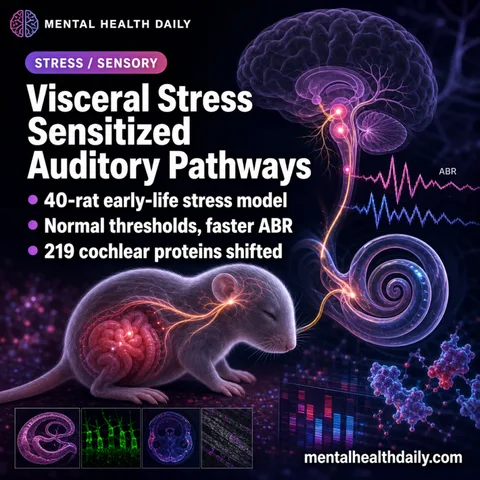
Early-Life Visceral Stress Sensitized Auditory Brainstem Responses in Rats

MHD featured image for early-life visceral stress and auditory brainstem sensitization.

A 40-rat early-life visceral stress study found auditory pathway sensitization without hearing-threshold loss: neonatal colorectal distension produced IBS-like visceral hypersensitivity, normal ABR thresholds, shortened auditory brainstem latencies, increased amplitudes, and 219 differentially expressed cochlear proteins.1 The result turns IBS-like stress exposure into a gut-pain and sensory-processing question. Research Highlights Visceral hypersensitivity was strong: At 20 …

Read more

Knee Osteoarthritis Pain and Fatigue Linked to Serum and CSF Metabolites

MHD featured image for knee osteoarthritis pain and fatigue metabolomics.

A 2026 targeted metabolomics study of knee osteoarthritis found 33 altered serum metabolites and 10 altered cerebrospinal-fluid metabolites, but the symptom signal split by compartment: serum amino acids, bile acids, and acylcarnitines tracked pain or fatigue, while CSF histamine and 3-hydroxyphenylacetic acid tracked central pain and sleep measures.1 Research Highlights 33 serum metabolites shifted: knee …

Read more