hit counter

Antidepressant Use in Pakistan (2026): SSRI Prescribing Patterns and Patient-Reported Side Effects

Photoreal illustration of a pharmacist counseling patient on antidepressant medication, conveying global pharmacovigilance.

Most antidepressant pharmacovigilance data come from high-income countries, leaving prescribing patterns and adverse-effect profiles in low- and middle-income countries underdocumented. A 2026 cross-sectional study by Riaz and colleagues describes antidepressant use in Pakistan, with patient-reported adverse effects mapped against prescription patterns.1 Research Highlights Antidepressant use in low- and middle-income countries (LMICs) has grown substantially but …

Read more

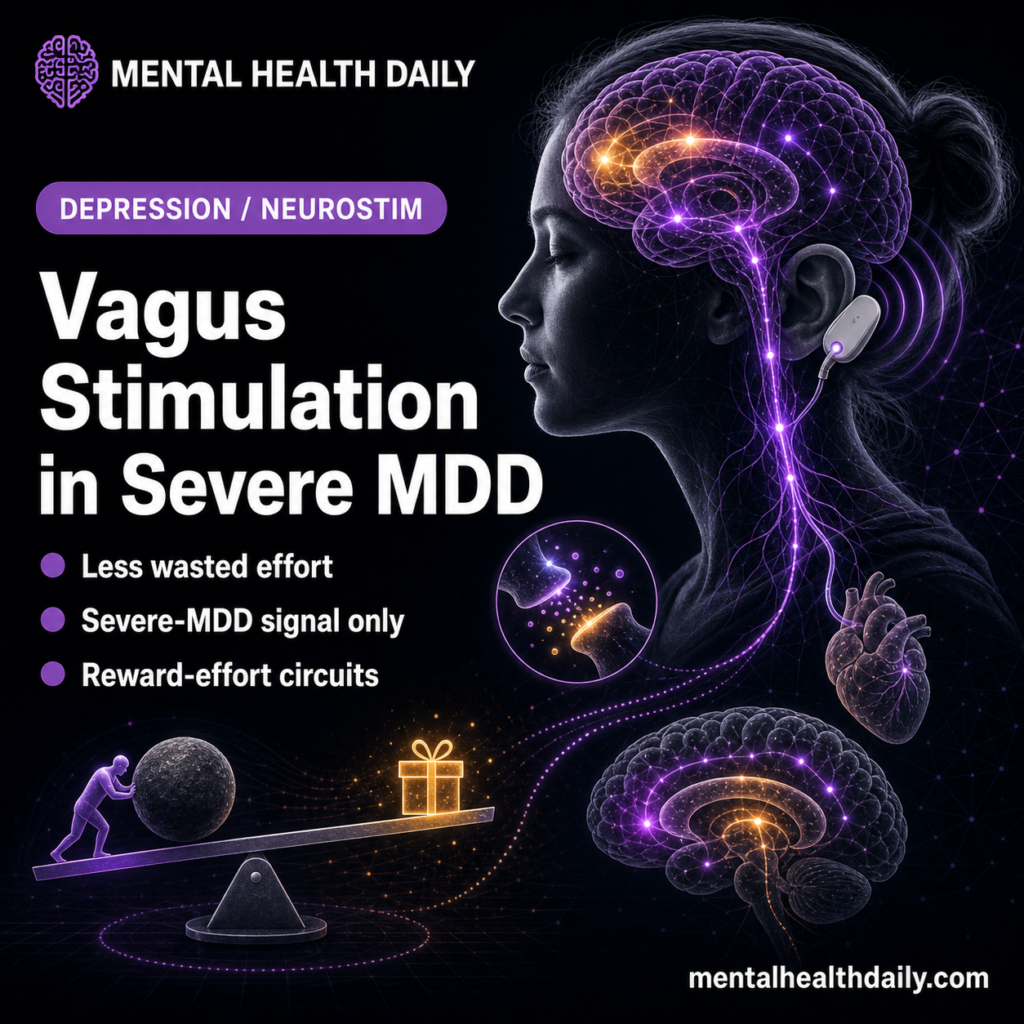
tVNS Alters Effort and Reward Decisions in Severe Depression

Photoreal illustration of an ear-clip vagus nerve stimulation electrode, with neural pathway motifs representing reward-effort circuits.

An ear-clip that modulates mood by stimulating the vagus nerve has obvious appeal — but the evidence base for non-invasive tVNS in depression has been mixed for a decade. A 2026 cross-over RCT by Forbes et al. sharpens what specifically tVNS does well.1 Research Highlights Transcutaneous vagus nerve stimulation (tVNS) is a non-invasive ear-electrode version …

Read more

Psychedelic Media Coverage Outpaced Evidence (2017–2024)

Photoreal illustration of newspaper headlines and scientific journals about psychedelic treatments, conveying media-evidence calibration.

Psychedelic-assisted therapy has been one of the most-covered mental-health stories of the past decade. A 2026 quantitative analysis by Evers and colleagues maps how media enthusiasm grew, peaked, and partially pulled back across major U.S. outlets — and how the coverage related to the actual evidence base for depression and PTSD.1 Research Highlights Psychedelic clinical …

Read more

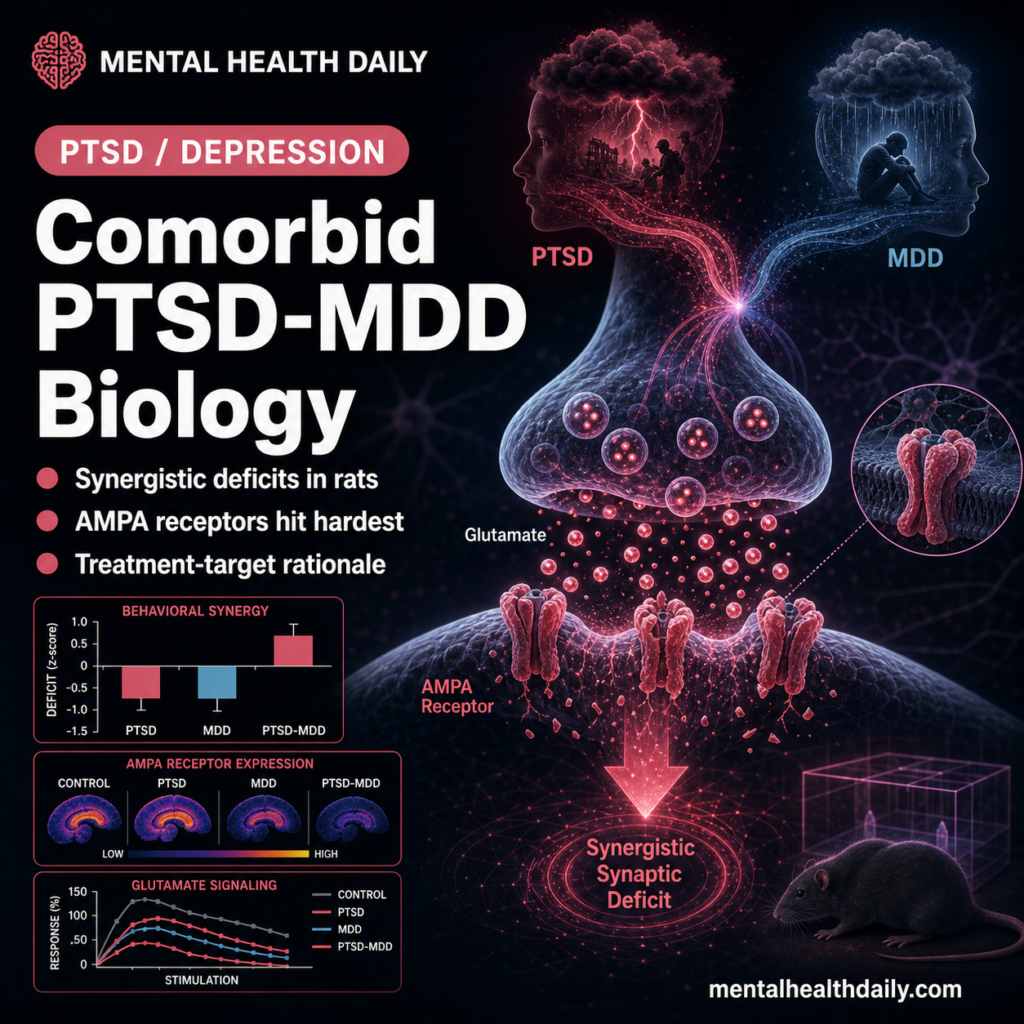
PTSD With Depression Hits AMPA Receptors Harder in Rat Models

Photoreal illustration of synaptic AMPA receptors and stressed neuron, conveying glutamate-system dysregulation in PTSD-MDD comorbidity.

PTSD and major depressive disorder co-occur in roughly half of patients with either diagnosis, and the comorbid presentation is more severe than either alone. The mechanistic question has been whether comorbidity reflects synergistic biology or simple symptom additivity. A 2026 rat-model study by Jiang and colleagues tests this directly, finding that PTSD-MDD comorbid rats show …

Read more

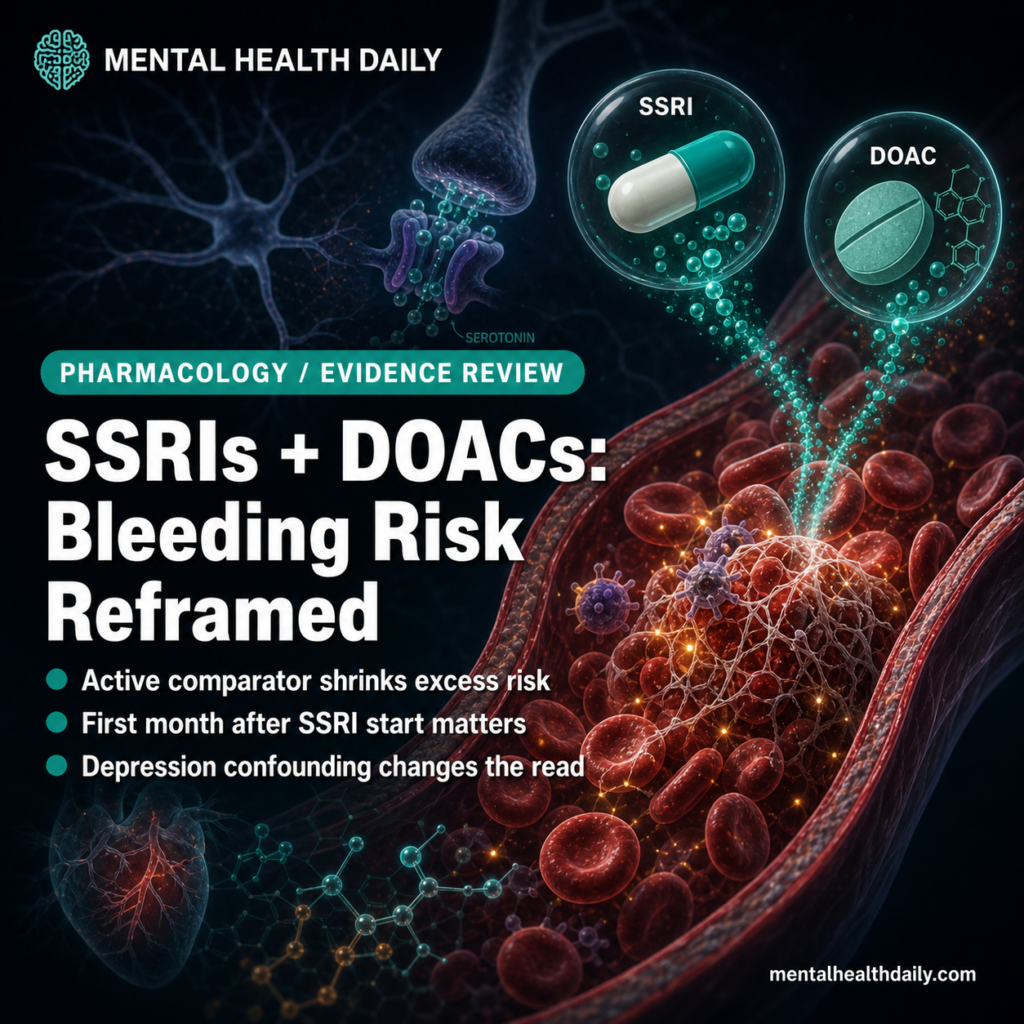
SSRIs + DOACs: No Excess Bleeding vs. Other Antidepressants

Stylized illustration of an SSRI capsule alongside a DOAC tablet against a vascular network background, representing the bleeding-interaction question in primary care.

SSRIs raise bleeding risk on their own. DOACs (direct oral anticoagulants — apixaban, rivaroxaban, dabigatran, edoxaban) raise it more. The intuitive worry is that combining them stacks the two effects. A new BJGP Open analysis from Chau and colleagues argues the stacking is smaller than most popular framings claim, and that the real safety question …

Read more

Deep Brain Stimulation (DBS) of Nucleus Accumbens (NAc) for Treatment-Resistant Depression (4 Case Reports)

Deep Brain Stimulation (DBS) for Treatment-Resistant Depression (TRD) explores the cutting-edge intersection of technology and neuroscience, offering hope to those for whom traditional treatments have failed. By targeting specific brain areas, such as the nucleus accumbens, DBS attempts to modulate the underlying neural circuits associated with depression. A recent review analyzed case reports documenting significant …

Read more

Tramadol for Depression: Highly Effective as Off-Label Antidepressant (According to User Reviews)

Tramadol, commonly known for its pain-relieving properties, has emerged as an effective off-label treatment for depression according to patient experiences and reviews. A recent analysis of tramadol’s antidepressant potential examined user feedback – comparing its efficacy and safety with established antidepressants. It considered the perspectives of patients who have found relief from depression with tramadol, …

Read more