hit counter

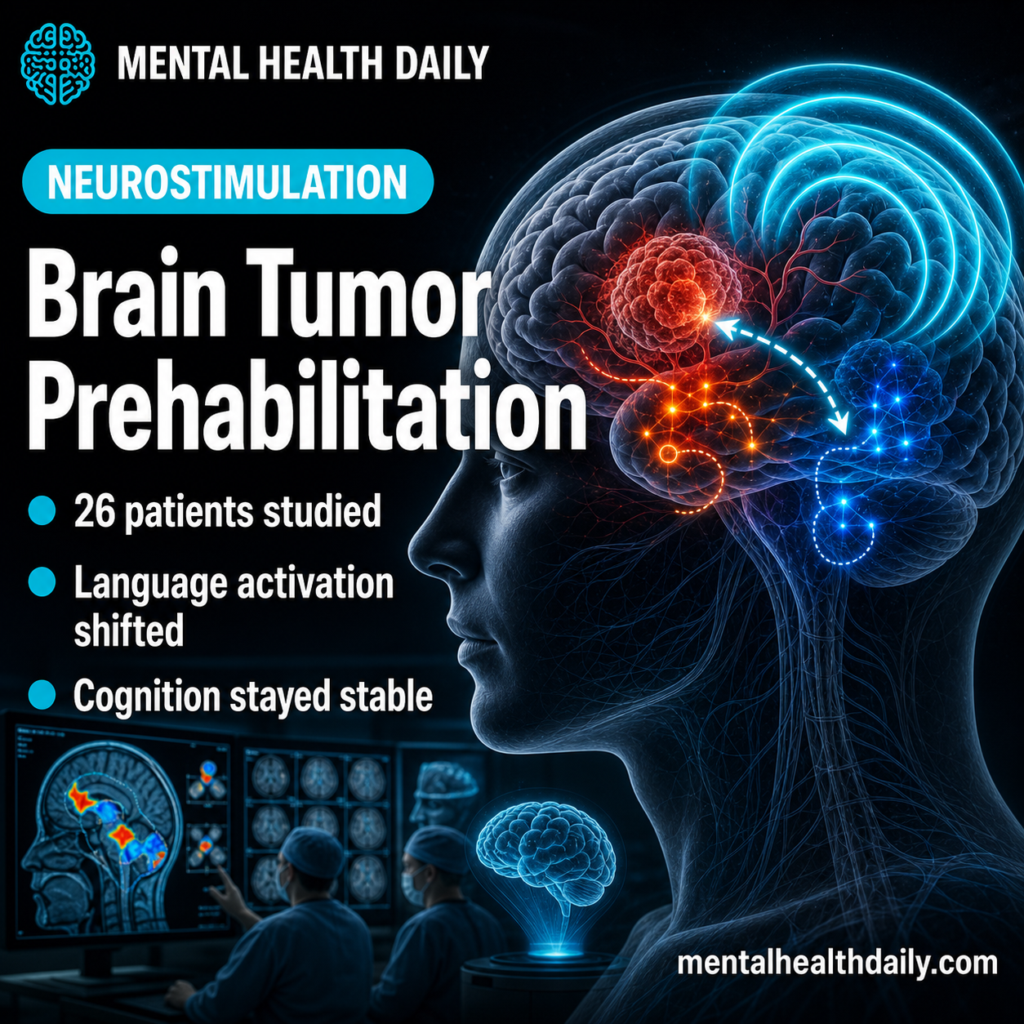
Non-Invasive Prehabilitation Shifted Brain Tumor Language Networks

MHD featured image for non-invasive prehabilitation, brain tumors, and language-network plasticity.

A 2026 brain tumor prehabilitation study involving 26 surgical patients found that language-targeted non-invasive stimulation plus intensive language training shifted fMRI language activation away from the stimulation target, while measured language and cognition stayed stable. Research Highlights Language-targeted prehabilitation moved the fMRI signal: the group-by-time interaction for stimulation-target overlap was significant, F(1,23) = 4.61, p …

Read more

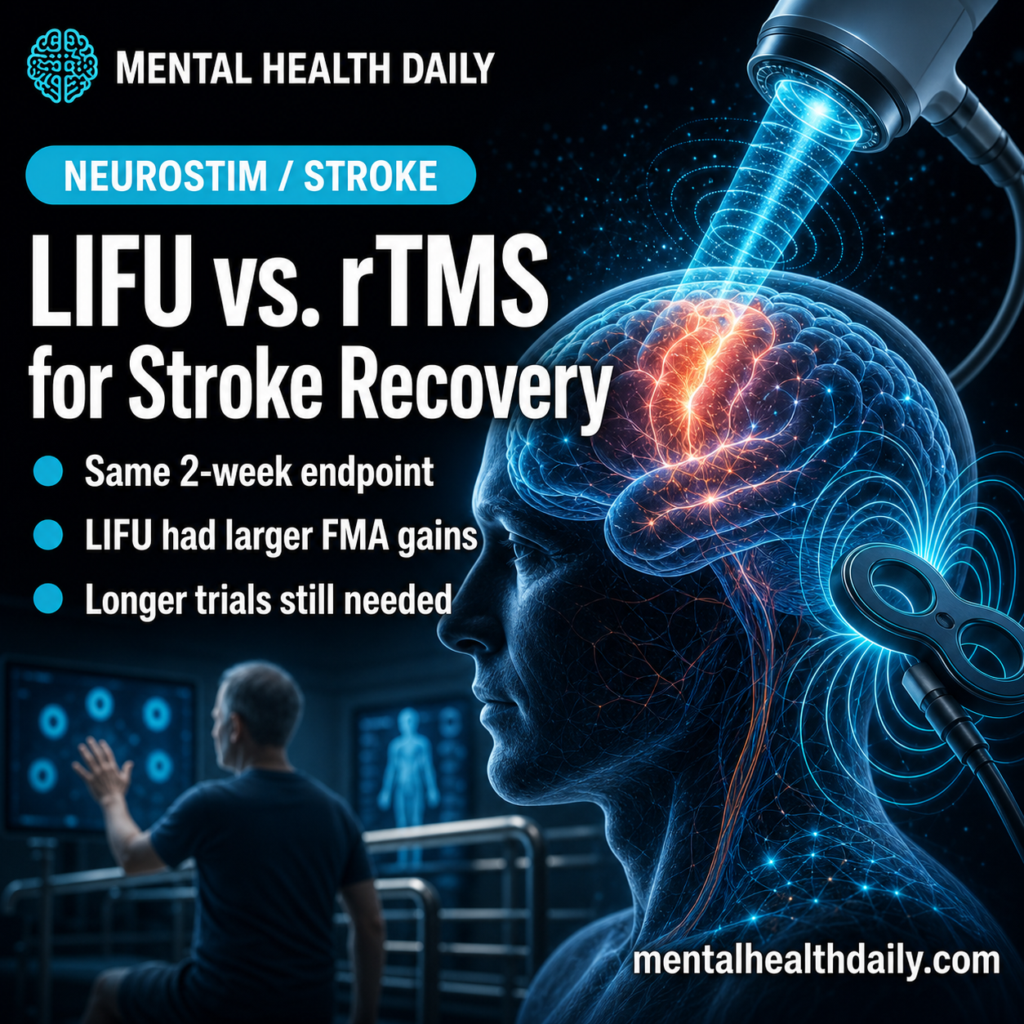
LIFU vs. rTMS for Stroke Recovery: Same 2-Week Endpoint, Larger FMA Gains

MHD featured image for LIFU vs. rTMS in post-stroke motor recovery.

A 2026 secondary randomized-trial analysis found that low-intensity focused ultrasound and repetitive transcranial magnetic stimulation reached statistically similar 2-week post-treatment motor scores after subacute stroke, even though LIFU produced larger median Fugl–Meyer Assessment gains than rTMS: 7 vs. 2 upper-limb points and 3 vs. 1 lower-limb points.1 LIFU therefore carries the recovery-dynamics signal in this …

Read more

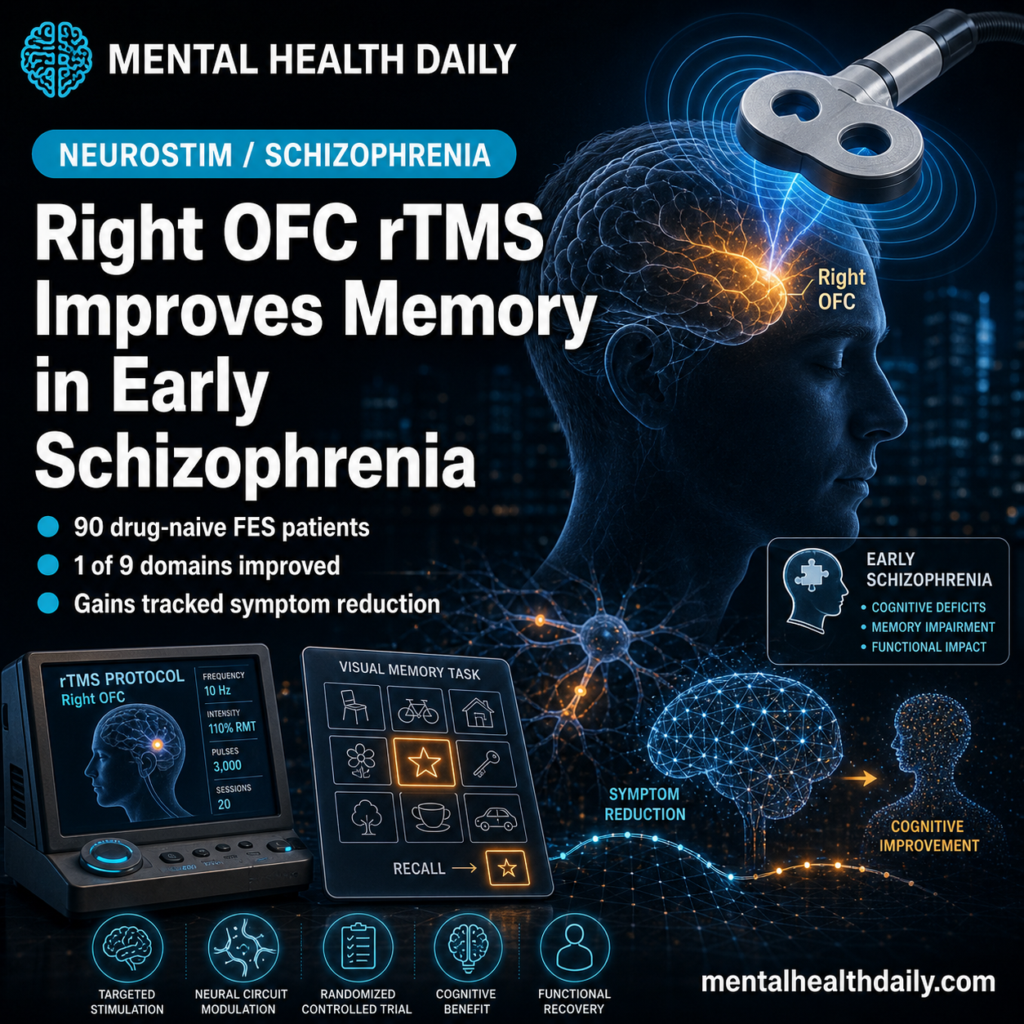
Right OFC rTMS Improves Memory in Early Schizophrenia

Editorial card showing a coronal brain section highlighting the right orbitofrontal cortex with a TMS coil, illustrating the first RCT of OFC stimulation in first-episode schizophrenia.

Cognitive impairment in first-episode schizophrenia (FES) is the symptom that does the most work blocking employment, relationships, and independent living — and the symptom current antipsychotics barely move. A 2026 RCT by Hu et al. in Psychological Medicine tested whether 20 sessions of low-frequency rTMS targeting the right orbitofrontal cortex (OFC) could improve cognition where …

Read more

Personalized TMS for Psychiatric Disorders: Targeting Functional Connectivity (FC) in the Brain (2024 Review)

Transcranial Magnetic Stimulation (TMS) has emerged as a beacon of hope in the realm of psychiatry, offering a non-invasive alternative for treating psychiatric disorders. The variability in treatment outcomes highlights the necessity for advancements in personalized approaches. A recent paper analyzed the potential of personalized TMS protocols (customized based on individual brain connectivity) may help …

Read more

Repetitive TMS for Alzheimer’s Disease Alters Brain Waves & Enhances Cognition (2024 Study)

Repetitive transcranial magnetic stimulation (rTMS) is making waves in the field of Alzheimer’s disease (AD) research, offering a glimmer of hope for enhancing cognitive functions in patients. By targeting specific brain regions, rTMS has shown promising results in modulating neural activity and improving cognitive scores. This innovative therapy, coupled with real-time monitoring through electroencephalography (EEG), …

Read more

Accelerated TMS for Depression: Is aTMS More Effective than Standard TMS? (2024 Review)

Depression, a common yet severe mood disorder, affects millions worldwide, posing significant challenges in both diagnosis and treatment. Recent advancements have led to the development of accelerated transcranial magnetic stimulation (aTMS), a novel approach aiming to offer rapid relief for individuals suffering from major depressive disorder (MDD). This revolutionary technique has shown promising results, potentially …

Read more

Symptom Provocation in Psychiatric Disorders: TMS, EEG, Neural Circuits for Personalized Treatment (2023 Review)

Symptom provocation, a cornerstone of psychiatric research and therapy, offers a fascinating glimpse into the intricate relationship between brain activity and psychiatric symptoms. By deliberately triggering symptoms, researchers and clinicians can identify neurophysiological biomarkers and target them with personalized therapies, such as transcranial magnetic stimulation (TMS). This technique not only enhances our understanding of psychiatric …

Read more