hit counter

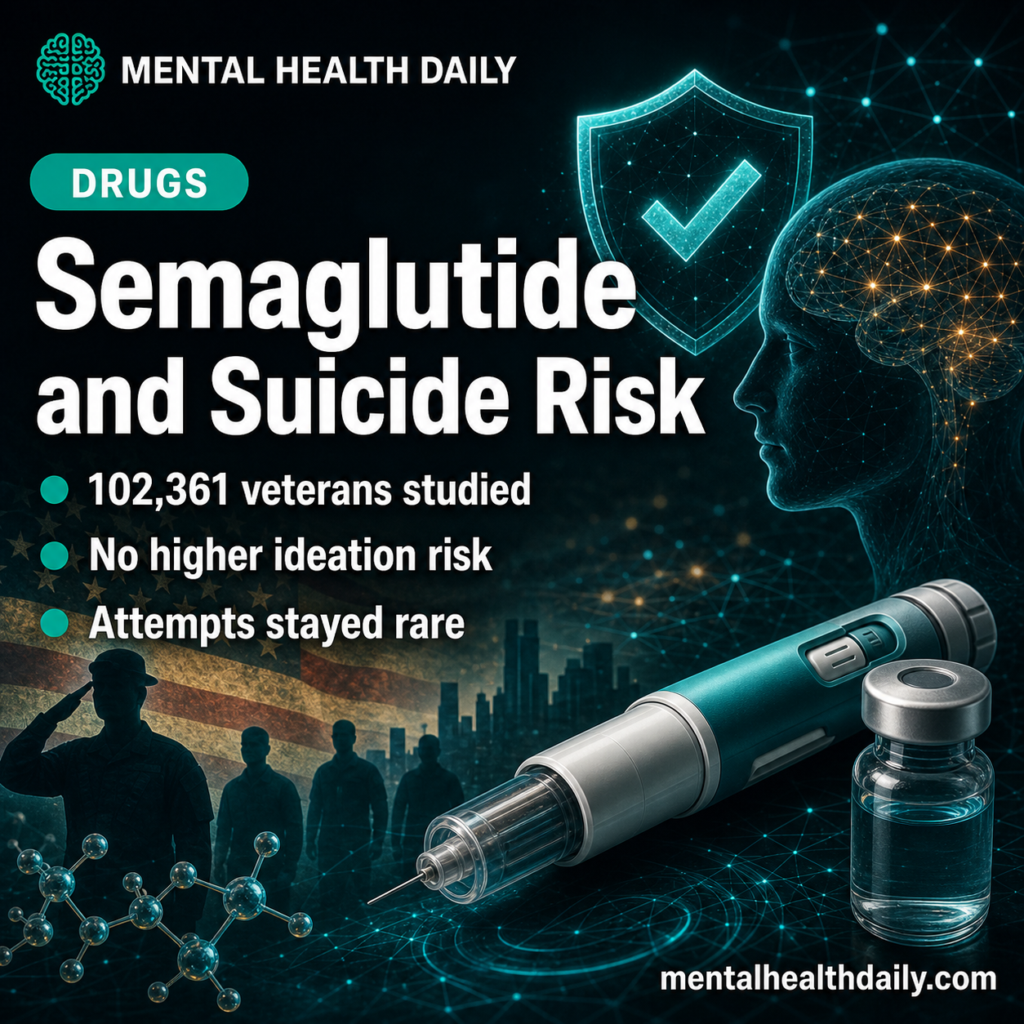
Semaglutide Did Not Increase Suicidality in 102,361 Veterans

MHD featured image for semaglutide and suicidality risk in veterans with type 2 diabetes.

A 2026 target-trial emulation involving 102,361 U.S. veterans with type 2 diabetes found no increased suicidality risk after starting semaglutide vs. sodium-glucose cotransporter-2 inhibitors (SGLT2 inhibitors): suicidal ideation HR 0.99 and suicide attempt/death HR 1.05 after overlap weighting.1 That does not prove semaglutide prevents suicide, but it weakens the broad claim that semaglutide initiation itself …

Read more

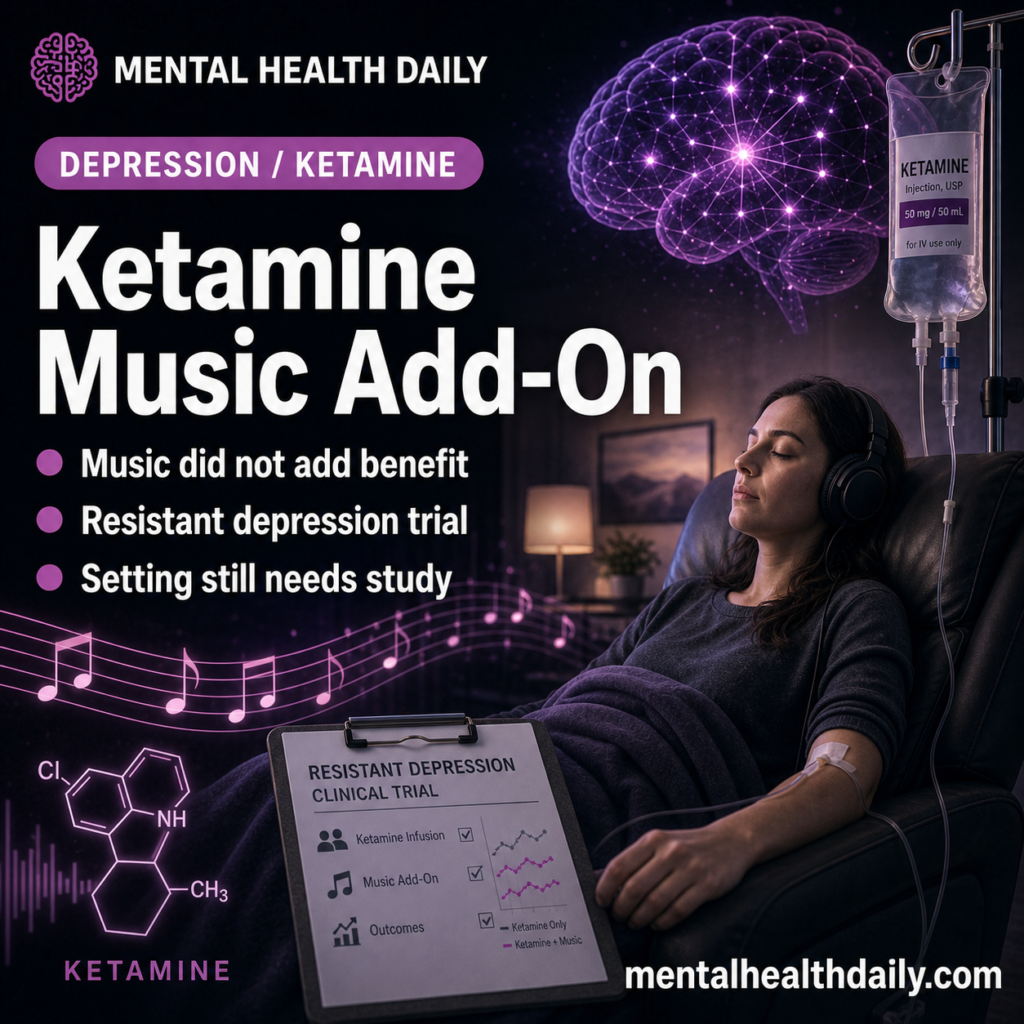
Music During Ketamine Did Not Improve Resistant Depression

MHD featured image for ketamine psychotherapy, treatment-resistant depression, music, and psychedelic-like treatment context.

Adding music to ketamine psychotherapy failed to provide extra antidepressant benefit over matched non-music support in a 2026 randomized clinical trial (RCT; a study that assigns participants to groups by chance), even though the full 6-infusion ketamine-psychotherapy course was followed by large depression-score reductions. Research Highlights Music added no confirmed MADRS benefit: in the MUSIK …

Read more

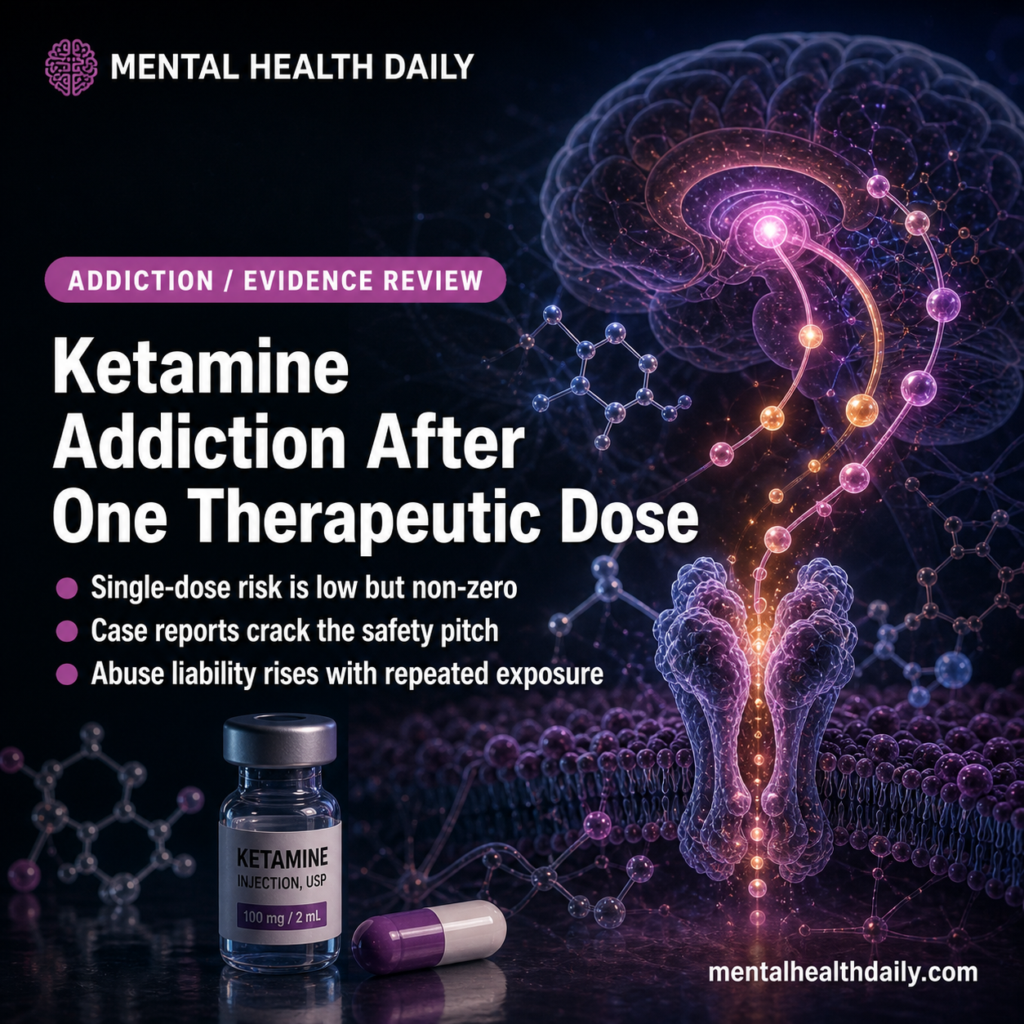
Ketamine Addiction After One Therapeutic Dose: How Rare Is It?

Stylized illustration evoking the tension between ketamine's clinical promise for depression and its abuse liability, framed in muted rose and amber tones for the addiction topic.

Ketamine and its S-enantiomer esketamine (sold as Spravato) are now established treatments for treatment-resistant depression and acute suicidality. The standard safety pitch from sponsors and clinics: at single sub-anesthetic doses, in supervised settings, addiction risk is minimal. A new case report in BJPsych Open documents a patient for whom that pitch failed catastrophically — and …

Read more

Peripheral Inflammatory Biomarkers vs. Suicide Risk in Major Depression (2024 Study)

Major Depressive Disorder (MDD) is not just a mental health concern; it’s a complex interplay of psychological, environmental, and biological factors, where the most tragic outcome can be suicide. Recent research has unveiled a potential link between the immune system’s inflammatory response and the increased risk of suicide among those suffering from MDD. By examining …

Read more

Brain Biomarkers in Suicide Attempts: Elevated 5-HT1A Heteroreceptors & Hyperactivity in Superior Temporal Gyrus (2023 Review)

Suicide, a tragic end to around 800,000 lives each year, remains one of the most perplexing and devastating phenomena in mental health. Despite the vast number of studies and data, accurately predicting who is at risk of suicide has remained largely elusive, with current tools heavily reliant on subjective assessments and the clinician’s experience. A …

Read more