hit counter

Total-Body Tau PET Links Brain-Organ Coupling to Alzheimer’s Cognition

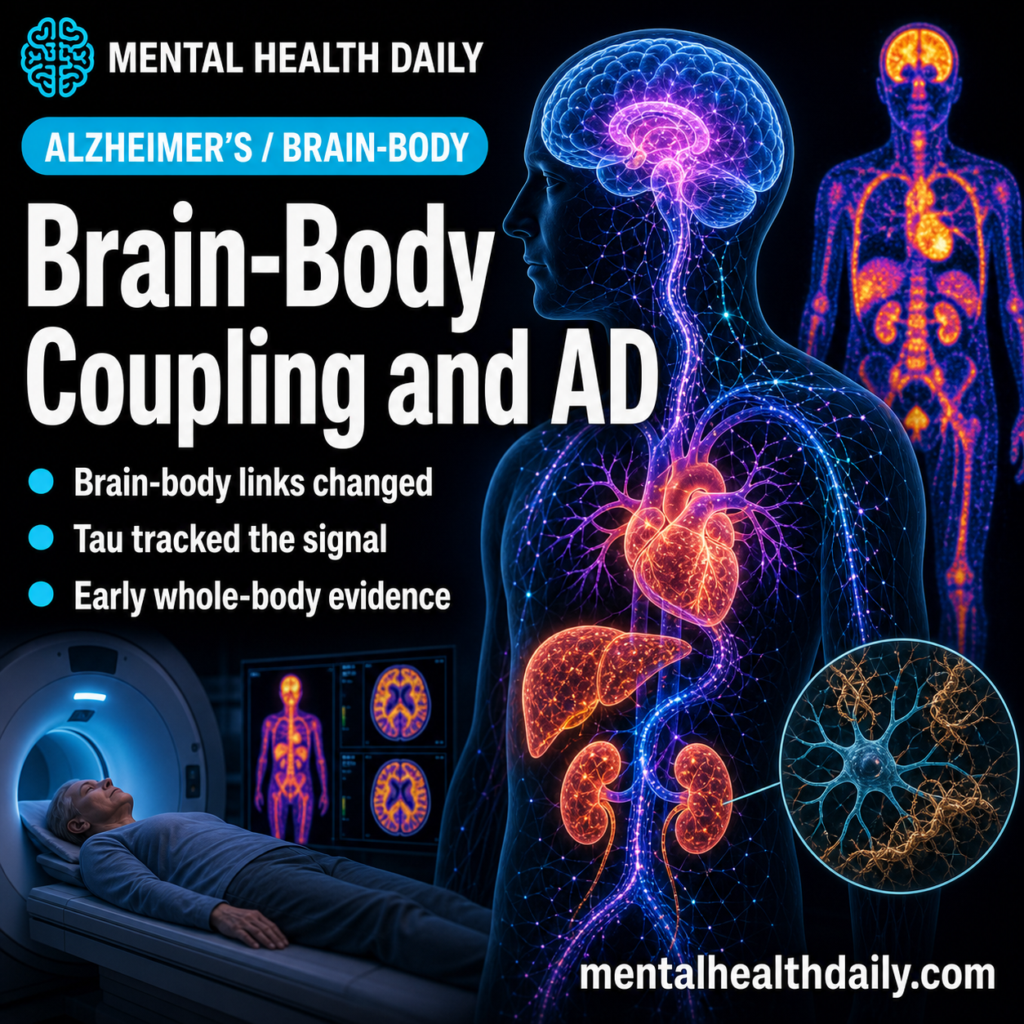
Photoreal illustration of brain with cardiac and respiratory rhythm overlays, conveying brain-body coupling and AD pathology.

A 2026 total-body tau-PET study of 28 people with Alzheimer’s disease and 23 biomarker-negative controls found stronger brain-organ network connectivity in Alzheimer’s disease than in biomarker-negative controls: 35 altered connections, including 21 brain-body edges, plus AD-only links between brain-organ coupling, cortical tau burden, MRI-derived glymphatic markers, and cognition.1 The result is best read as a …

Read more

Sleep Memory Cues Do Not Boost Parkinson’s Motor Learning

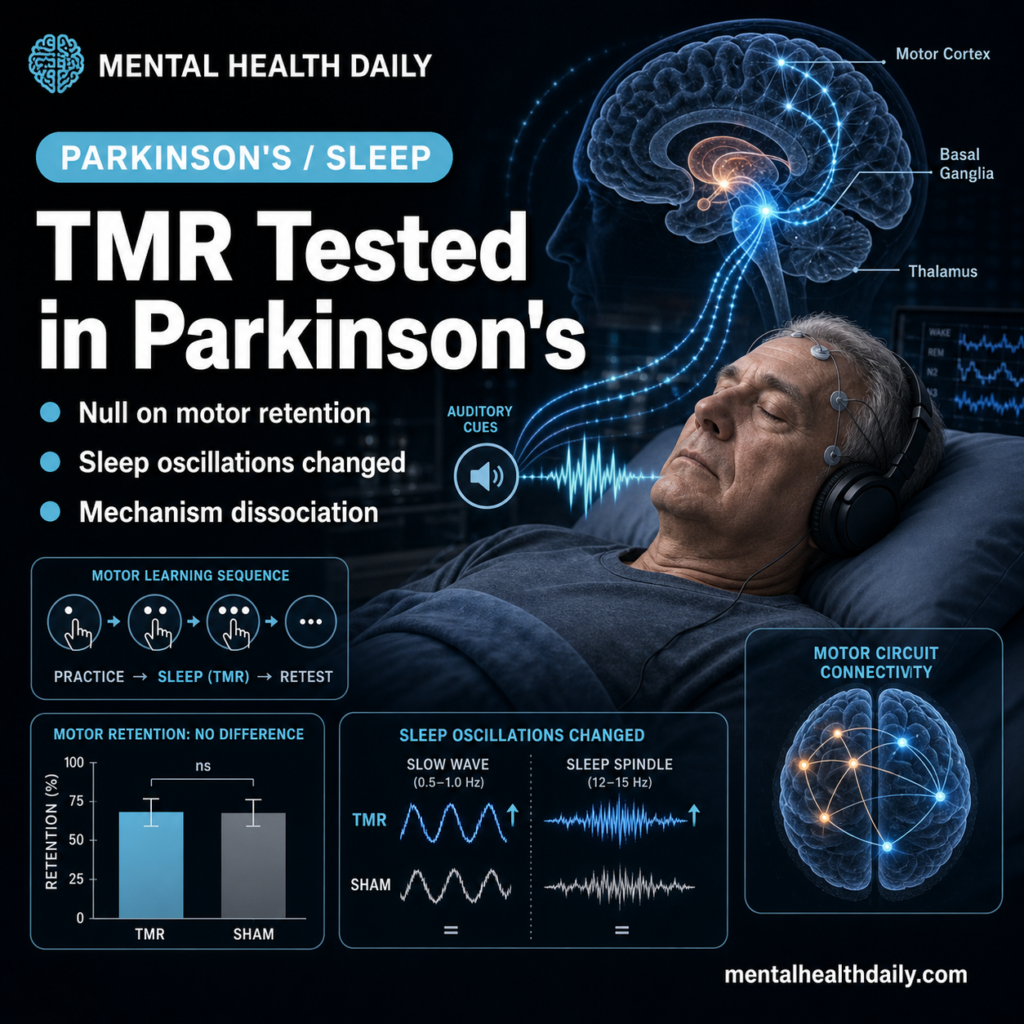
Photoreal illustration of an older adult sleeping with overlay of memory and brain oscillation imagery, conveying sleep-based learning intervention.

Auditory targeted memory reactivation during a 2-hour nap did not improve motor retention in 20 Parkinson’s disease patients or 20 healthy older adults, even though the same cues changed sleep physiology by reducing spindle density and increasing slow-wave density.1 Research Highlights First Parkinson’s TMR test: Micca et al. studied 20 Parkinson’s disease patients and 20 …

Read more

EEG Alpha Density Decreased in Children, Increased in Adults

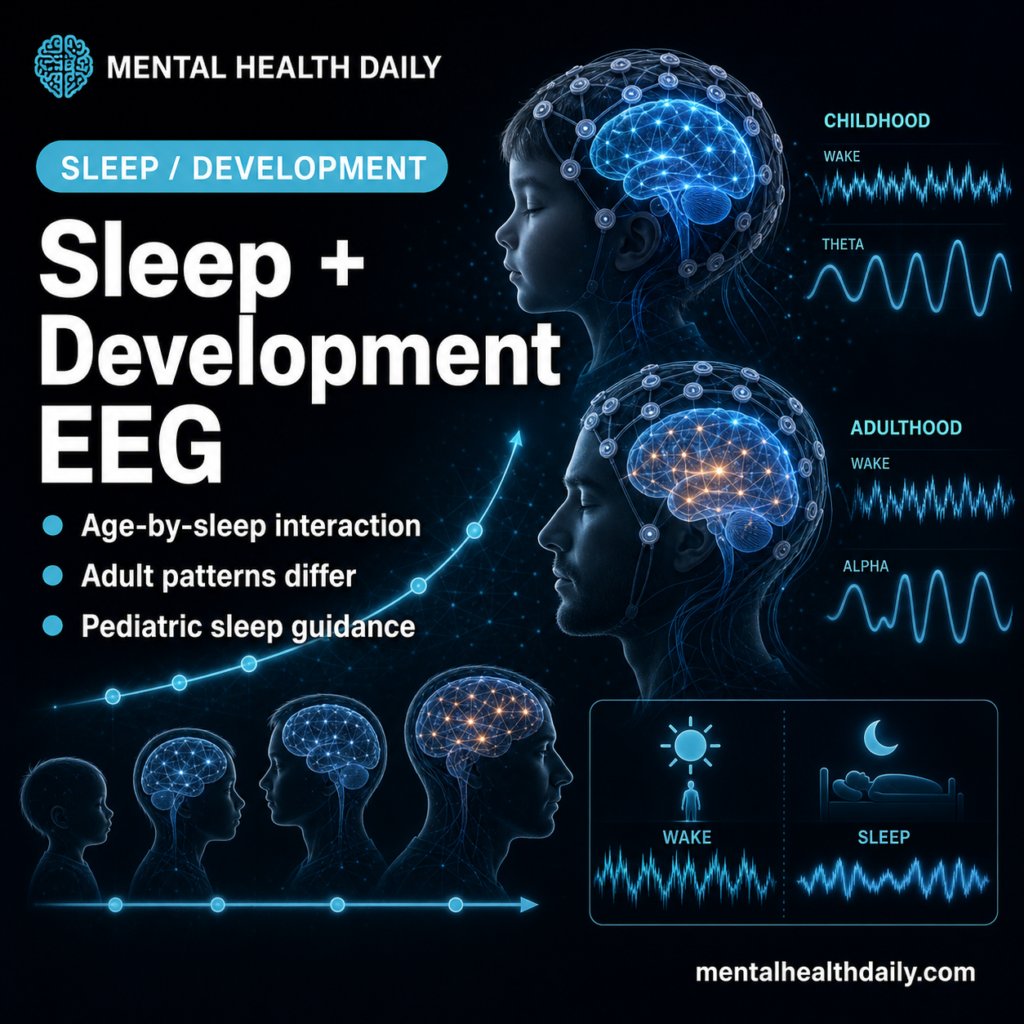
Photoreal illustration of children and adults with overlay of EEG brain rhythms, conveying developmental differences in sleep effects on brain activity.

A 2026 eNeuro analysis of 163 people ages 3.5–24.7 found that wake EEG amplitude behaved like a sleep-pressure marker, but wake alpha-density changed in opposite directions across development: it decreased overnight in children and increased overnight in adolescents and adults.1 Research Highlights Alpha density flipped by age: In 163 participants ages 3.5–24.7, oscillation density showed …

Read more

Sleep Disorders vs. Systemic Immune-Inflammation Index (SII) in the U.S. Population (2023 Study)

Sleep and inflammation have long been topics of scientific inquiry, with a growing body of evidence underscoring their intricate relationship. The systemic immune-inflammation index (SII), a novel marker based on leukocyte parameters, has emerged as a significant indicator of systemic inflammation. A recent study explored the association between sleep-related disorders and SII, revealing intriguing connections …

Read more

Valerian Root for Insomnia & Sleep: Is It Actually Effective? (2023 Review)

Valerian, a herb long cherished for its sedative properties, stands at the crossroads of traditional medicine and modern scientific inquiry. Despite its widespread use across cultures for promoting sleep and alleviating insomnia, the scientific community remains divided over its efficacy. Highlights: Historical Significance: Valerian has been used since the times of ancient Greece and Rome …

Read more

tDCS for Insomnia & Sleep Disturbances: Targeting the Infralimbic Cortex to Ventrolateral Preoptic Area Pathway (2024 Study)

In the quest to effectively treat insomnia, a condition plaguing millions worldwide, scientists are exploring innovative treatments beyond traditional medication. Transcranial Direct Current Stimulation (tDCS) emerges as a promising intervention, offering a non-invasive method to modulate brain activity and enhance sleep quality. A recent study suggests tDCS may treat stress-related sleep disturbances and highlights the …

Read more