hit counter

Quetiapine Linked to Better Working Memory Scores in Schizophrenia
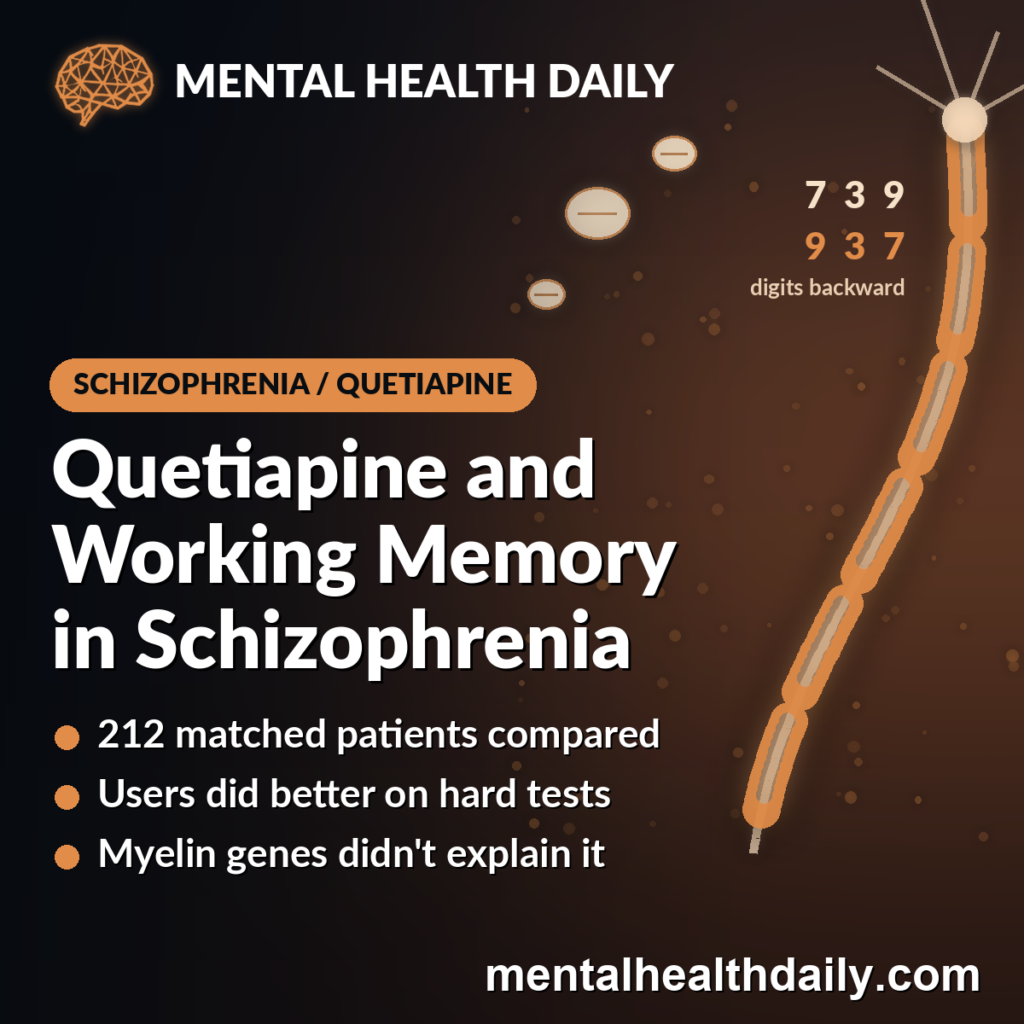
MHD card with an amber myelinated nerve fiber, quetiapine tablets, and a digits-backward memory sequence: quetiapine users with schizophrenia scored higher on hard working-memory tests, but myelin genes did not explain it.

A 2026 German-Austrian cohort analysis found that people with schizophrenia who were taking quetiapine scored modestly higher on demanding working-memory tests than sex- and age-matched patients who were not, with the largest gap at doses of 300 mg a day or less.1 Because patients were not randomized to quetiapine, this is an association; the advantage …
Read more

Top-Ranked Treatments for Schizophrenia Aggression: Clozapine, Paliperidone and Olanzapine

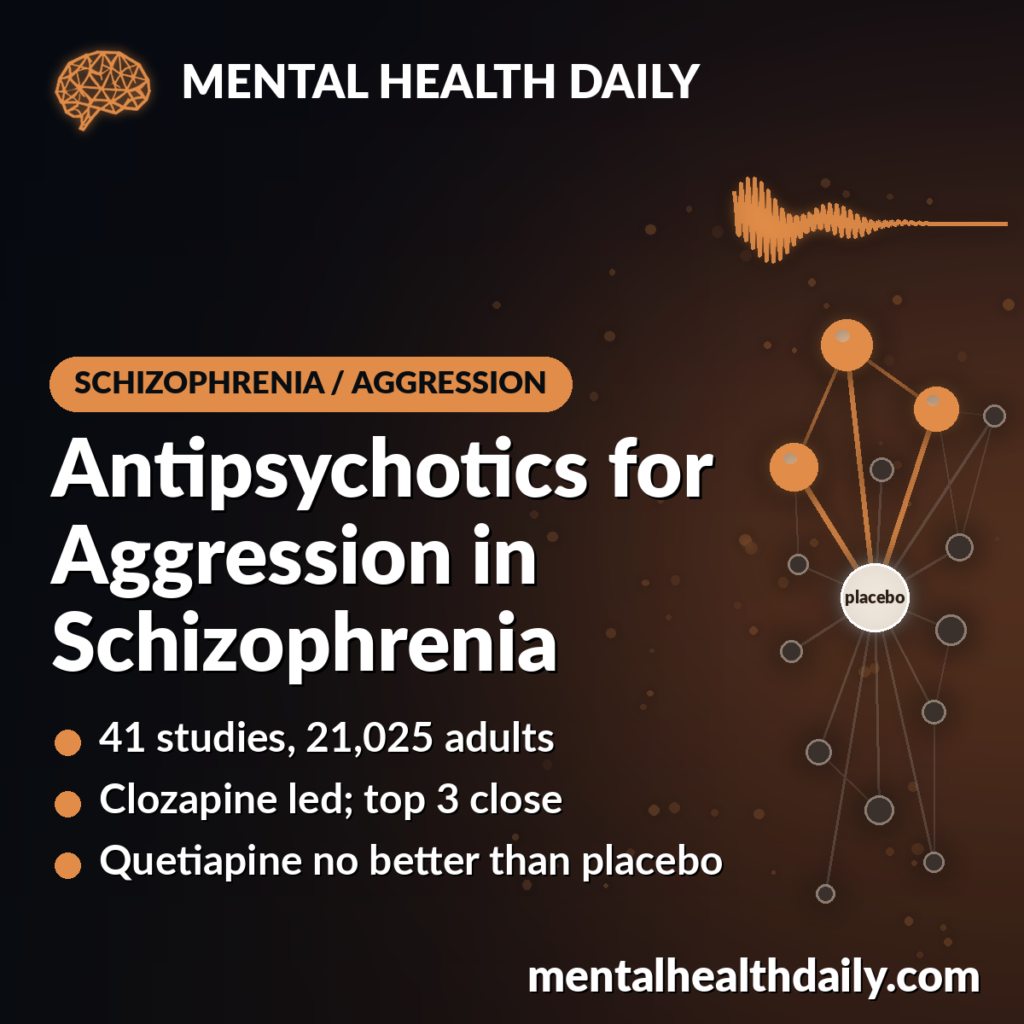
MHD card with an amber network of antipsychotic drug nodes linked to a placebo node over a dark background, with a calming waveform: clozapine, paliperidone, and olanzapine reduced aggression in schizophrenia most, but confidence was low.

A 2026 analysis of 41 randomized studies involving 21,025 adults with schizophrenia found the largest estimated reductions in hostility and aggression for clozapine (standardized mean difference, or SMD, of −0.75), paliperidone (−0.62), and olanzapine (−0.60) vs. placebo.1 Confidence in every comparison was low or very low, the top 3 were not statistically separable, and most …

Read more

Lithium Loading Dose Did Not Clearly Beat Standard Acute-Mania Titration

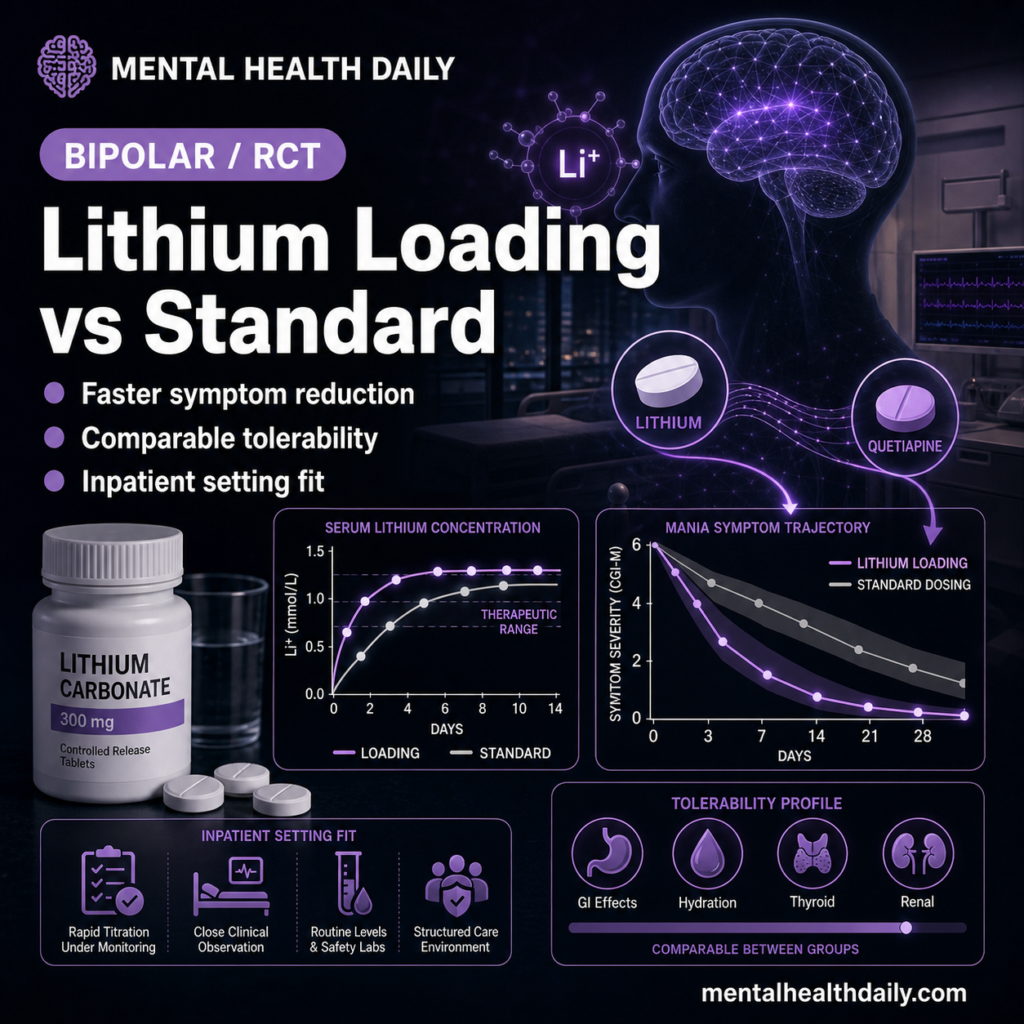
Photoreal illustration of lithium tablets and blood-level monitoring chart, conveying acute-mania pharmacological strategy.

A 60-patient randomized trial of lithium loading for acute bipolar I mania reported faster serum lithium attainment than standard titration and a larger 14-day Young Mania Rating Scale (YMRS) change score, but the same accepted manuscript says absolute YMRS scores at Days 3, 7, and 14 were not significantly different between the 2 arms when …

Read more

Quetiapine-Induced Psychosis: A Rare Adverse Effect (2024 Case Report)

Quetiapine, a second-generation antipsychotic medication, is renowned for its efficacy in managing a spectrum of psychiatric conditions, including schizophrenia, bipolar disorder, and major depressive disorder (MDD). Despite its broad therapeutic utility and a generally favorable side effect profile, quetiapine’s role in rare instances of inducing psychotic symptoms warrants a closer examination. Highlights: Quetiapine’s Mechanism of …

Read more

How People Feel About Antipsychotics & Mood Stabilizers: Twitter/X Sentiment Analysis (2024 Study)

Social media has emerged as a pivotal source of real-world evidence, especially in understanding patient experiences and perceptions regarding the treatment of severe mental disorders such as Schizophrenia and related psychotic disorders (SRD) and Bipolar Disorder (BD). Leveraging advanced artificial intelligence (AI) techniques, a comprehensive analysis of 893,289 tweets between 2008 and 2022 revealed significant …

Read more

Quetiapine Dosing for Depression Optimized with XGBoost Algorithm (2024 Study)

Depression is a globally pervasive mental illness that often requires complex treatment strategies. One such strategy involves the use of Quetiapine, an antipsychotic medication, as an augmentation to antidepressants. However, determining the optimal dose of Quetiapine is challenging due to individual variability. A recent study utilizes machine learning techniques to develop a predictive model for …

Read more

Seroquel (Quetiapine) For Anxiety Disorders: An “Atypical” Treatment

Seroquel (Quetiapine) is an atypical antipsychotic engineered in the early 1990s by the pharmaceutical company AstraZeneca.  It was first approved by the FDA in 1997 for the treatment of schizophrenia, and was sequentially approved by the FDA in 2004 for the management of bipolar mania.  Seroquel would also receive subsequent FDA approval in 2009 as …

Read more