hit counter

CoQ10 Preserved Working Memory in Drp1-Deficient Mice Through Coa6
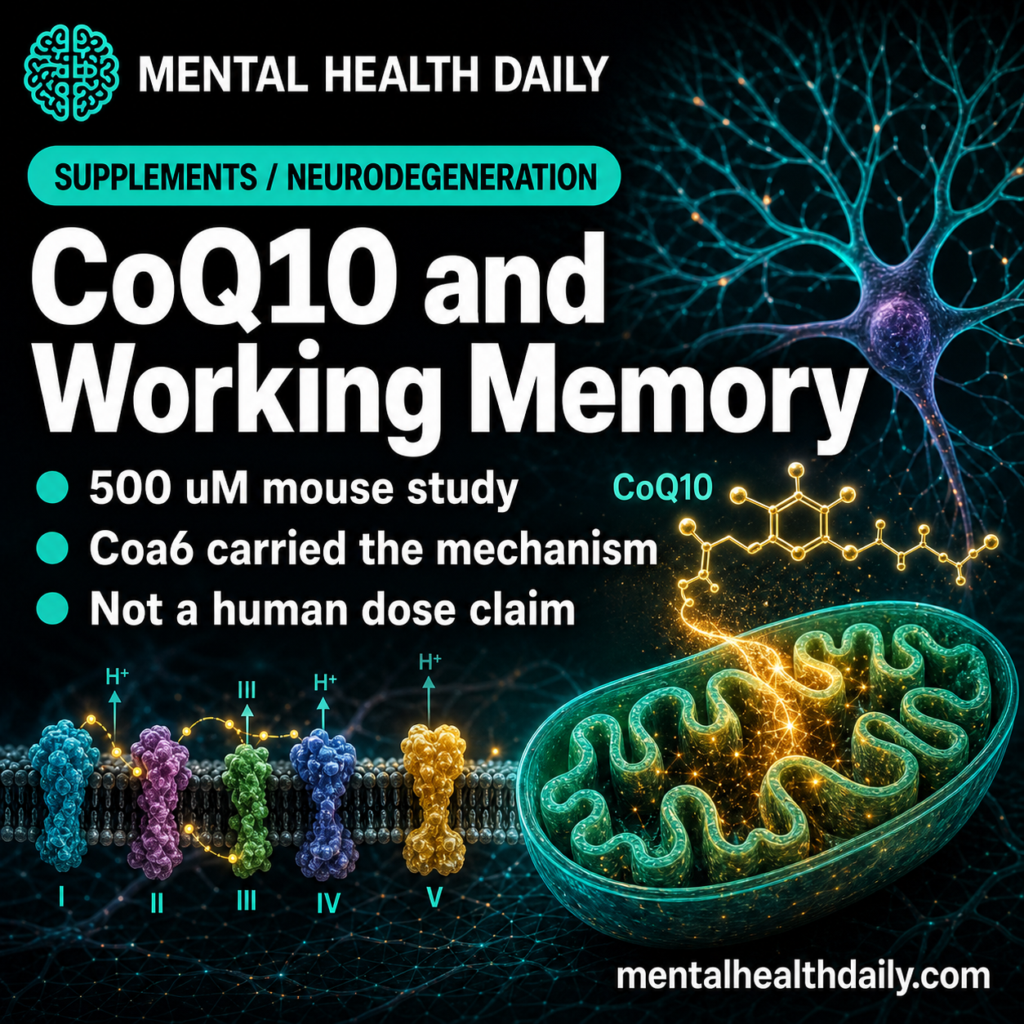
MHD featured image for CoQ10, working memory, Drp1 deficiency, Coa6, and mitochondrial respiratory-chain function.

A 2026 mouse study found that long-term CoQ10 exposure reduced working-memory errors in Purkinje-cell-specific Drp1-deficient mice, tying the behavioral rescue to Coa6 binding and support for mitochondrial respiratory-chain function.1 The result supports a narrow mechanistic CoQ10-Coa6 pathway under neuronal mitochondrial dysfunction while leaving human memory-supplement claims untested. Research Highlights Working memory improved in a mouse …

Read more

Prenatal PM2.5 Linked to Autism-Relevant Newborn Amino Acid Metabolism

MHD featured image for prenatal air pollution, newborn metabolomics, and autism risk.

A matched case-control study of 50 children with autism spectrum disorder and 50 controls found that newborn amino acid metabolism overlapped with both later autism diagnosis and prenatal air-pollution exposure.1 The central pathway, aspartate and asparagine metabolism, was associated with autism (p = 0.01), pregnancy PM2.5 (p < 0.001), first-trimester PM2.5 (p < 0.001), and …

Read more

Microplastics and Parkinson’s Disease: 6 Plausible Brain-Risk Pathways

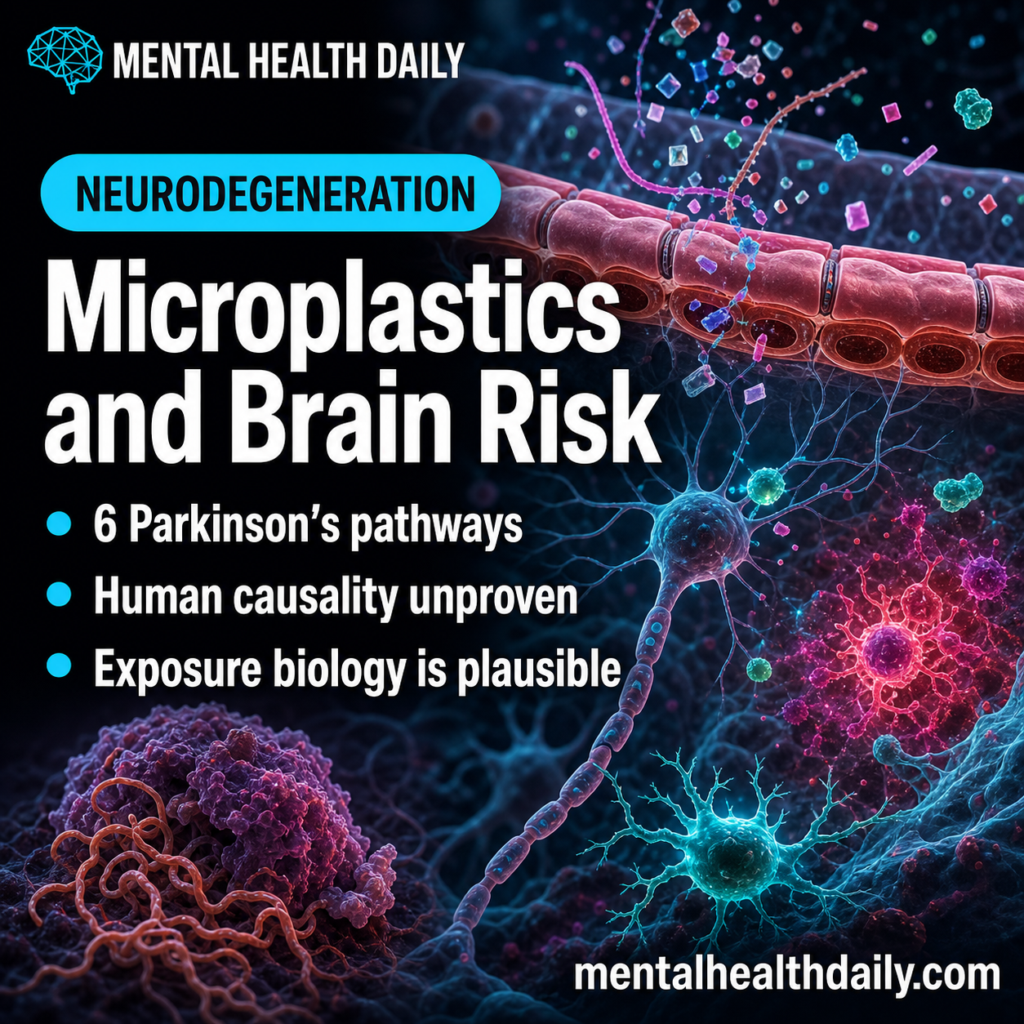
MHD featured image for microplastics and neurodegenerative disease mechanisms.

A 2026 mechanistic review linked microplastics to 6 proposed Alzheimer’s disease pathways and 6 proposed Parkinson’s disease pathways.1 The calibrated interpretation is that microplastics are biologically plausible brain stressors, but the human evidence does not yet prove that they cause Parkinson’s disease or Alzheimer’s disease. Research Highlights Exposure is widespread: the review cited an estimate …

Read more

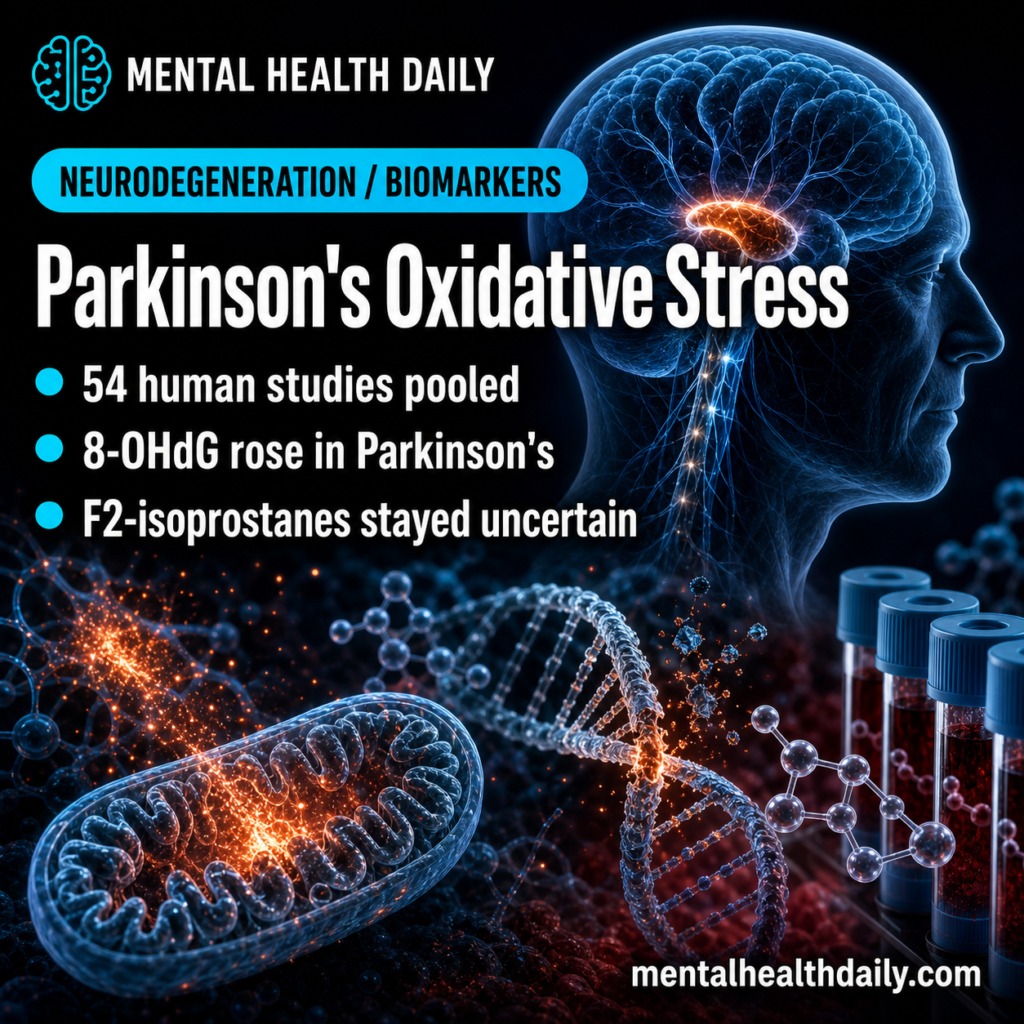
Parkinson’s Diabetes Oxidative Stress: 8-OHdG Rose, F2-Isoprostanes Did Not

MHD featured image for Parkinson's disease, diabetes, oxidative stress, 8-OHdG, and F2-isoprostanes.

A 2026 meta-analysis of 54 human studies found that 8-hydroxy-2′-deoxyguanosine rose in Parkinson’s disease, while F2-isoprostanes did not show a statistically confirmed Parkinson’s signal; type 2 diabetes showed much larger peripheral oxidative-stress elevations than Parkinson’s disease for both biomarkers. Research Highlights Parkinson’s DNA-oxidation signal was moderate: Msigwa et al. pooled 5 Parkinson’s disease studies with …

Read more

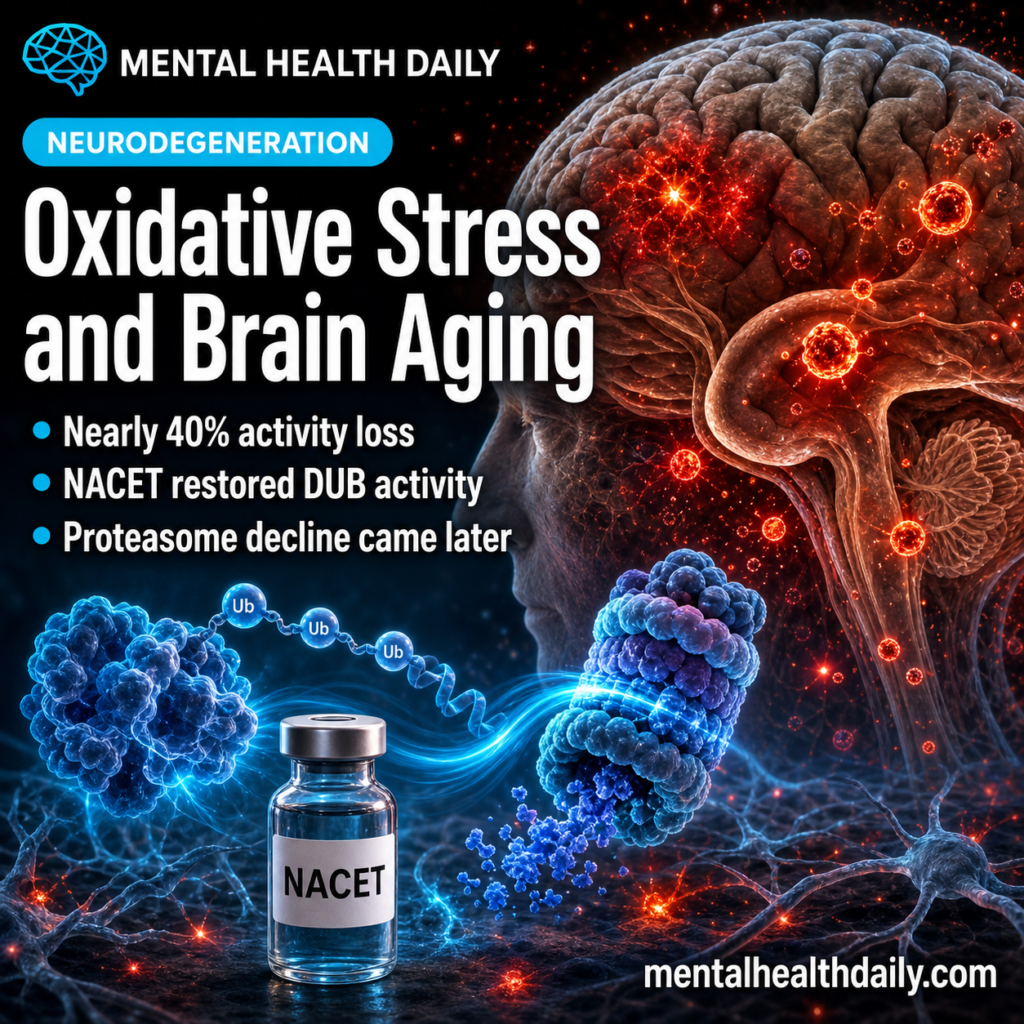
Oxidative Stress Reduced Brain DUB Activity by Nearly 40% With Age

MHD featured image for oxidative stress, DUB activity, NACET, and brain aging.

A Nature Communications study found that old vertebrate brains lost almost 40% of cysteine protease deubiquitylase catalytic activity with age, despite relatively stable protein abundance.1 Antioxidant treatment with NACET restored DUB activity in aging brains, making the finding a reversible enzyme-mechanism result rather than a generic “antioxidants reverse brain aging” claim. Research Highlights DUB activity …

Read more

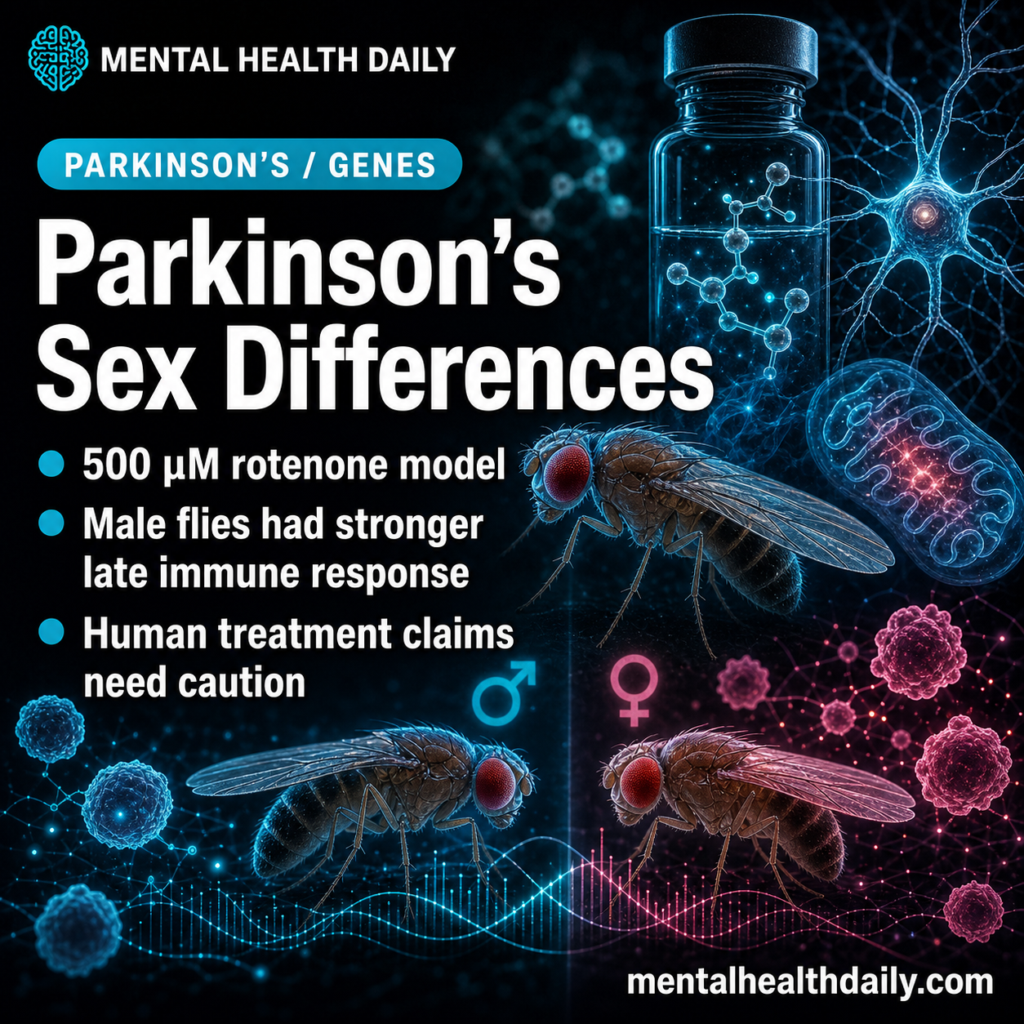
Parkinson’s Sex Differences: Male Flies Show Stronger Rotenone Stress

MHD featured image for Parkinson's sex differences and rotenone immune-gene response in Drosophila.

A 2026 Drosophila Parkinson’s model exposed male and female flies to 500 μM rotenone. By 60 days, male flies had worse survival/climbing than female flies; the paper is a vulnerability screen, not evidence that the same genes are ready human biomarkers.1 Research Highlights 500 μM rotenone split male and female flies: Iyer et al. used …

Read more

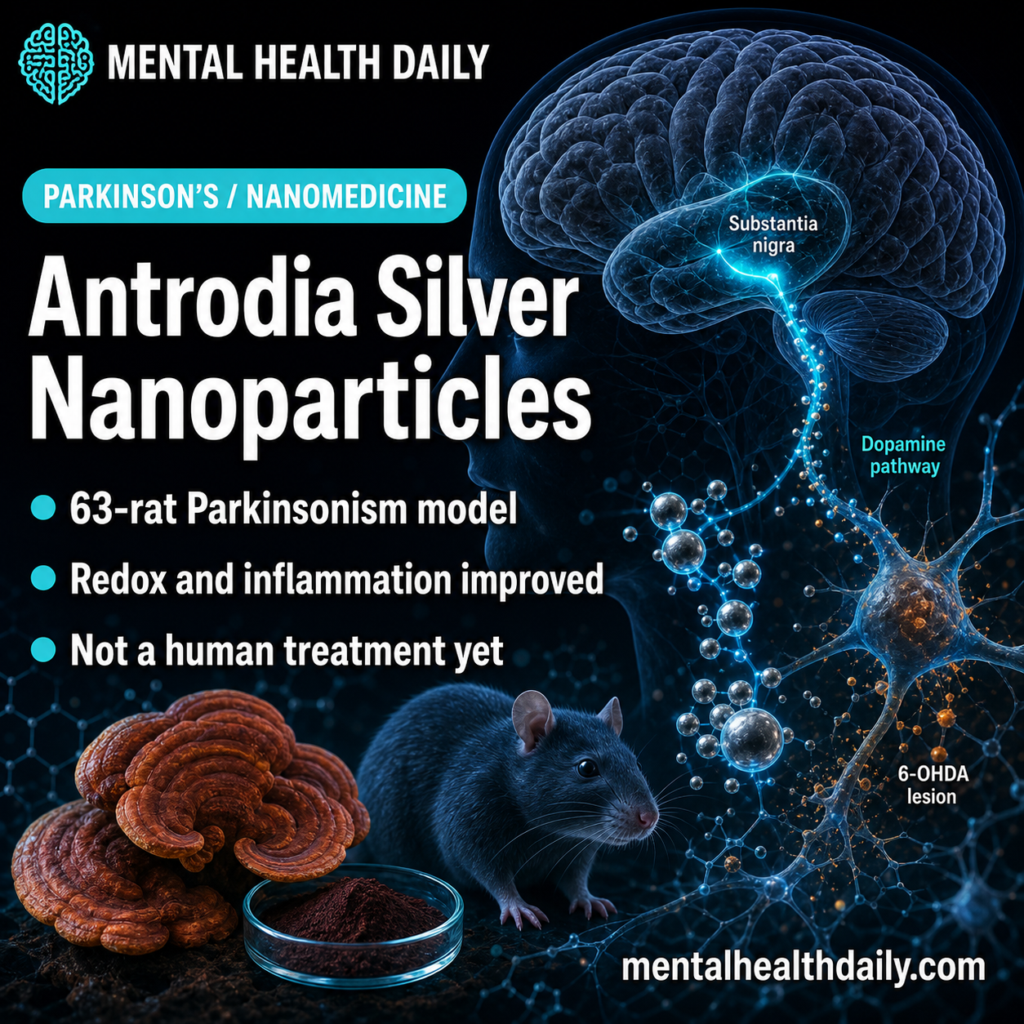
Antrodia Silver Nanoparticles Reduced Parkinsonism Markers in 63 Rats

MHD featured image for Antrodia silver nanoparticles and Parkinsonism oxidative-stress markers.

A 2026 Parkinsonism study involving 63 male rats found that Antrodia cinnamomea plus citrate-stabilized silver nanoparticles reduced 6-OHDA motor, oxidative-stress, inflammatory, α-synuclein, and apoptosis markers, while dopamine and acetylcholine recovery remained nonsignificant. The useful claim is a multitarget preclinical signal, not a Parkinson’s disease treatment recommendation. Research Highlights Combination treatment looked strongest: Tekiner et al. …

Read more