hit counter

bvFTD MRI Atrophy Ratings: Left Orbitofrontal Score Predicted 3.77x Odds
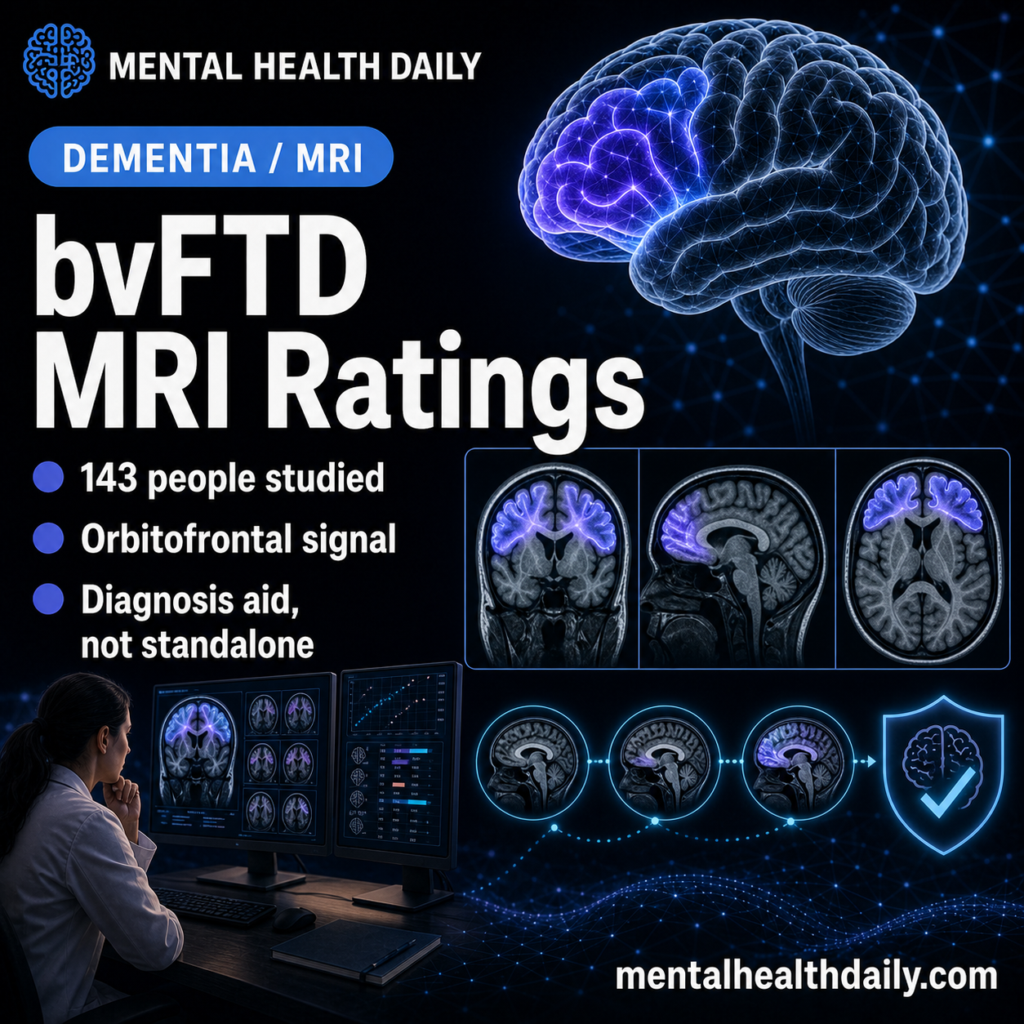
A 2026 behavioral-variant frontotemporal dementia MRI study found that simple visual ratings of orbitofrontal and frontoinsular brain atrophy helped separate probable from possible bvFTD, with baseline left orbitofrontal atrophy predicting 3.77-fold higher odds of probable bvFTD classification.1 Research Highlights 143 people were rated: the study included 93 probable bvFTD cases, 15 possible bvFTD cases, and …
Read more

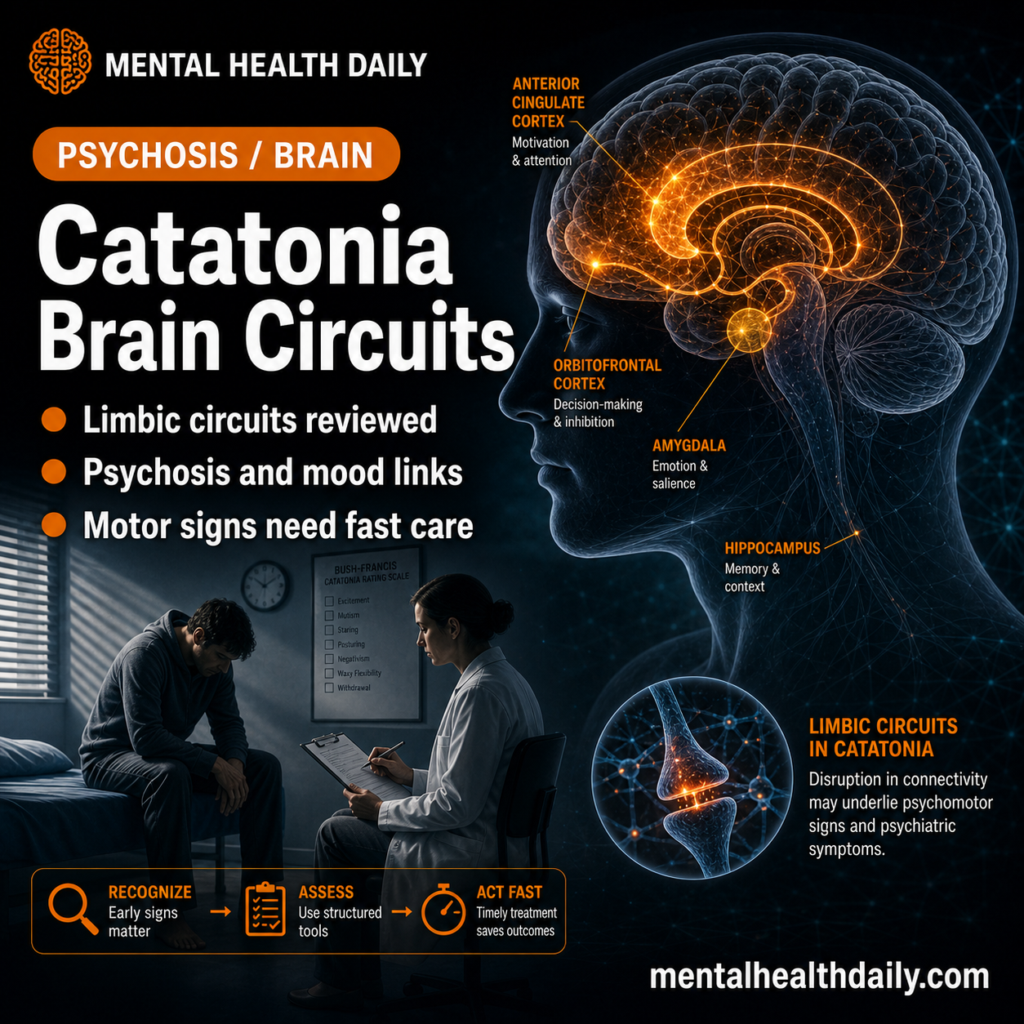
Catatonia Brain Circuits: Limbic System Review

MHD featured image for catatonia, limbic-system brain circuits, and psychomotor shutdown.

A 2026 systematic review argues that catatonia should be read as a limbic-cortical circuit syndrome, with motor shutdown tied to brain systems for threat, salience, motivation, and emotional regulation. Research Highlights 20 studies met criteria: the 2026 review screened 1,792 records, assessed 54 full texts, and included 20 articles: 13 observational studies and 7 case …

Read more

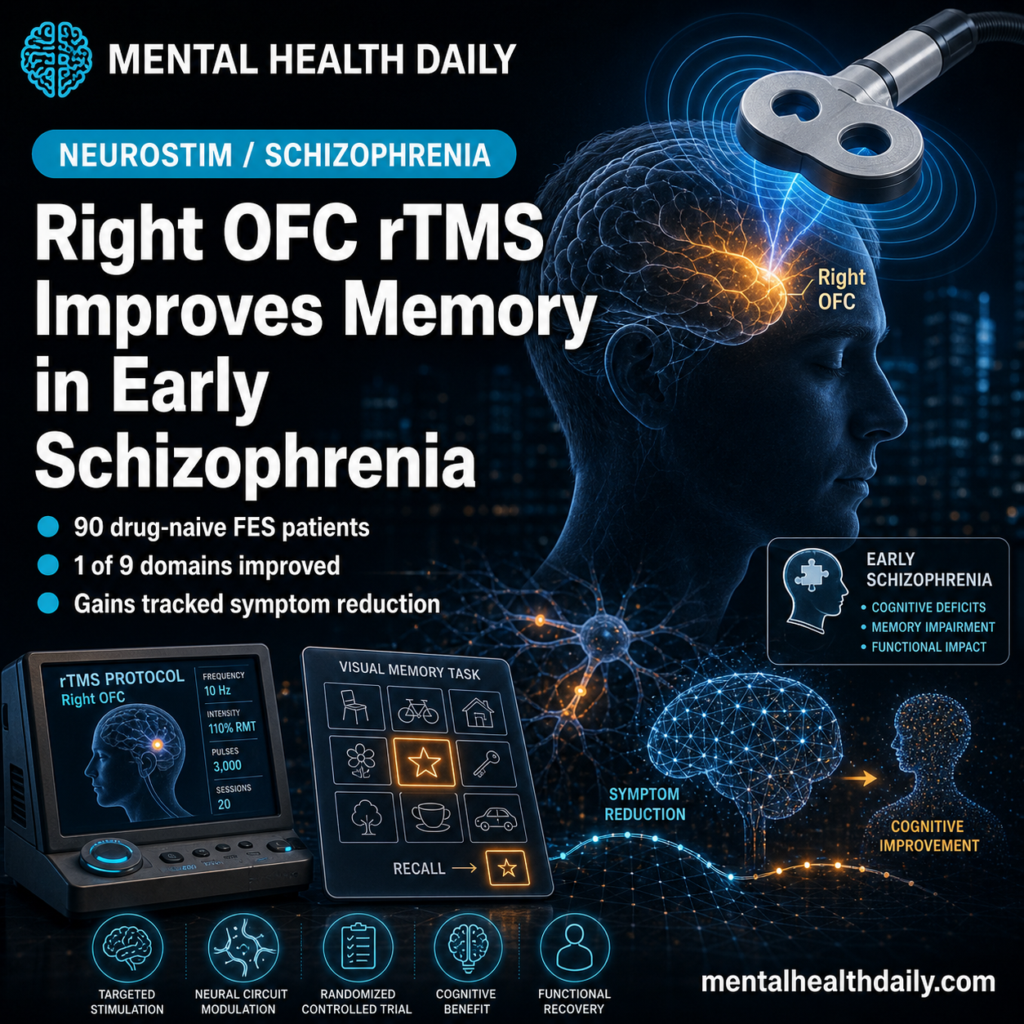
Right OFC rTMS Improves Memory in Early Schizophrenia

Editorial card showing a coronal brain section highlighting the right orbitofrontal cortex with a TMS coil, illustrating the first RCT of OFC stimulation in first-episode schizophrenia.

Cognitive impairment in first-episode schizophrenia (FES) is the symptom that does the most work blocking employment, relationships, and independent living — and the symptom current antipsychotics barely move. A 2026 RCT by Hu et al. in Psychological Medicine tested whether 20 sessions of low-frequency rTMS targeting the right orbitofrontal cortex (OFC) could improve cognition where …

Read more

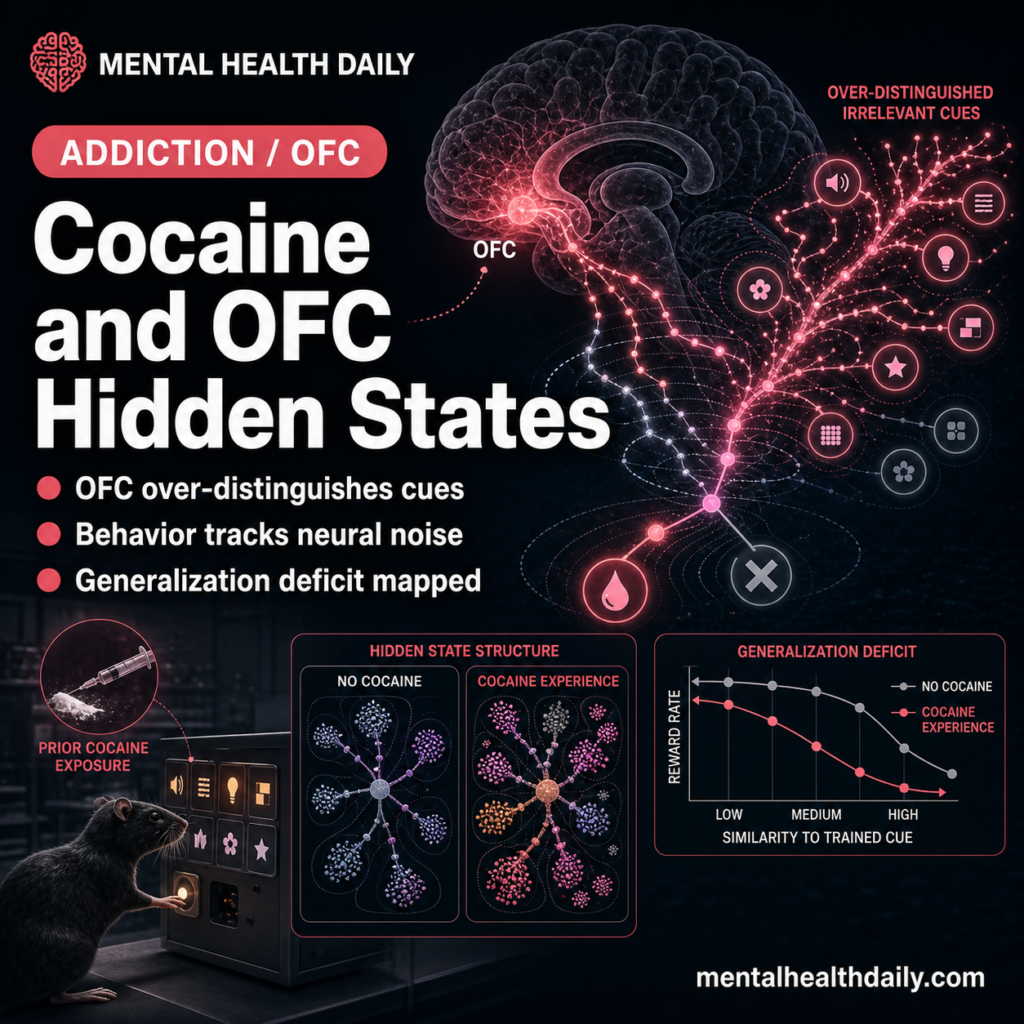
Prior Cocaine Use Disrupts Orbitofrontal Hidden-State Coding

MHD featured image for Prior Cocaine Use Disrupts Orbitofrontal Hidden-State Coding.

A 2026 eLife study recorded 3,881 lateral orbitofrontal cortex units in rats and found that prior cocaine use made the OFC over-distinguish task positions that controls treated as functionally equivalent. The headline result was not gross task failure: cocaine-experienced rats still performed the odor task, but their OFC ensembles showed higher S1-vs.-S2 decoding than sucrose …

Read more

tDCS of the DLPFC Treats Anhedonia in Depression & Improves Social Functioning (2024 Study)

In the quest to find more effective treatments for depression, particularly the challenging symptom of anhedonia, Transcranial Direct Current Stimulation (tDCS) emerges as a promising option. This non-invasive brain stimulation technique targets specific brain regions to modulate activity and potentially alleviate symptoms. A recent study has shed light on the efficacy and safety of targeting …

Read more

Proton Pump Inhibitors (PPIs) May Treat OCD via Neuronal pH & Dopamine Modulation (2024 Study)

Obsessive-compulsive disorder (OCD), a prevalent neuropsychiatric condition, presents significant treatment challenges due to its varied symptom patterns and poor response to traditional medications. Recent research has revealed a novel approach to treating OCD, focusing on the interplay between dopamine D2 receptor (D2R) agonists and proton pump inhibitors (PPIs). Highlights: OCD’s Complex Treatment Landscape: Traditional treatments …

Read more