hit counter

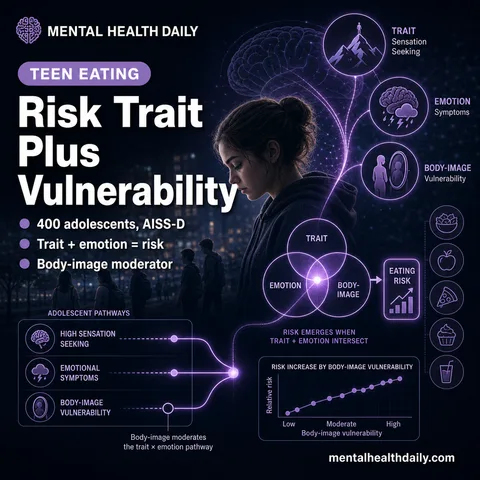
Sensation Seeking Predicts Disordered Eating in Teens

Photoreal illustration of a teenager with overlapping symbols of food and personality traits, conveying sensation-seeking eating-disorder risk.

Sensation seeking has long been linked to risky behaviors in teens, but its role in eating-disorder psychopathology has been mixed. A 2026 study by Bogner and colleagues clarifies the picture in 400 German adolescents: sensation seeking matters for disordered eating, but the effects are moderated by weight status and emotional symptoms.1 Research Highlights Sensation seeking …

Read more

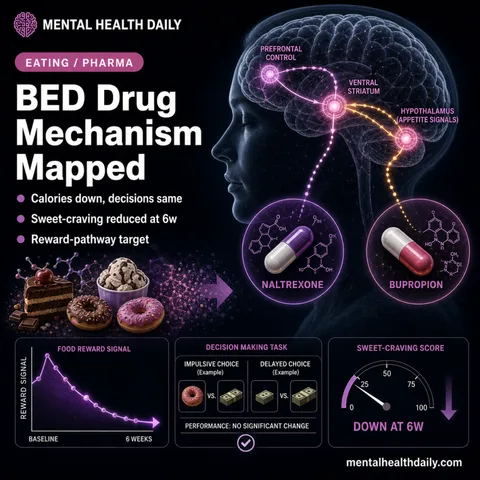
Naltrexone/Bupropion Reduced Food Intake in Binge-Eating Lab Study

Photoreal illustration of brain reward circuitry overlaid on imagery of palatable food, conveying pharmacological reduction of consummatory reward.

Lisdexamfetamine remains the only FDA-approved medication for binge-eating disorder — a serious condition affecting roughly 1.2% of adults. A 2026 human laboratory study by McKee and colleagues tests whether naltrexone/bupropion, already approved for obesity, reduces the food-reward mechanisms that drive binge episodes.1 Research Highlights Binge-eating disorder (BED) is the most common eating disorder in the …

Read more

Lifestyle & Health Habits of People with OCD: Lack of Exercise, Poor Diets, Bad Sleep (2024 Study)

Obsessive-compulsive disorder (OCD) is more than a mental health issue; it’s a condition that can influence the physical health and lifestyle habits of those it affects. A recent international survey shed light on the intricate relationship between OCD and various health-related issues, highlighting the importance of addressing lifestyle habits alongside mental health treatment. By exploring …

Read more

Obesity & Endocrine-Disrupting Chemicals: Bisphenols & Phthalates (2024 Review)

In the quest to understand the alarming rise in obesity rates worldwide, recent research has pointed towards a surprising culprit: endocrine-disrupting chemicals (EDCs), such as bisphenol A (BPA) and phthalates. These chemicals, ubiquitous in our environment, have been linked to significant disturbances in the hormonal regulation of body mass and adipose tissue function. Highlights: Endocrine …

Read more

Probiotics & Synbiotics for the Metabolic Side Effects of Psychiatric Medications: Are They Effective? (2024 Review)

Patients with severe mental illnesses (SMI), such as schizophrenia and chronic depression, often face the challenge of managing weight gain and metabolic complications, side effects commonly associated with antipsychotics and antidepressants. These medications are known to induce increased appetite and weight gain, leading to long-term metabolic syndromes. Recent studies have evaluated into the role of …

Read more

Semaglutide & Empagliflozin May Treat Obesity-Related Cognitive Impairment (Mouse Study)

Obesity now affects over 650 million adults globally and is a major risk factor for various chronic diseases including cognitive decline and impairment. Recent evidence shows a link between obesity, reduced brain volume and neuronal loss, increased dementia risk, and impaired learning, memory and cognition. Preliminary evidence suggests that weight loss drugs like semaglutide may …

Read more

Phentermine For Depression: Does It Improve Mood?

Phentermine is a sympathomimetic amine [derived from amphetamine] initially approved by the FDA in 1959 for the treatment of obesity.  Its usage in the treatment of obesity was considered ideal due to the fact that phentermine suppressed appetite through central modulation of norepinephrine, and peripherally mobilized fat stores through catecholaminergic upregulation. That said, in the …

Read more