hit counter

Drug Addiction Linked to Cortical Thinning in 65 of 68 Brain Regions

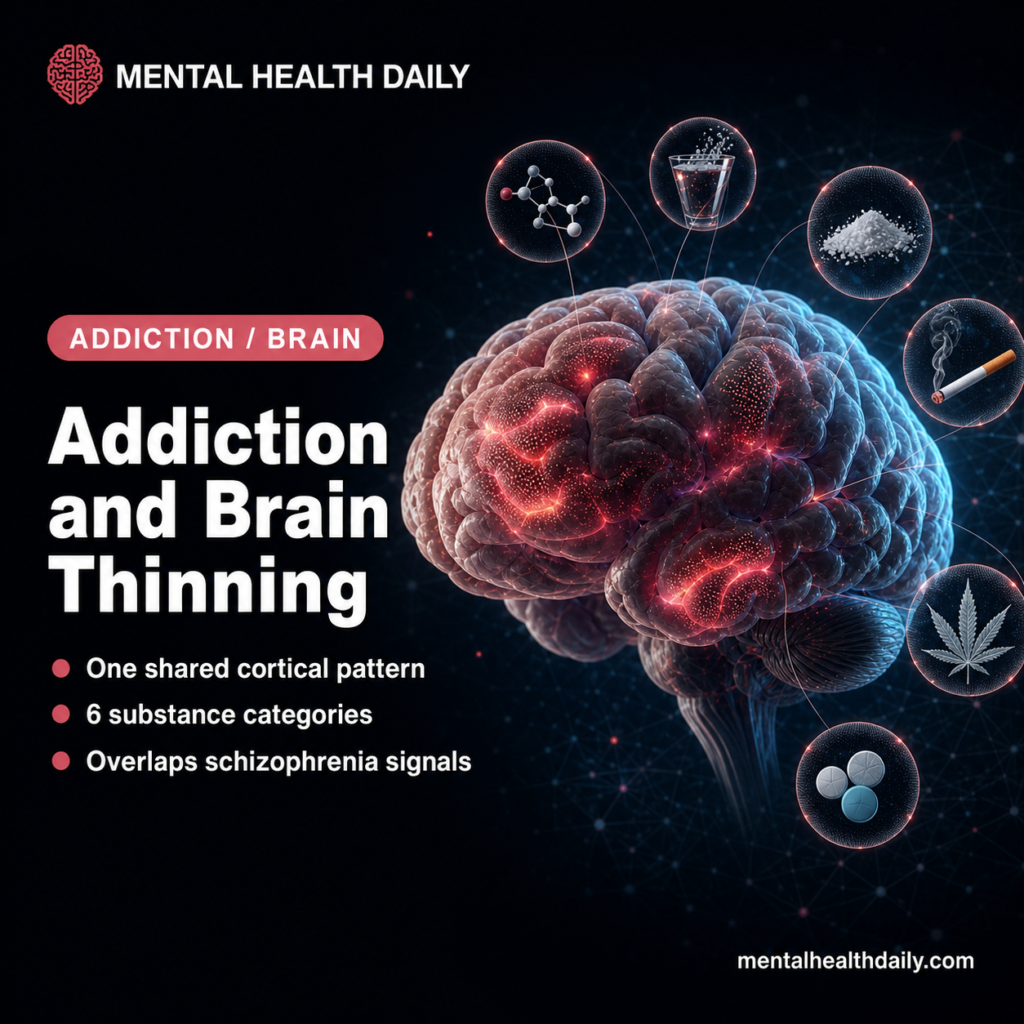
Photoreal illustration of a human brain with cortical regions highlighted across substance categories, representing the cross-substance morphometric pattern in addiction.

Whether alcohol, cocaine, nicotine, and cannabis damage the same brain regions or different brain regions has been hard to settle in the addiction-imaging literature. A 2026 ENIGMA Addiction analysis by Georgiadis et al. — pooling 4,733 brains across 51 sites — now has an answer. Research Highlights Across 2,782 people with substance use disorder (SUD) …

Read more

Pharmaceutical & Recreational Drug Use During & After COVID-19 Pandemic (2020-2023 in Latvia) (2024 Study)

The COVID-19 pandemic has undeniably transformed various facets of human life, including our health behaviors and substance consumption patterns. Through the lens of wastewater-based epidemiology (WBE), a study conducted in Riga, Latvia, from December 2020 to July 2023, sheds light on how the pandemic and subsequent restrictions have impacted the use of pharmaceuticals and recreational …

Read more

CNQX as a Potential Drug Addiction Treatment via AMPA & Kainate Receptors (Glutamate) (2023 Study)

The journey to overcome addiction is fraught with challenges, not least due to the limited options available for pharmacological intervention. In recent research, the focus has shifted toward understanding the role of glutamate, a key neurotransmitter in the brain, in the development and persistence of addictive behaviors. One compound, CNQX, which antagonizes certain glutamate receptors, …

Read more

Genetics of Tobacco Use Disorder (TUD) & Nicotine Addiction (2024 Study)

Tobacco use is a complex behavior influenced by both environmental factors and genetic predispositions. A recent study leveraging the UCLA ATLAS biobank explored the genetic underpinnings of Tobacco Use Disorder (TUD) and its systemic health effects using a Polygenic Score (PGS). Highlights: Genetic Underpinnings of Tobacco Use: The study used a European ancestry-derived PGS to …

Read more

Epigenetics & Nicotine Addiction: Effects on Genes & Potential Treatments (2023)

Nicotine addiction is not just a habit; it’s a complex interplay of molecular changes altering the brain’s function and structure. Recent research sheds light on how nicotine interacts with our genetic makeup, leading to persistent cravings and relapse. Highlights: Nicotine & Epigenetic Modification: Nicotine alters the way genes are expressed in the brain, affecting behavior …

Read more

Hidden Benefits Of Nicotine on The Brain

When most people think of nicotine, they think of smoking cigarettes or other tobacco products.  Since tobacco products are linked to various types of cancer (e.g. lung cancer from smoking), many people assume that nicotine is inherently evil.  While nicotine is considered one of the most addictive drugs, there isn’t significant evidence supporting the idea …

Read more