hit counter

REDDI MEG Classifier Separated 4 Neurodegenerative Diseases at 0.81
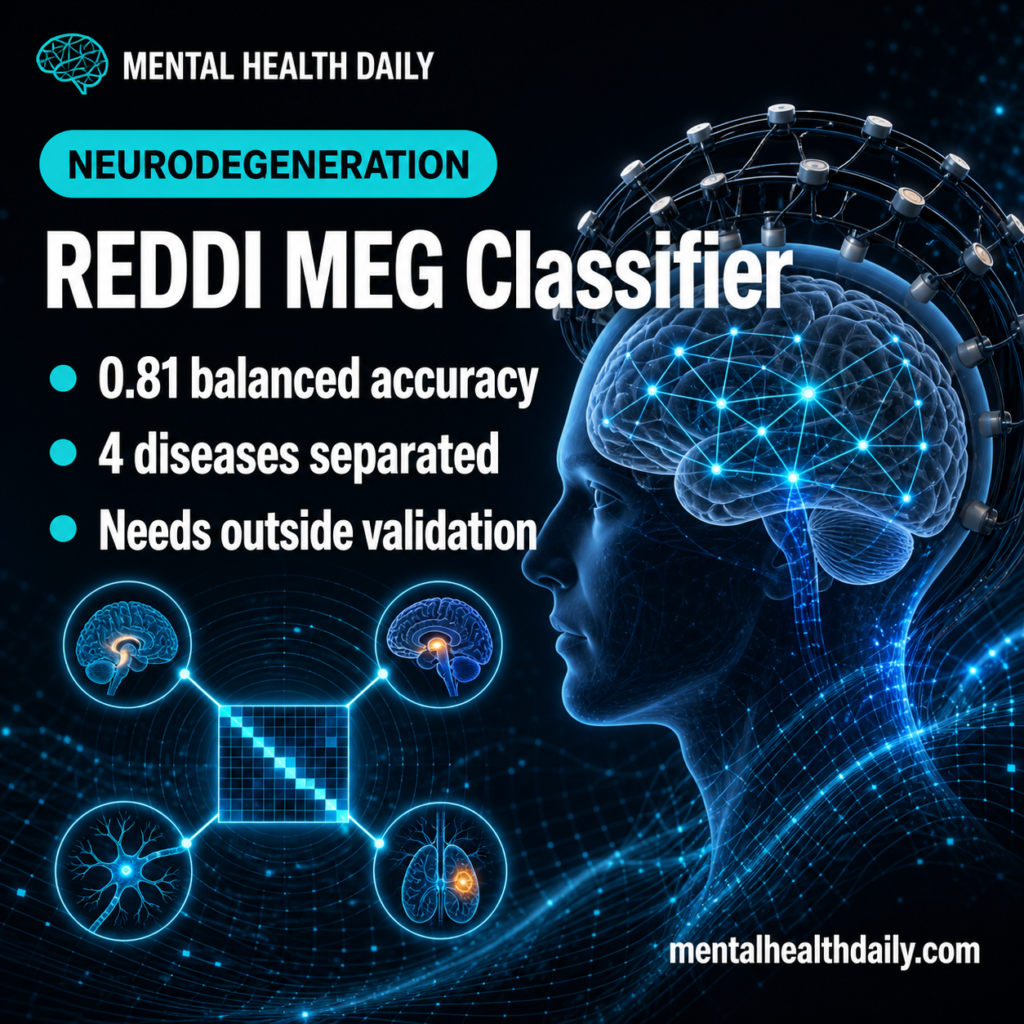
MHD featured image for REDDI MEG differential diagnosis research.

A 2026 medRxiv preprint found that REDDI, a resting-state magnetoencephalography machine-learning pipeline, separated mild cognitive impairment, multiple sclerosis, Parkinson’s disease, and amyotrophic lateral sclerosis with 0.81 ± 0.04 balanced accuracy across 5 folds.1 That is a meaningful jump over the prior 67.1% MEG benchmark, but it is still research-stage decision support rather than a clinical …
Read more

Caffeine to Prevent Alzheimer’s Disease via Adenosine A2A Receptors? (2023 Review)

Alzheimer’s Disease (AD), a prevalent form of dementia, poses significant challenges for individuals and healthcare systems worldwide. Current treatments primarily offer symptomatic relief without altering the disease’s progression. However, emerging research suggests that caffeine, a widely consumed psychoactive substance, may have neuroprotective properties against AD. Highlights: Alzheimer’s Disease is the most common form of dementia, …

Read more

Hidden Benefits Of Nicotine on The Brain

When most people think of nicotine, they think of smoking cigarettes or other tobacco products.  Since tobacco products are linked to various types of cancer (e.g. lung cancer from smoking), many people assume that nicotine is inherently evil.  While nicotine is considered one of the most addictive drugs, there isn’t significant evidence supporting the idea …

Read more

MCT Oil Benefits: List Of Scientific Possibilities

MCTs (Medium Chain Triglycerides) are defined as fatty acids comprised of a 6-12 carbon atom aliphatic tail with a glycerol backbone. The fatty acids derived from MCTs are commonly referenced as “MCFAs” or medium-chain fatty acids. MCT oils are most commonly extracted from coconut oil and palm kernel oil and can take a number of different forms. …

Read more

Neuroprotective Agents: List of Drugs & Supplements

Neuroprotective agents refer to substances that are capable of preserving brain function and structure. When the brain is exposed to high levels of oxidative stress, mitochondrial dysfunction, inflammation, various forms of neurotoxicity (e.g. excitotoxicity), and protein deficiencies – neurodegeneration can occur. To prevent or mitigate the effects of any neurodegeneration, strategic administration of a neuroprotective …

Read more