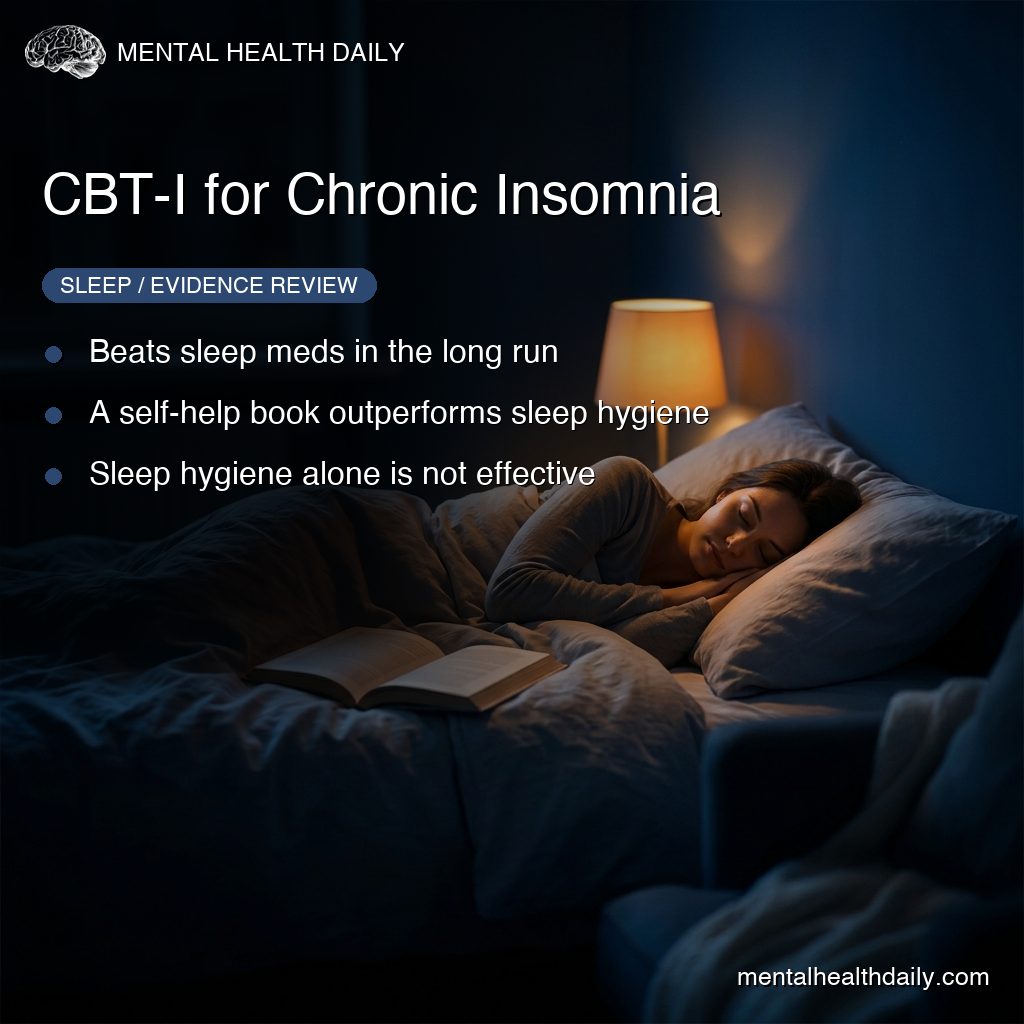
CBT-I: First-Line Insomnia Treatment Most People Don’t Get
CBT-I beats sleep medications long-term and self-help versions work too. Sleep hygiene alone isn’t enough — the two are routinely conflated.
Valerian, a herb long cherished for its sedative properties, stands at the crossroads of traditional medicine and modern scientific inquiry. Despite its widespread use across cultures for promoting sleep and alleviating insomnia, the scientific community remains divided over its efficacy. Highlights: Historical Significance: Valerian has been used since the times of ancient Greece and Rome …
In the quest to effectively treat insomnia, a condition plaguing millions worldwide, scientists are exploring innovative treatments beyond traditional medication. Transcranial Direct Current Stimulation (tDCS) emerges as a promising intervention, offering a non-invasive method to modulate brain activity and enhance sleep quality. A recent study suggests tDCS may treat stress-related sleep disturbances and highlights the …
Recent research has shed light on the potential benefits of cannabis-based medicinal products (CBMPs) in treating Generalized Anxiety Disorder (GAD), especially in patients with sleep disturbances. Recent research explored the effectiveness of CBMPs on GAD, the role of sleep quality in treatment outcomes, and the incidence of adverse events. Highlights: CBMPs Show Promise in Treating …
Test anxiety among college students is a significant concern, affecting their mental and physical well-being. A new study suggests that a probiotic/psychobiotic intervention (Lactobacillus plantarum) could significantly alleviate anxiety, depression, and insomnia, with changes observed in the gut microbiota and fecal metabolites. Highlights: Prevalence of Test Anxiety: 20%-40% of college students experience test anxiety, often …
Gabapentin, sold under the brand name “Neurontin,” is a drug that was first approved by the United States FDA in 1993 as an adjunct treatment for partial seizures in adults. Thereafter, gabapentin’s indication as a treatment for partial seizures would be extended in 2000 to pediatrics, and subsequently, it would receive FDA approval for the …
Kratom (Mitragyna speciosa) is an evergreen tree from the Rubiaceae (coffee) family that produces leaves containing numerous psychoactive compounds, most notably including indole alkaloids: 7-hydroxymitragynine, mitraphylline, and mitragynine. When ingested by humans, the aforestated indole alkaloids significantly modulate CNS activity primarily via partial agonism of mu-opioid receptors (MORs). In addition, evidence from pharmacodynamic investigations suggests …