hit counter

Epilepsy and Alzheimer’s Blood Biomarkers in Older Adults

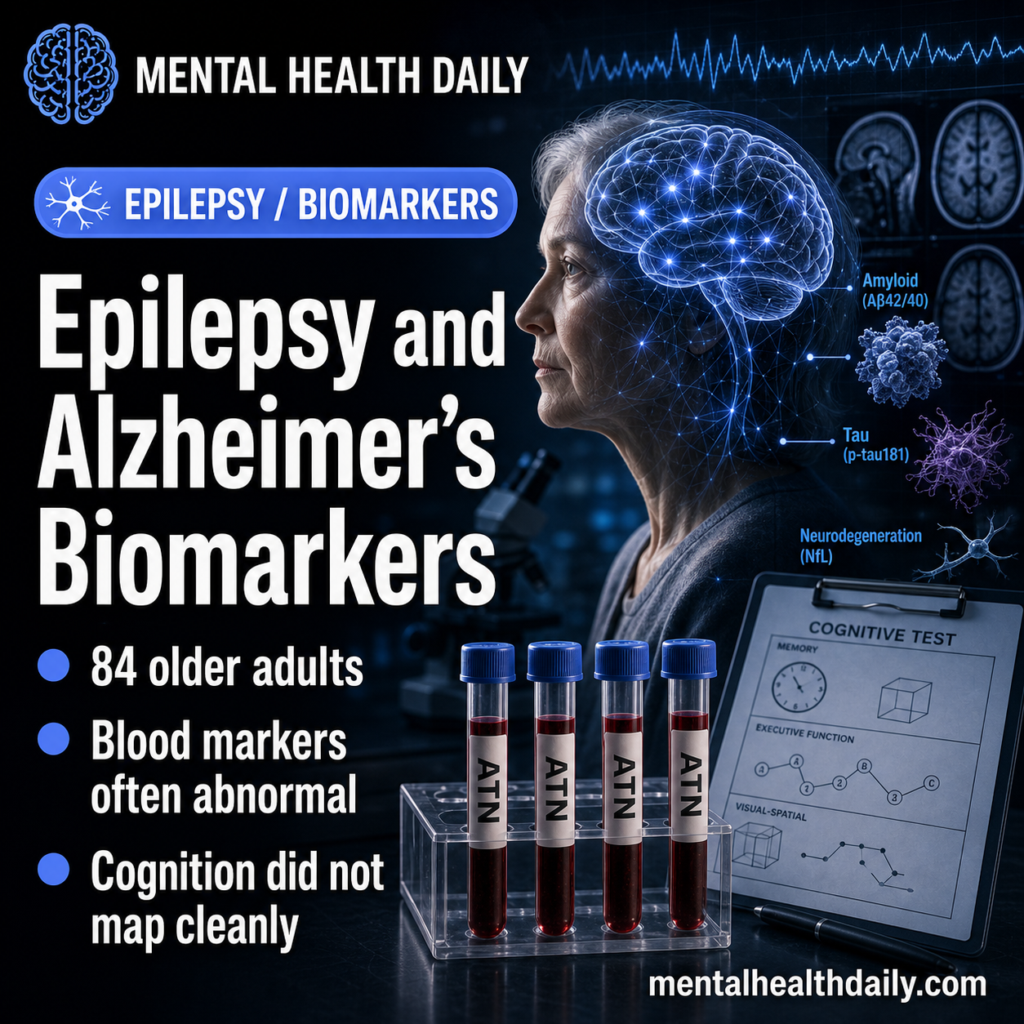
MHD featured image for epilepsy, Alzheimer’s blood biomarkers, and AT(N) profiles in older adults.

A preprint in 84 older adults with epilepsy found that abnormal Alzheimer's-related blood biomarkers were common, but the biomarker categories did not line up neatly with cognitive impairment. Research Highlights Only 32.1% had normal biomarkers: 27 of 84 older adults with epilepsy were A−T−N− using blood-based amyloid, tau, and neurodegeneration markers.1 AD-continuum profiles were common: …

Read more

Bumetanide PROMset Study: 83% Improved in 1 Sensory-Related Domain

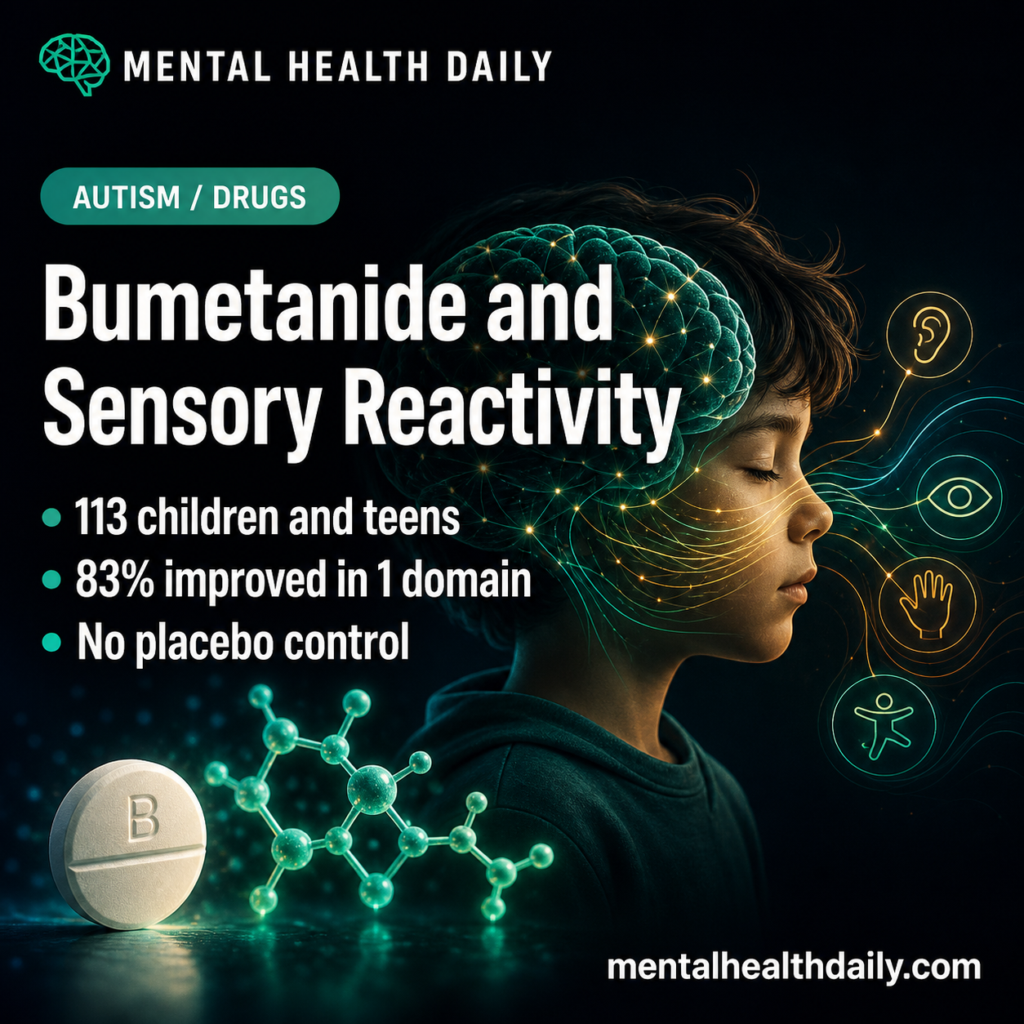
MHD featured image for bumetanide and sensory-related parent-reported outcomes in neurodevelopmental disorders.

A 2026 medRxiv preprint using parent-cocreated sensory-related outcome measures found that 83% of children and teens improved on at least 1 PROMIS domain during 6 months of bumetanide treatment.1 The result is interesting, but the unmasked single-case design means the strongest claim is about sensitive outcome tracking, not definitive bumetanide efficacy. Research Highlights Most participants …

Read more

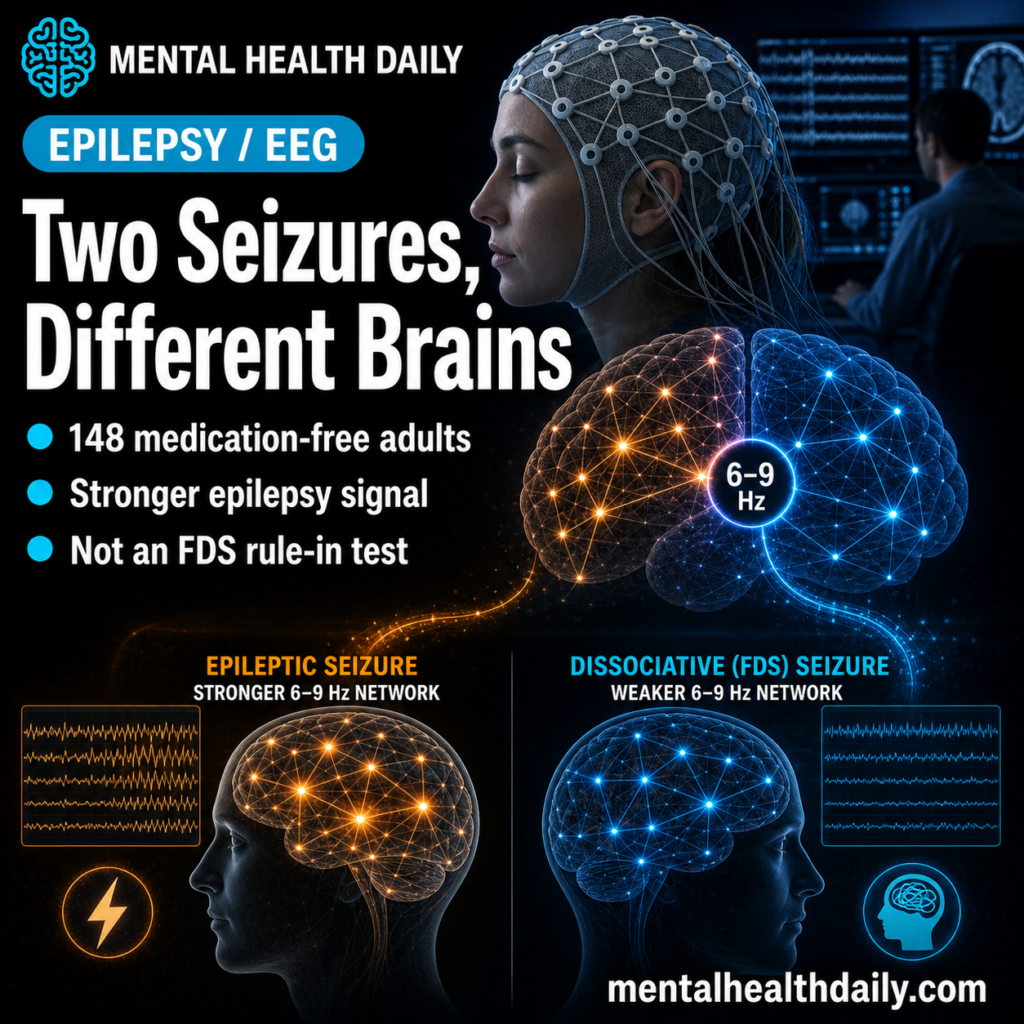
Resting EEG Supports Epilepsy More Than Functional Seizures

Photoreal illustration of EEG waveforms over a stylized brain, conveying network-based discrimination between two seizure-like disorders.

A 2026 diagnostic-accuracy preprint found that resting-state EEG network features separated non-lesional epilepsy from functional/dissociative seizures (FDS) at 67.5% balanced accuracy, but the signal was not symmetrical: sensitivity was 81.8% for epilepsy and only 53.3% for FDS.1 In plain clinical terms, the model looked more useful as an epilepsy-supporting marker than as a positive test …

Read more

Psychedelics vs. Epilepsy & Seizures: Effective Treatment or Exacerbation? (2023 Review)

Psychedelic compounds, long associated with the fringes of medicine and spirituality, are now at the forefront of a radical shift in neurology and psychiatry. Decades of clinical trials have begun to unravel the therapeutic potentials of these substances, revealing promising outcomes in the treatment of various psychiatric disorders. However, a notable gap in this burgeoning …

Read more

New Epilepsy Treatments (2023): Neurostimulation, CBD, Gene Therapy for Seizures

Epilepsy affects over 50 million people worldwide, making it one of the most common neurological disorders globally. For many living with epilepsy, achieving reliable seizure control remains a significant challenge, underscoring the need for continued innovation in treatment approaches. Exciting new developments in the field are providing clinicians with an expanding array of therapeutic options …

Read more

Eating A Ketogenic Diet For Epilepsy & Seizure Reduction

A ketogenic diet involves consumption of foods with high fat (80%), moderate protein (15%), and low carbohydrates (5%).  Consistent intake of high fat, moderate protein foods, with simultaneous avoidance of carbohydrates, allows the body to transition from using glucose (sugar) as a primary source of fuel, to using ketone bodies (commonly called “ketones”).  During ketosis, …

Read more