hit counter

Parkinson’s DBS Impulse Risk: Diffusion MRI Prediction
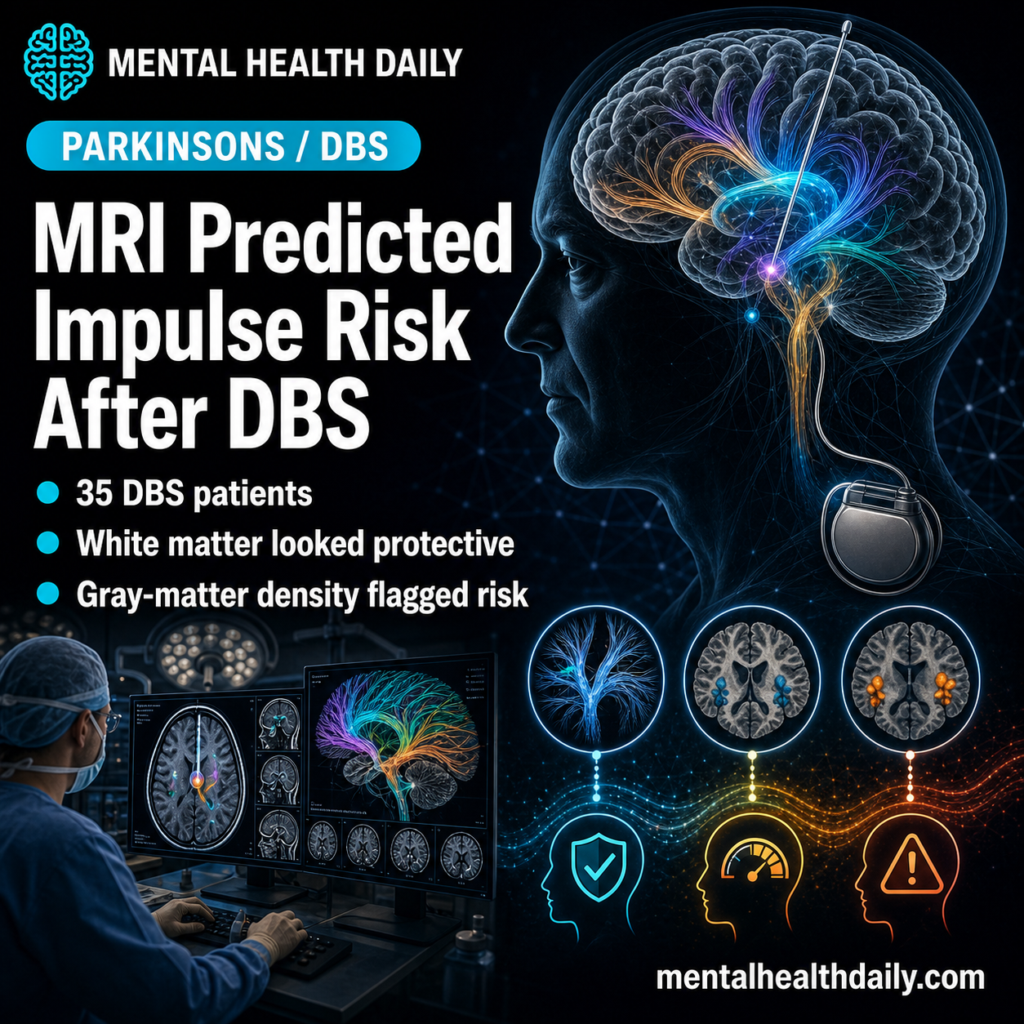
Stylized illustration of a Parkinson's patient brain with overlaid diffusion-MRI tractography showing frontolimbic and executive control fiber bundles, alongside a DBS lead, representing the imaging biomarker question for post-DBS impulse control.

Subthalamic deep brain stimulation (STN-DBS) gives most patients with advanced Parkinson’s disease meaningful motor relief, but a subset develops new or worsened impulse control disorders — pathological gambling, compulsive shopping, hypersexuality, binge eating — while others see preexisting symptoms improve. A 2026 prospective preprint from Loehrer et al. used pre-surgical diffusion MRI to identify microstructural …
Read more

OCD DBS Reduced Y-BOCS 42.9% as GPe Alpha Activity Decreased

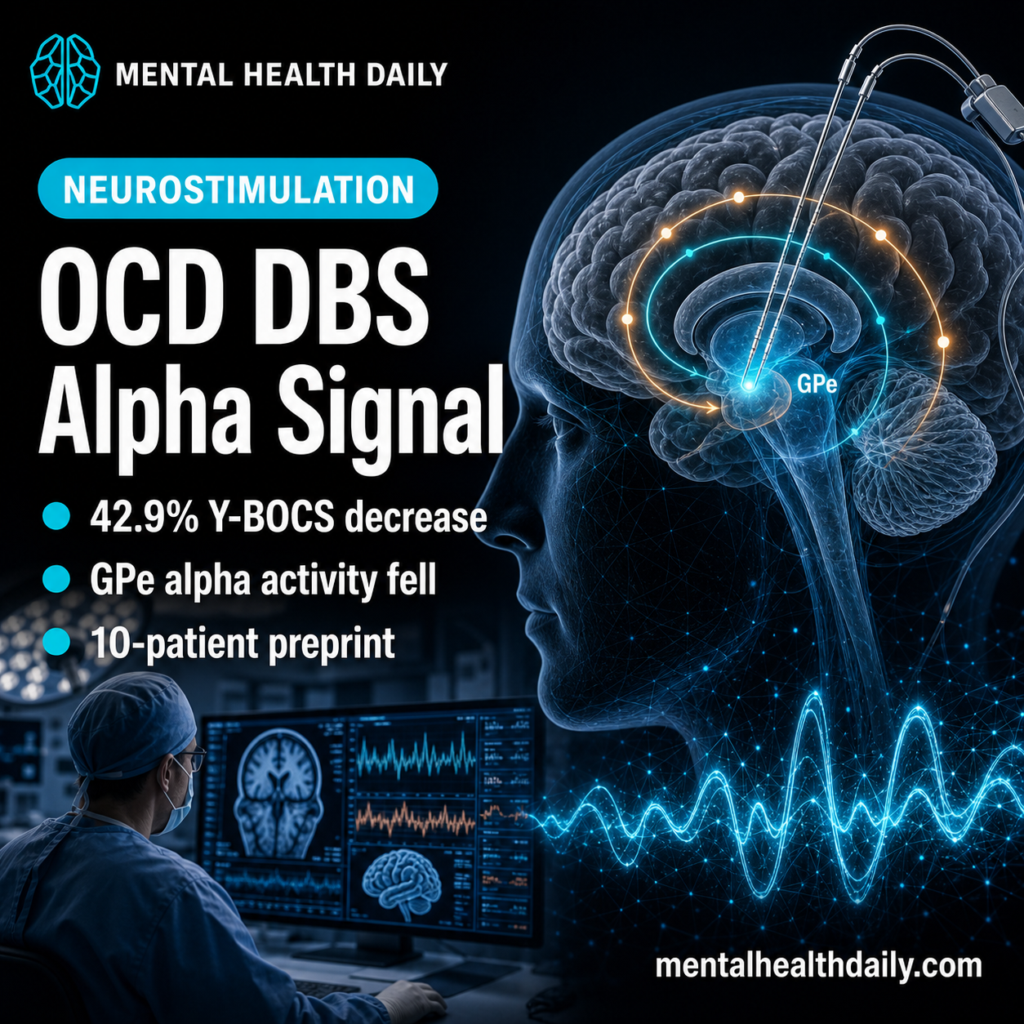
MHD featured image for OCD DBS and GPe alpha activity.

A 2026 medRxiv preprint found that 10 severe obsessive-compulsive disorder patients treated with anterior-limb-of-internal-capsule DBS had a 42.9% average Y-BOCS symptom decrease over 6 months while alpha-band activity in the anterior globus pallidus externus fell.1 The strongest read is a response-marker signal: GPe alpha decreased during effective OCD DBS, but the sample is too small …

Read more

DBS for Cerebellar Ataxia: 27 Patients, Weak Evidence

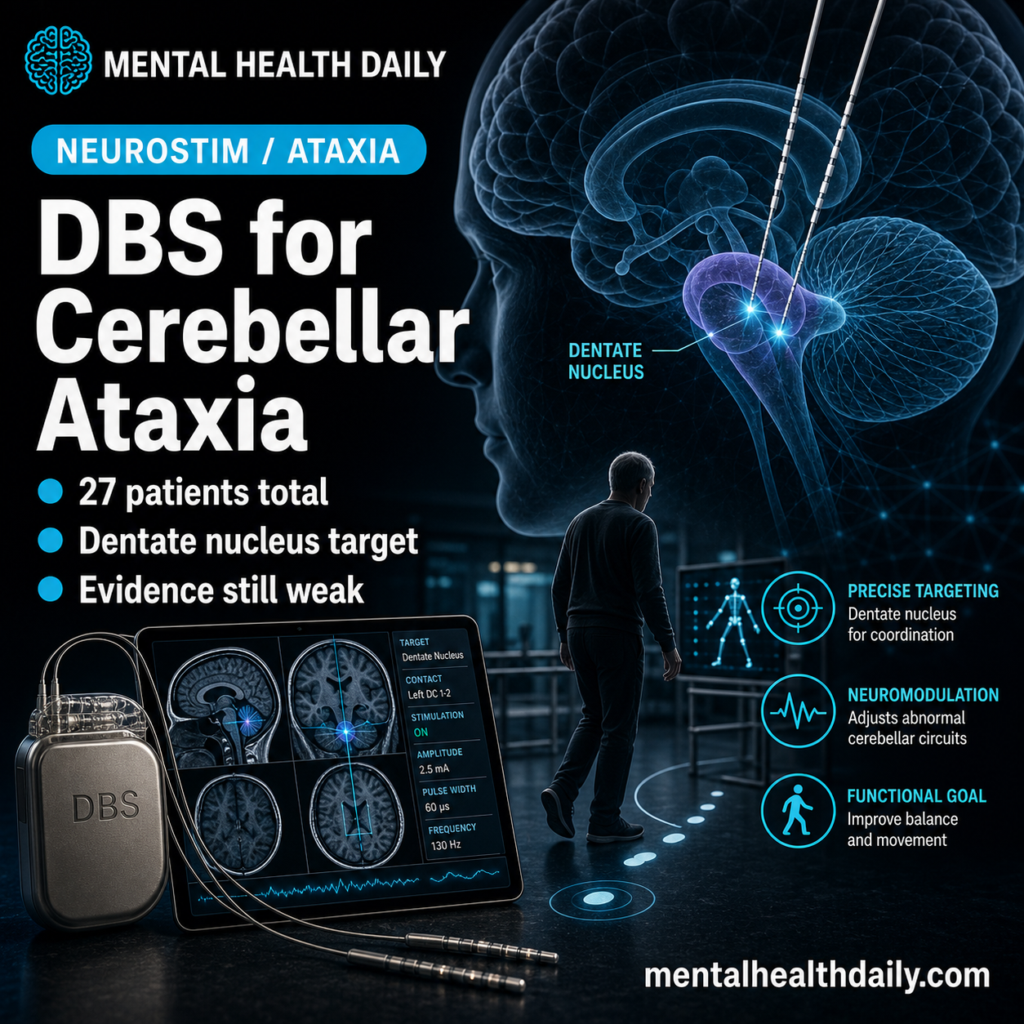
MHD featured image for deep brain stimulation, the dentate nucleus, and cerebellar ataxia.

A 2026 systematic review found 15 clinical reports of deep brain stimulation for cerebellar ataxia, covering only 27 human patients across heterogeneous targets, causes, and outcome measures. Research Highlights The human evidence base was tiny: the review found 27 patients across 15 clinical studies, including 10 case reports, 4 case series, and 1 randomized trial. …

Read more

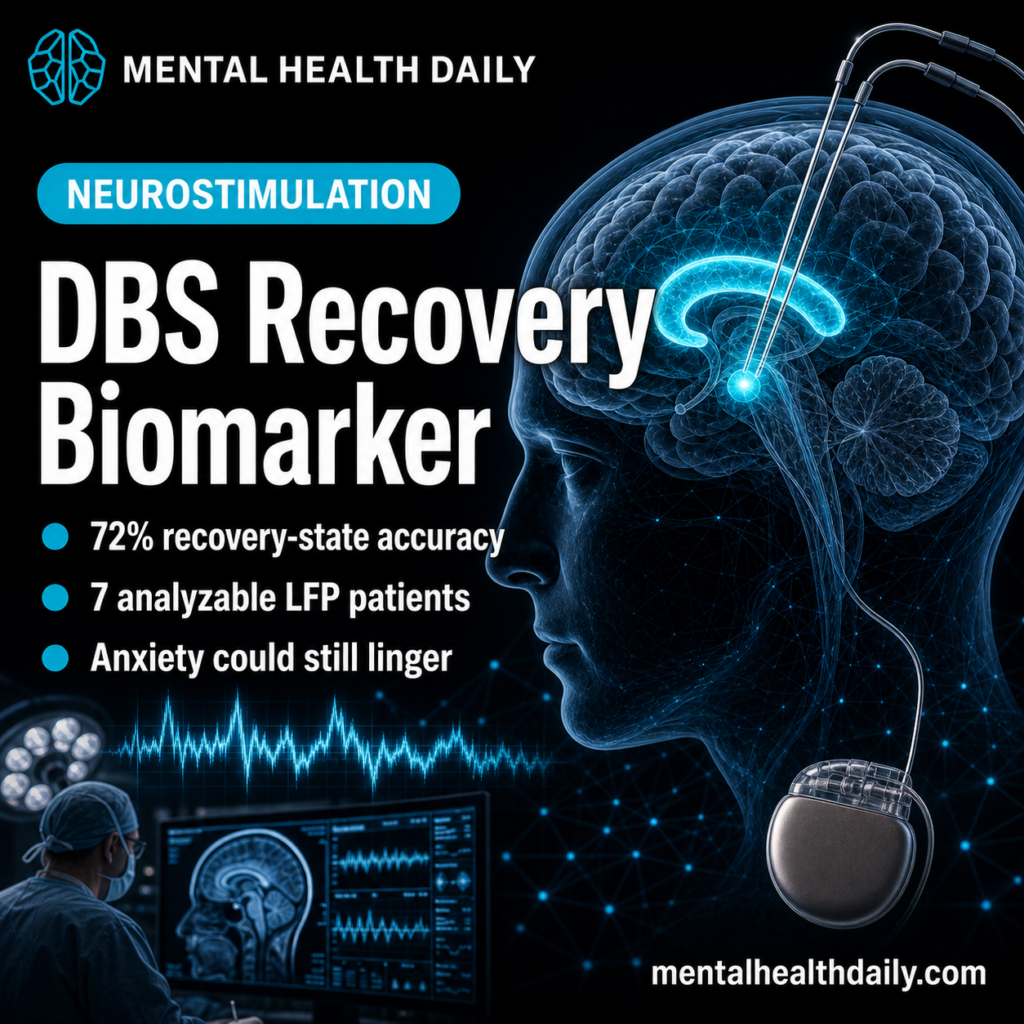
Subcallosal Cingulate DBS Biomarker Predicted Depression Recovery at 72%

MHD featured image for subcallosal cingulate DBS depression biomarker research.

A 2026 medRxiv preprint reported that an at-home subcallosal cingulate cortex deep brain stimulation (SCC DBS) recording system could track stable recovery in severe treatment-resistant depression: in 7 analyzable patients, the local-field-potential biomarker predicted weekly recovery states with 0.72 ± 0.16 accuracy.1 The useful claim is not that brain recordings can diagnose depression broadly; it …

Read more

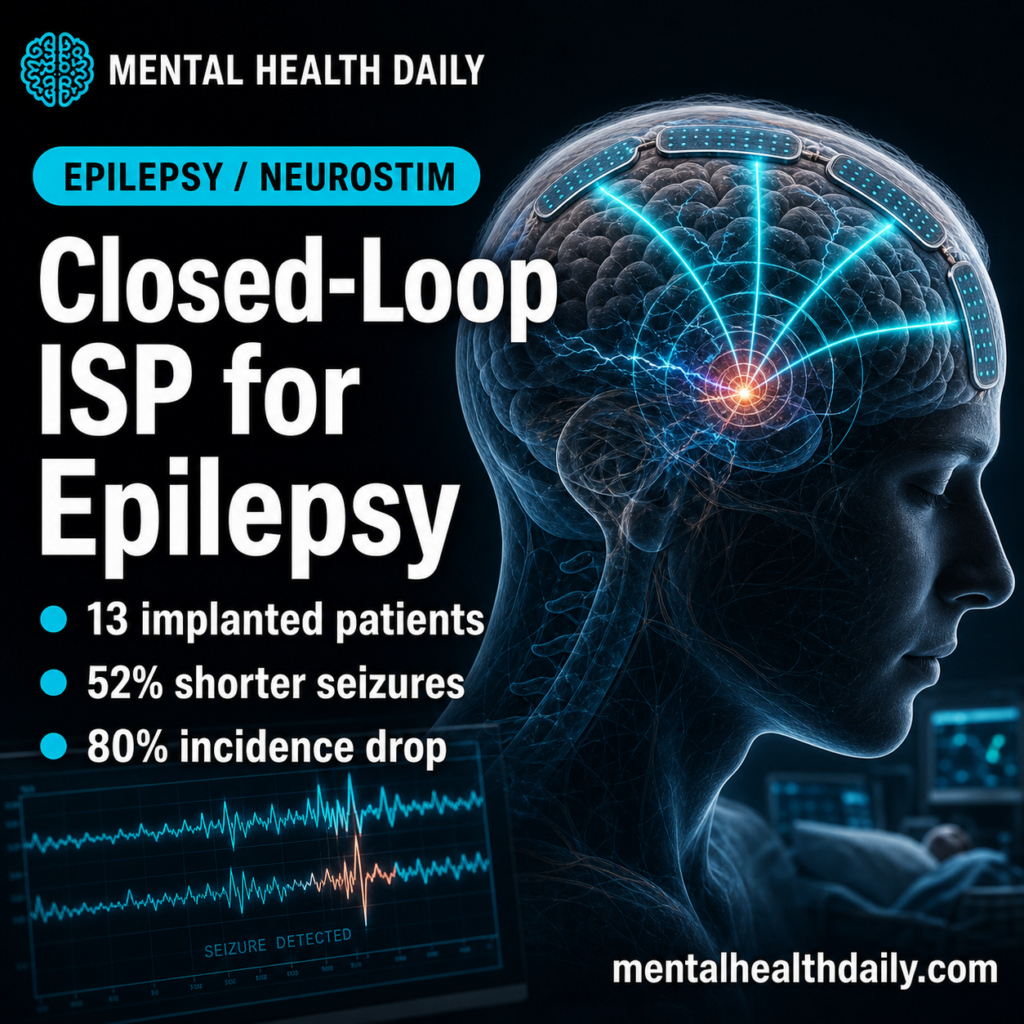
Closed-Loop Subgaleal ISP Reduced Epilepsy Seizure Incidence 80%

Editorial card showing subgaleal electrode strips, closed-loop seizure detection, and focused neurostimulation for therapy-resistant epilepsy.

A 2026 first-in-human medRxiv preprint reported that closed-loop subgaleal intersectional short-pulse stimulation shortened stimulated seizures by 52% on average and reduced seizure incidence by 80.9% after 48 hours in 5 high-frequency therapy-resistant epilepsy patients. The signal is promising because it combines responsive seizure detection with electrode strips placed under the scalp rather than electrodes implanted …

Read more

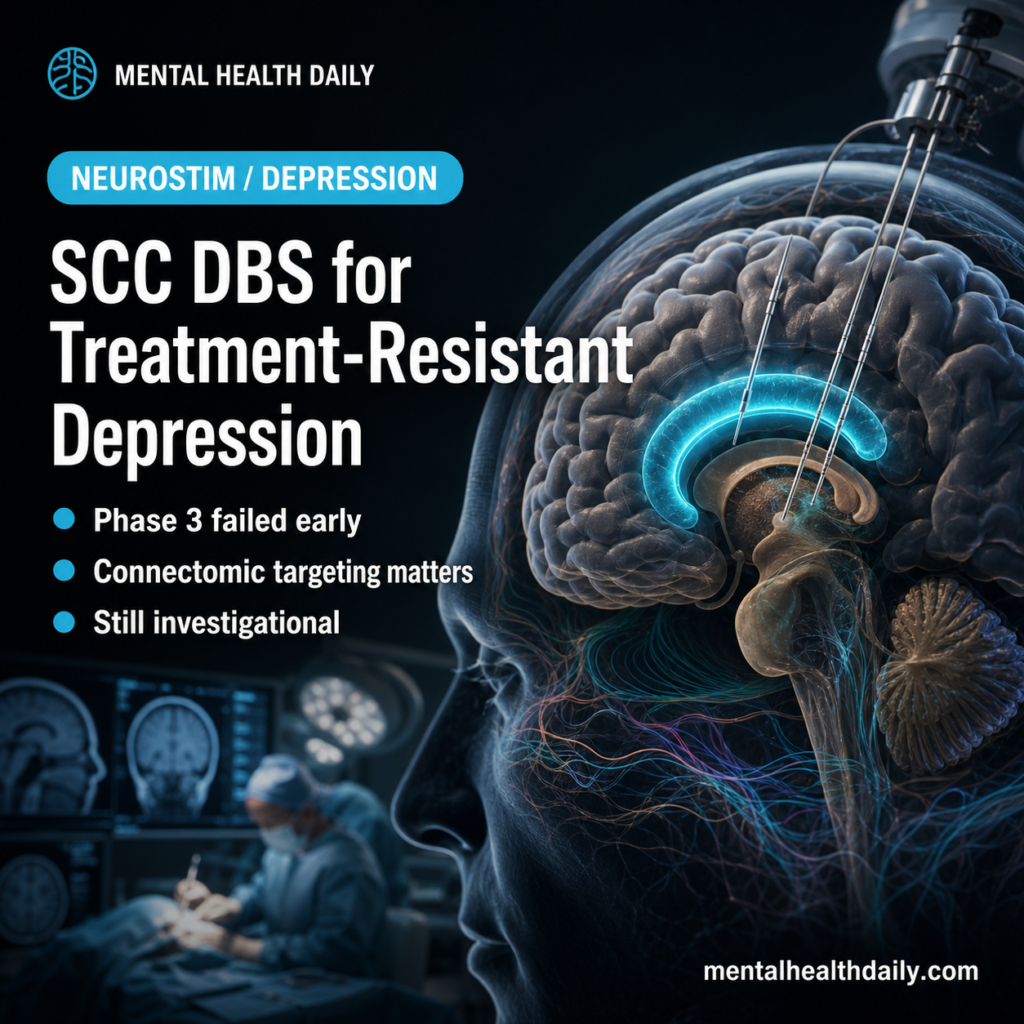
Subcallosal Cingulate DBS for Treatment-Resistant Depression

MHD featured image for Subcallosal Cingulate DBS for Treatment-Resistant Depression.

A 2026 systematic review of subcallosal cingulate (SCC) functional connectivity found 28 qualifying resting-state fMRI studies in depression: 21 rTMS/iTBS studies, 4 ECT studies, 3 focused-ultrasound studies, and 0 DBS or tDCS studies.1 That number is the useful correction: SCC DBS may still be biologically plausible, but the current fMRI connectivity literature mostly explains noninvasive …

Read more

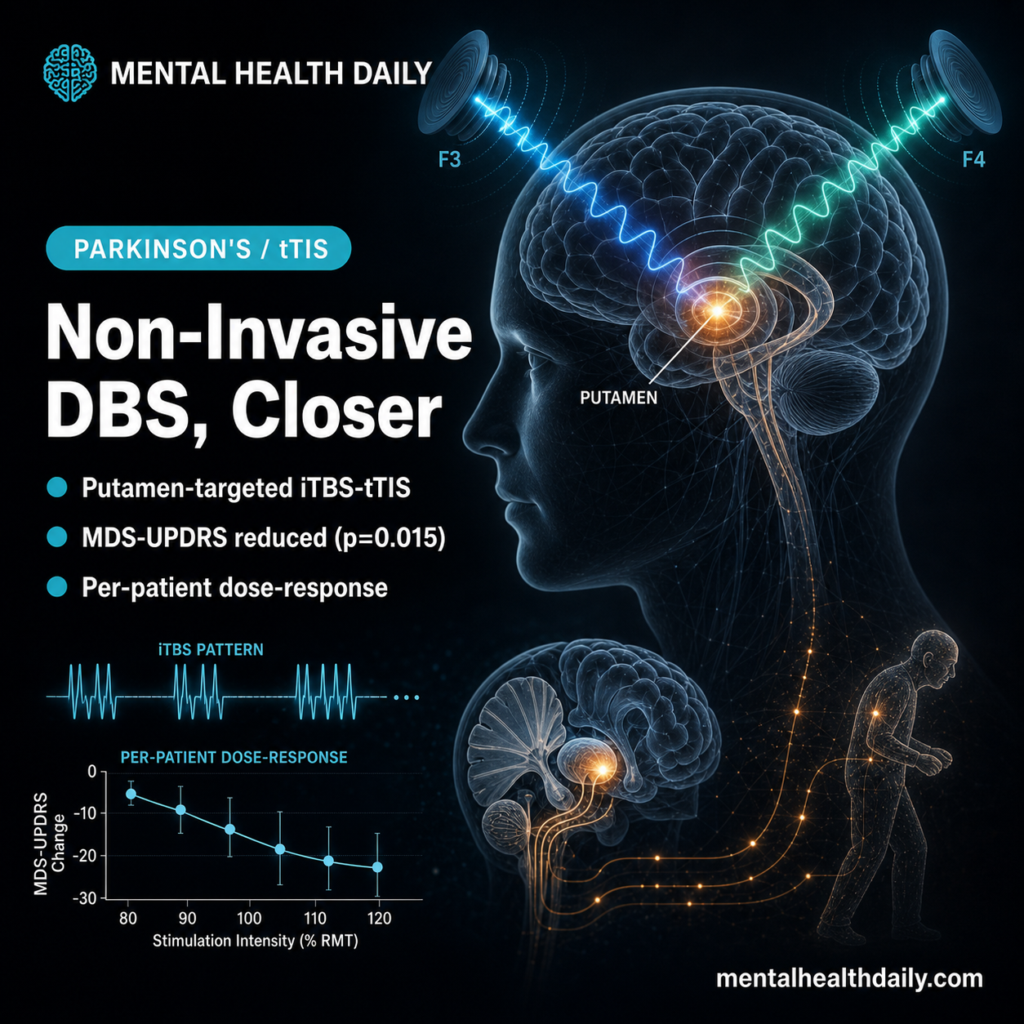
Transcranial Temporal Interference Stimulation (tTIS) May Improve Parkinson’s Motor Symptoms

Photoreal illustration of two interfering electric fields converging at deep brain regions, conveying non-invasive deep stimulation in Parkinson's.

Deep brain stimulation works for Parkinson’s, but it requires implanted electrodes. A 2026 randomized crossover trial by Stalter and colleagues tested whether transcranial temporal interference stimulation — a non-invasive technique designed to reach deep targets without exciting overlying cortex — can move the needle on motor symptoms when aimed at the putamen.1 Research Highlights Transcranial …

Read more