cognitive impairment
Published research on cognitive impairment.
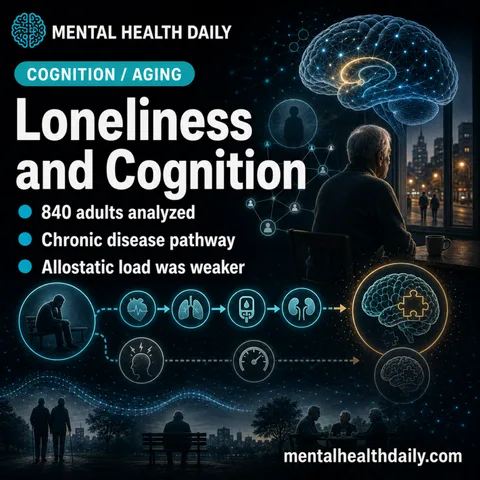
A longitudinal MIDUS analysis involving 840 adults found that loneliness scores higher than a person's objective social-isolation score were linked to later cognitive impairment mainly throu…
Read article →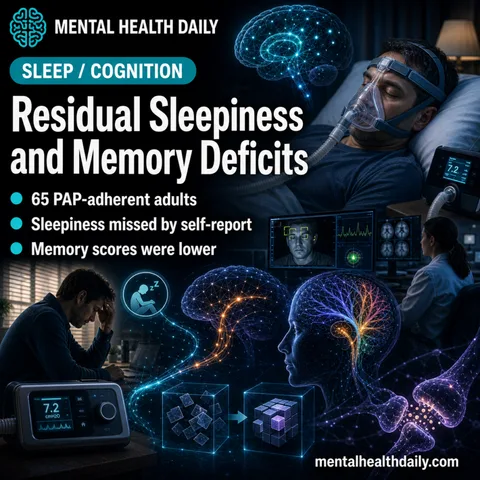
Some sleep apnea patients stay sleepy even when their CPAP is used 6+ hours a night and apnea events have been driven back to normal range. A 2026 cross-sectional study of 65 PAP-adherent ad…
Read article →
A 2026 study by Bai et al. in Dialogues in Clinical Neuroscience uses Mendelian randomization (MR) — inherited genetic variants as a natural experiment to test causality — and concludes that…
Read article →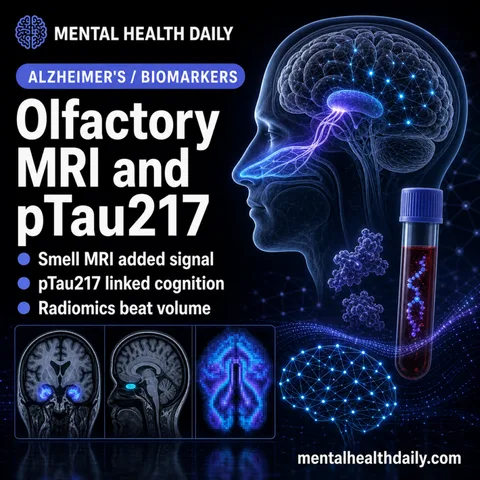
A 2026 multi-cohort Alzheimer’s disease study found that MRI radiomics from the hippocampus and amygdala linked plasma pTau217 and smell identification to cognitive impairment — with more ad…
Read article →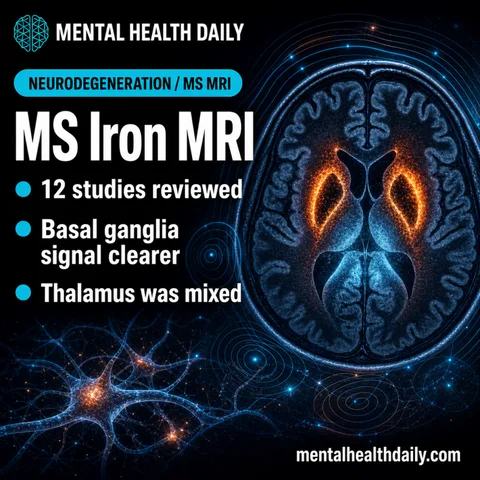
A 2026 systematic review of advanced neuroimaging in multiple sclerosis narrowed 600 database records to 12 studies and found the clearest cognition signal in basal ganglia iron-sensitive MR…
Read article →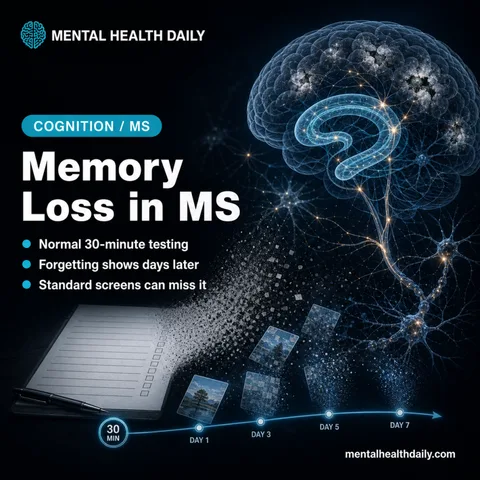
Standard memory testing can tell a multiple-sclerosis (MS) patient that recall is normal after 30 minutes while missing a deficit that appears days later. Jansen et al. tested that exact bli…
Read article →
In the quest to understand the enigmatic nature of depression, scientists are turning to the intricate patterns of brain activity, seeking clues hidden within the electrical storm of thought…
Read article →