hit counter

Psilocybin First Use Changed Brain Signals for 1 Month
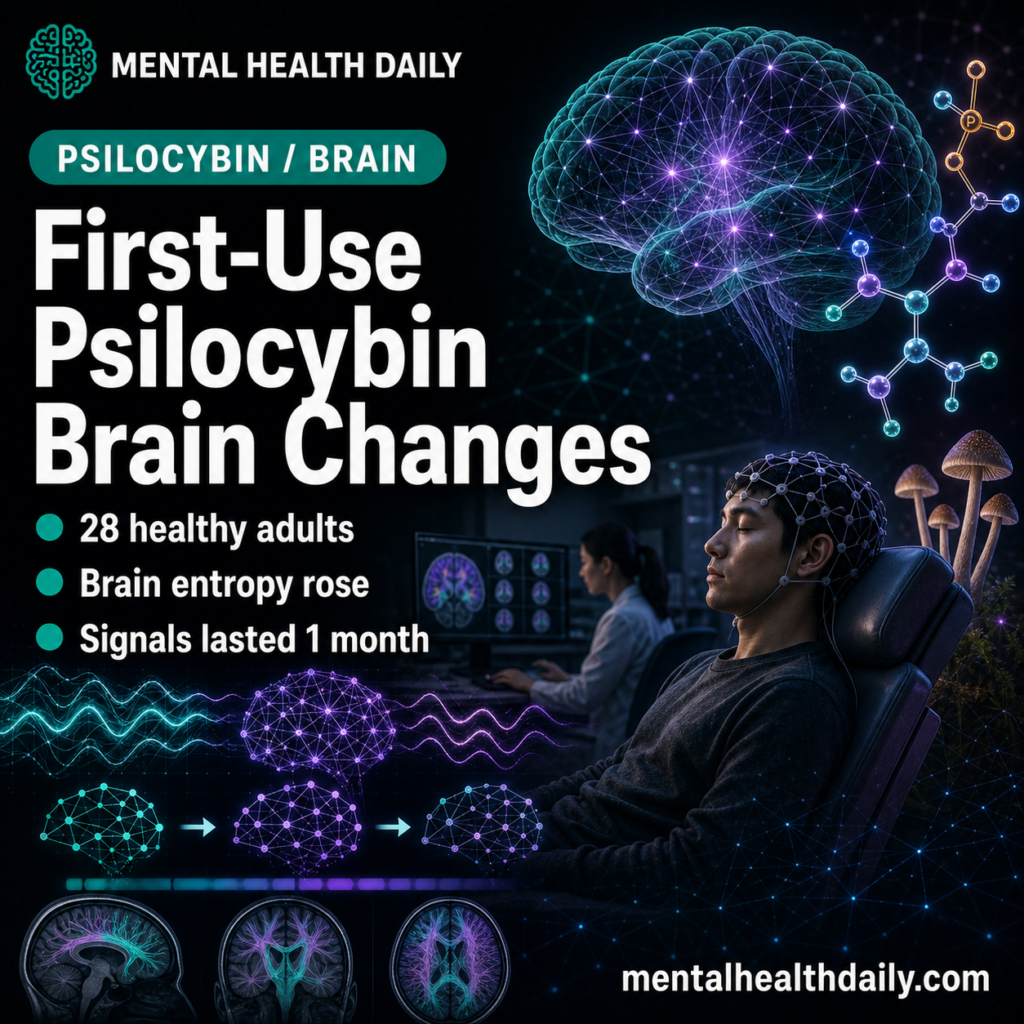
MHD featured image for first-time psilocybin use, brain entropy, MRI changes, and psychological insight.

A 2026 mechanistic study involving 28 healthy adults found that a single 25 mg psilocybin session changed acute brain entropy, psychological insight, well-being, cognitive flexibility, and some MRI-derived white-matter signals for up to 1 month. Research Highlights Acute brain entropy rose clearly: 25 mg psilocybin increased Lempel-Ziv complexity (LZc; a measure of signal irregularity) at …
Read more

Prior Cocaine Use Disrupts Orbitofrontal Hidden-State Coding

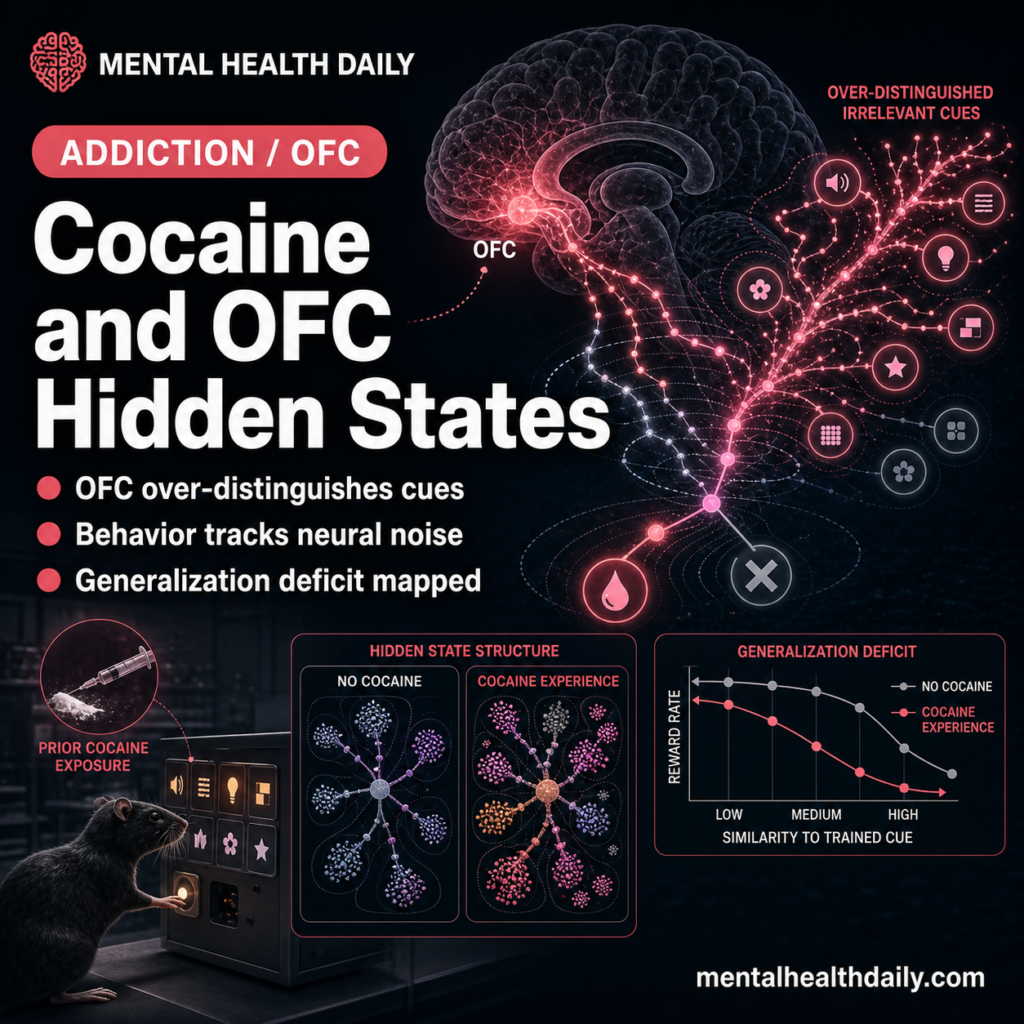
MHD featured image for Prior Cocaine Use Disrupts Orbitofrontal Hidden-State Coding.

A 2026 eLife study recorded 3,881 lateral orbitofrontal cortex units in rats and found that prior cocaine use made the OFC over-distinguish task positions that controls treated as functionally equivalent. The headline result was not gross task failure: cocaine-experienced rats still performed the odor task, but their OFC ensembles showed higher S1-vs.-S2 decoding than sucrose …

Read more

7 Ways To Increase Your Cognitive Flexibility

Cognitive flexibility refers to the ability to transition thoughts between multiple concepts or perspectives.  It also refers to the ability to process multiple concepts simultaneously such as the color and shape of an object or perspectives of republicans and democrats.  An individual who is able to switch quickly from thinking about one concept, characteristic, or …

Read more

What Is Cognitive Flexibility?

Cognitive flexibility refers to the brain’s ability to transition from thinking about one concept to another.  The quicker you are able to switch or “shift” your thinking from one dimension (e.g. color of an object) to another (e.g. shape of an object), the greater your level of cognitive flexibility.  As an example, let’s say you …

Read more