blood biomarkers
Published research on blood biomarkers.
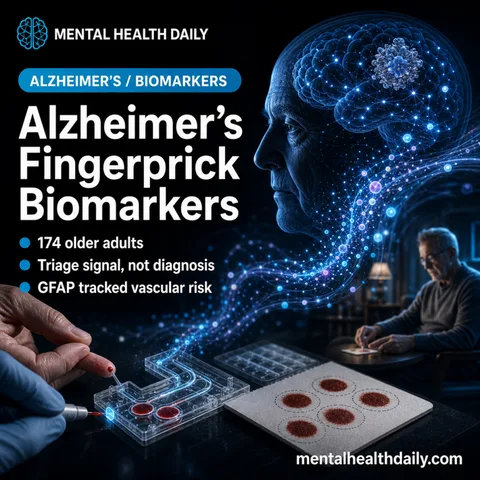
A 2026 PROTECT study involving 174 older adults found that self-administered fingerprick p-tau217 correlated with episodic memory (r = 0.299, p < 0.001) and GFAP correlated with working memo…
Read article →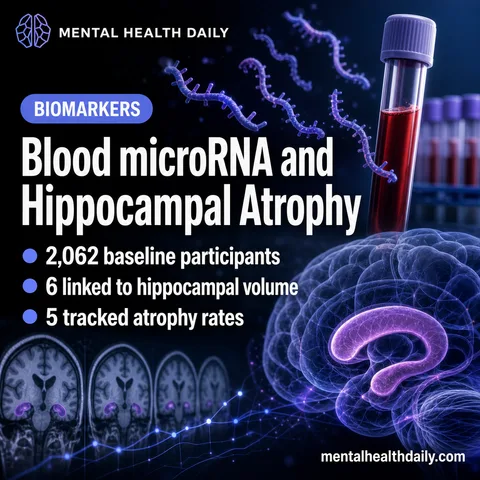
A 2026 Molecular Psychiatry analysis from the Rhineland Study found that blood-derived microRNA signatures were associated with hippocampal brain structure: 6 microRNAs linked cross-sectiona…
Read article →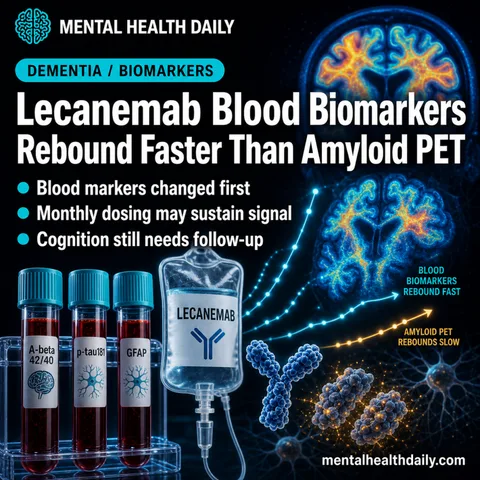
Lecanemab blood biomarkers may rebound much faster than amyloid PET after treatment stops: a 2026 PK/PD model estimated that half of the Aβ42/40 treatment effect is lost within 0.5 years, co…
Read article →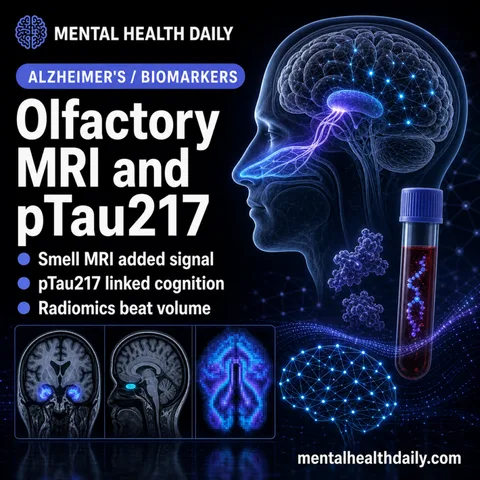
A 2026 multi-cohort Alzheimer’s disease study found that MRI radiomics from the hippocampus and amygdala linked plasma pTau217 and smell identification to cognitive impairment — with more ad…
Read article →
A 2026 medRxiv case-control study found that serum myelin oligodendrocyte glycoprotein was 20.5 pg/ml higher in multiple sclerosis than in healthy donors and 15.3 pg/ml higher during relapse…
Read article →
Schizophrenia (SZ) is a complex psychiatric disorder characterized by a myriad of symptoms, typically divided into positive, negative, and cognitive categories. Despite the prevalence and se…
Read article →
Attention-deficit/hyperactivity disorder (ADHD) is a common childhood-onset neurodevelopmental disorder characterized by developmentally inappropriate levels of inattention, hyperactivity, a…
Read article →