Schizophrenia
Published research on Schizophrenia.

A 12-week text-message intervention for people with schizophrenia spectrum disorders improved diabetes self-management confidence and patient activation, but it did not yet move weight, HbA1…
Read article →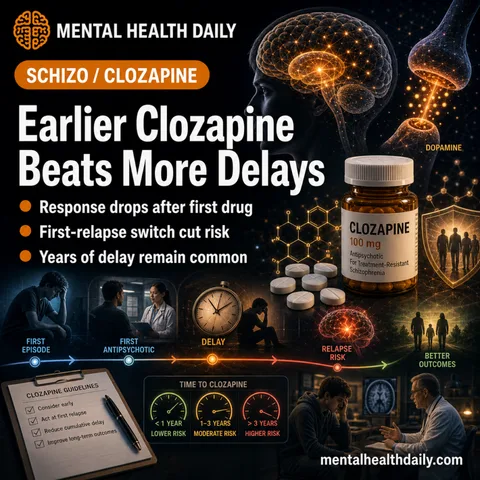
Clozapine has been the most effective antipsychotic in schizophrenia for almost 40 years, yet it is still routinely held back until patients have failed multiple alternatives over many years…
Read article →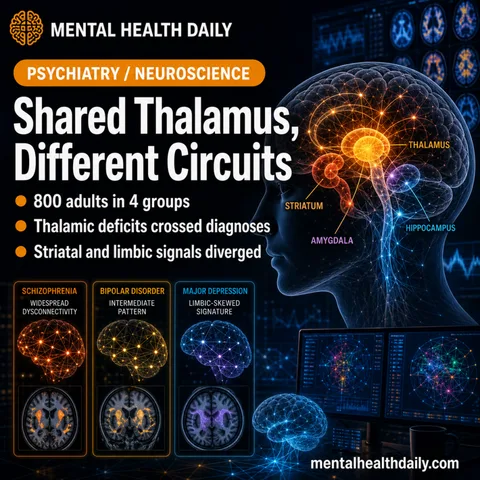
A 2026 resting-state fMRI study of 800 adults found intra-thalamic hypoconnectivity across schizophrenia, bipolar disorder, and major depression, but schizophrenia showed far broader subcort…
Read article →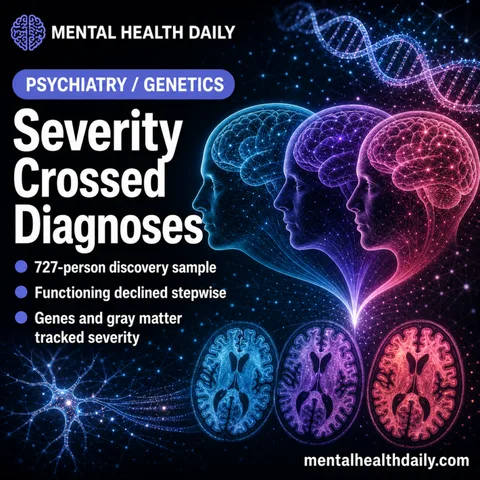
A 2026 PRONIA preprint involving 727 discovery-sample participants found that early mental illness severity cut across psychosis risk, recent psychosis, and recent depression: groups with hi…
Read article →
A 2026 SEEearly baseline report found that 53.3% of 184 young people with early schizophrenia-spectrum psychosis were not in employment, education, or training at study entry, even though 97…
Read article →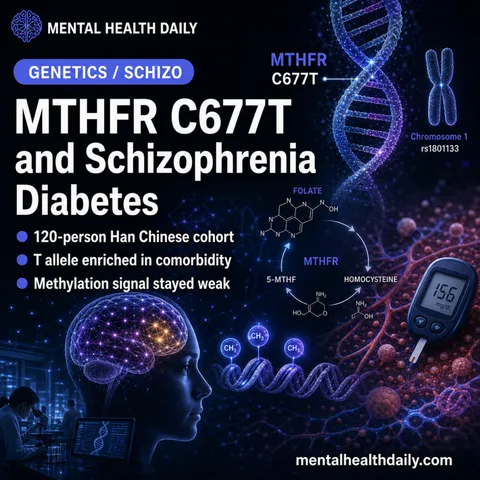
A 2026 Han Chinese case-control preprint linked the MTHFR C677T variant to schizophrenia with type 2 diabetes: the 677T allele appeared in 81.67% of alleles in the comorbid group vs. 60.00% …
Read article →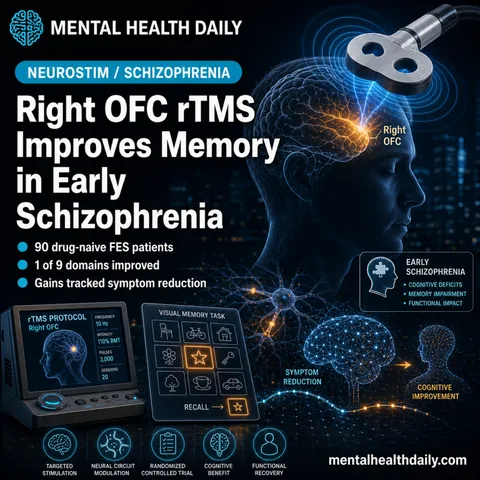
Cognitive impairment in first-episode schizophrenia (FES) is the symptom that does the most work blocking employment, relationships, and independent living — and the symptom current antipsyc…
Read article →