hit counter

Cholestatic Liver Injury Alters Thalamus Fatigue Genes

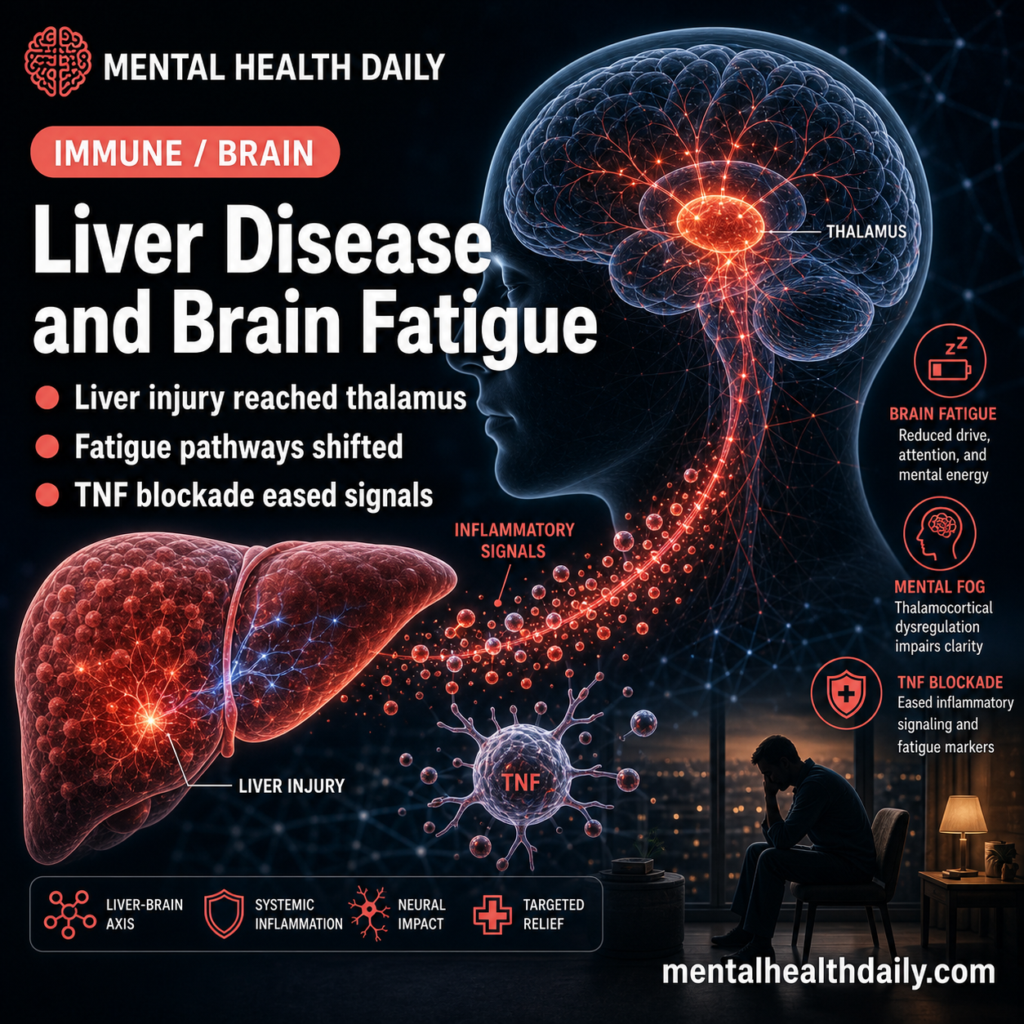
MHD featured image for cholestatic liver disease, thalamus changes, fatigue, and TNF signaling.

A 2026 mouse study linked cholestatic liver injury to smaller thalamic volume than control injury-free mice, broad thalamus gene-expression changes, and partial pathway rescue after systemic tumor necrosis factor neutralization. Research Highlights Thalamic volume decreased: bile duct ligation (BDL; a mouse model of obstructive cholestatic liver injury) reduced thalamic volume vs. sham surgery by magnetic …

Read more

Subcortical Connectivity Differs in Schizophrenia, Bipolar, Depression

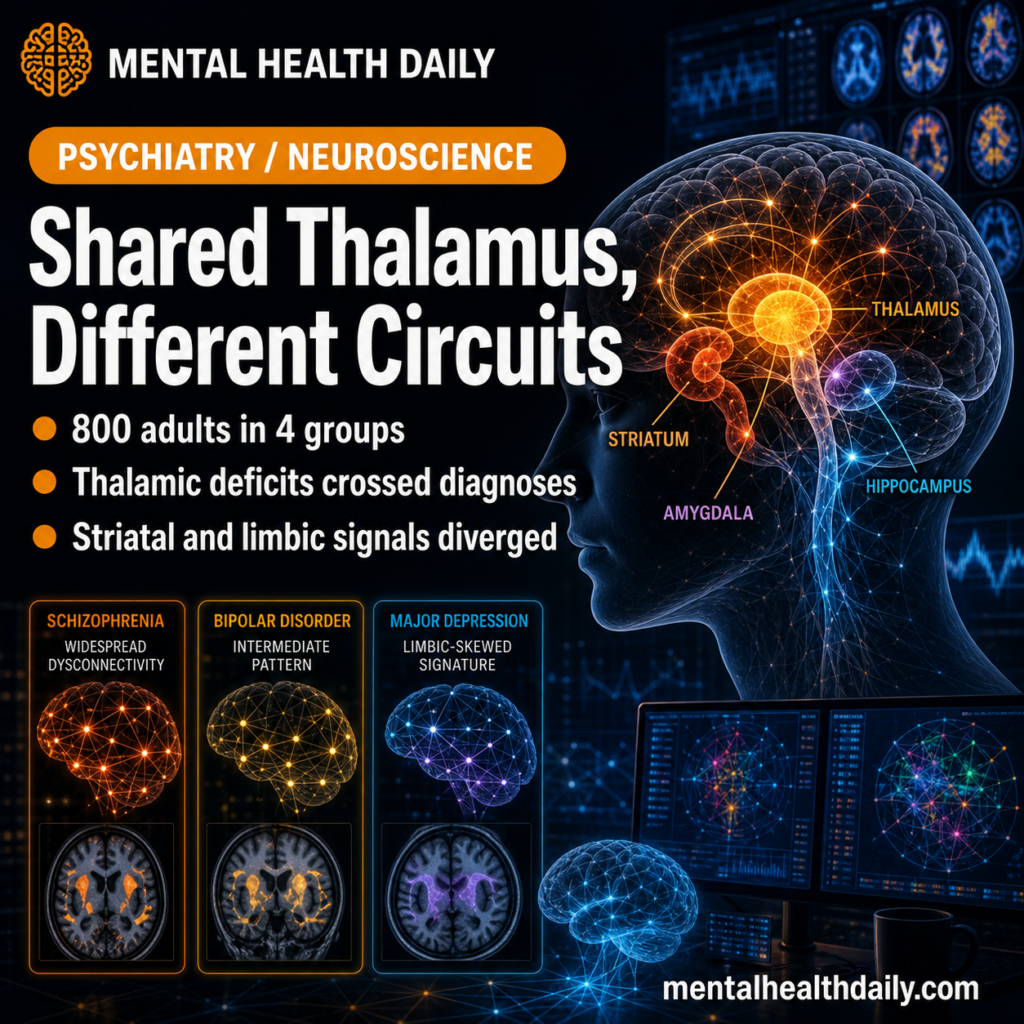
MHD featured image for subcortical connectivity patterns across schizophrenia, bipolar disorder, and depression.

A 2026 resting-state fMRI study of 800 adults found intra-thalamic hypoconnectivity across schizophrenia, bipolar disorder, and major depression, but schizophrenia showed far broader subcortical dysconnectivity than bipolar disorder or depression.1 The calibrated read is that these diagnoses may share a thalamic vulnerability while diverging in striatal and limbic circuitry. Research Highlights Shared thalamic deficit: In …

Read more

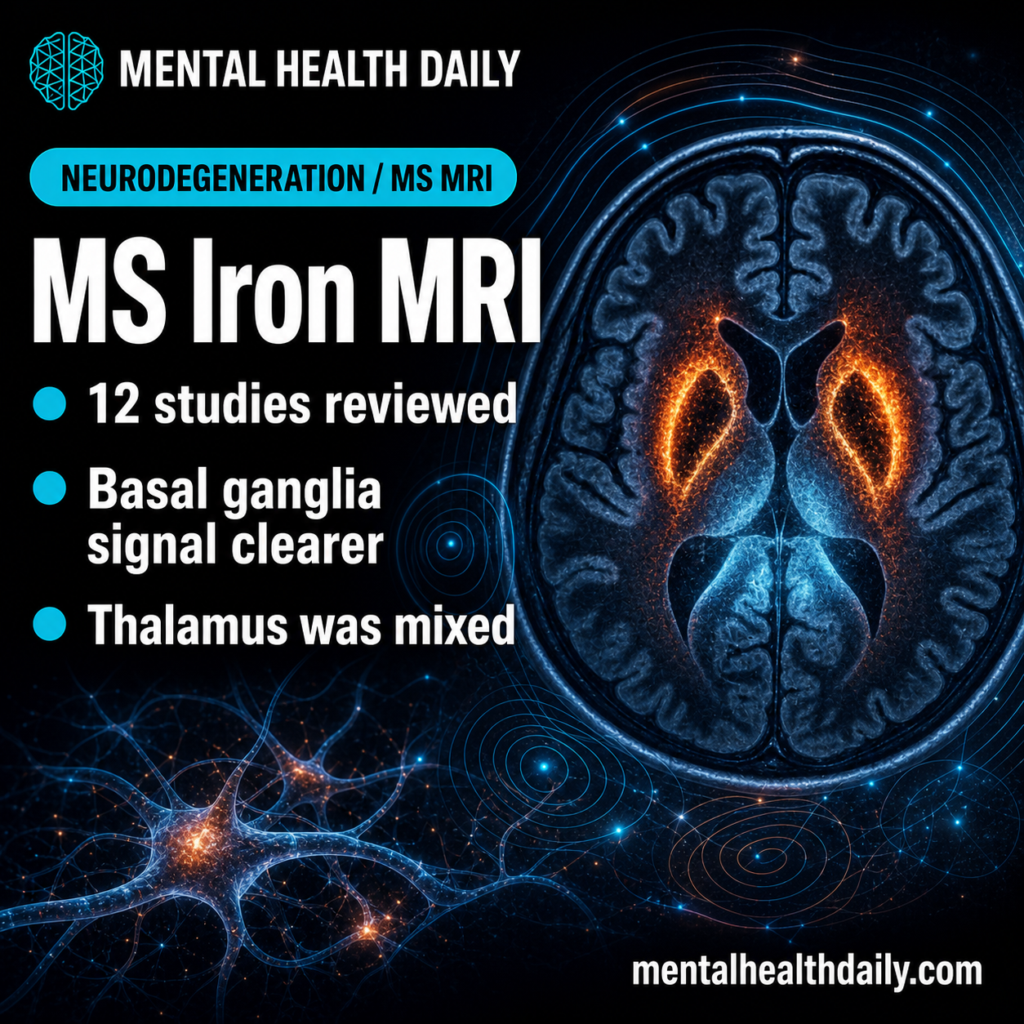
Multiple Sclerosis Iron MRI Linked to Cognitive Impairment in 12 Studies

MHD featured image for multiple sclerosis, iron-sensitive MRI, and cognitive impairment.

A 2026 systematic review of advanced neuroimaging in multiple sclerosis narrowed 600 database records to 12 studies and found the clearest cognition signal in basal ganglia iron-sensitive MRI measures, while thalamic susceptibility was more variable and often tangled with atrophy. Research Highlights Basal ganglia signal was strongest: across 12 studies, elevated susceptibility or iron-related metrics …

Read more

2 Neuroanatomical Subtypes Identified for First-Episode Depression (2024 Study)

Depression, with its cloak of sadness and despair, affects millions worldwide, presenting a complex puzzle for scientists and clinicians alike. Recent research leveraging machine learning and high-resolution brain imaging has begun to unravel this complexity, revealing two distinct neuroanatomical subtypes of first-episode, treatment-naïve depression. This study offers fresh insights into depression’s heterogeneity, promising more tailored …

Read more

Bilateral Anterior Capsulotomy (BAC) for Treatment-Resistant Depression & OCD (2023 Case Reports)

In the relentless pursuit of effective treatments for mental disorders, neurosurgery offers a glimmer of hope where traditional methods falter. Bilateral anterior capsulotomy (BAC), a neurosurgical procedure, emerges as an option for patients with treatment-resistant depression (TRD) and obsessive-compulsive disorder (OCD), offering substantial relief with minimal side effects. Highlights: Bilateral Anterior Capsulotomy (BAC) is a …

Read more