hit counter

Social Cognition After Stroke/TBI: Insula-Cingulate Hub

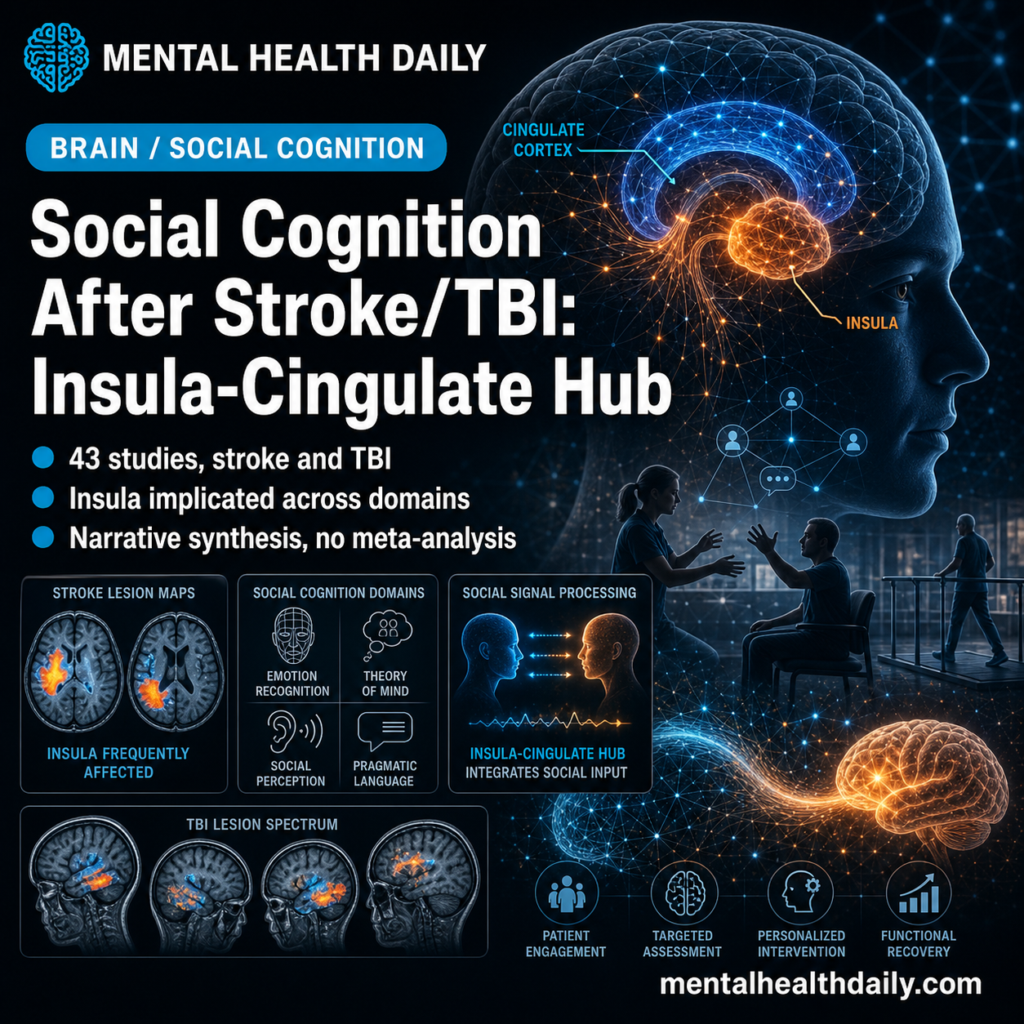
Editorial card showing a stylized brain with the insula, cingulate, middle frontal gyrus, and corpus callosum highlighted, representing the convergent neural substrates of social cognition after acquired brain injury.

A 2026 PRISMA systematic review by Cavallo et al. in Cognitive, Affective, & Behavioral Neuroscience aggregates 43 neuroimaging studies of social cognition in adults with stroke or traumatic brain injury and finds the same handful of regions implicated again and again: the insula, cingulate cortex, middle frontal gyrus, and corpus callosum.1 Research Highlights Stroke/TBI social-cognition …

Read more

Post-Stroke Depression Tracks Serotonin-Acetylcholine Damage

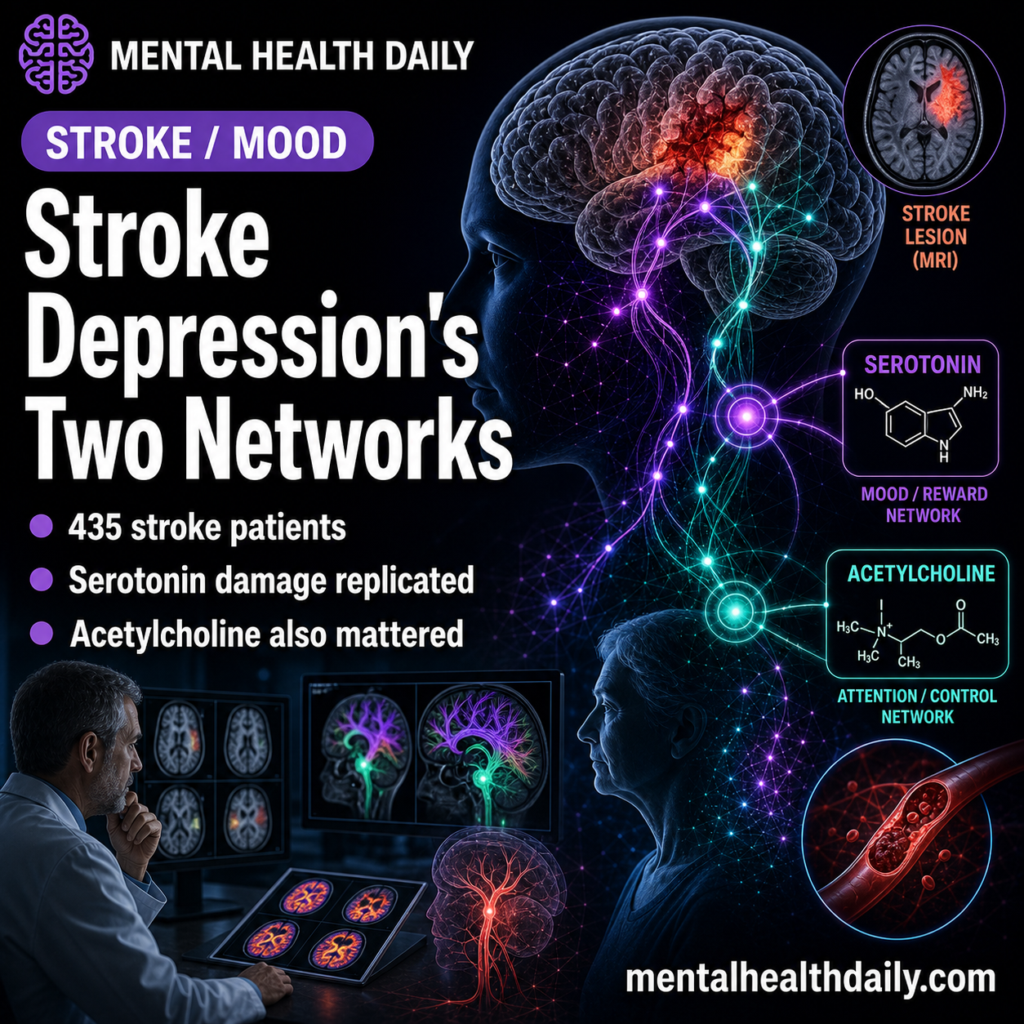
Photoreal illustration of stroke lesion with overlapping neurotransmitter network damage, conveying mechanism of post-stroke depression.

A 2026 two-cohort connectome study found that post-stroke depressive symptoms tracked damage to networks weighted by the serotonin transporter and vesicular acetylcholine transporter: 5-HTT damage predicted depression in Leipzig (OR 2.4, 95% CI 1.15–5.02) and Oxford (OR 2.05, 95% CI 1.03–4.09), while VAChT damage also replicated across both cohorts.1 The dopamine part of the original …

Read more

Migrant Stroke Patients Had 1.90x Higher Late-Arrival Odds

Photoreal illustration of a stroke patient in an emergency room with overlay of treatment-eligibility imagery, conveying disparities in acute-stroke care.

A 2026 Dutch stroke-center cohort found the opposite of the damaged draft’s claim: patients with a migration background were more likely to reach the hospital outside the therapeutic window for acute reperfusion therapy, and they had sharply lower odds of receiving endovascular thrombectomy.1 Research Highlights Late arrival was the clearest disparity: 53.2% of migrant-background patients …

Read more

Risperidone Stroke Risk in Dementia: HR 1.28 Across CVD Subgroups

Conceptual illustration of cerebral blood vessels and a pill, representing risperidone-associated stroke risk in dementia patients.

The risperidone-stroke link in dementia is one of the longest-running safety signals in geriatric psychiatry, anchoring the FDA’s 2005 black-box warning on atypical antipsychotic mortality. Popular framing reduces it to “antipsychotics cause stroke in dementia” — a true sentence that flattens a multi-axis decision. Choma’s 2025 analysis of UK primary care records is the largest …

Read more

BPC-157 Peptide for Neurological & CNS Disorders: Preliminary Research

BPC 157, a stable gastric pentadecapeptide, has recently emerged as a promising therapeutic agent due to its multifaceted role in treating various central nervous system disorders. Its ability to mitigate conditions like stroke, schizophrenia, and spinal cord injuries while promoting neural recovery and functional improvement is capturing the interest of the medical community. Highlights: BPC …

Read more

Long Term Effects of Cocaine on the Brain and Body

Most people are aware that cocaine is a highly addictive psychostimulant drug associated with increases in energy and feelings of euphoria. Cocaine functions by flooding the brain with the neurotransmitter dopamine, leading to feelings of pleasure and euphoria. Some consider the “crack” format of cocaine to be among the most addictive drugs in the world. …

Read more