hit counter

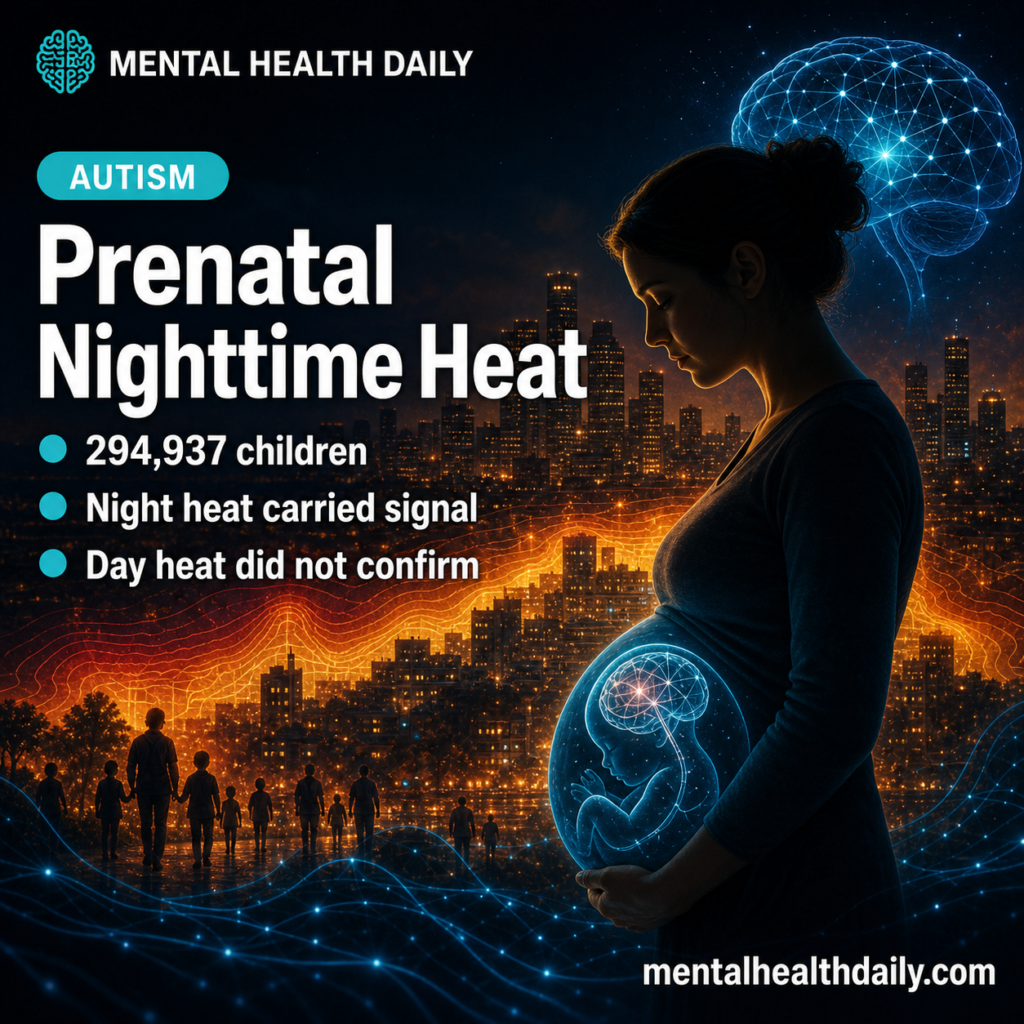
Prenatal Nighttime Heat Linked to Autism Risk in 294,937-Child Cohort

MHD featured image for prenatal nighttime heat and autism risk.

A Kaiser Permanente Southern California cohort involving 294,937 children linked extreme prenatal nighttime heat to autism diagnosis by age 5, with stronger associations at the 99th percentile than the 90th percentile.1 Compared with nighttime minimum temperature, daytime maximum temperature did not show the same confirmed whole-pregnancy pattern. Research Highlights Nighttime heat carried the main signal: …

Read more

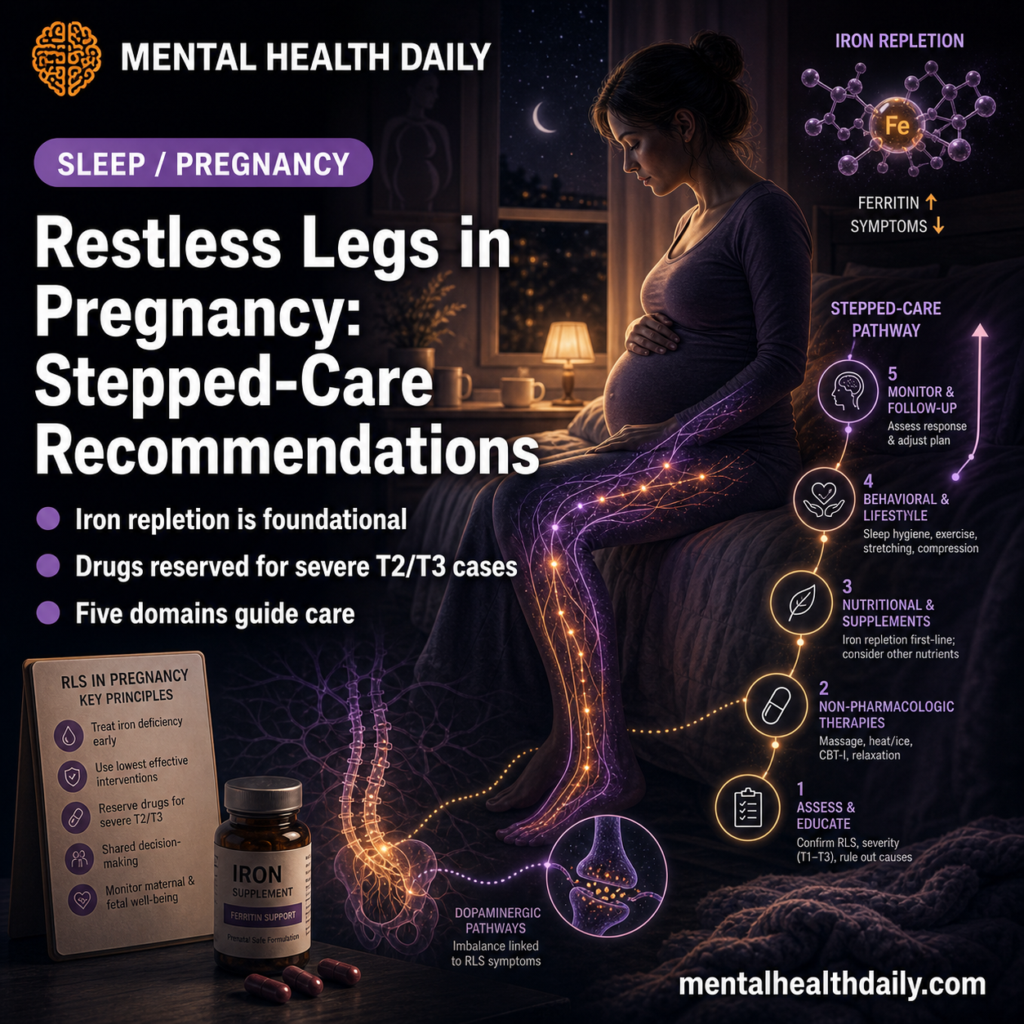
Restless Legs in Pregnancy: Stepped-Care Recommendations

Restless legs syndrome (RLS), now also called Willis-Ekbom disease (WED), is a sleep-disrupting neurologic disorder that affects roughly 20–30% of pregnancies in some series and is linked to preeclampsia, increased cesarean delivery, and perinatal depression. A 2026 Nature and Science of Sleep synthesis turned 9 source documents into 27 practice recommendations across 5 domains, ending …

Read more

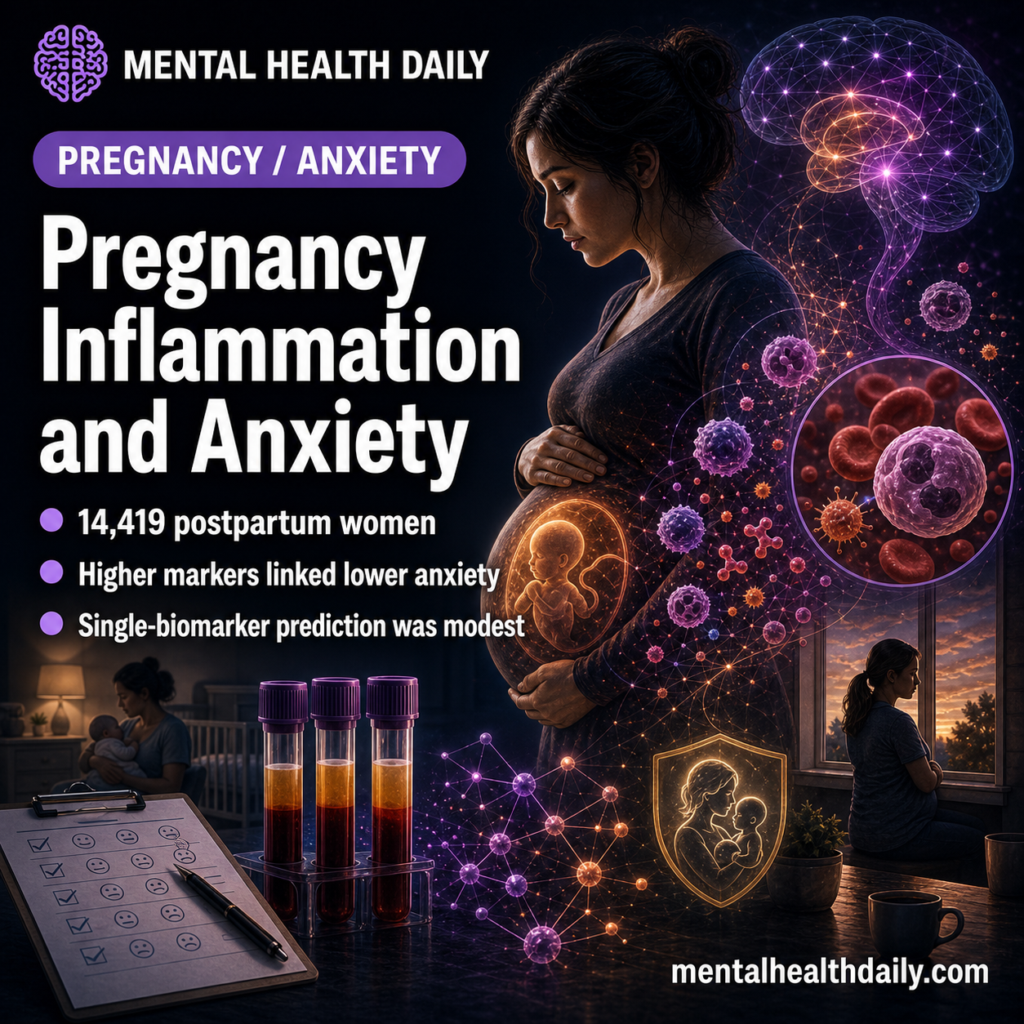
Pregnancy Inflammation Linked to 79% Lower Postpartum Anxiety Odds

Stylized illustration of a pregnant silhouette with overlay of immune cells and a postpartum anxiety questionnaire, illustrating the inverse association between pregnancy inflammation indices and postpartum anxiety risk.

The depression-inflammation literature has firmly established that elevated inflammatory markers track with mood symptoms, but a 2026 study of 14,419 postpartum women from Xie et al. found the opposite pattern for postpartum anxiety: women with higher second-trimester platelet-neutrophil products and related immune-inflammation indices had substantially lower postpartum anxiety risk.1 Research Highlights Higher second-trimester PPN was …

Read more

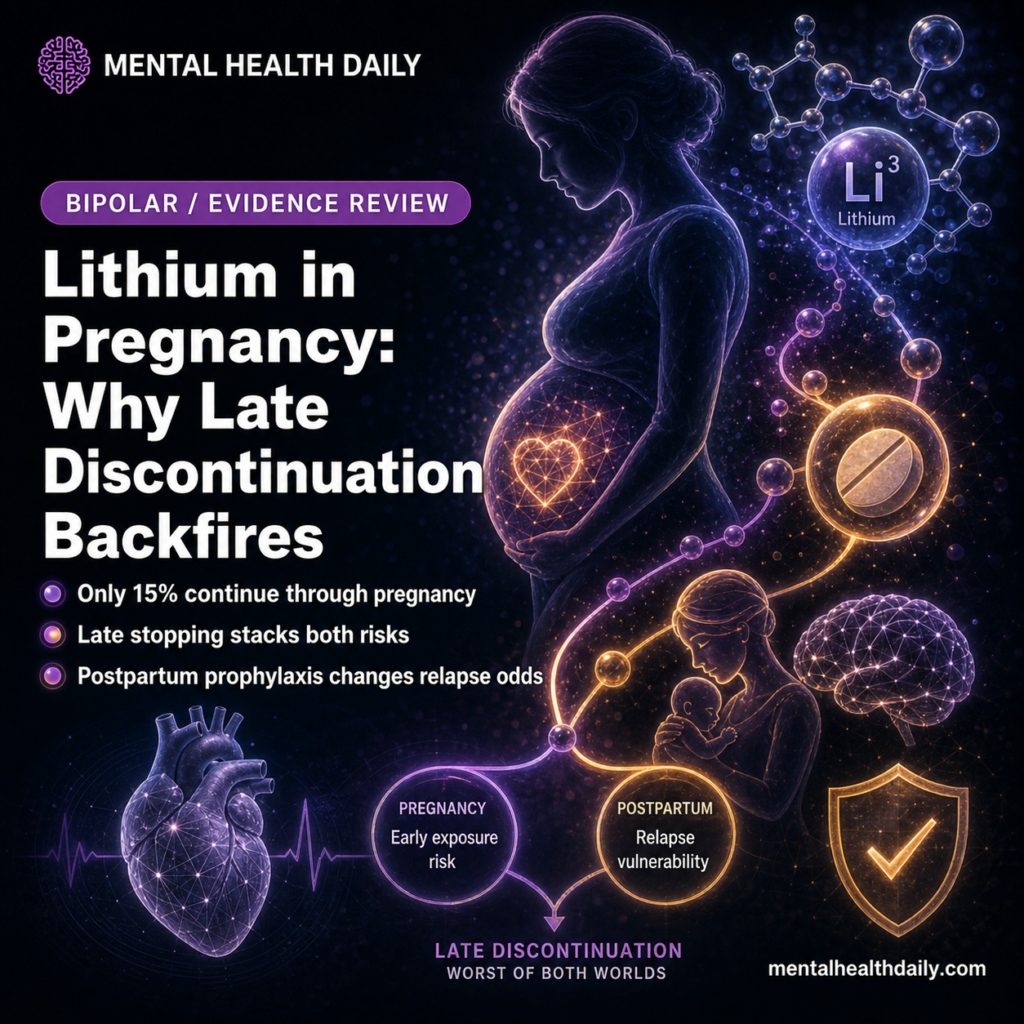
Lithium in Pregnancy: Why Late Discontinuation Backfires

Photoreal illustration representing lithium prescribing decisions during pregnancy, with imagery of a pregnant figure and pharmaceutical motifs.

Lithium prescribing during pregnancy sits in a knot of competing risks. The teratogenicity data have been recalibrated dramatically since the 1970s, while the postpartum-relapse data have moved in the opposite direction. Most popular framing still treats lithium as a uniquely dangerous fetal exposure to be avoided when possible. The new Chauhan UK cohort shows what …

Read more

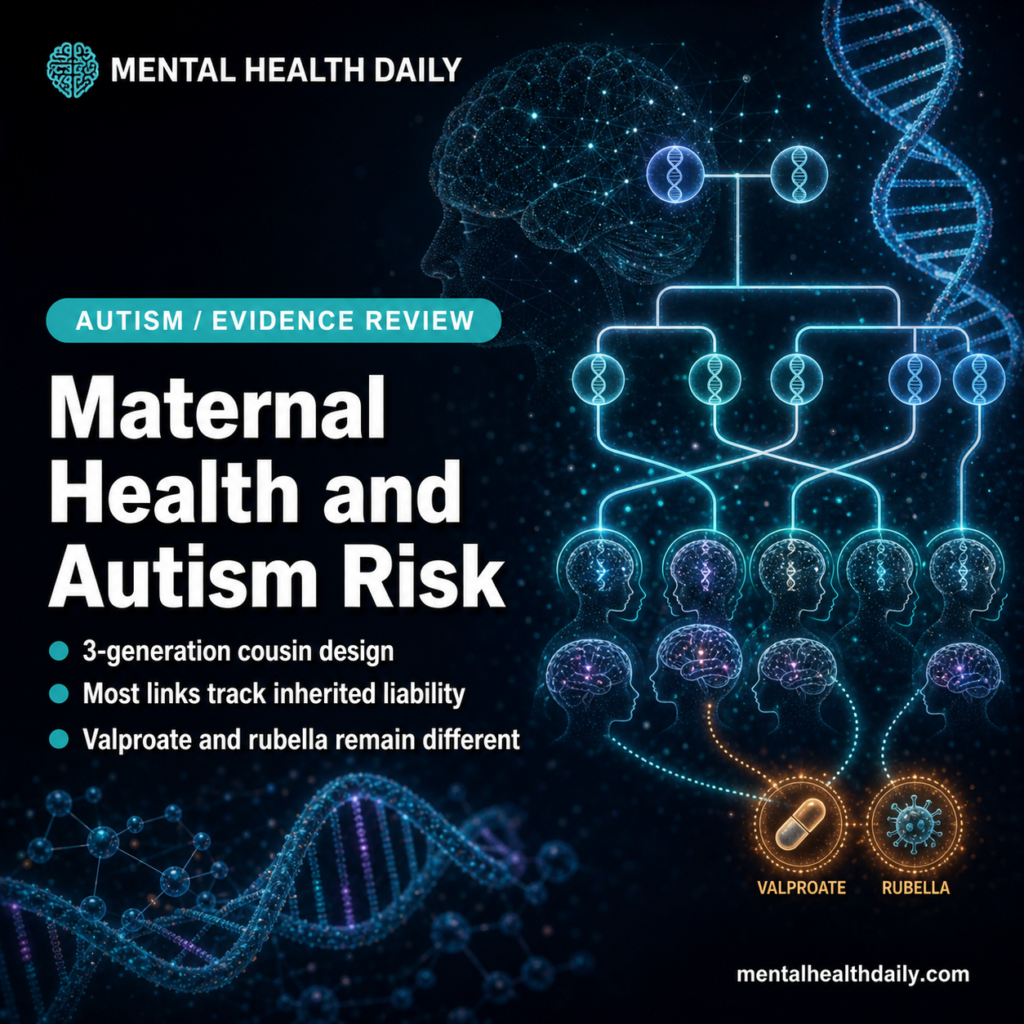
Maternal Health and Autism Risk: Most Links Are Genetic, Not Prenatal

Stylized illustration of a multi-generation family tree branching into cousin pairs, representing the 3-generation registry design used to separate inherited from in-utero genetic effects on autism risk.

For two decades, headlines have linked autism to maternal obesity, depression, anxiety, gestational diabetes, infection, autoimmune disease, and antidepressant use. The studies behind those headlines are well-replicated registry associations. A new design from the Aarhus University iPSYCH group offers the most careful answer yet to what they mean for an individual pregnancy. Most “maternal X …

Read more

Celecoxib Effective for Postpartum Depression in 34-Year-Old Woman (2023 Case Report)

Postpartum depression (PPD) is a serious mental health issue affecting many new mothers, impacting their well-being and their ability to bond with their child. Recent research suggests that inflammation could play a crucial role in the development of depression, opening the door to innovative treatments. A new case report highlights the potential of celecoxib, an …

Read more

Antidepressants (SSRIs) During Pregnancy Increases Autism Risk by 3X for Boys

New research has just surfaced from Johns Hopkins indicating that there is likely a link between prenatal exposure to antidepressant drugs and autism spectrum disorder (ASD) as well as other developmental delays (DD) among boys. This is highly concerning for pregnant mothers who have made the choice to stay on antidepressants throughout their pregnancy, particularly …

Read more