hit counter

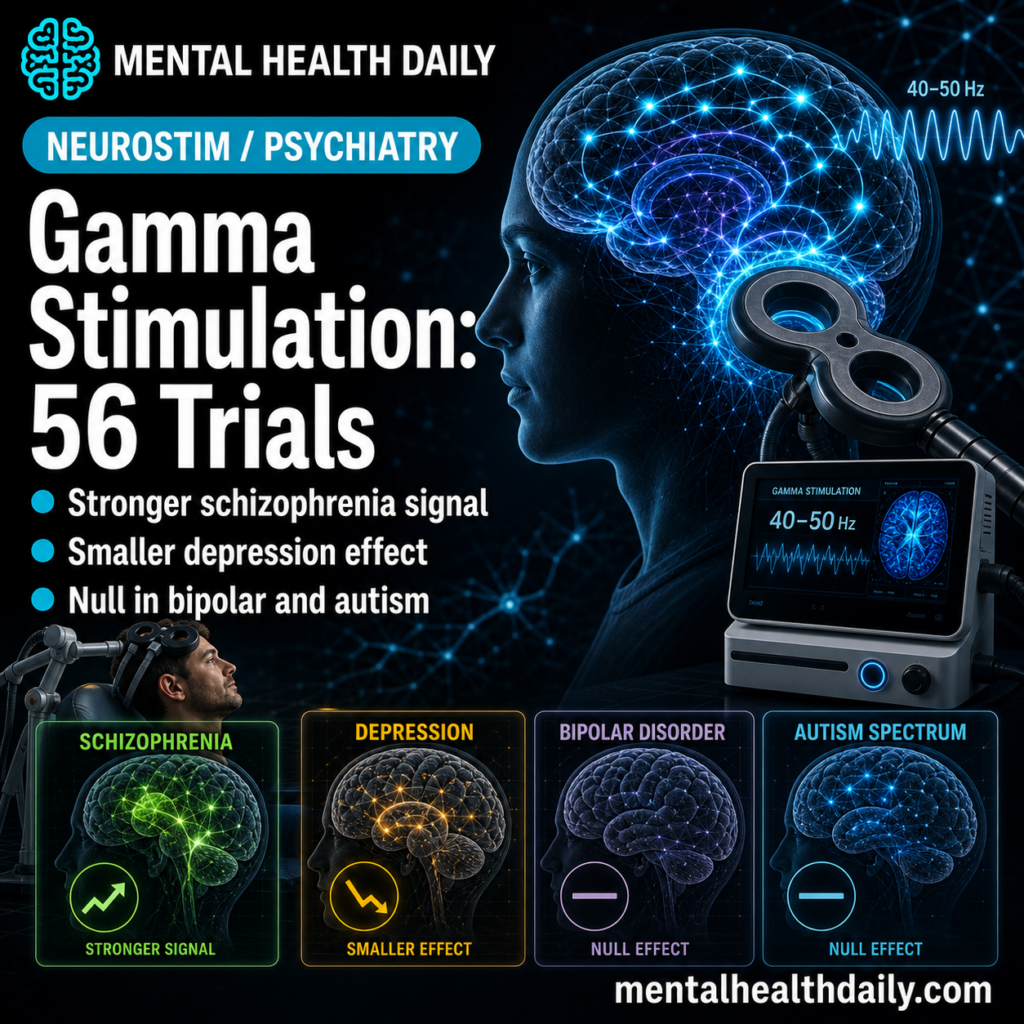
Gamma Brain Stimulation Helps Schizophrenia More Than Depression

Photoreal illustration of gamma-frequency brain stimulation showing TMS coil and oscillation waveforms in 30-50 Hz range over a brain.

A 2026 meta-analysis of 56 controlled trials found the clearest gamma-frequency neuromodulation signal in schizophrenia: overall symptoms improved vs. control (g = −0.46), global cognition improved (g = 0.55), and MDD showed a smaller depression effect than the schizophrenia symptom estimate (g = −0.34). Bipolar disorder and autism stayed directional but nonsignificant, and the paper’s …

Read more

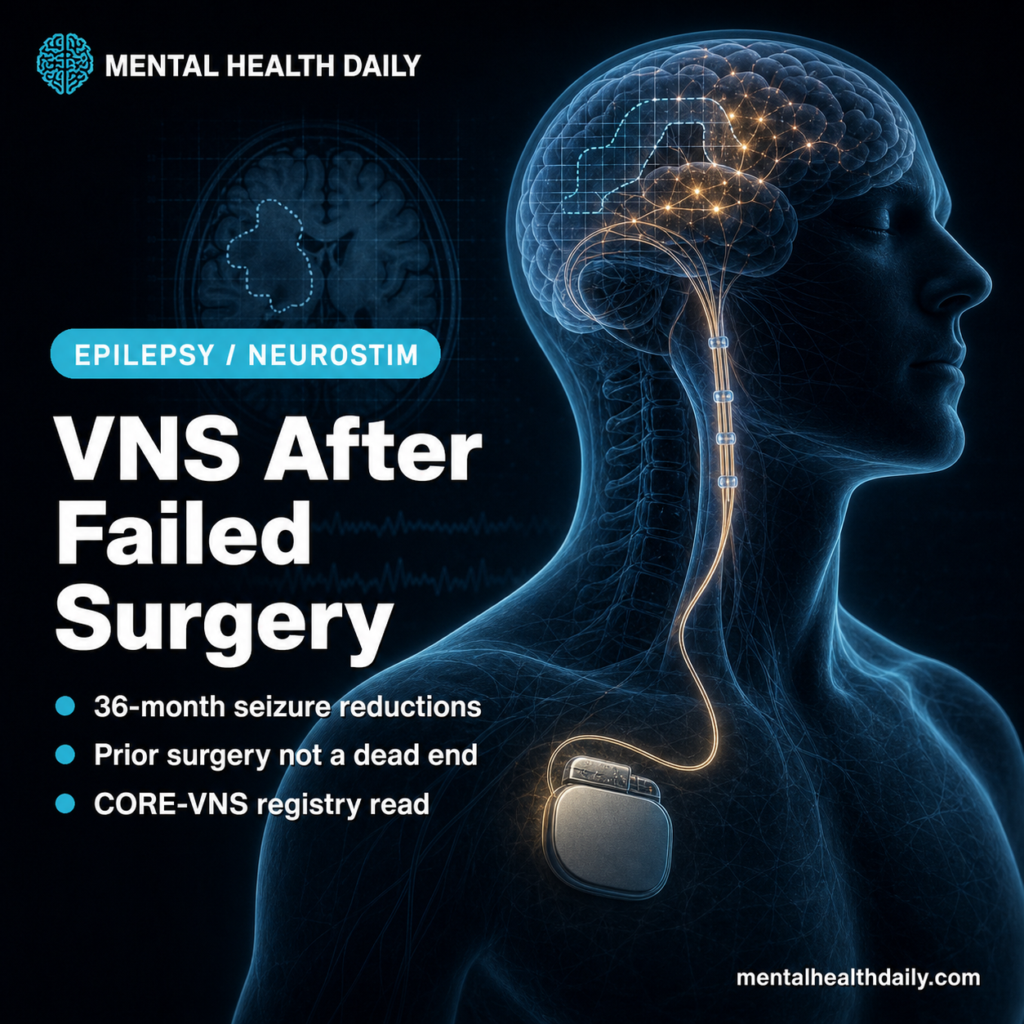
VNS After Failed Epilepsy Surgery Reduced Seizures 76% at 36 Months

Photoreal illustration showing an implanted vagus nerve stimulator and brain pathways, representing neuromodulation for drug-resistant epilepsy.

A 2026 CORE-VNS registry analysis found that implanted vagus nerve stimulation still produced large 36-month seizure reductions after failed intracranial epilepsy surgery: median all-seizure reduction was 76.3% with prior surgery vs. 76.6% without prior surgery.1 Research Highlights Prior surgery did not blunt the main VNS signal: CORE-VNS reported 76.3% median all-seizure reduction at 36 months …

Read more

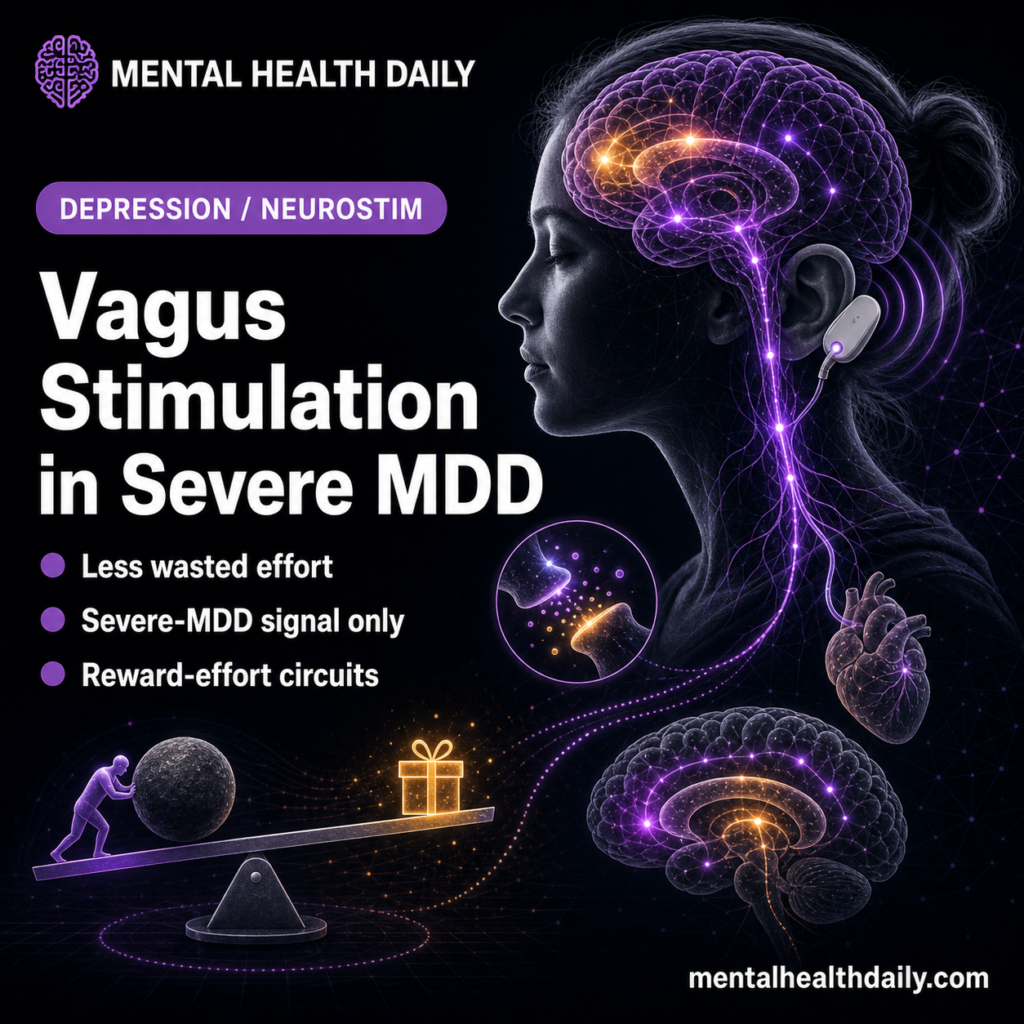
tVNS Alters Effort and Reward Decisions in Severe Depression

Photoreal illustration of an ear-clip vagus nerve stimulation electrode, with neural pathway motifs representing reward-effort circuits.

An ear-clip that modulates mood by stimulating the vagus nerve has obvious appeal — but the evidence base for non-invasive tVNS in depression has been mixed for a decade. A 2026 cross-over RCT by Forbes et al. sharpens what specifically tVNS does well.1 Research Highlights Transcutaneous vagus nerve stimulation (tVNS) is a non-invasive ear-electrode version …

Read more

At-Home tDCS Trial (HomeDC) Prematurely Terminated Due to Skin Lesions & Safety Concerns (2023 Study)

Transcranial Direct Current Stimulation (tDCS) is emerging as a promising home-based treatment for Major Depressive Disorder (MDD), offering a non-invasive, cost-effective, and scalable option for patients. This treatment modulates cortical excitability, potentially altering neuronal activity in the brain areas associated with depression. However, a recent randomized controlled trial (RCT), the HomeDC trial, aimed at investigating …

Read more

Deep Brain Stimulation (DBS) of Nucleus Accumbens (NAc) for Treatment-Resistant Depression (4 Case Reports)

Deep Brain Stimulation (DBS) for Treatment-Resistant Depression (TRD) explores the cutting-edge intersection of technology and neuroscience, offering hope to those for whom traditional treatments have failed. By targeting specific brain areas, such as the nucleus accumbens, DBS attempts to modulate the underlying neural circuits associated with depression. A recent review analyzed case reports documenting significant …

Read more

Cognitive Function Does Not Predict Response to tDCS for Depression (2023 Trial)

Transcranial Direct Current Stimulation (tDCS) has been explored as a potential treatment for major depressive disorder (MDD), particularly for patients who have not responded to traditional treatments like selective serotonin reuptake inhibitors (SSRIs). This non-invasive technique involves applying a weak electrical current to the prefrontal cortex of the brain, aiming to modulate neurocognitive functions. However, …

Read more

tDCS for Fibromyalgia: Efficacy of Transcranial Direct Current Stimulation (2024 Review)

A recent systematic review and meta-analysis aimed to update the understanding of the efficacy and safety of transcranial direct current stimulation (tDCS) for treating fibromyalgia (FM), focusing on its effects on analgesia, antidepressant outcomes, and the reduction of FM’s impact. Highlights: Efficacy of tDCS: The analysis revealed that tDCS is effective in reducing pain intensity, …

Read more