hit counter

CoQ10 Preserved Working Memory in Drp1-Deficient Mice Through Coa6
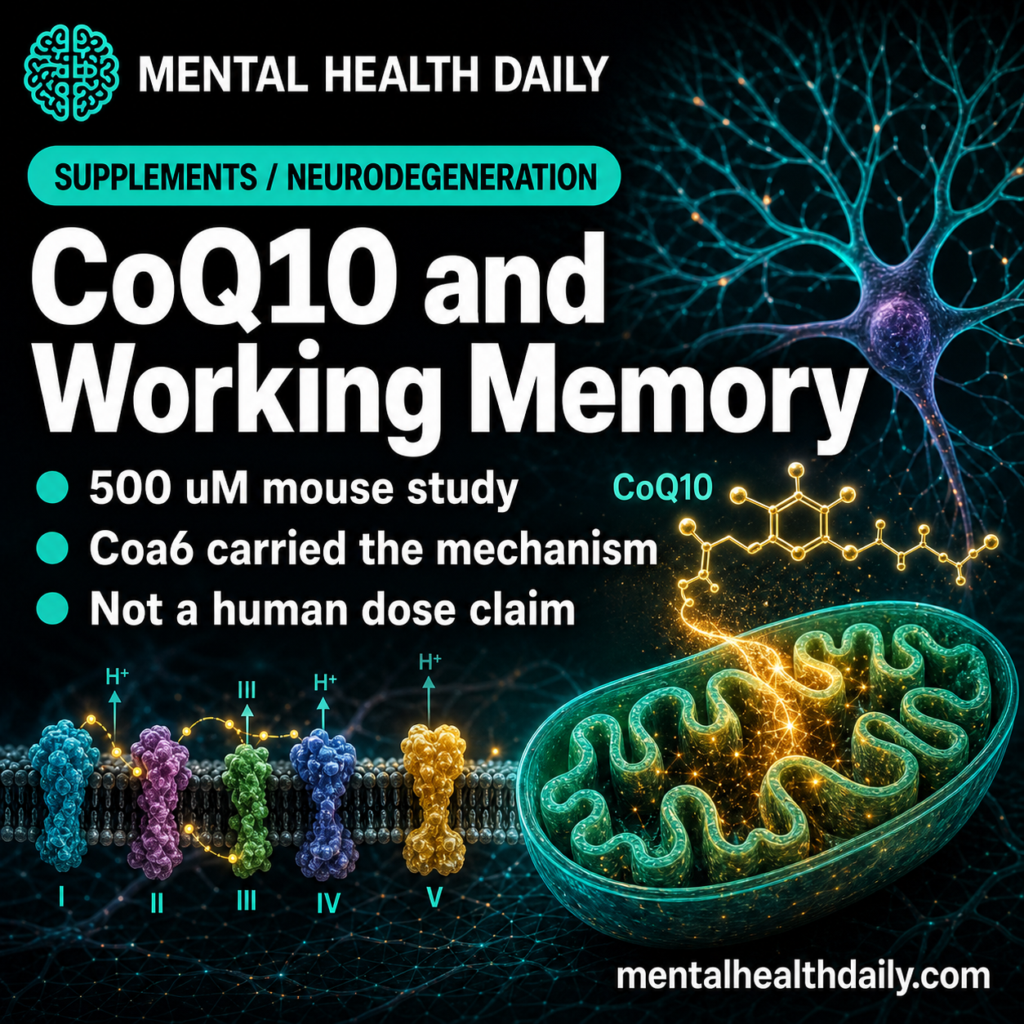
MHD featured image for CoQ10, working memory, Drp1 deficiency, Coa6, and mitochondrial respiratory-chain function.

A 2026 mouse study found that long-term CoQ10 exposure reduced working-memory errors in Purkinje-cell-specific Drp1-deficient mice, tying the behavioral rescue to Coa6 binding and support for mitochondrial respiratory-chain function.1 The result supports a narrow mechanistic CoQ10-Coa6 pathway under neuronal mitochondrial dysfunction while leaving human memory-supplement claims untested. Research Highlights Working memory improved in a mouse …
Read more

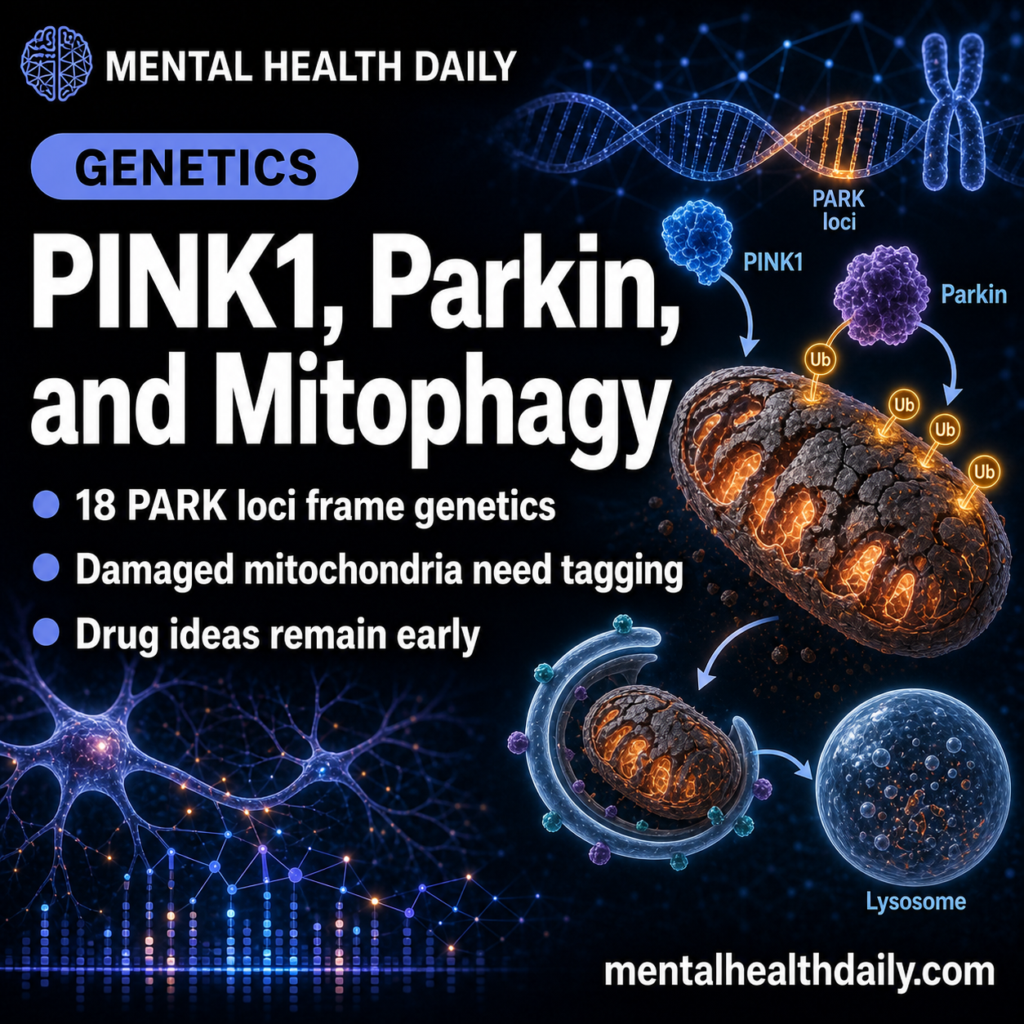
PINK1 and Parkin Link Parkinson’s Disease to Failed Mitochondrial Cleanup

MHD featured image for PINK1, parkin, mitophagy, and mitochondrial cleanup in Parkinson's disease.

A 2026 review ties the Parkinson’s disease genes PINK1 and parkin to damaged-mitochondria cleanup, from damage sensing and ubiquitin tagging to autophagy recruitment and lysosomal degradation.1 That shifts “mitochondrial dysfunction” into specific failure points: tagging, extraction, transport, autophagosome recruitment, and degradation. Research Highlights 18 PARK loci frame inherited risk: PARK2 encodes parkin and PARK6 encodes …

Read more

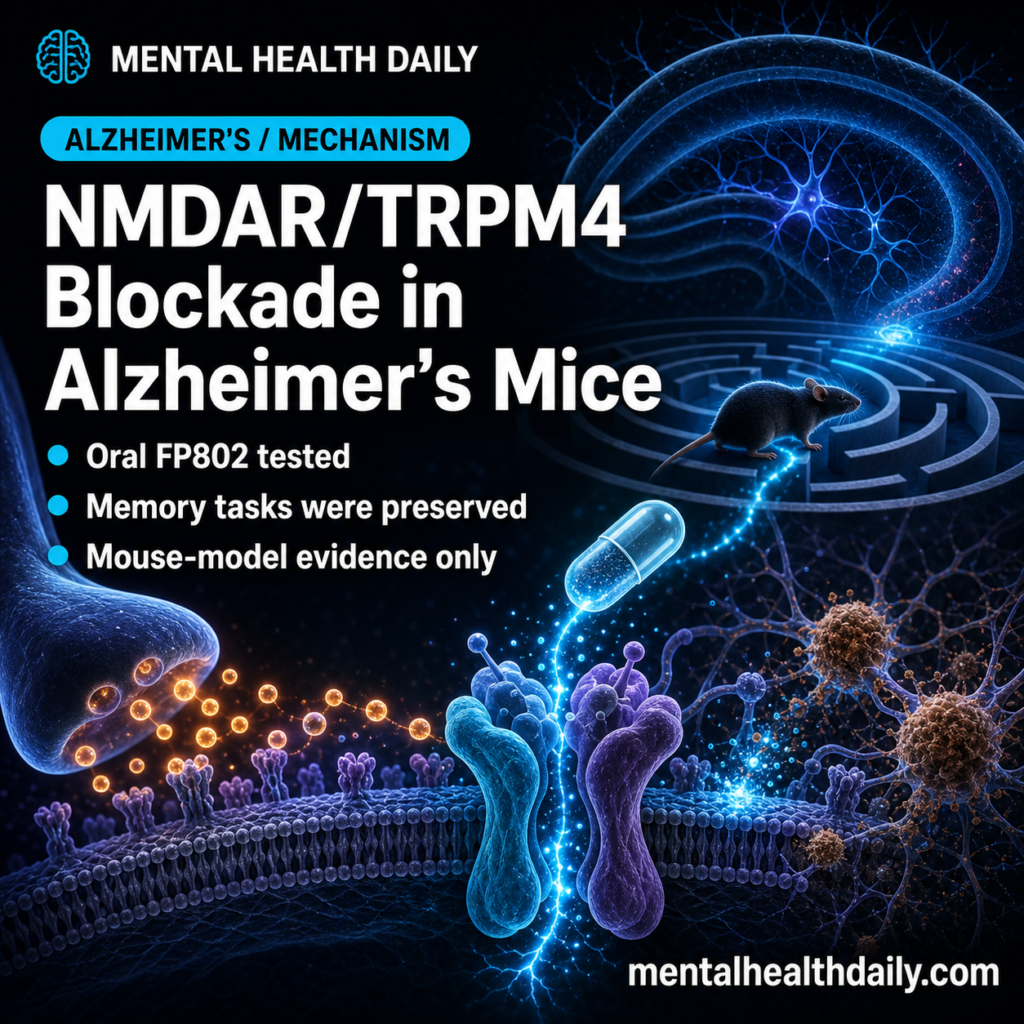
NMDAR/TRPM4 Death Complex Blocker Preserved Memory in Alzheimer’s Mice

MHD featured image for the NMDAR/TRPM4 death complex, FP802, and Alzheimer's mouse-model memory protection.

A 2026 Molecular Psychiatry study found that oral FP802 disrupted the NMDAR/TRPM4 death complex and preserved memory-task performance in 5xFAD Alzheimer’s mice treated for 3 months.1 The finding is mechanistically sharper than a generic anti-amyloid claim: FP802 targeted a glutamate-toxicity complex downstream of amyloid stress. Research Highlights Complex formation was blocked: 5xFAD mice had increased …

Read more

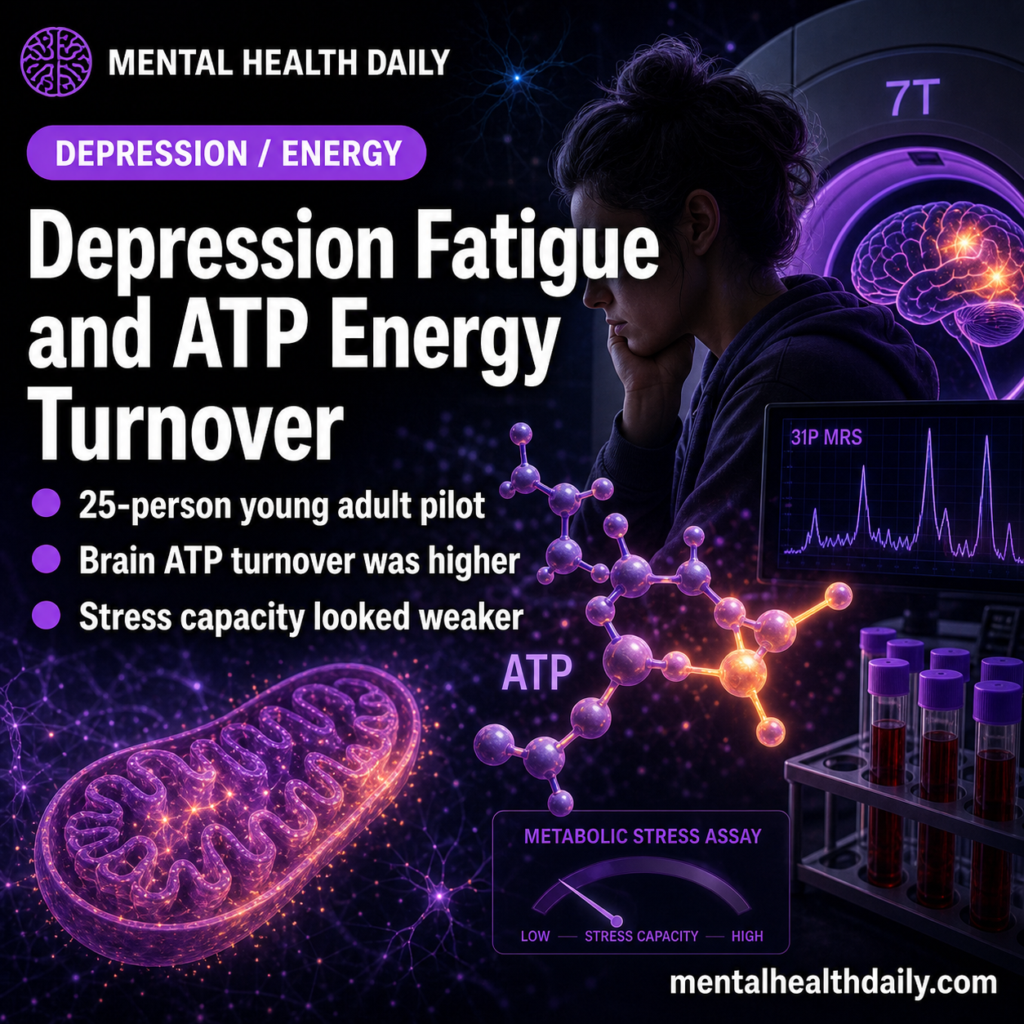
Depression Fatigue Linked to Higher ATP Brain Energy Turnover

MHD featured image for depression fatigue and ATP bioenergetics in young adults.

A 25-person pilot study of young adults found an ATP fatigue pattern that was directionally reversed from the simple “low brain energy” story: the depression group had higher visual-cortex ATP production metrics than healthy controls, while fatigue severity correlated with ATPase production rate, r = 0.73, p = 0.006.1 The cleaner interpretation is compensatory strain, …

Read more

Black Seed Oil (Nigella Sativa) Effectively Reverses Antibiotic-Induced Depression in Mice (2024 Study)

In a world increasingly reliant on antibiotics, emerging research sheds light on the unintended consequences of their chronic use, revealing significant impairments in mitochondrial function, hypothalamus-mediated metabolic operations, and amygdala-regulated emotional processes. A novel study has explored the potential of black seed oil (Nigella sativa oil, NSO) to mitigate these adverse effects, focusing on its …

Read more

PGAM5 Genetics & Depression via ATP Levels in the Prefrontal Cortex (2023 Mouse Study)

Major depressive disorder (MDD) is a complex and prevalent psychiatric condition that affects millions worldwide, yet its underlying mechanisms remain only partially understood. Recent research sheds light on the critical roles of phosphoglycerate mutase family member 5 (PGAM5) and adenosine triphosphate (ATP) in the brain, offering new insights into how disruptions in energy metabolism can …

Read more

Mitophagy & Depression: Mitochondrial Autophagy as an Antidepressant Target?

Depression is a pervasive mental health issue with complex origins and often inadequate treatment options. Recent studies have suggested that mitophagy, the process of selective mitochondrial autophagy, plays a crucial role in the onset and progression of depression, offering new insights into its pathogenesis and potential treatments. Highlights: Major Depressive Disorder (MDD) affects millions globally, …

Read more