hit counter

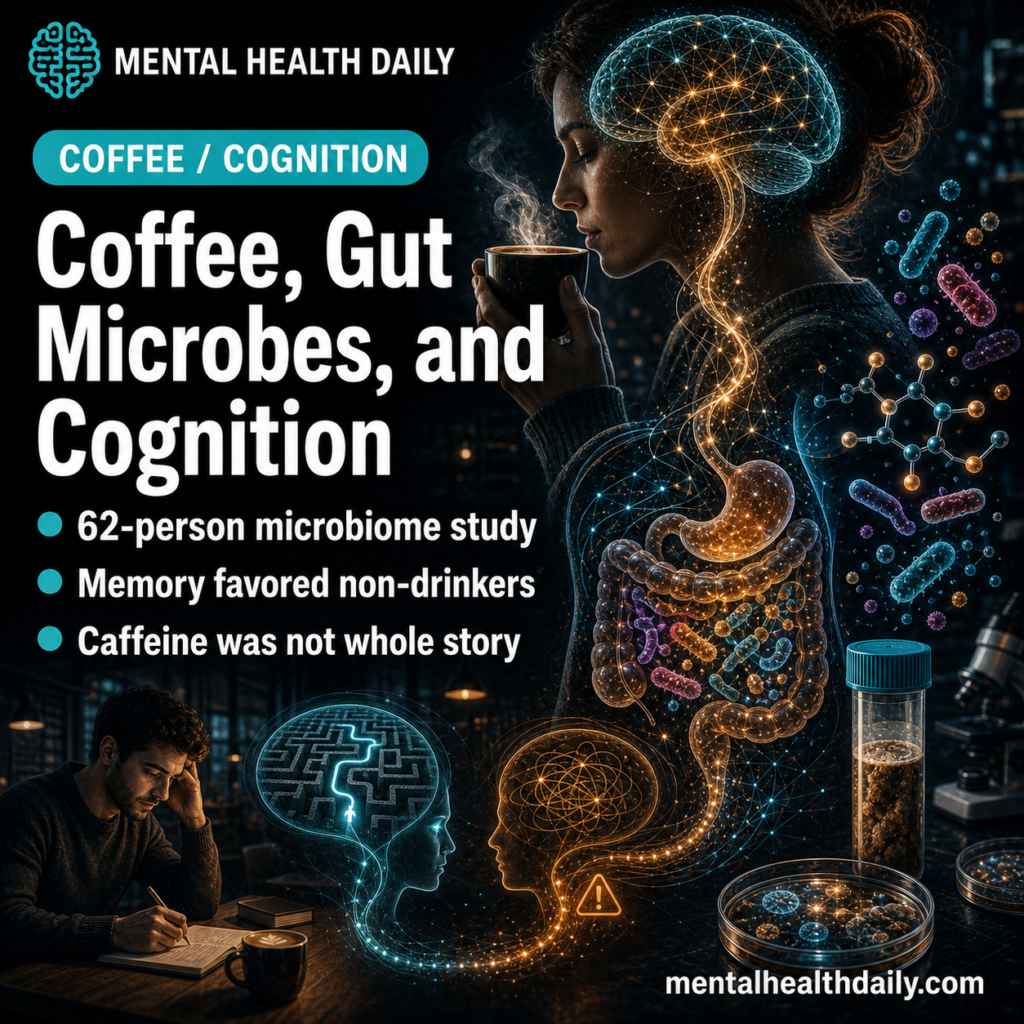
Coffee, Gut Microbes, Memory, and Impulsivity in 62 Adults

Stylized illustration of a coffee cup overlaid with gut bacteria silhouettes and brain neurons with neurotransmitter symbols, representing the gut-brain axis effects of habitual coffee intake.

Coffee is widely framed as cognitively friendly, but a 2026 prospective study from Boscaini et al. published in Nature Communications used shotgun metagenomics, metabolomics, and cognitive testing in 62 healthy adults to show that coffee drinkers and non-coffee drinkers differ on the gut microbiome, key neurotransmitter-related metabolites, and behavioral measures — with coffee drinkers showing …

Read more

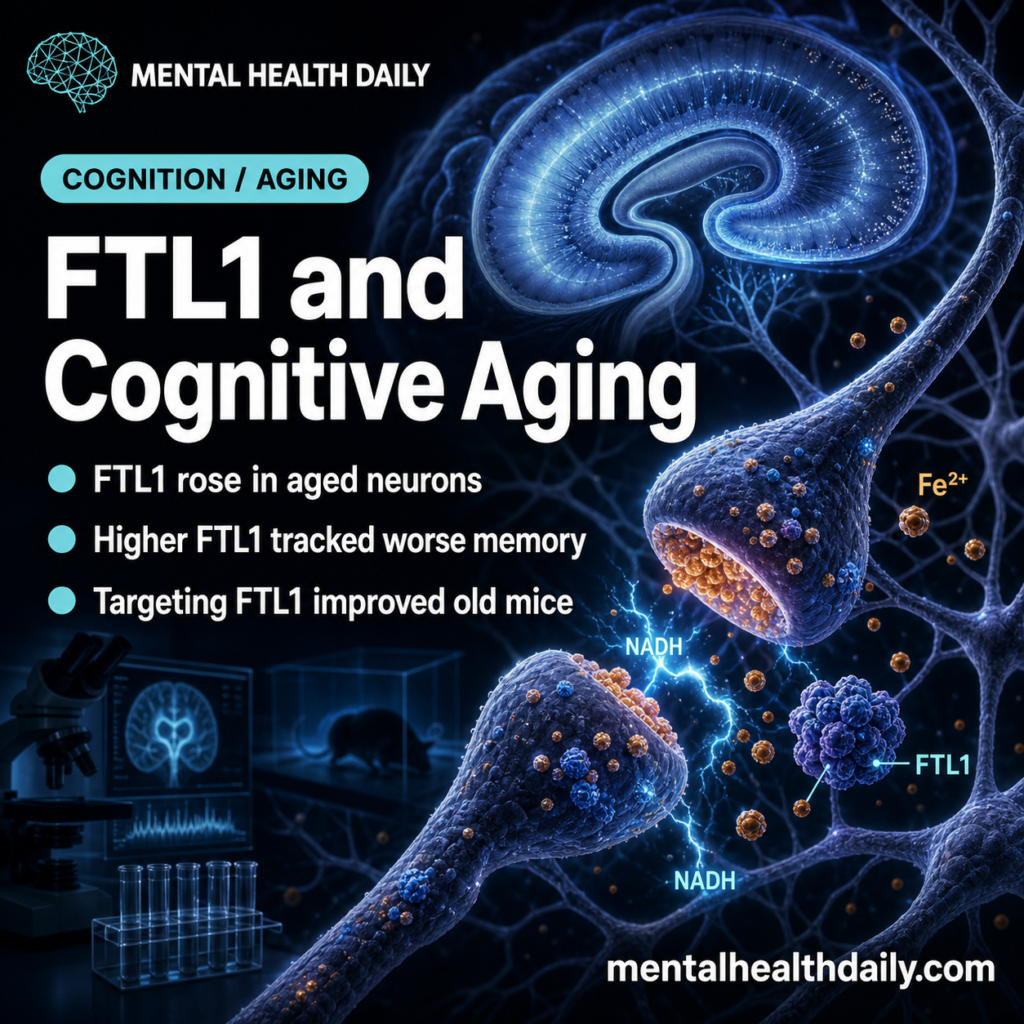
FTL1 Iron Protein Reversal Improved Cognitive Aging in Old Mice

MHD featured image for FTL1, iron biology, and cognitive aging in mice.

A 2025 Nature Aging study found that hippocampal ferritin light chain 1 (FTL1) rose with age in mouse neurons, tracked poorer cognition, and became experimentally reversible in old mice. This is an animal-mechanism result, not a human anti-aging treatment.1 Research Highlights FTL1 rose in aged hippocampus: Western blot data showed higher hippocampal FTL1 in aged …

Read more

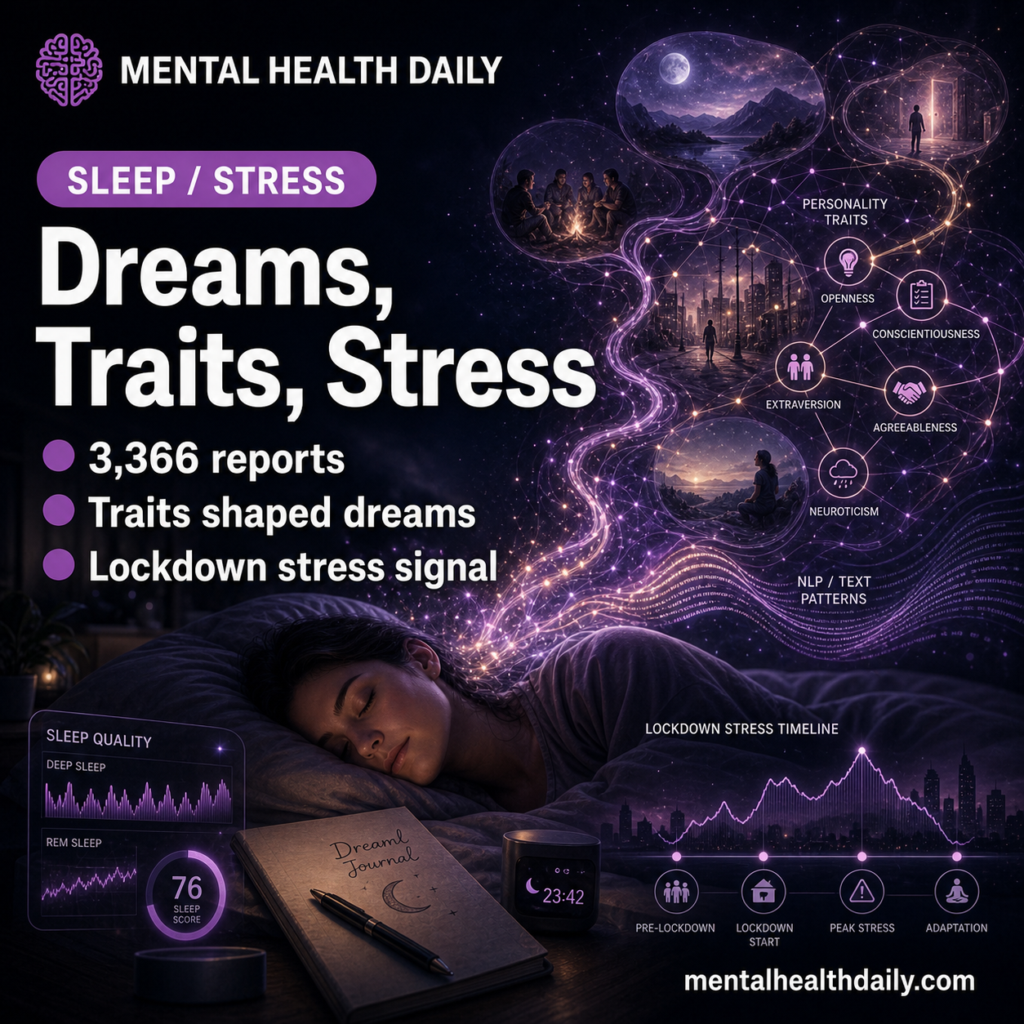
Dream Content Tracks Personality, Sleep Quality, and Stress

Dreams transform waking life rather than replaying it directly. In a 2026 Communications Psychology study of 3,366 reports, dreams were more visual, spatial, social, and bizarre than waking reports, while attitude toward dreaming, mind-wandering tendency, sleep quality, and COVID lockdown stress each left measurable fingerprints on dream content.1 Research Highlights Dreams were not random word …

Read more

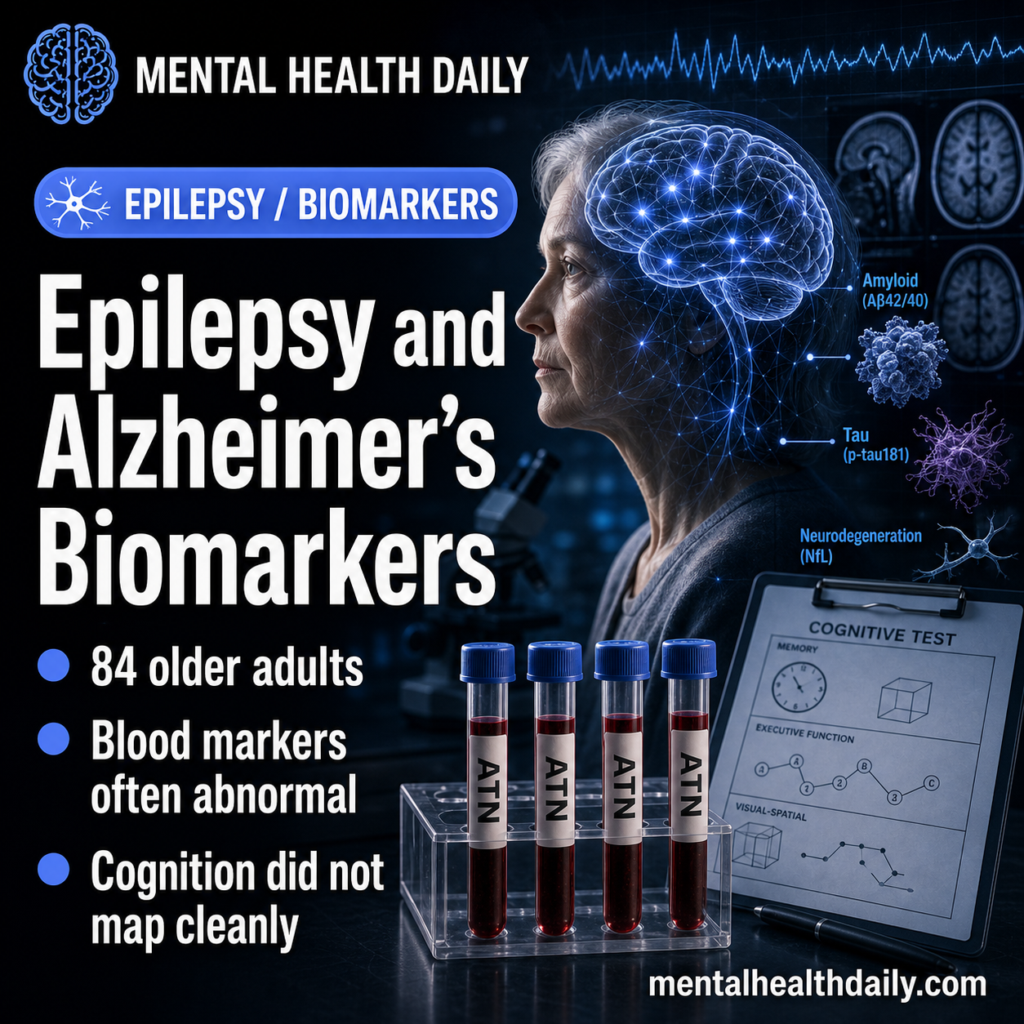
Epilepsy and Alzheimer’s Blood Biomarkers in Older Adults

MHD featured image for epilepsy, Alzheimer’s blood biomarkers, and AT(N) profiles in older adults.

A preprint in 84 older adults with epilepsy found that abnormal Alzheimer's-related blood biomarkers were common, but the biomarker categories did not line up neatly with cognitive impairment. Research Highlights Only 32.1% had normal biomarkers: 27 of 84 older adults with epilepsy were A−T−N− using blood-based amyloid, tau, and neurodegeneration markers.1 AD-continuum profiles were common: …

Read more

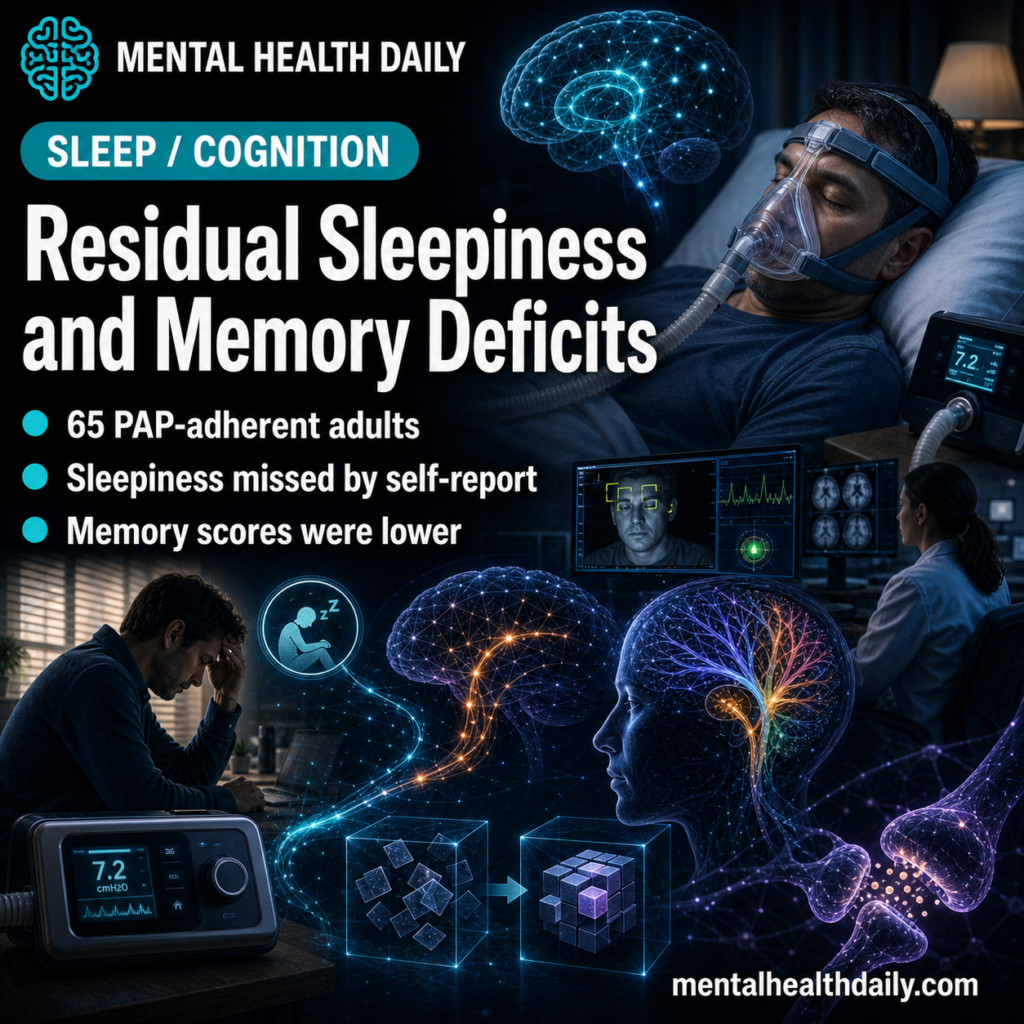
Residual Sleepiness in Treated Sleep Apnea Linked to Memory Deficits

Stylized sleep-apnea treatment scene with CPAP, daytime sleepiness testing, and memory-task circuitry, representing cognitive deficits linked to residual sleepiness despite PAP adherence.

Some sleep apnea patients stay sleepy even when their CPAP is used 6+ hours a night and apnea events have been driven back to normal range. A 2026 cross-sectional study of 65 PAP-adherent adults found those residually sleepy patients performed measurably worse on global cognition, memory, executive function, attention, and processing speed than their well-rested …

Read more

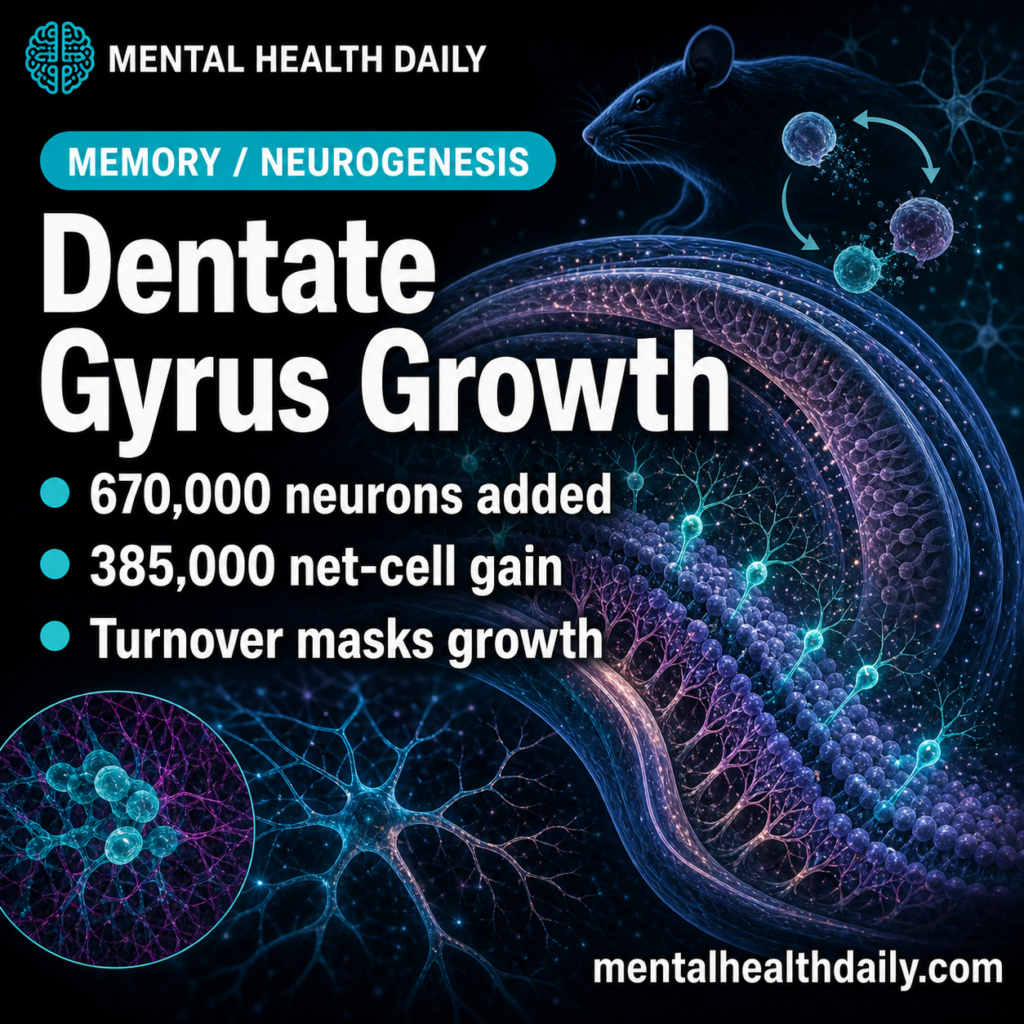
Adult Hippocampal Neurogenesis Added 670,000 Rat Dentate Neurons

MHD featured image for adult hippocampal neurogenesis and dentate gyrus neuron turnover.

A 2026 rat study estimated that adult hippocampal neurogenesis added 670,000 dentate gyrus granule neurons from 2 to 18 months of age, but the total dentate gyrus population grew by only 385,000 cells because older developmentally born neurons were also being lost.1 The result makes adult neurogenesis look numerically larger than the usual “tiny trickle” …

Read more

Clomipramine Improved Alzheimer’s Mouse Memory by Blocking Itch in 45 Days

Editorial card showing clomipramine, Itch signaling, and Alzheimer's mouse-memory rescue with a molecular neuroscience background.

A 2026 iScience study found that 45 days of clomipramine improved spatial, working, and reference memory in female APP/PS1 Alzheimer’s-model mice, apparently by blocking the E3 ubiquitin ligase Itch rather than by clearing amyloid plaques.1 Research Highlights 45-day clomipramine signal: 6-month female APP/PS1 mice received 25 mg/kg clomipramine every other day for 45 days, then …

Read more