hit counter

Metformin’s Brain Rap1 Pathway Controlled Glucose in Mouse Study

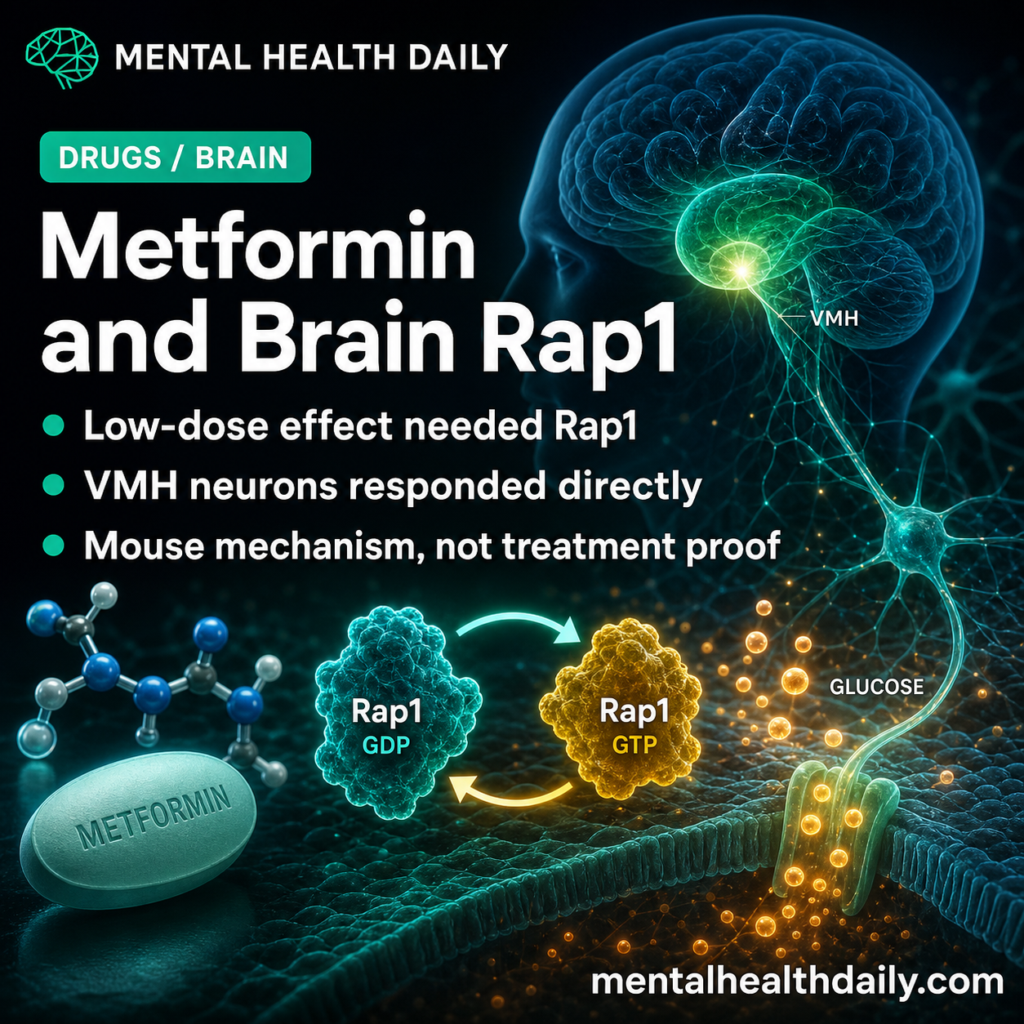
MHD featured image for metformin, brain Rap1 signaling, hypothalamic VMH neurons, and glucose control.

A 2025 Science Advances mouse study found a more brain-dependent metformin mechanism than the usual liver-gut framing suggests: low-dose metformin lost its glucose-lowering effect when brain Rap1 signaling could not be reduced, and 36 of 47 ventromedial-hypothalamus SF1 neurons responded directly to metformin.1 Research Highlights Low-dose metformin needed brain Rap1: Control mice lowered glucose after …

Read more

Stress Social Deficits Reversed by Amygdala-Oxytocin Circuit Suppression

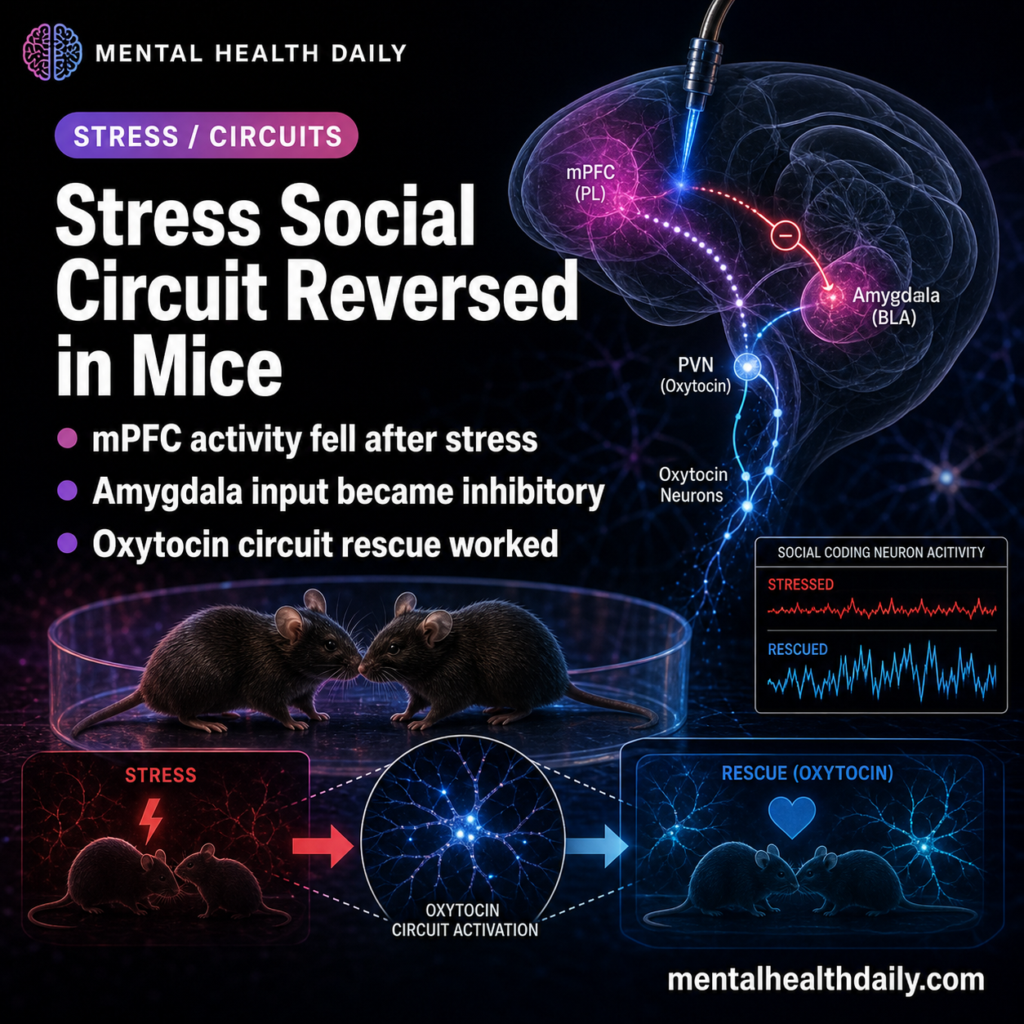
MHD featured image for stress-induced social changes, mPFC, amygdala, and oxytocin circuits.

A 2026 mouse circuit study found that restraint stress progressively reduced medial prefrontal social coding: mPFC excitatory-neuron transient rates fell to roughly 70-80% of baseline after acute stress and nearly 50% after chronic stress, while suppressing either basolateral-amygdala input or hypothalamic oxytocin input restored social discrimination and behavior.1 The result is a circuit-specific oxytocin finding, …

Read more

PMDD Imaging Shows Higher Glymphatic and Hypothalamus Signals

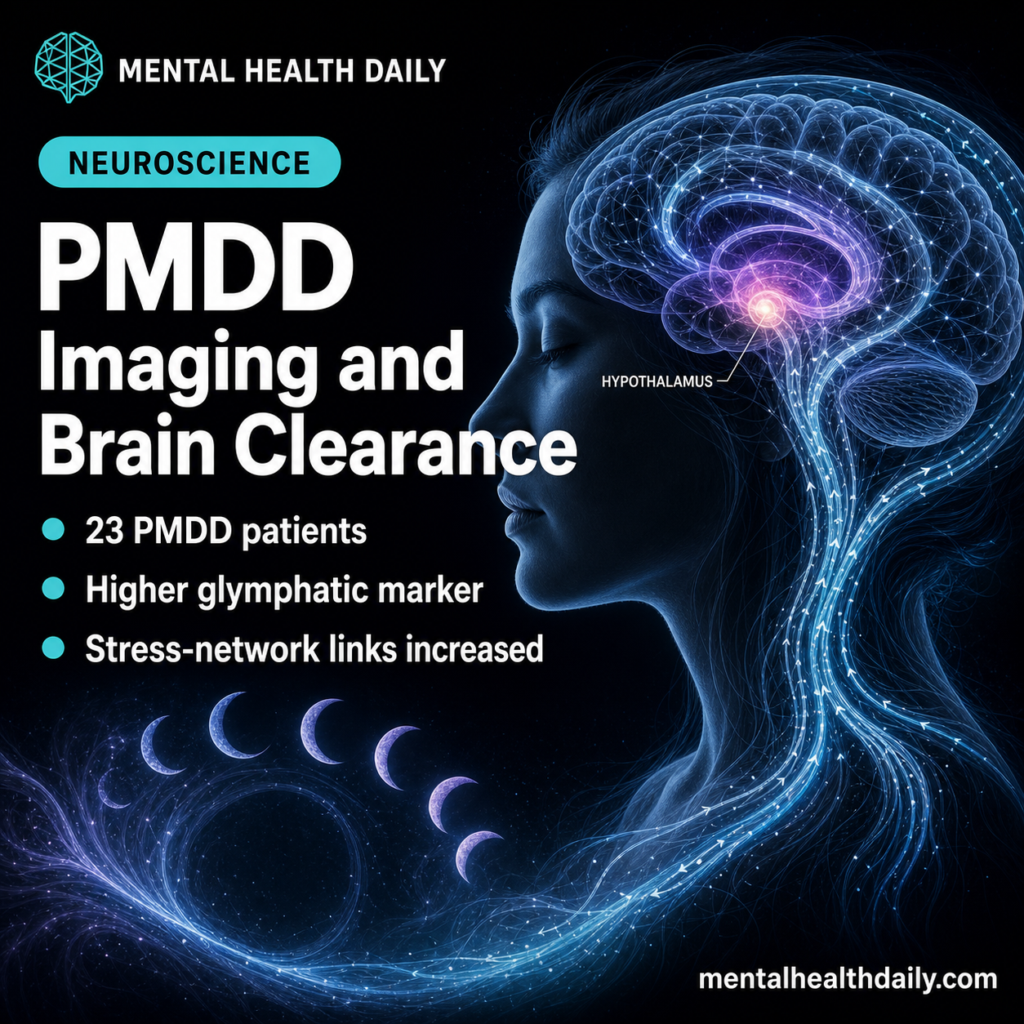
MHD featured image for PMDD glymphatic activity and hypothalamus connectivity.

A 2026 case-control imaging study found that 23 women with premenstrual dysphoric disorder had higher left DTI-ALPS glymphatic index than 27 healthy controls (p = 0.024), plus wider hypothalamus connectivity across emotion and subcortical networks.1 The result adds a brain-fluid-clearance and stress-network layer to PMDD biology, but the evidence is still small-sample imaging rather than …

Read more

Low Hypothalamus Volume Linked to Violence, Aggression, Psychopathy (2024 Study)

The complex interplay between the human brain and behavior has long fascinated scientists and laypeople alike, particularly when it comes to understanding the roots of violence. A recent study showcases the hypothalamus, a small but crucial brain region, revealing its significant role in aggression and violent behavior. Highlights: Hypothalamic Volume Reductions Linked to Violence: Studies …

Read more

Black Seed Oil (Nigella Sativa) Effectively Reverses Antibiotic-Induced Depression in Mice (2024 Study)

In a world increasingly reliant on antibiotics, emerging research sheds light on the unintended consequences of their chronic use, revealing significant impairments in mitochondrial function, hypothalamus-mediated metabolic operations, and amygdala-regulated emotional processes. A novel study has explored the potential of black seed oil (Nigella sativa oil, NSO) to mitigate these adverse effects, focusing on its …

Read more