hit counter

Top-Ranked Treatments for Schizophrenia Aggression: Clozapine, Paliperidone and Olanzapine
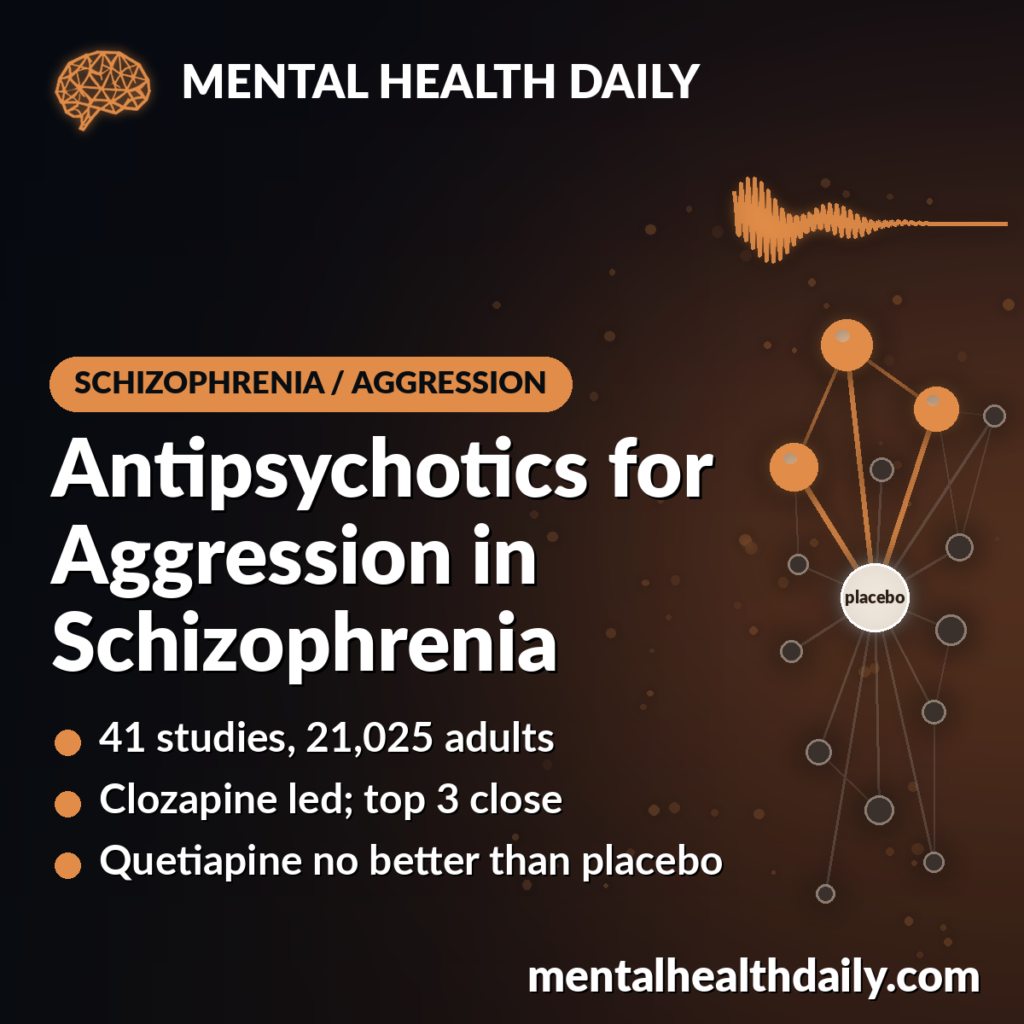
MHD card with an amber network of antipsychotic drug nodes linked to a placebo node over a dark background, with a calming waveform: clozapine, paliperidone, and olanzapine reduced aggression in schizophrenia most, but confidence was low.

A 2026 analysis of 41 randomized studies involving 21,025 adults with schizophrenia found the largest estimated reductions in hostility and aggression for clozapine (standardized mean difference, or SMD, of −0.75), paliperidone (−0.62), and olanzapine (−0.60) vs. placebo.1 Confidence in every comparison was low or very low, the top 3 were not statistically separable, and most …
Read more

Drug-Induced Dystonia: Metoclopramide and Antipsychotics Lead FAERS

MHD featured image for drug-induced dystonia signals involving metoclopramide and antipsychotics.

A 2026 FAERS pharmacovigilance study of 28,938 dystonia reports found the strongest reporting signal for metoclopramide, while antipsychotics dominated the high-volume psychiatric medication signal and most timed cases began within 30 days of drug exposure.1 Research Highlights 28,938 dystonia reports: Chen et al. analyzed 27,618 patients represented in FAERS reports from Q1 2004 through Q3 …

Read more

Antipsychotic Shortages Caused Drug Switching: 95,968-Patient Claims Study (2026)

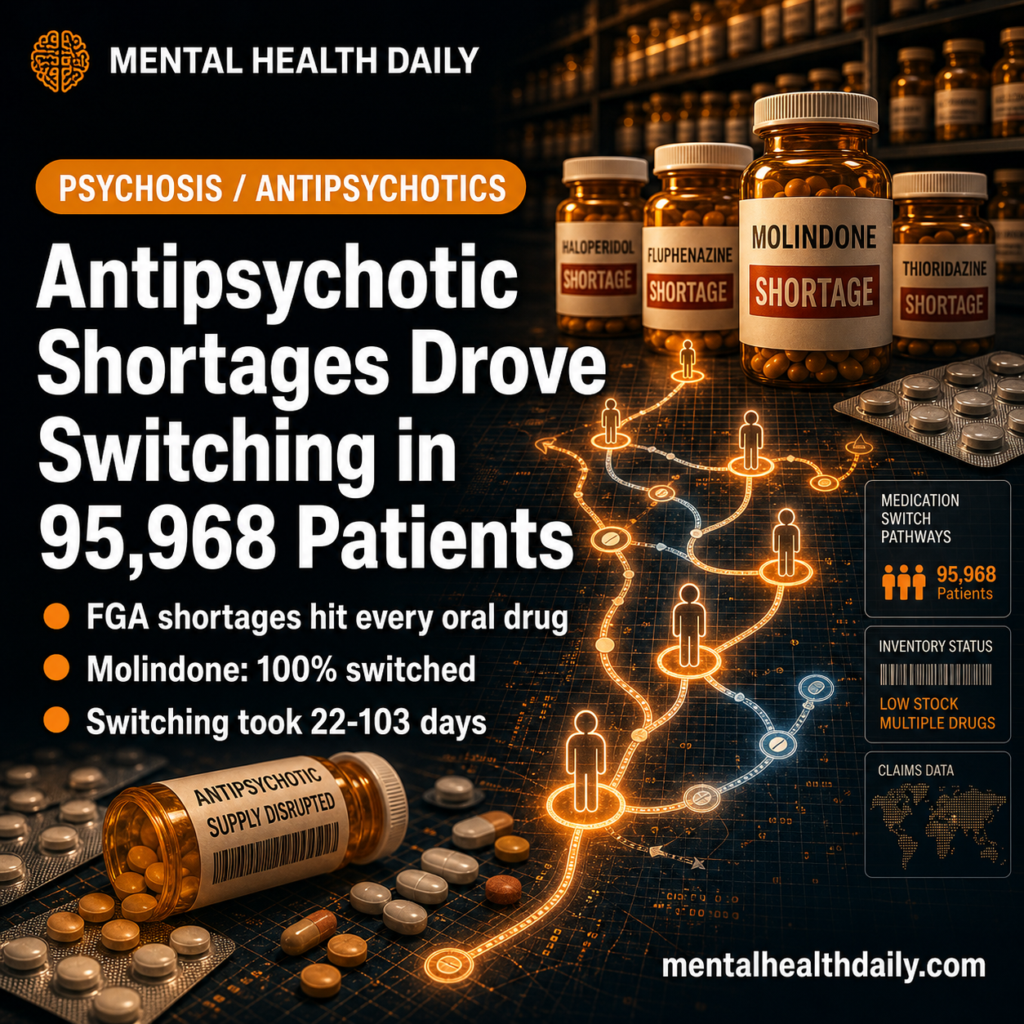
First-generation antipsychotic (FGA) shortages are not just pharmacy annoyances; they force medication changes in people who may have taken years to stabilize on a tolerable regimen. Research Highlights 95,968 patients: Tabah 2026 used Komodo claims data to study people with psychotic-spectrum diagnoses taking shortage-affected first-generation antipsychotics. Switching was not evenly distributed: molindone reached 100% switching, …

Read more