hit counter

Coffee, Gut Microbes, Memory, and Impulsivity in 62 Adults

Stylized illustration of a coffee cup overlaid with gut bacteria silhouettes and brain neurons with neurotransmitter symbols, representing the gut-brain axis effects of habitual coffee intake.

Coffee is widely framed as cognitively friendly, but a 2026 prospective study from Boscaini et al. published in Nature Communications used shotgun metagenomics, metabolomics, and cognitive testing in 62 healthy adults to show that coffee drinkers and non-coffee drinkers differ on the gut microbiome, key neurotransmitter-related metabolites, and behavioral measures — with coffee drinkers showing …
Read more

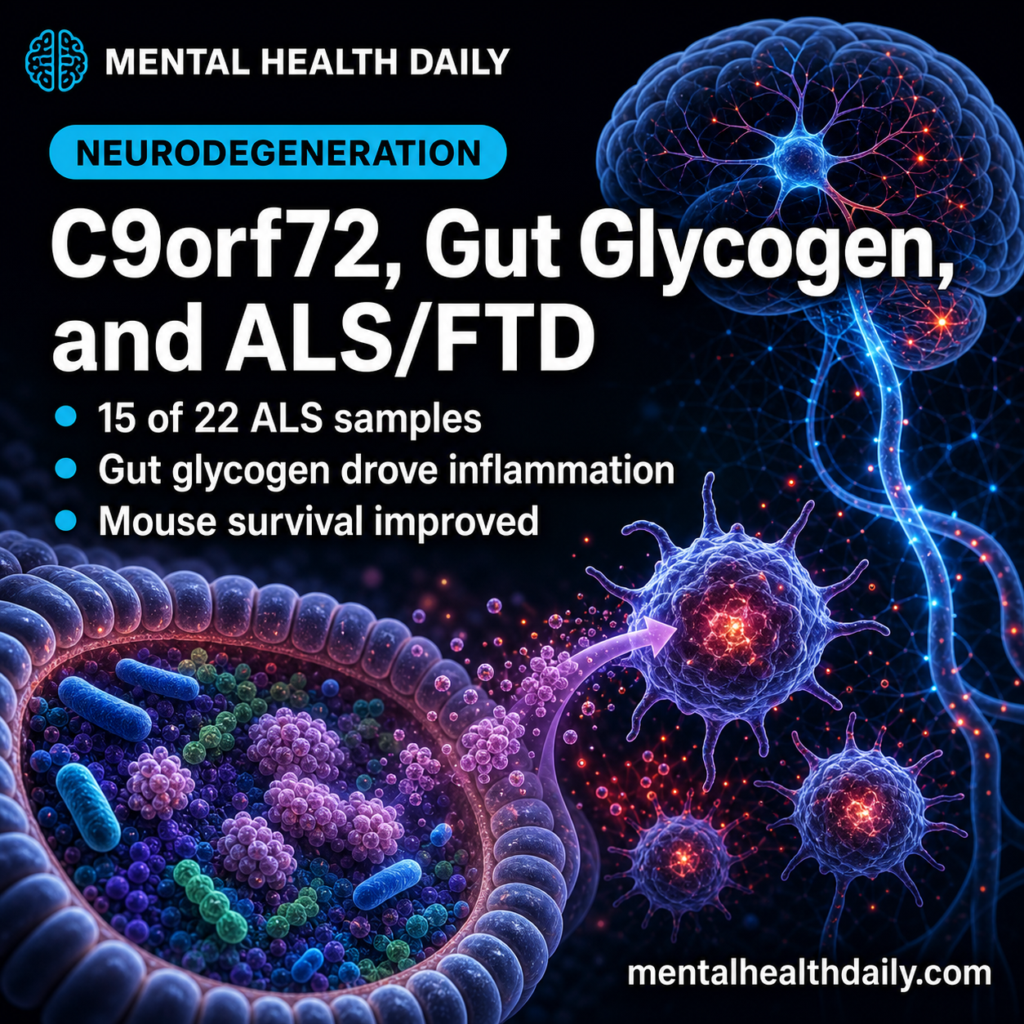
C9orf72 ALS/FTD Inflammation Linked to Microbial Glycogen in Gut

MHD featured image for C9orf72, microbial glycogen, gut inflammation, and ALS/FTD risk.

A Cell Reports study tied C9orf72-related ALS/FTD inflammation to a gut-bacterial product: inflammatory microbial glycogen appeared in 15 of 22 ALS fecal samples, 1 of 1 C9orf72-frontotemporal dementia sample, and 4 of 12 healthy controls.1 The result supports a narrower gene-by-microbial-product mechanism that makes C9orf72 loss of function more inflammatory. Research Highlights Human samples carried …

Read more

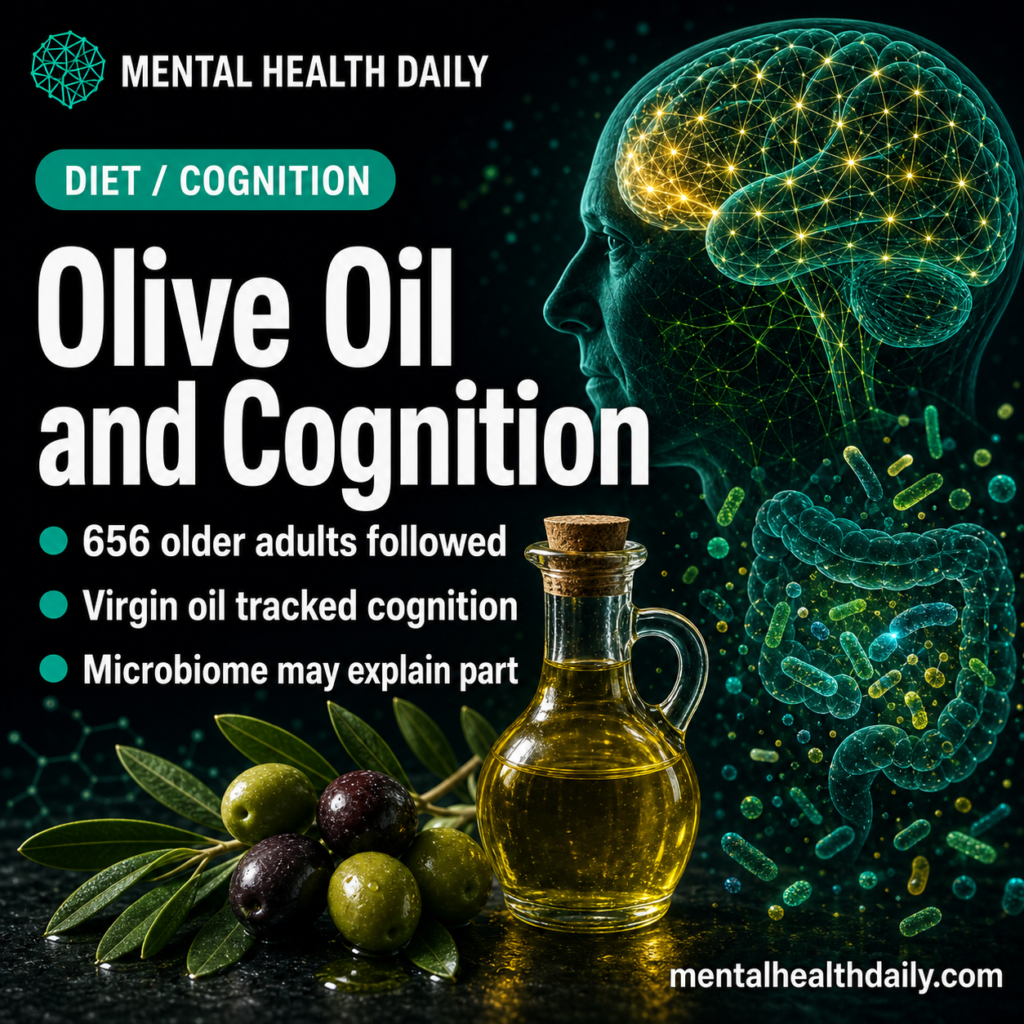
Virgin Olive Oil Linked to Cognitive Preservation and Gut Diversity

MHD featured image for virgin olive oil, gut microbiome diversity, and cognition.

A 2026 PREDIMED-Plus cohort analysis linked higher olive-oil intake with 2-year cognitive preservation in 656 older adults, with each 10 g/day increment associated with higher global cognition change compared with lower intake (beta 0.044 z-score; 95% CI 0.013 to 0.075; p = 0.006).1 The more specific signal favored virgin olive oil and gut-microbiome diversity, while …

Read more

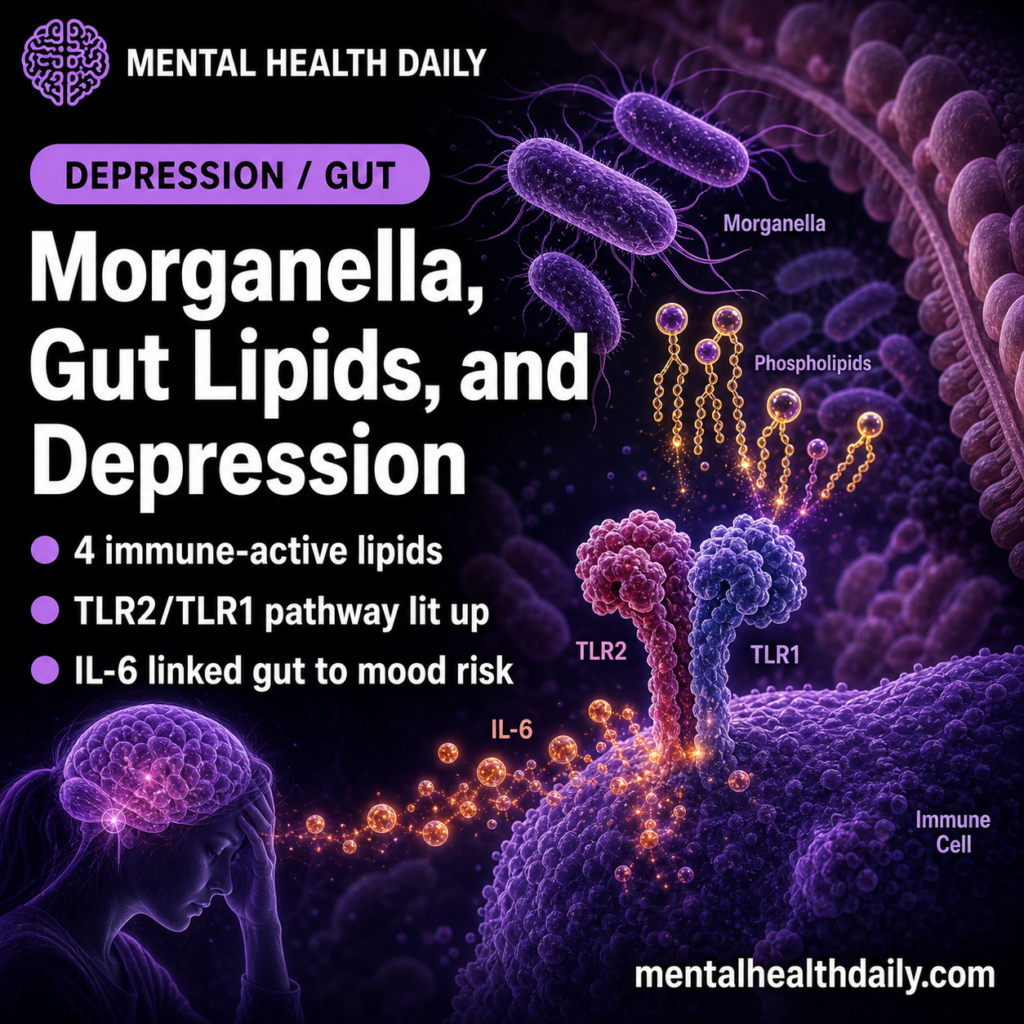
Morganella Phospholipids Triggered IL-6 in Depression Mechanism Study

MHD featured image for Morganella gut bacteria, phospholipids, and depression-related inflammation.

A 2025 Journal of the American Chemical Society study identified 4 unusual Morganella morganii phospholipids that activated TLR2/TLR1 immune receptors and induced inflammatory cytokines, especially IL-6.1 The finding does not prove that one gut bacterium causes depression, but it gives the microbiome-depression field something it often lacks: a named molecule and a receptor pathway. Research …

Read more

Apple Cider Vinegar for Psychotropic Weight Gain: 11 Cases

MHD featured image for apple cider vinegar capsules, psychotropic weight gain, metabolic side effects, and gut microbiome changes.

An 11-person case series tested delayed-release apple cider vinegar capsules in young adults who had gained weight while taking psychotropic medications, and metabolic markers carried more signal than weight loss. Research Highlights Feasibility was the strongest result: 11 of 12 enrolled participants completed the study, 10 of 11 completers missed 5 or fewer doses, and …

Read more

Sex Differences of Gut Bacteria (Microbiome) in Major Depression (2024 Review)

The intricate relationship between the gut microbiome and major depressive disorder (MDD) is gaining significant attention within the scientific community. Emerging research highlights sex-specific disparities in the gut microbiome’s composition and its potential impact on MDD, pointing towards the necessity of integrating sex as a biological variable in future studies. Highlights: Sex Disparities in MDD: …

Read more