hit counter

Parasite Gut-Brain Study Links Tuft Cells to Serotonin Appetite Signal
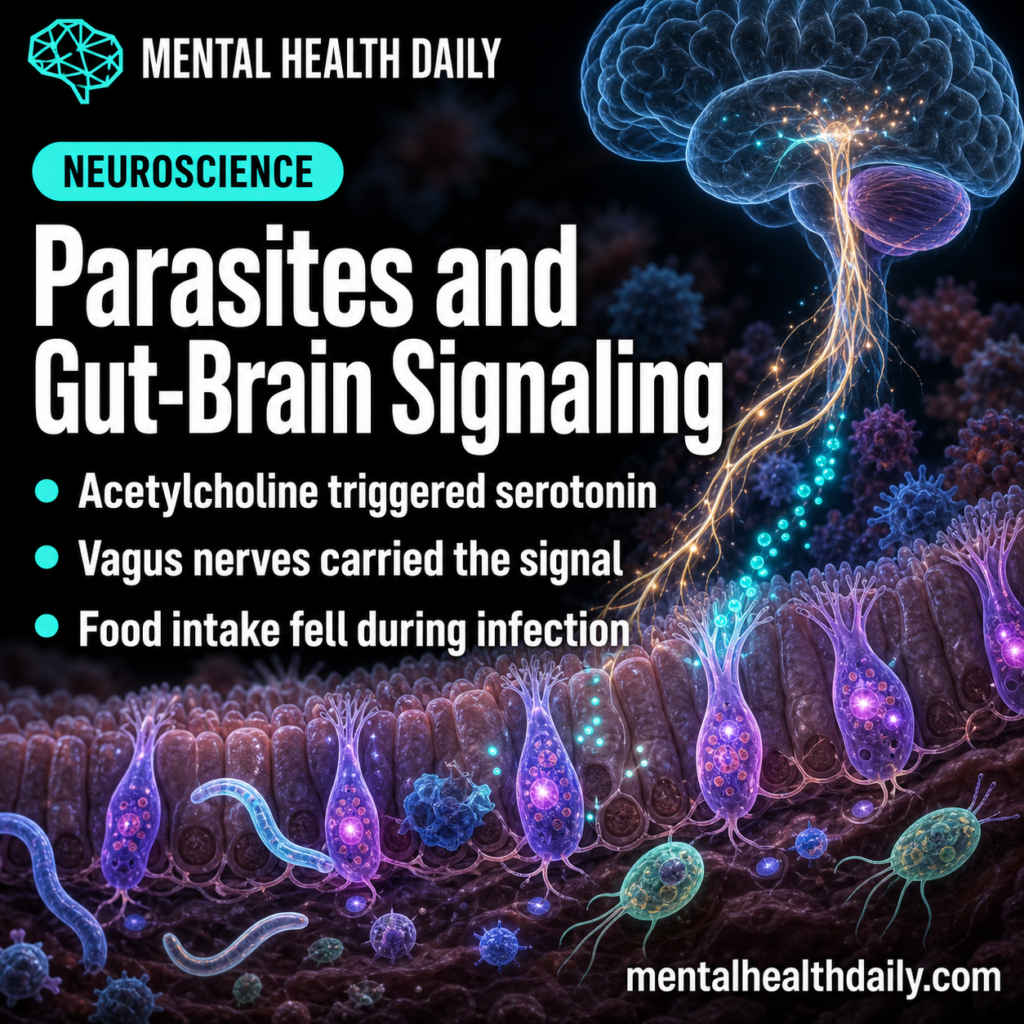
MHD featured image for parasite-triggered gut-brain serotonin signaling and food intake.

A 2026 Nature study found that parasite-sensing tuft cells can release acetylcholine, activate crypt enterochromaffin cells through muscarinic receptors, trigger serotonin release, stimulate vagal afferent neurons, and suppress food intake during established infection.1 The finding is a precise gut-defense circuit, not a generic claim that the gut-brain axis explains every mood or appetite problem. Research …
Read more

Migraine With PFO: Lower Indoleacrylic Acid, 211 Metabolite Changes

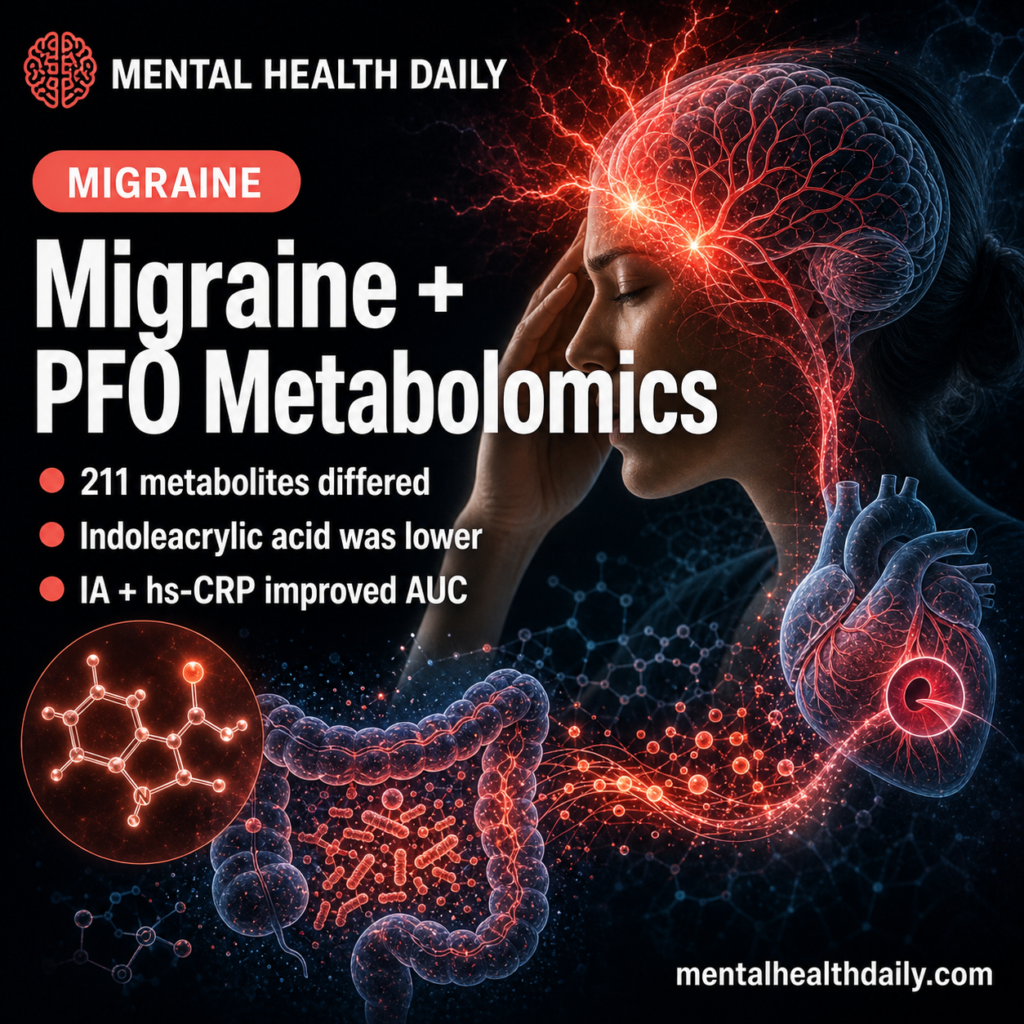
MHD featured image for migraine with PFO metabolomics and indoleacrylic acid.

A 2026 iScience metabolomics study found 211 differentially expressed metabolites in migraine patients with patent foramen ovale; in a 220-person validation cohort, lower indoleacrylic acid plus hs-CRP reached AUC 0.722 for distinguishing migraine with PFO from controls.1 Research Highlights Metabolomics found a broad signal: The discovery cohort included 30 migraine-with-PFO patients and 17 controls, with …

Read more

Parasite Infections and Mental Health: 5 Gut-Brain Immune Routes

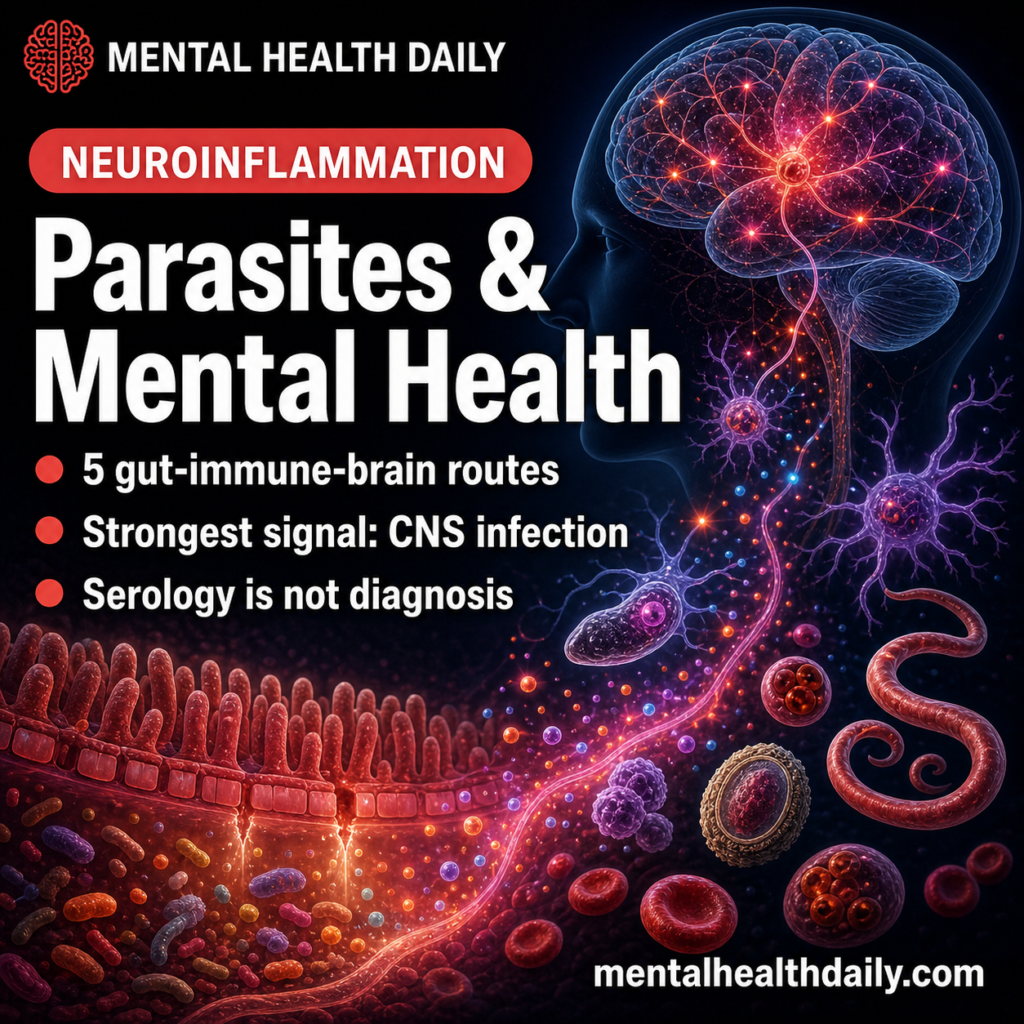
MHD featured image for parasite infections, neuroinflammation, and mental health.

A 2026 Journal of Neuroinflammation review organized parasite-linked neuropsychiatric risk around 5 gut-immune-brain routes; direct CNS parasitic disease carries the clearest signal, while broader mood and cognition associations usually remain observational and confounded.[1] Research Highlights 5 pathways converge on brain function: the 2026 review connected parasite exposure to peripheral cytokines, gut dysbiosis, intestinal permeability, blood-brain …

Read more

Sex Differences of Gut Bacteria (Microbiome) in Major Depression (2024 Review)

The intricate relationship between the gut microbiome and major depressive disorder (MDD) is gaining significant attention within the scientific community. Emerging research highlights sex-specific disparities in the gut microbiome’s composition and its potential impact on MDD, pointing towards the necessity of integrating sex as a biological variable in future studies. Highlights: Sex Disparities in MDD: …

Read more

EPA & DHA Treat Depression in Mouse Models of Ulcerative Colitis (UC) (2024 Study)

Recent research has uncovered significant insights into the intersection of physical and mental health, particularly focusing on the relationship between ulcerative colitis (UC) and depression. This study has delved into how two omega-3 fatty acids, eicosapentaenoic acid (EPA) and docosahexaenoic acid (DHA), can alleviate depressive-like behavior in mice induced by UC. Through meticulous experimentation, it …

Read more

Lactofem Probiotic as Adjunct to SSRI Antidepressants May Enhance Mood & Sexual Satisfaction in Women (2024 Study)

The link between mental health and sexual function is complex and multifaceted, with depressive disorders particularly affecting individuals’ sexual satisfaction and functionality. Recent research has highlighted the potential benefits of probiotics in mitigating these impacts, especially among women undergoing treatment with Selective Serotonin Reuptake Inhibitors (SSRIs). A new study conducted in Iran provides promising evidence …

Read more

Chronic Stress Alters the Gut Microbiome & Intestinal Barrier in Mice with Sex-Specific Effects (2023 Study)

The gut-brain axis, a complex communication network linking the gastrointestinal tract and the brain, plays a pivotal role in maintaining both mental and physical health. Recent studies illuminate how chronic stress disrupts this intricate system, particularly affecting the intestinal barrier in the jejunum, and contributes to the pathogenesis of Major Depressive Disorder (MDD). This emerging …

Read more