hit counter

Neonatal Brain MRI Shows Gyri Are Connectivity Hubs by 38-44 Weeks

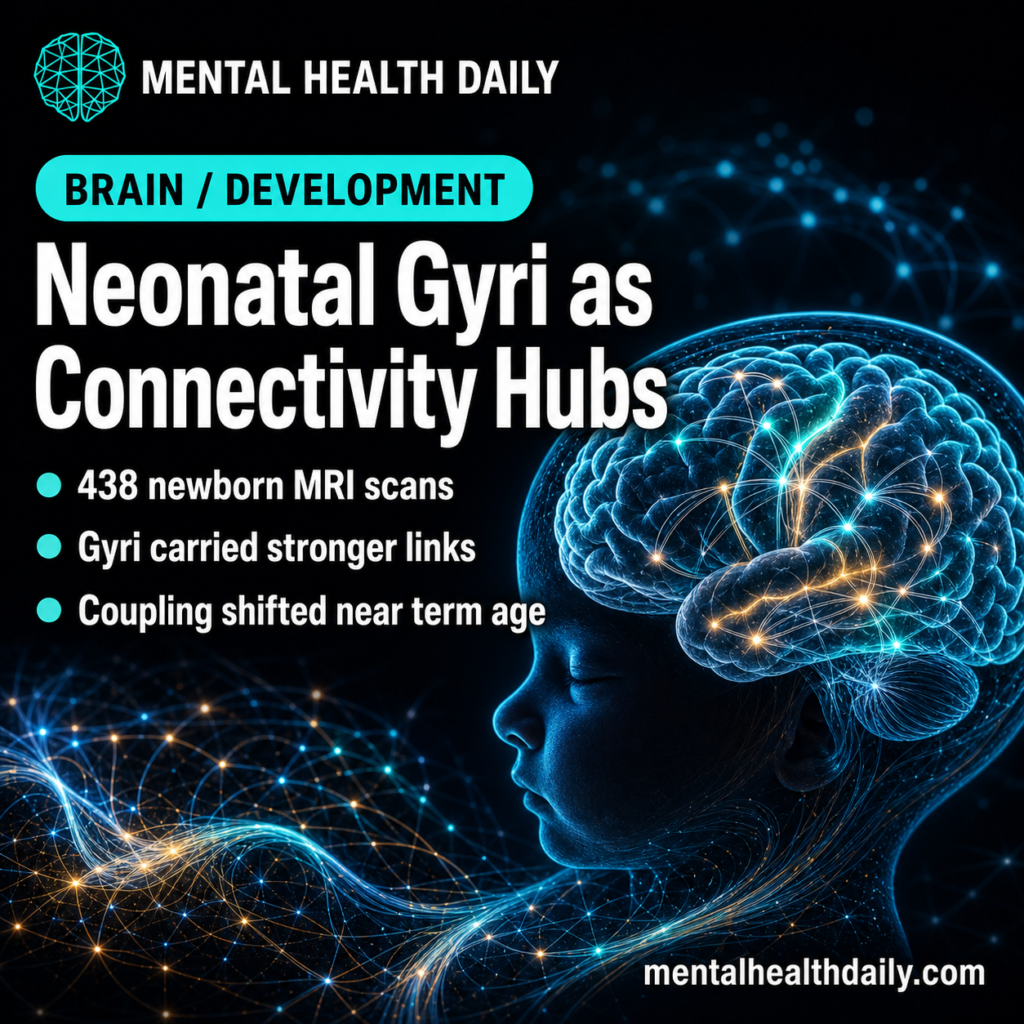
MHD featured image for neonatal MRI, cortical gyri, sulci, and early brain connectivity.

A 2026 developing Human Connectome Project analysis of 438 full-term neonates found that the newborn cortex already had an adult-like folding hierarchy: gyri connected most strongly to other gyri, sulci connected most weakly to other sulci, and structure-function coupling shifted near 41 to 42 weeks postmenstrual age.1 Research Highlights Gyri were already high-connectivity hubs: across …

Read more

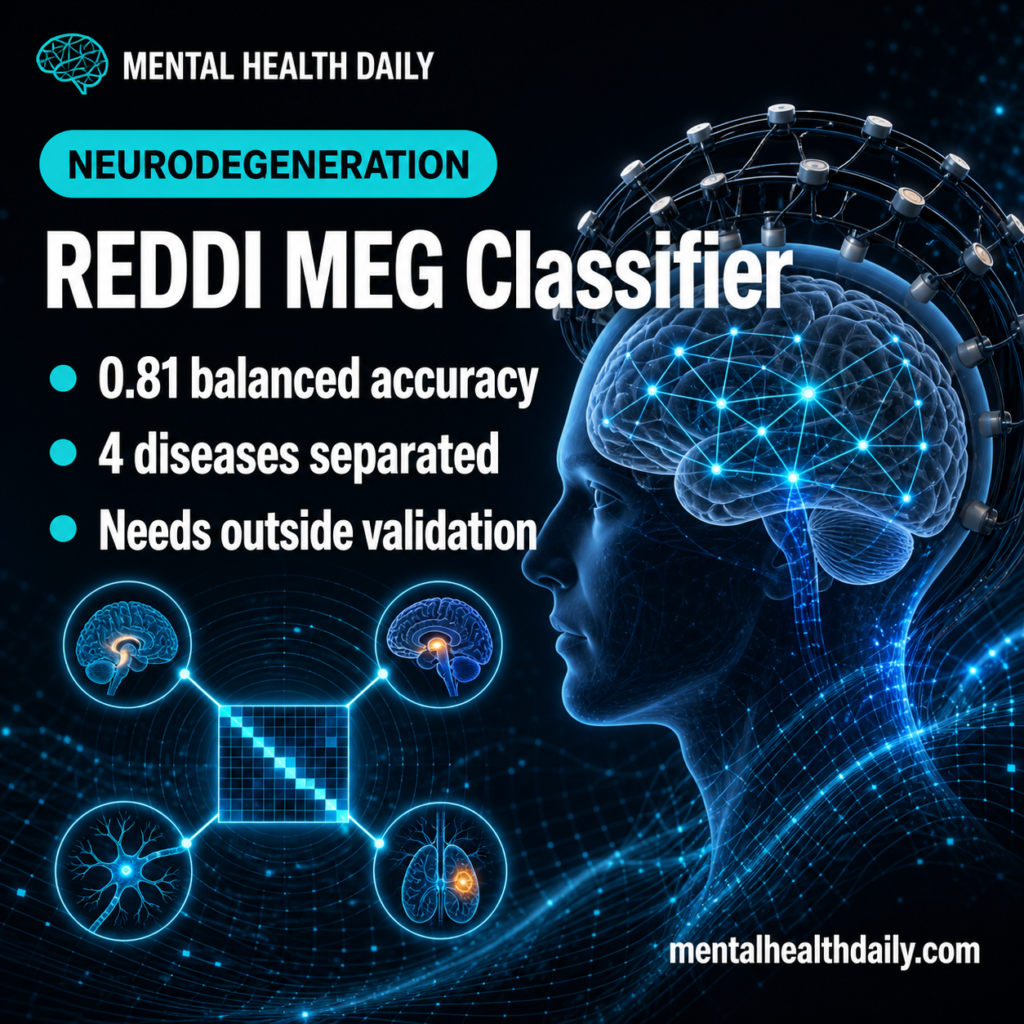
REDDI MEG Classifier Separated 4 Neurodegenerative Diseases at 0.81

MHD featured image for REDDI MEG differential diagnosis research.

A 2026 medRxiv preprint found that REDDI, a resting-state magnetoencephalography machine-learning pipeline, separated mild cognitive impairment, multiple sclerosis, Parkinson’s disease, and amyotrophic lateral sclerosis with 0.81 ± 0.04 balanced accuracy across 5 folds.1 That is a meaningful jump over the prior 67.1% MEG benchmark, but it is still research-stage decision support rather than a clinical …

Read more

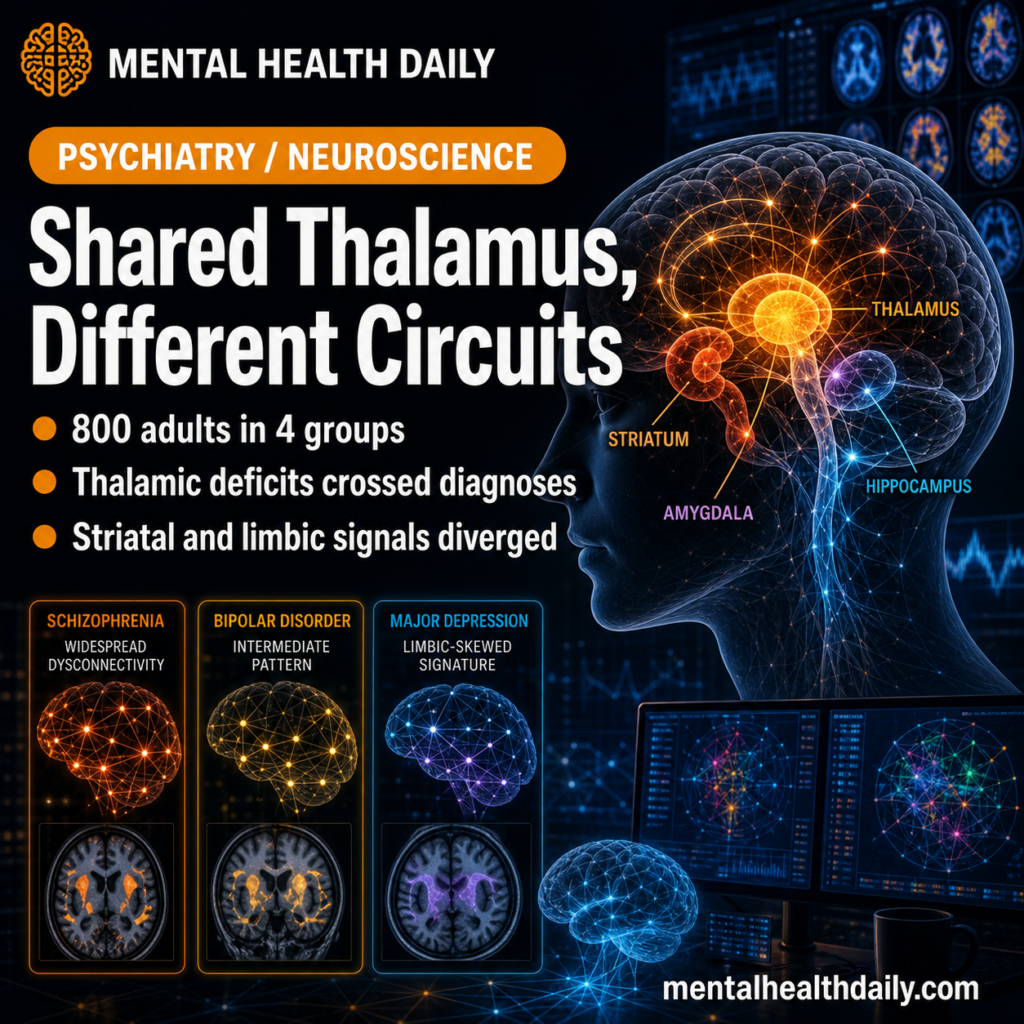
Subcortical Connectivity Differs in Schizophrenia, Bipolar, Depression

MHD featured image for subcortical connectivity patterns across schizophrenia, bipolar disorder, and depression.

A 2026 resting-state fMRI study of 800 adults found intra-thalamic hypoconnectivity across schizophrenia, bipolar disorder, and major depression, but schizophrenia showed far broader subcortical dysconnectivity than bipolar disorder or depression.1 The calibrated read is that these diagnoses may share a thalamic vulnerability while diverging in striatal and limbic circuitry. Research Highlights Shared thalamic deficit: In …

Read more

Autism vs. ADHD Connectome Study: Frontal-DMN Signal Tracks Autism Severity

MHD featured image for autism, ADHD, and connectome-based symptom mapping.

A 166-child resting-state fMRI study found that clinician-observed autism severity, not ADHD severity, tracked connectivity strength between a left middle frontal gyrus node and the posterior cingulate/default mode network across children diagnosed with autism or ADHD without autism. The result is transdiagnostic, but asymmetrical: autism traits carried the connectome signal after ADHD ratings were controlled.1 …

Read more

Language and Theory of Mind Separate by Age 3 in Child Brain Scans

MHD featured image for language and theory of mind brain development in children.

A 2026 fMRI study found language and theory-of-mind activation already separated in 54 child sessions from ages 3-9, with strict child overlap near zero in the left superior temporal lobe (Dice 0.015) and no evidence that the 2 systems disentangled with age.1 The result pushes against a simple developmental story in which language grows out …

Read more

Resting EEG Supports Epilepsy More Than Functional Seizures

Photoreal illustration of EEG waveforms over a stylized brain, conveying network-based discrimination between two seizure-like disorders.

A 2026 diagnostic-accuracy preprint found that resting-state EEG network features separated non-lesional epilepsy from functional/dissociative seizures (FDS) at 67.5% balanced accuracy, but the signal was not symmetrical: sensitivity was 81.8% for epilepsy and only 53.3% for FDS.1 In plain clinical terms, the model looked more useful as an epilepsy-supporting marker than as a positive test …

Read more

Personalized TMS for Psychiatric Disorders: Targeting Functional Connectivity (FC) in the Brain (2024 Review)

Transcranial Magnetic Stimulation (TMS) has emerged as a beacon of hope in the realm of psychiatry, offering a non-invasive alternative for treating psychiatric disorders. The variability in treatment outcomes highlights the necessity for advancements in personalized approaches. A recent paper analyzed the potential of personalized TMS protocols (customized based on individual brain connectivity) may help …

Read more