hit counter

Neighborhood Deprivation Linked to Faster Epigenetic Aging in 370 Adults

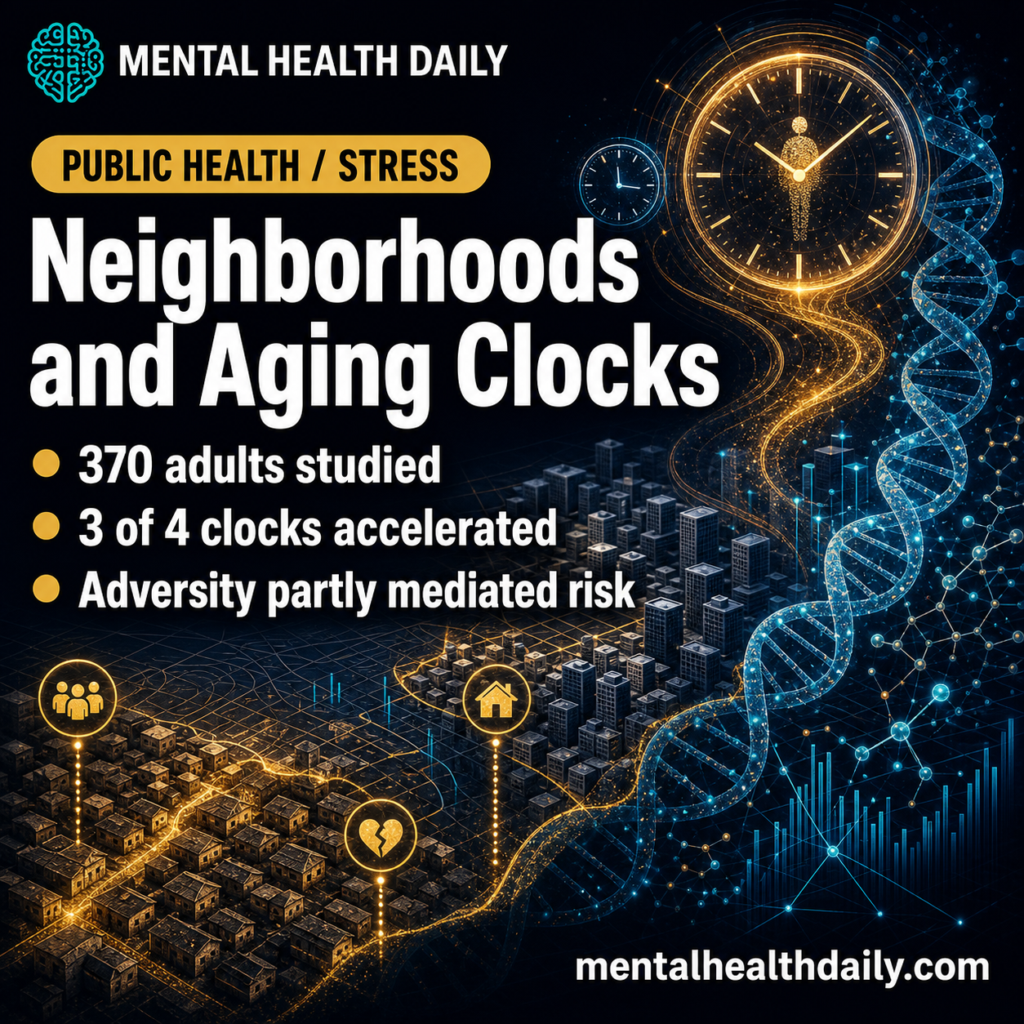
Editorial card showing neighborhood deprivation, lifetime adversity, and epigenetic clock acceleration.

A 2026 medRxiv preprint involving 370 healthy adults found that each increase in neighborhood-deprivation percentile rank was associated with epigenetic age acceleration on 3 of 4 second-generation DNA-methylation clocks, with lifetime adversity explaining 20.3% of the GrimAge association and 23.3% of the PCGrimAge association.1 Research Highlights 3 of 4 clocks accelerated: each increase in Area …

Read more

Low-Level Lead Linked to Infant Neurodevelopment Through DNA Methylation

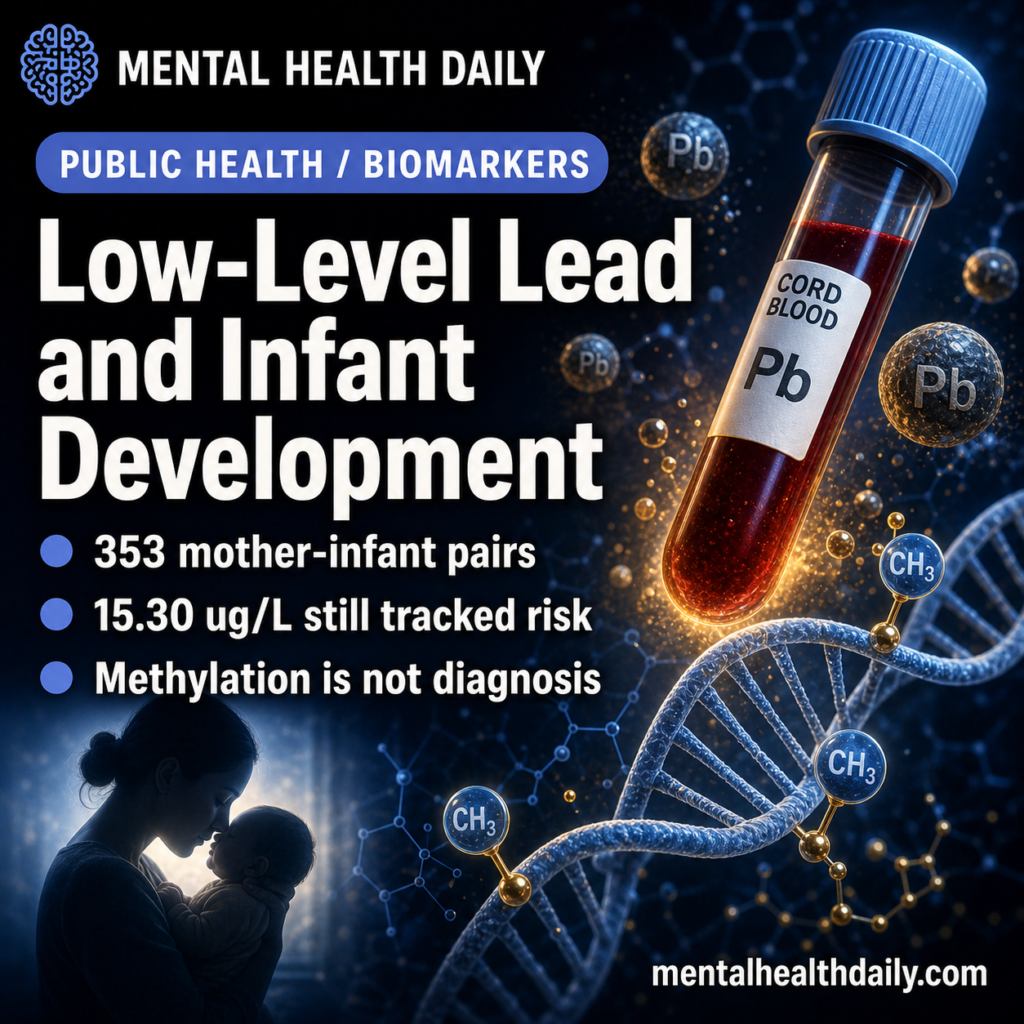
MHD featured image for low-level lead exposure, infant neurodevelopment, and FAM50B/PTCHD3 DNA methylation.

A 2026 prospective birth-cohort study in southern China linked mean cord-blood lead of 15.30 μg/L to lower infant neurodevelopmental scores across all 5 Ages and Stages Questionnaire domains, even though only 1.13% of samples exceeded 50 μg/L.1 A second finding was mechanistic: part of the lead-development association statistically ran through FAM50B/PTCHD3 DNA methylation, an epigenetic …

Read more

Childhood Anxiety Linked to DNA Methylation and DMN-Limbic Development

MHD featured image for childhood anxiety, DNA methylation, and DMN-limbic network development.

A 2026 Singapore birth-cohort preprint found a conditional childhood-anxiety signal: the cord-blood DNA methylation component predicted less age-13 anxiety only in boys in the low DMN-limbic trajectory group from ages 4.5 to 10.5 years. The paper is useful for mapping developmental risk biology, but it is not a screening test and it does not show …

Read more

Oxycodone vs. Other Opioids: Distinct Epigenetic Effects & Molecular Adaptations (2023 Review)

The opioid crisis, particularly in North America, has spotlighted oxycodone as a central figure due to its significant role in addiction and overdose deaths. A recent review analyzed the genomic and epigenetic mechanisms behind oxycodone’s effects compared to other opioids, shedding light on its unique impact on addiction pathways. Highlights: Oxycodone, a semi-synthetic opioid derived …

Read more

Myo-Inositol for Traumatic Brain Injury (TBI): Targeting BATF2 for Epigenetic & Transcriptomic Changes (2024 Study)

Traumatic brain injury (TBI) remains one of the most challenging conditions for modern neurology, carrying a wide range of long-term consequences that can significantly impair an individual’s quality of life. In a new study, researchers analyzed the epigenetic landscape post-TBI, revealing significant DNA methylation changes in the hippocampus—a crucial area for memory and learning. The …

Read more

Combo of Neuroimaging, Transcriptome, Epigenetics to Understand Gray Matter Abnormalities in Major Depression (2024 Study)

Major depressive disorder (MDD) affects millions worldwide, yet its underlying causes remain largely enigmatic. A new study integrated neuroimaging, transcriptomic, and epigenetic data to better understand the genetic underpinnings of MDD. This comprehensive approach revealed a complex interplay between brain structure, gene expression, and DNA methylation, offering new insights into this debilitating condition. Highlights: Integrative …

Read more

Epigenetics & Nicotine Addiction: Effects on Genes & Potential Treatments (2023)

Nicotine addiction is not just a habit; it’s a complex interplay of molecular changes altering the brain’s function and structure. Recent research sheds light on how nicotine interacts with our genetic makeup, leading to persistent cravings and relapse. Highlights: Nicotine & Epigenetic Modification: Nicotine alters the way genes are expressed in the brain, affecting behavior …

Read more