hit counter

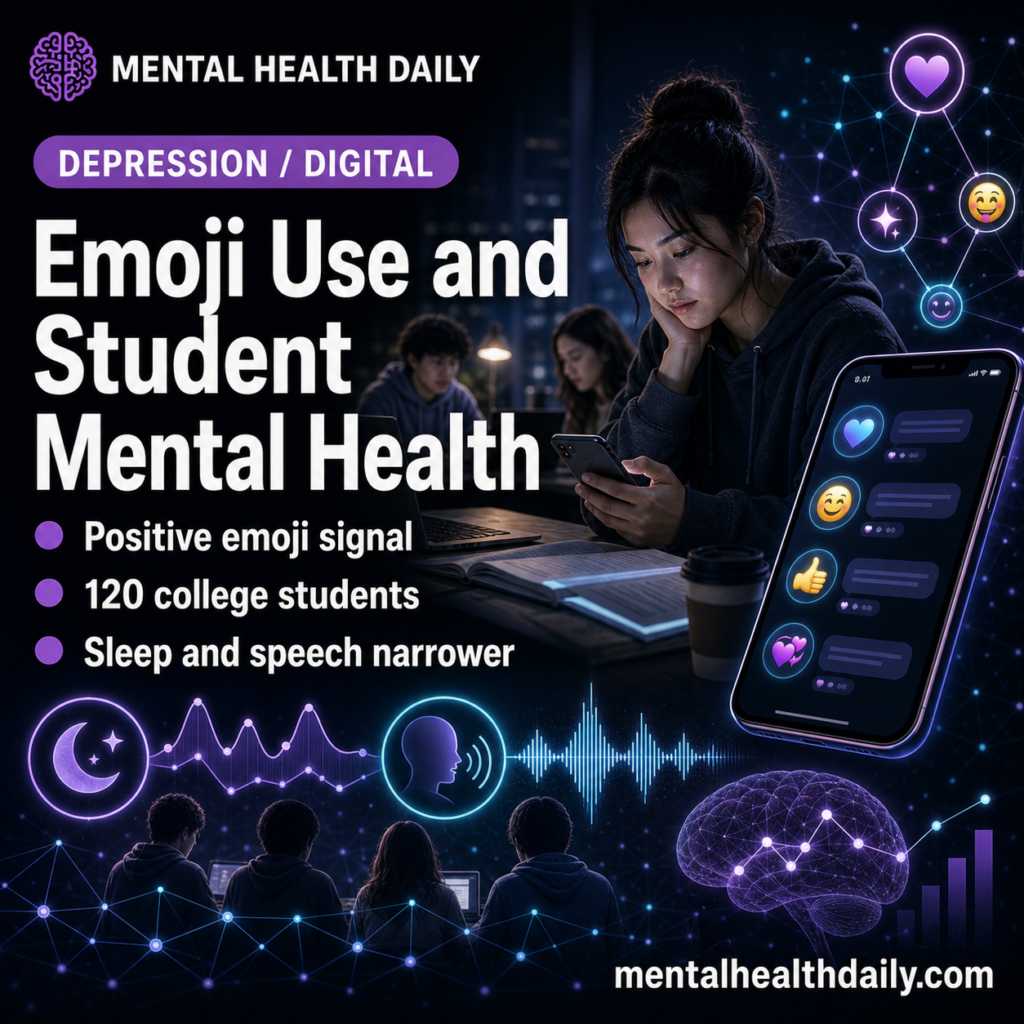
Positive Emoji Use Tracked Lower Depression in 120 Students

Low-burden digital phenotyping is appealing because college students already leave daily traces in phones, messages, sleep logs, and voice samples. In Henry et al.’s 120-student study, positive emoji use was the clearest signal compared with GPS and complex voice biomarkers: higher positive emoji use tracked lower depression and anxiety, while speech rate and sleep added …

Read more

Hwa-Byung Digital ACT Therapy Improved Anger and Depression

A single-arm Hwa-byung digital therapeutic pilot found good app engagement and large pre-post symptom changes, but the absence of a control group keeps the result in feasibility territory. The ACT-based Hwa-free app improved Hwa-byung symptoms, depression, state anger, psychological flexibility, and quality-of-life scores over 4 weeks, with some gains maintained at 8 weeks.1 Research Highlights …

Read more

Non-Auditory Tinnitus Linked to Lower Brain Blood Flow

MHD featured image for non-auditory tinnitus and cerebral blood flow.

A 2026 arterial spin labeling MRI study found that 34 patients with non-auditory tinnitus and cerebral venous congestion had lower corrected cerebral blood flow across multiple brain regions than venous-congestion patients without tinnitus and healthy controls.1 Compared with those 2 groups, the tinnitus group had poorer sleep quality, higher depression scores, and slightly lower cognitive …

Read more

Depression Symptoms & Personality Traits in Older Chinese Adults Over 60 (2024 Study)

Depression is a multifaceted mental health condition that deeply affects individuals worldwide, particularly the older population. A study in Chinese individuals ages 60 and above sheds light on the complex interplay between depressive symptoms and personality traits, revealing critical insights that could transform how we identify and treat depression in older adults. This research not …

Read more

Genetics of Major Depression vs. Symptom Scales (PHQ-9 & CIDI-SF) (2023 Study)

Major Depressive Disorder (MDD) presents a significant challenge in mental health, with its complex genetic and symptomatic landscape. Recent research focusing on the UK Biobank data has compared the genetic underpinnings of MDD symptoms assessed by the PHQ-9 and CIDI-SF tools. This comparison has highlighted significant differences in their genetic correlations and implications for understanding …

Read more