hit counter

Lobar Brain Bleeds Carried 3.49x Dementia Risk in NLP Stroke-Subtype Study
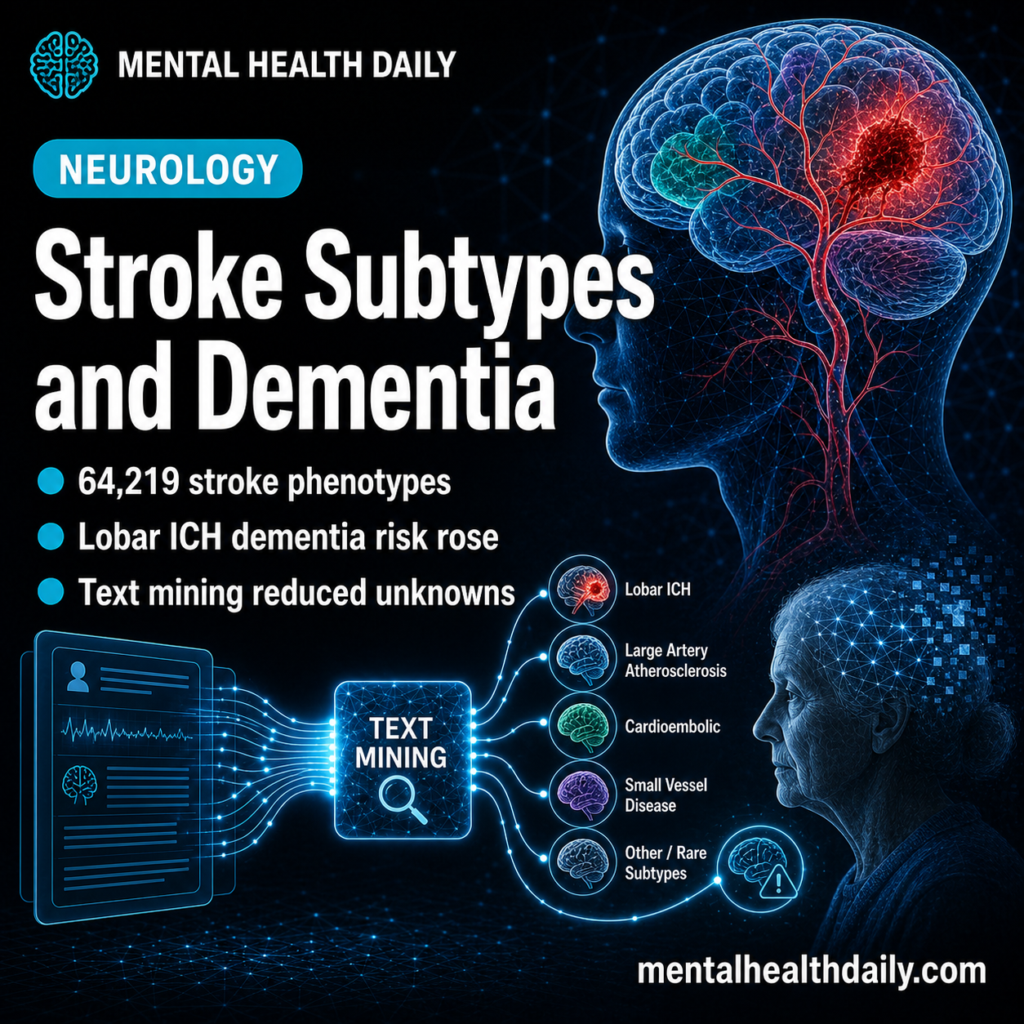
MHD featured image for stroke subtypes and dementia risk.

A 2026 Scottish health-system preprint used natural language processing of CT and MRI reports to subtype stroke and found that lobar intracerebral hemorrhage carried a higher dementia risk beyond 6 months, aHR 3.49 vs matched controls.1 The method reduced unspecified stroke coding from 26.1% to 3.4%, making location-specific prognosis easier to see. Research Highlights Lobar …
Read more

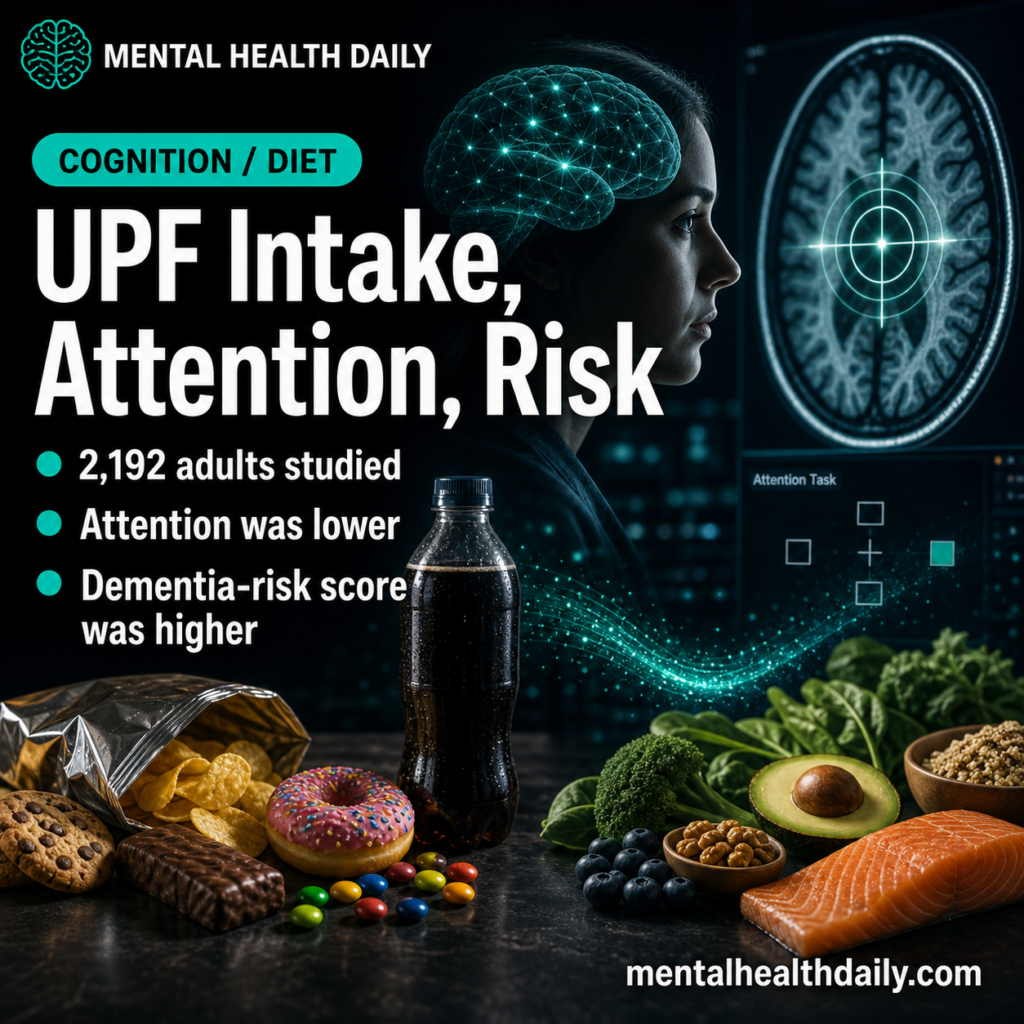
Ultra-Processed Foods Linked to Lower Attention in 2,192 Adults

MHD featured image for ultra-processed foods, attention, and dementia-risk scores.

A 2026 Australian study involving 2,192 dementia-free adults found that each 10% higher ultra-processed food intake was associated with 0.05-point lower attention and 0.24-point higher modified CAIDE dementia-risk score.1 The memory result was not significant, so the honest read is attention and risk-score signal, not global cognitive collapse. Research Highlights Attention was lower: Each 10% …

Read more

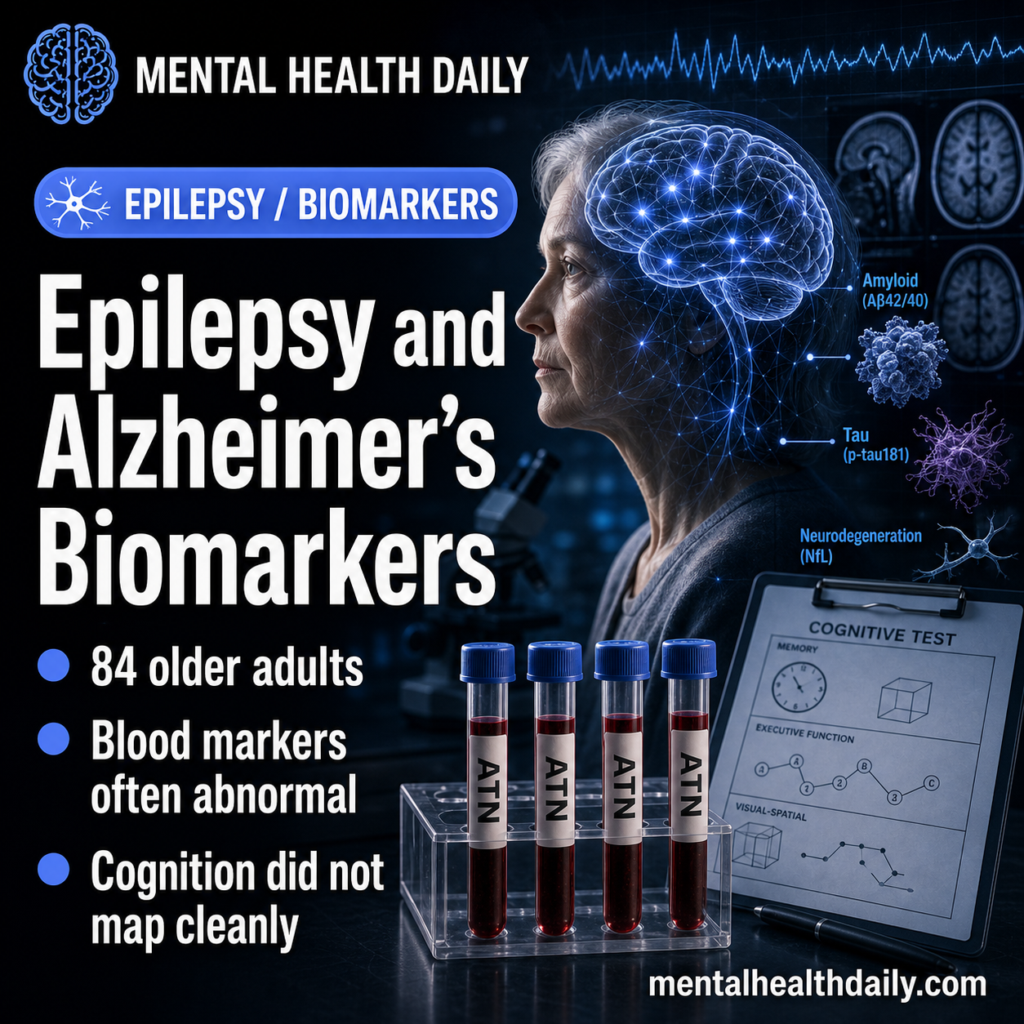
Epilepsy and Alzheimer’s Blood Biomarkers in Older Adults

MHD featured image for epilepsy, Alzheimer’s blood biomarkers, and AT(N) profiles in older adults.

A preprint in 84 older adults with epilepsy found that abnormal Alzheimer's-related blood biomarkers were common, but the biomarker categories did not line up neatly with cognitive impairment. Research Highlights Only 32.1% had normal biomarkers: 27 of 84 older adults with epilepsy were A−T−N− using blood-based amyloid, tau, and neurodegeneration markers.1 AD-continuum profiles were common: …

Read more

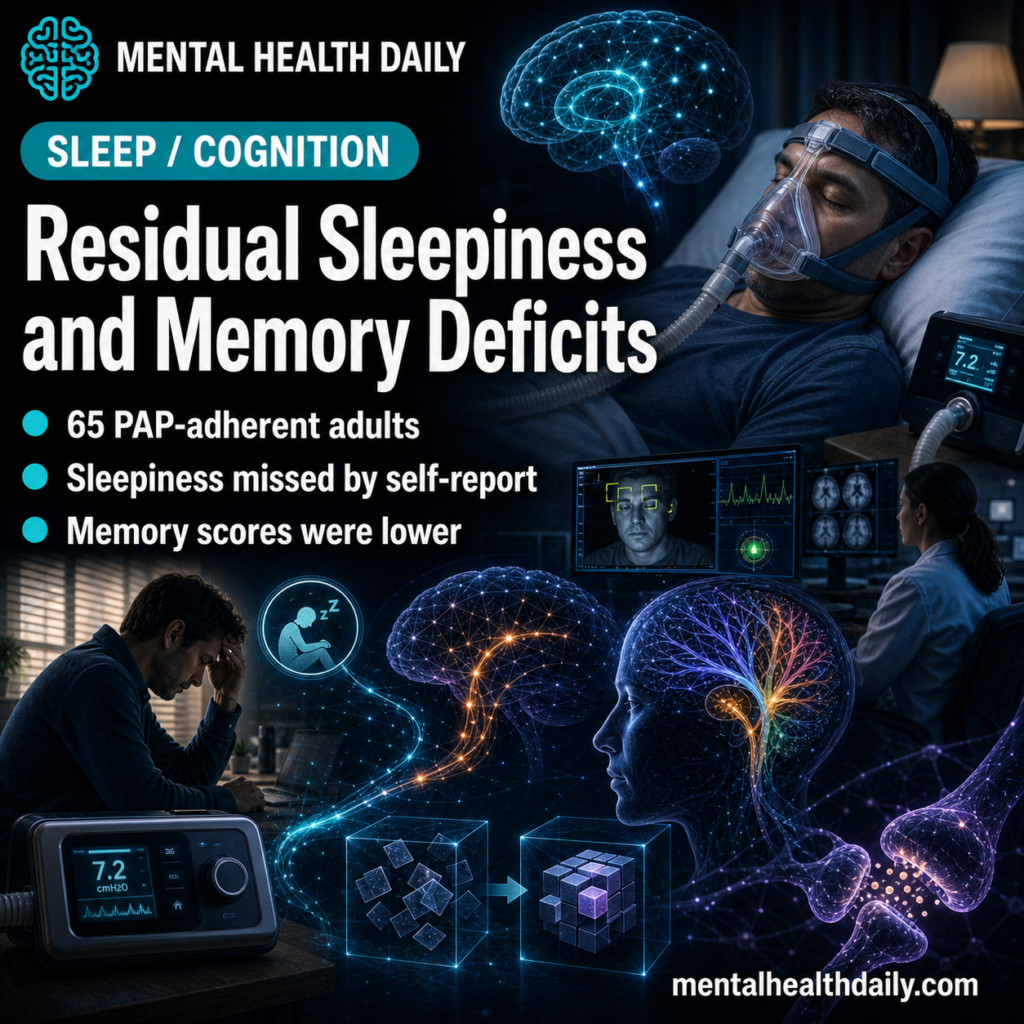
Residual Sleepiness in Treated Sleep Apnea Linked to Memory Deficits

Stylized sleep-apnea treatment scene with CPAP, daytime sleepiness testing, and memory-task circuitry, representing cognitive deficits linked to residual sleepiness despite PAP adherence.

Some sleep apnea patients stay sleepy even when their CPAP is used 6+ hours a night and apnea events have been driven back to normal range. A 2026 cross-sectional study of 65 PAP-adherent adults found those residually sleepy patients performed measurably worse on global cognition, memory, executive function, attention, and processing speed than their well-rested …

Read more

Antidepressants & Dementia Risk in Elderly Users: SSRIs vs. TCAs (2024 Study)

Recent research has uncovered connections between the use of antidepressants and the risk of developing dementia in the elderly. This complex relationship, marked by varying results and considerations, is becoming a critical area of study in geriatric medicine and mental health. In light of these findings, it is crucial to delve into the nuances of …

Read more