hit counter

Ayahuasca Reversed Chronic Stress Markers in Zebrafish Model

MHD featured image for ayahuasca chronic-stress zebrafish cortisol and BDNF study.

A zebrafish experiment found that one 1-hour ayahuasca exposure reversed several effects of 14 days of unpredictable chronic stress: impaired sociability, anxiety-like behavior, stress-related hyperlocomotion, elevated cortisol, and reduced whole-brain BDNF.1 The result is mechanistic animal evidence, not a clinical trial of ayahuasca for human depression or anxiety. Research Highlights 14 days of chronic stress …

Read more

Chronic Stress Increased Mouse D1 and D2 Dopamine Receptors

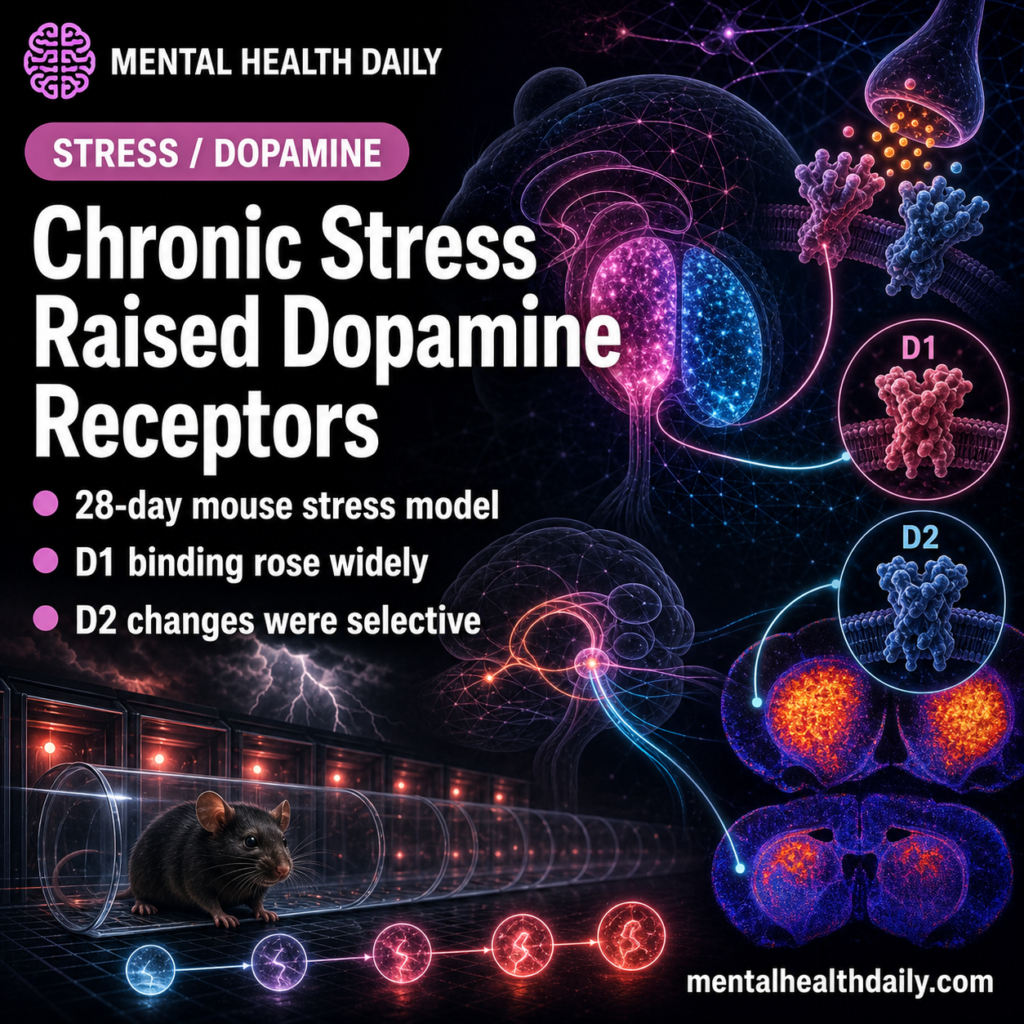
Stylized striatal dopamine receptor map in a mouse stress model, highlighting widespread D1 receptor binding increases and selective D2 changes after chronic mild stress.

Chronic stress is a candidate mechanism for both depression and addiction risk. A 2026 mouse study found that 28 days of unpredictable chronic mild stress increased striatal dopamine D1 receptor binding by 22–48% across nearly every region examined, plus more selective D2 receptor increases — pointing to a stress-driven shift in reward signaling that may …

Read more

Chronic Stress Alters the Gut Microbiome & Intestinal Barrier in Mice with Sex-Specific Effects (2023 Study)

The gut-brain axis, a complex communication network linking the gastrointestinal tract and the brain, plays a pivotal role in maintaining both mental and physical health. Recent studies illuminate how chronic stress disrupts this intricate system, particularly affecting the intestinal barrier in the jejunum, and contributes to the pathogenesis of Major Depressive Disorder (MDD). This emerging …

Read more

Alzheimer’s Disease, Microglia, & Environmental Risk Factors (2024 Evidence)

Alzheimer’s disease, a debilitating neurodegenerative condition, is influenced significantly by a blend of genetic, environmental, and lifestyle factors. New research focuses on environmental risk factors and microglia (the brain’s immune cells) for Alzheimer’s development. Highlights: Alzheimer’s Disease and Microglia: Alzheimer’s is characterized by cognitive decline, and microglia play a crucial role in its pathogenesis, acting …

Read more