hit counter

Umbilical Cord Exosomes Reduced ICH Neuroinflammation in Rats

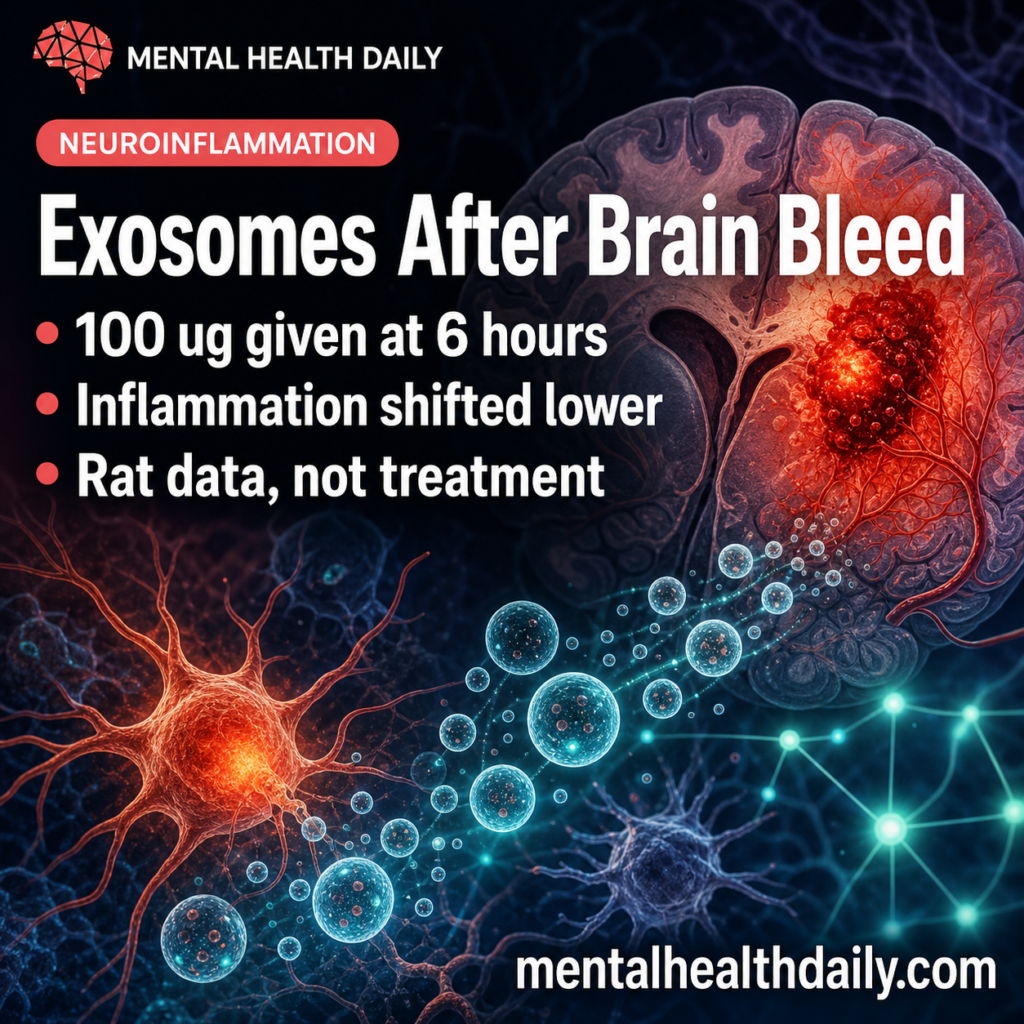
MHD featured image for umbilical cord exosomes and intracerebral hemorrhage neuroinflammation.

A 2026 rat and astrocyte study found that human umbilical cord mesenchymal stem cell exosomes given 6 hours after experimental intracerebral hemorrhage reduced pro-inflammatory signaling and improved neurological recovery scores through the PI3K/AKT/PKM2/H3K18la pathway.1 The result is a mechanistic preclinical signal, not an emergency treatment for human brain hemorrhage. Research Highlights Exosomes were timed early: …

Read more

Astrocyte Calcium Signals Shape Amygdala Fear Memory and Extinction in Mice

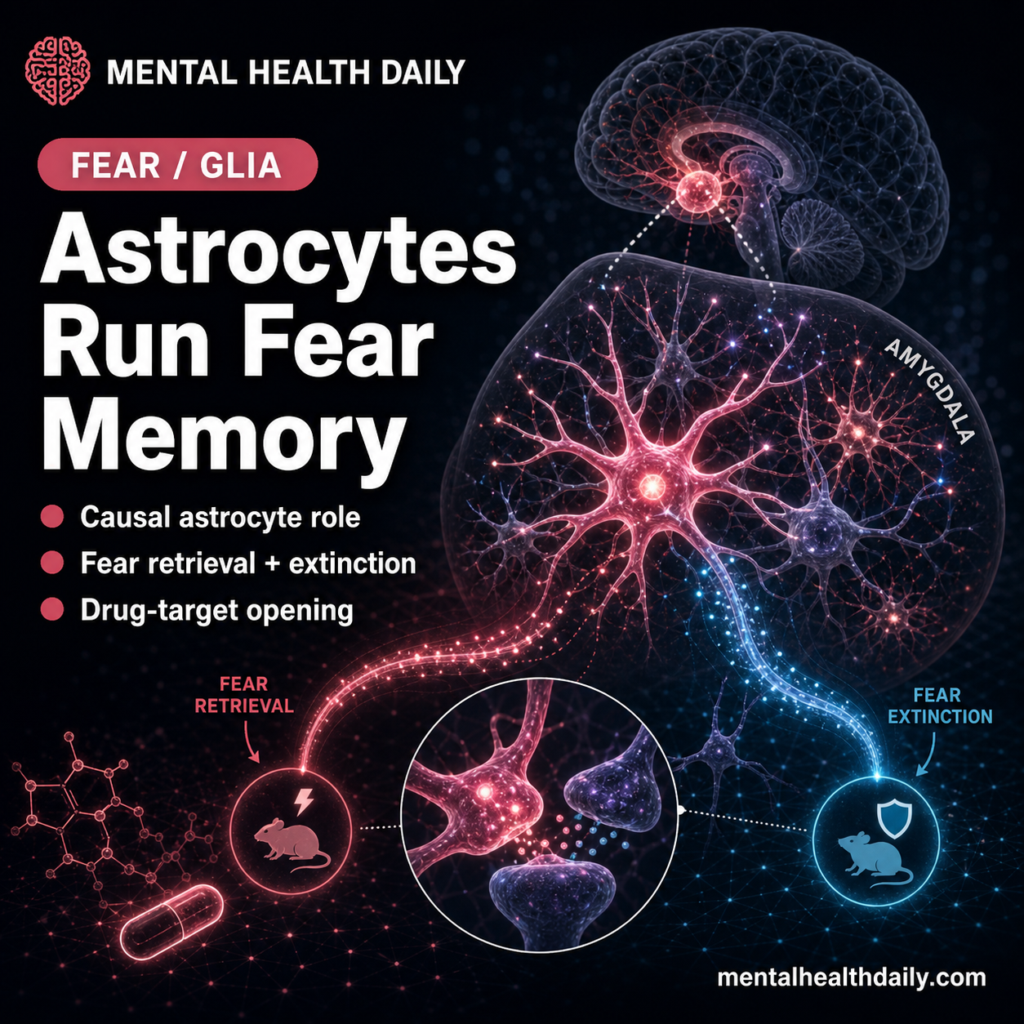
Photoreal illustration of astrocytes interacting with neurons in the amygdala, conveying glial role in fear circuit dynamics.

A 2026 Nature mouse study found that basolateral amygdala astrocyte Ca2+ signals tracked fear retrieval and extinction, then showed causality: 3 mg/kg CNO manipulations of astrocyte DREADDs pushed early-extinction freezing in opposite directions while both disrupting later extinction retrieval.1 Research Highlights Astrocytes tracked fear state: after 3 tone-shock pairings and 2 days of 25 cue-only …

Read more

D-Cycloserine Targets the NMDA Receptors to Enhance Synpatic Plasticity in Hippocampus (2024 Study)

In the complex and evolving field of neuroscience, the role of synaptic plasticity in psychiatric disorders has garnered significant attention. d-Cycloserine (DCS), a partial agonist of the N-methyl-D-aspartate receptor (NMDAR), emerges as a key player in potentially revolutionizing treatment approaches. Highlights: d-Cycloserine (DCS): Initially an antimicrobial agent, DCS is now known for its role as …

Read more