hit counter

25C-NBF Psychedelic Shows Antidepressant-Like Effects in Male Rodents

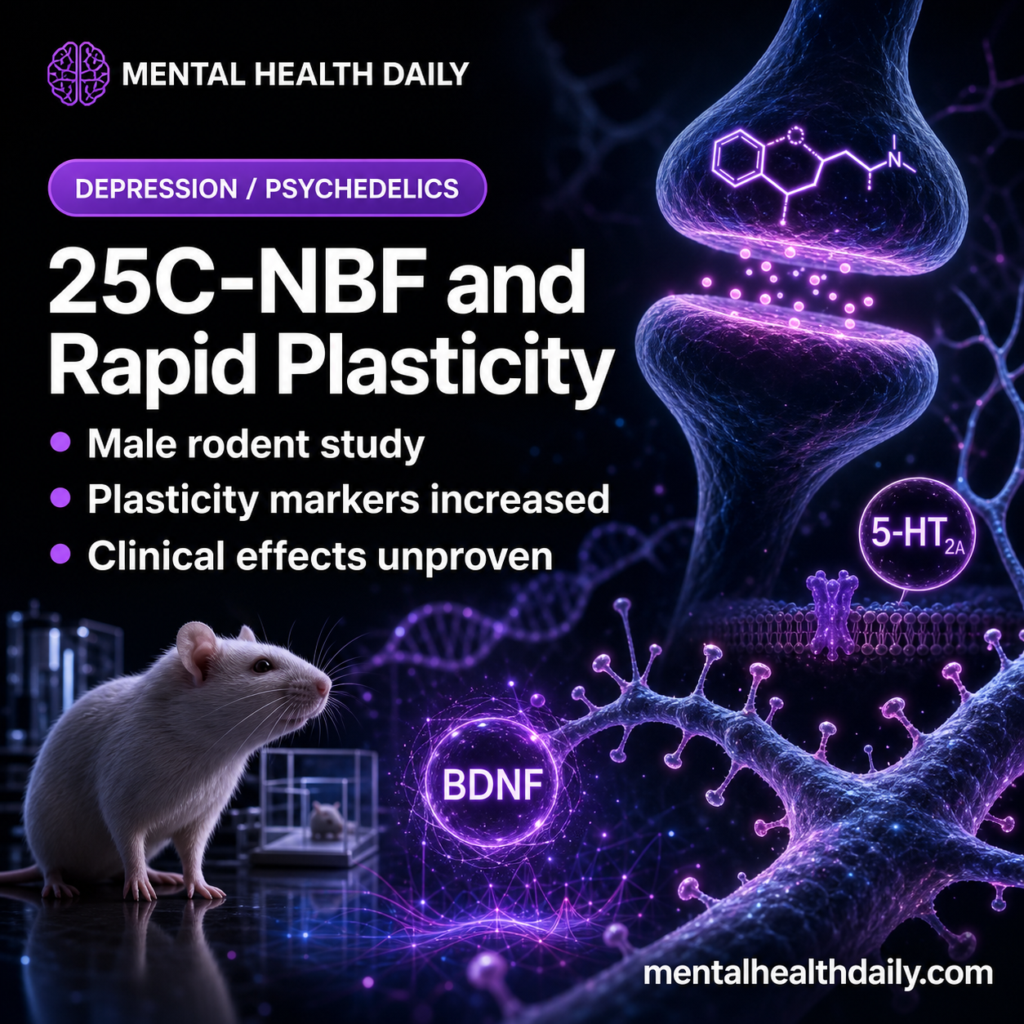
MHD featured image for 25C-NBF psychedelic psychoplastogenic and antidepressant-like effects in male rodents.

A 2026 preclinical study found that 25C-NBF, a selective 5-HT2A psychedelic phenethylamine, increased plasticity-related markers and produced rapid antidepressant-like effects in male rodents, while showing no detected reward or reinforcement signal in the models tested. Research Highlights 25C-NBF was preclinical: Nadal-Gratacos et al. tested cells, male mice, and male rats, not patients with depression.1 5-HT2A …

Read more

Reward Activation Failed as Bipolar-Psychosis Endophenotype

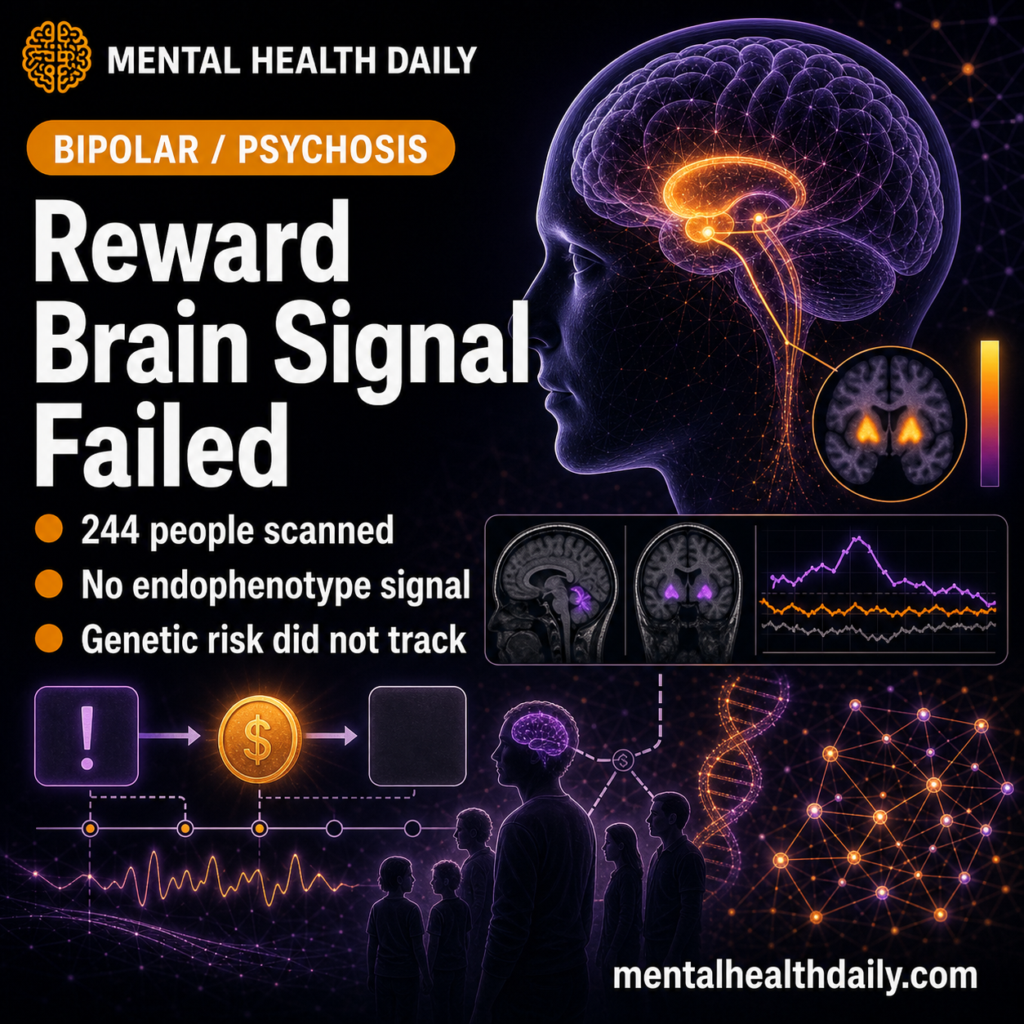
MHD featured image for reward brain activation and bipolar-psychosis endophenotype testing.

A 244-person functional MRI study found no significant evidence that ventral striatum activation during reward anticipation works as an endophenotype — a measurable trait used to connect inherited risk with diagnosed illness — for bipolar and psychotic disorders. Research Highlights The registered hypothesis failed: Barendse et al. found no significant ventral striatum reward-anticipation difference among …

Read more

Teen Anxiety and Anhedonia Split Reward-Uncertainty fMRI

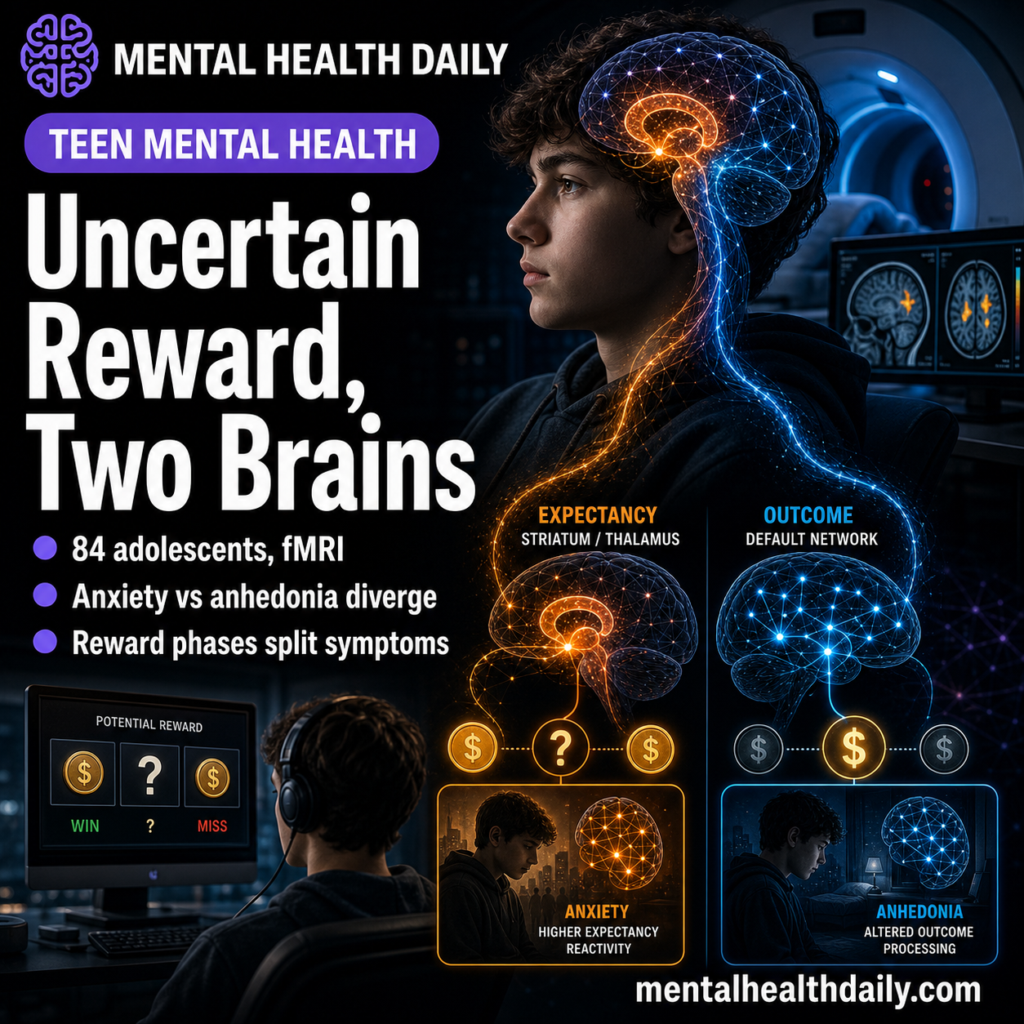
Photoreal illustration of adolescent brain regions with overlapping reward and default-mode network glow, conveying uncertainty processing.

A 2026 fMRI study of 84 medication-free adolescents found that reward uncertainty had its own phase-specific brain pattern: anxiety, depression, and anhedonia separated across different task phases and brain systems.1 The clearest clinical split was narrow but useful: anxiety tracked blunted striatum/thalamus activation during uncertain non-reward expectancy, while depression and anhedonia tracked higher visual/default-network activation …

Read more

tVNS Alters Effort and Reward Decisions in Severe Depression

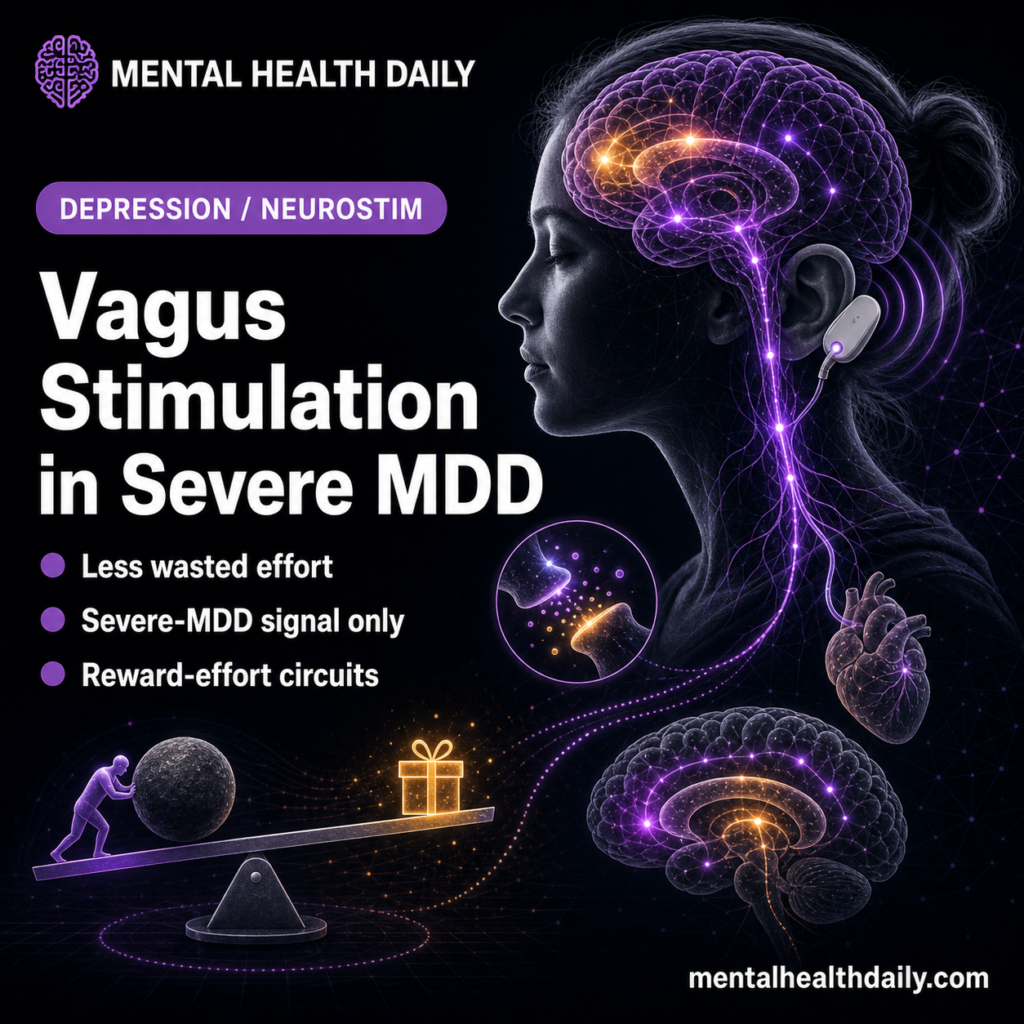
Photoreal illustration of an ear-clip vagus nerve stimulation electrode, with neural pathway motifs representing reward-effort circuits.

An ear-clip that modulates mood by stimulating the vagus nerve has obvious appeal — but the evidence base for non-invasive tVNS in depression has been mixed for a decade. A 2026 cross-over RCT by Forbes et al. sharpens what specifically tVNS does well.1 Research Highlights Transcutaneous vagus nerve stimulation (tVNS) is a non-invasive ear-electrode version …

Read more

Black Americans Diagnosed with Schizophrenia 2.42x the Rate of White Americans: More Negative Symptoms

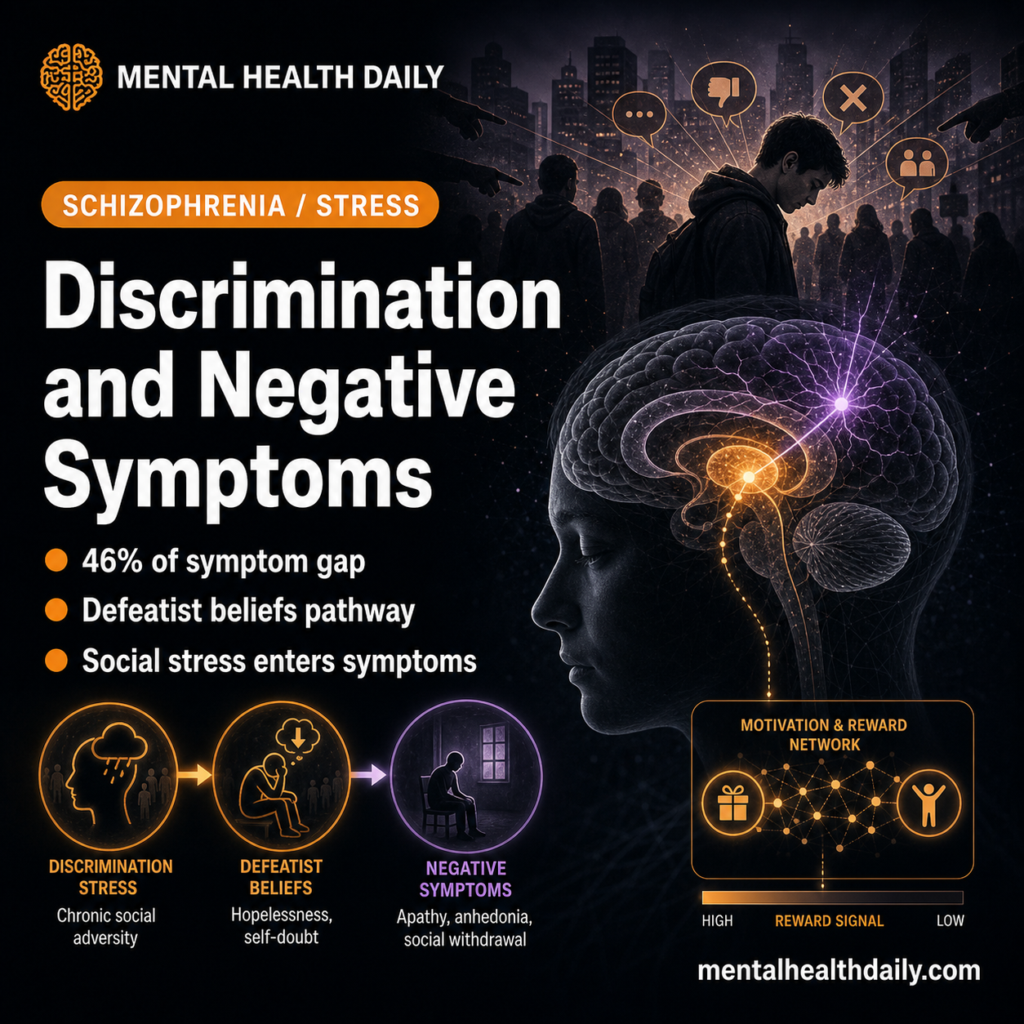
Photoreal illustration representing racial stress and mental health, with conceptual imagery of contemplation, identity, and cognitive pathways.

Black Americans are diagnosed with schizophrenia-spectrum disorders at 2.42 times the rate of White Americans, and they also score higher on negative-symptom measures than White patients carrying the same diagnosis.2 A 2026 paper by Spann and colleagues asks why. Research Highlights Black Americans are diagnosed with schizophrenia-spectrum disorders at 2.42x the rate of White Americans, …

Read more

Melatonin Phases & Circadian Rhythms vs. Depression & Anhedonia Severity (2024 Study)

In the intricate world of mental health, the rhythms of our body’s natural processes play a pivotal role, particularly the circadian rhythm of melatonin, a hormone primarily produced by the pineal gland. Recent research suggests that variations in melatonin’s circadian rhythm might not only distinguish between depression and bipolar disorder but also correlate with the …

Read more

tDCS of the DLPFC Treats Anhedonia in Depression & Improves Social Functioning (2024 Study)

In the quest to find more effective treatments for depression, particularly the challenging symptom of anhedonia, Transcranial Direct Current Stimulation (tDCS) emerges as a promising option. This non-invasive brain stimulation technique targets specific brain regions to modulate activity and potentially alleviate symptoms. A recent study has shed light on the efficacy and safety of targeting …

Read more