hit counter

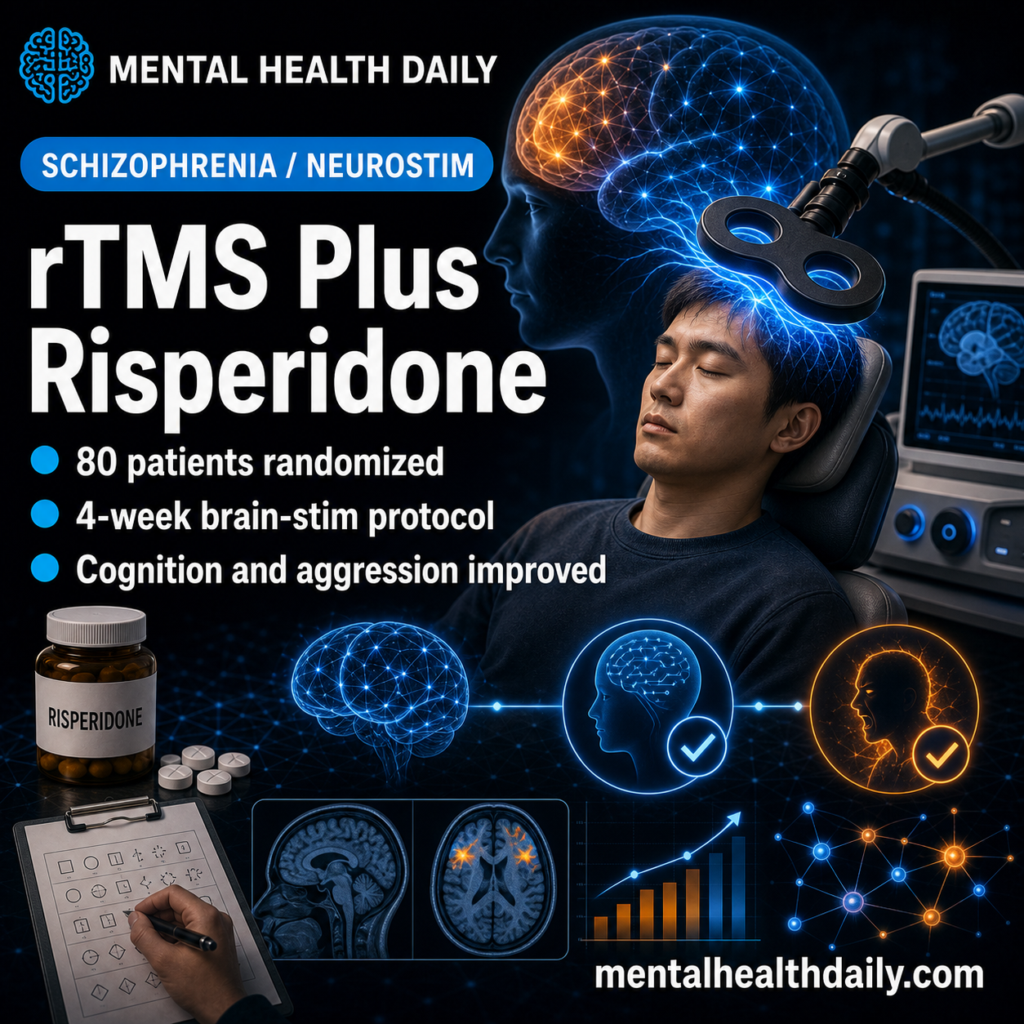
rTMS Plus Risperidone Improved Schizophrenia Cognition

A 2026 randomized study involving 80 people with schizophrenia found that adding high-frequency repetitive transcranial magnetic stimulation to risperidone improved PANSS cognitive-factor scores and aggressive-behavior ratings more than risperidone alone over 4 weeks.1 Research Highlights Design was randomized but short: 80 patients were assigned to risperidone alone or risperidone plus rTMS, 40 per group, with …

Read more

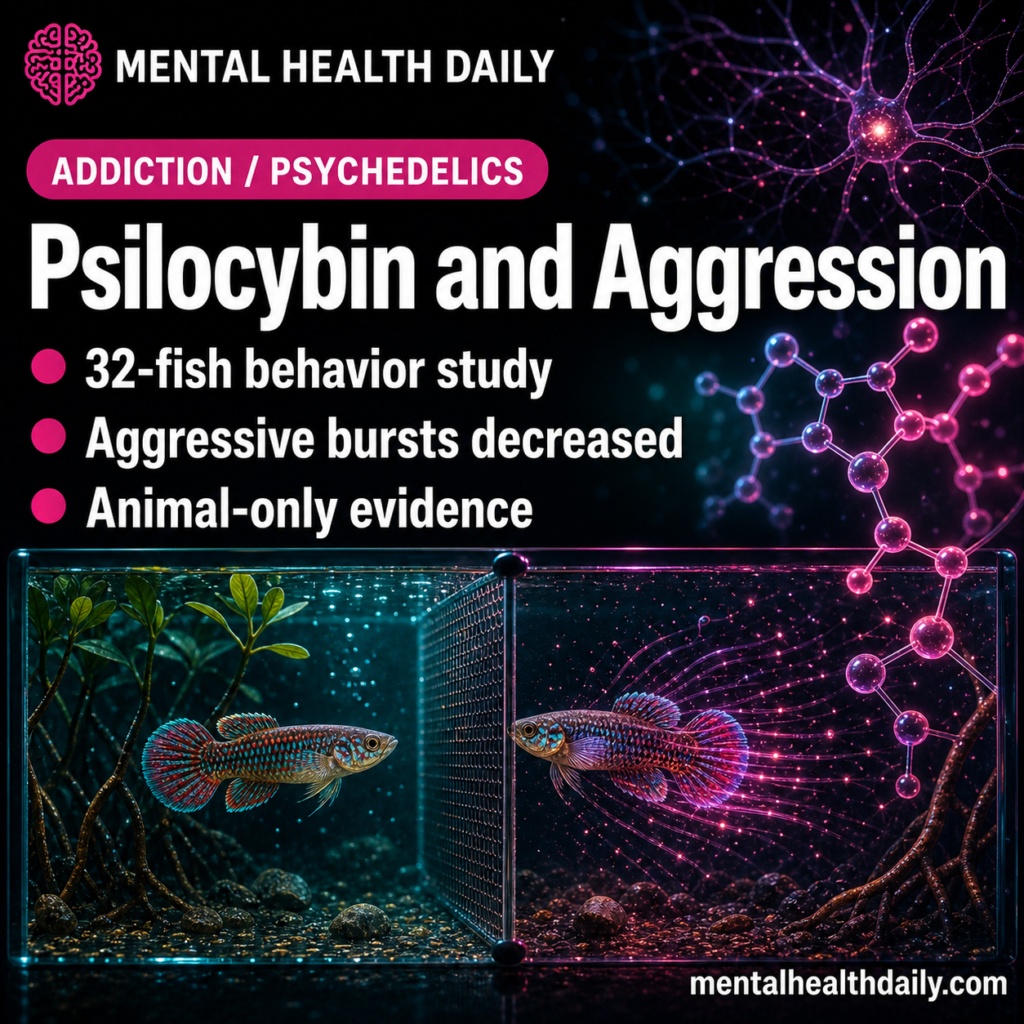
Psilocybin Reduced Fish Aggression Bursts in Rivulus Study

MHD featured image for psilocybin effects on aggression and activity in a mangrove rivulus fish model.

A 2026 study involving 32 adult mangrove rivulus fish pairs found that 3,000 µg/L waterborne psilocybin reduced movement and aggressive swimming bursts, but the result belongs in animal behavioral pharmacology, not in human aggression treatment claims.1 Research Highlights Fish movement decreased: psilocybin produced a treatment-by-time interaction for time spent moving (p = 0.006), with a …

Read more

Low Hypothalamus Volume Linked to Violence, Aggression, Psychopathy (2024 Study)

The complex interplay between the human brain and behavior has long fascinated scientists and laypeople alike, particularly when it comes to understanding the roots of violence. A recent study showcases the hypothalamus, a small but crucial brain region, revealing its significant role in aggression and violent behavior. Highlights: Hypothalamic Volume Reductions Linked to Violence: Studies …

Read more

Intermittent Explosive Disorder (IED): Causes, Symptoms, Treatment

Intermittent explosive disorder (IED) is regarded as a subtype of impulse control disorder characterized by impulsive, uncontrollable explosive outbursts of anger, aggression, and/or rage – sometimes accompanied by violence.  To be considered intermittent explosive disorder, the explosive outbursts of anger must be triggered in situations and/or conditions in which such anger is unjustified.  In other …

Read more