hit counter

Thymol Carbamate TC-6 Improved Memory in Alzheimer’s Mice by Blocking BuChE
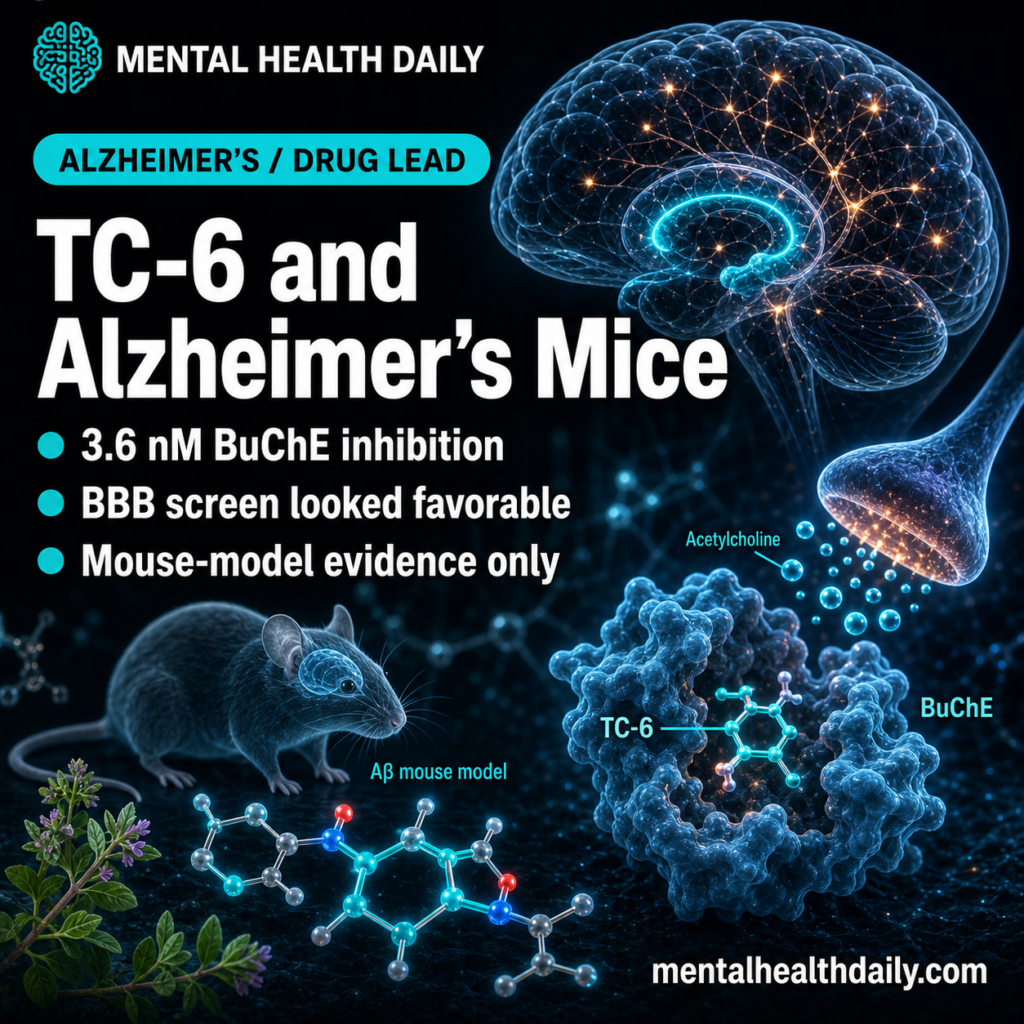
MHD featured image for thymol carbamate TC-6, BuChE inhibition, and Alzheimer's mouse-model memory testing.

A 2026 medicinal-chemistry study found that thymol carbamate TC-6 inhibited human butyrylcholinesterase at 3.6 nM, showed more than 2,500-fold selectivity over human acetylcholinesterase, crossed a blood-brain-barrier screening assay, and improved spatial-memory behavior in amyloid-β-injected mice. Research Highlights TC-6 hit BuChE hard: Wu et al. reported human butyrylcholinesterase (BuChE) inhibition at 3.6 nM, compared with 9,320 …
Read more

Parasite Gut-Brain Study Links Tuft Cells to Serotonin Appetite Signal

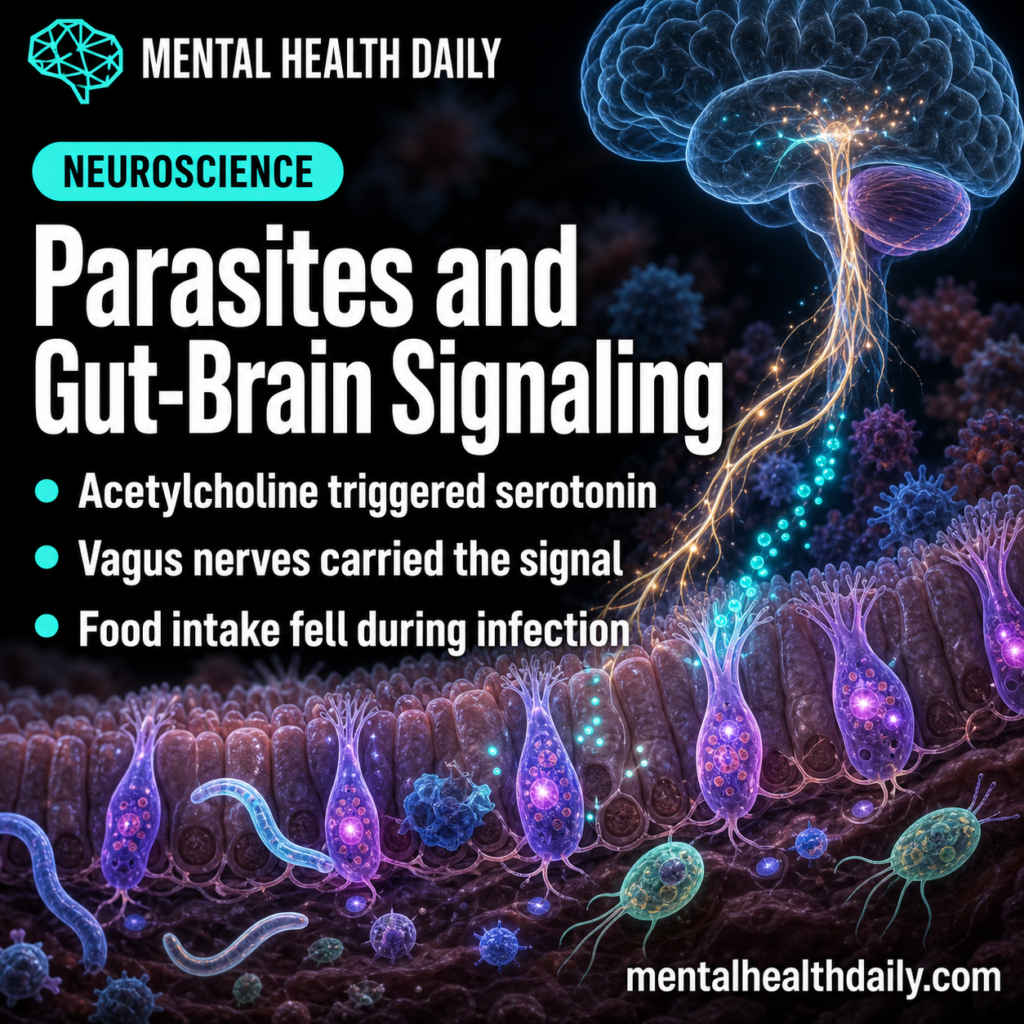
MHD featured image for parasite-triggered gut-brain serotonin signaling and food intake.

A 2026 Nature study found that parasite-sensing tuft cells can release acetylcholine, activate crypt enterochromaffin cells through muscarinic receptors, trigger serotonin release, stimulate vagal afferent neurons, and suppress food intake during established infection.1 The finding is a precise gut-defense circuit, not a generic claim that the gut-brain axis explains every mood or appetite problem. Research …

Read more

Post-Stroke Depression Tracks Serotonin-Acetylcholine Damage

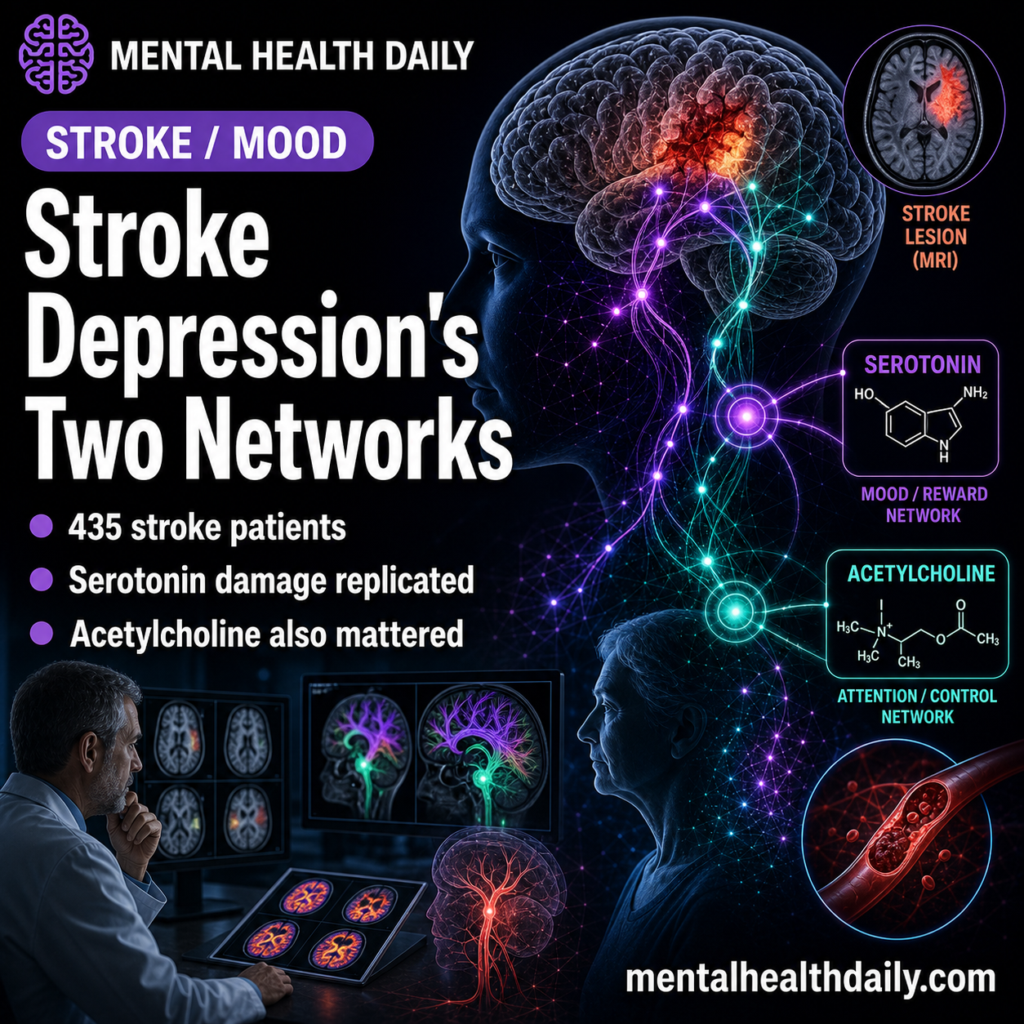
Photoreal illustration of stroke lesion with overlapping neurotransmitter network damage, conveying mechanism of post-stroke depression.

A 2026 two-cohort connectome study found that post-stroke depressive symptoms tracked damage to networks weighted by the serotonin transporter and vesicular acetylcholine transporter: 5-HTT damage predicted depression in Leipzig (OR 2.4, 95% CI 1.15–5.02) and Oxford (OR 2.05, 95% CI 1.03–4.09), while VAChT damage also replicated across both cohorts.1 The dopamine part of the original …

Read more

Synergistic Effect of Fish Oil & Choline Supplementation on Brain DHA & Memory (Mouse Study)

Recent research reveals that combining fish oil and choline supplementation may have synergistic effects in boosting levels of brain docosahexaenoic acid (DHA) and memory enhancement in middle-aged mice. Key Facts: Combining fish oil and choline increased DHA levels in the brain more than either supplement alone in mice. The combination upregulated expression of key fatty …

Read more

Aniracetam Side Effects: List of Possibilities

Aniracetam is a drug of the “racetam” chemical classification that was initially developed in the 1970s by pharmaceutical company Hoffman-La Roche.  Chemically, aniracetam is synthesized via reaction of 2-pyrrolidone with anisoyl chloride in the presence of triethylamine; hence it is sometimes referred to as “N-anisoyl-2-pyrrolidinone.”  When administered to humans and animals, aniracetam functions via allosterically …

Read more

Anticholinergic Toxicity: Causes, Symptoms, & Treatment

Many drugs have anticholinergic properties, meaning they inhibit the neurotransmission of acetylcholine in the brain.  Drugs with anticholinergic effects prevent acetylcholine from binding to receptors, resulting in therapeutic effects.  There are three major types of anticholinergic drugs including: antimuscarinics, ganglionic inhibitors, and neuromuscular inhibitors – the majority being antimuscarinic. Anticholinergic drugs are often administered for …

Read more

Fish Oil Causing Depression or Anxiety? Consider Acetylcholine.

There is considerable evidence supporting the usage of fish oil for depression. The omega-3 fatty acids within fish oil are capable of increasing activity in the prefrontal cortex, enhancing neurotransmission, and reducing inflammation. Although they can be effective as a standalone treatment for mood disorders (e.g. depression), they are also commonly used with success as …

Read more