hit counter

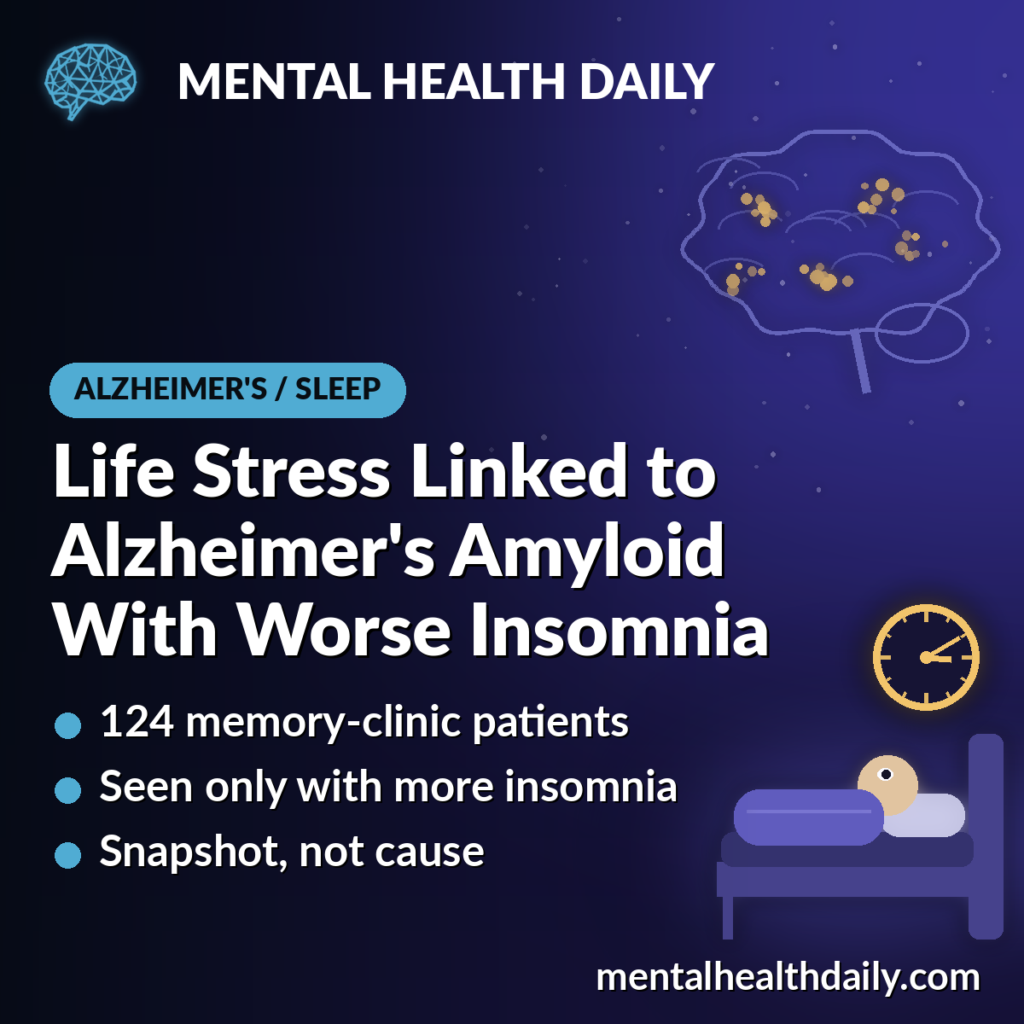
Life Stress Linked to Alzheimer’s Amyloid When Insomnia Is Worse

MHD card showing a person lying awake in bed under a glowing clock, with a faint brain outline holding gold amyloid clusters above, illustrating a study in which life stress was linked to an Alzheimer's amyloid marker only in people with worse insomnia.

Among Swedish memory-clinic patients without dementia, more stressful life events were linked to a spinal-fluid sign of Alzheimer’s amyloid buildup, but only in people with moderate-to-high insomnia symptoms, according to a 2026 study.1 Research Highlights Stress and insomnia worked together: in 103 patients with spinal-fluid tests, lifetime stressful events and insomnia symptoms interacted in relation …

Read more

Subthreshold Depression Linked to Inflammation and Altered Brain Connectivity

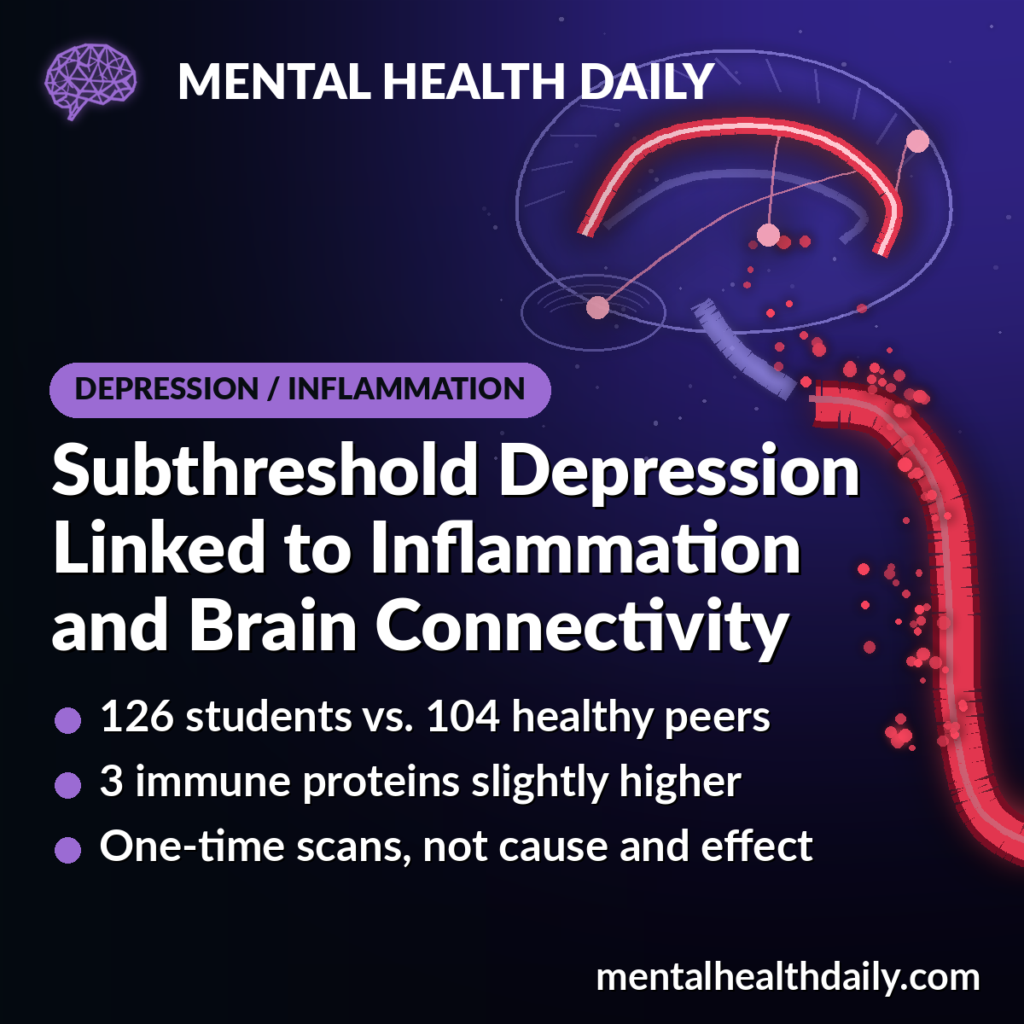
MHD card showing a side-view brain with a glowing crimson cingulate arc and a blood vessel releasing small red particles, illustrating a study in which university students with subthreshold depression had altered brain connectivity and slightly higher inflammatory proteins.

University students with subthreshold depression, meaning real depressive symptoms that fall short of a major depression diagnosis, had stronger connections in 3 cingulate brain circuits and slightly higher levels of 3 inflammatory proteins than healthy students, according to a 2026 brain-imaging study from China.1 Research Highlights Stronger cingulate connections: resting brain scans of 126 students …

Read more

Believing Worry Is Uncontrollable Linked to Higher Neuroticism

MHD card showing a tangled glowing loop of worry with an amber arrow pointing down into a large personality-trait node linked to smaller trait nodes, illustrating a study that linked beliefs that worry is uncontrollable to higher neuroticism.

Among 296 Norwegian university students, believing worry is uncontrollable and dangerous was strongly linked to neuroticism: the tendency to feel anxious, sad, irritable and easily stressed. This link remained after accounting for the other 4 major personality traits in a 2026 study.1 An exploratory model drew an arrow from worry beliefs to neuroticism, but the …

Read more

Physical Activity Linked to Better Quality of Life in Teens

MHD card showing a glowing teen runner on a curved school running track at night with a thought bubble that turns a jagged stress scribble into calm arcs, illustrating a survey linking physical activity to better quality of life in teens.

In a 2026 survey of 420 middle school students in eastern China, more physically active teens reported more cognitive reappraisal (reframing stressful situations), better stress-management habits and better health-related quality of life.1 Research Highlights Activity linked to quality of life through coping scores: the researchers’ model combined proposed links through reframing stressful situations and stress-management …

Read more