hit counter

Psychedelic Media Coverage Outpaced Evidence (2017–2024)

Photoreal illustration of newspaper headlines and scientific journals about psychedelic treatments, conveying media-evidence calibration.

Psychedelic-assisted therapy has been one of the most-covered mental-health stories of the past decade. A 2026 quantitative analysis by Evers and colleagues maps how media enthusiasm grew, peaked, and partially pulled back across major U.S. outlets — and how the coverage related to the actual evidence base for depression and PTSD.1 Research Highlights Psychedelic clinical …

Read more

Teenage Cannabis Use vs. Cognition and Brain Development: THC vs. CBD (Toxicology Data)

Photoreal illustration of an adolescent brain with overlay of cannabis molecules and cognitive metrics, conveying developmental neurocognitive impact.

Studies of adolescent cannabis effects on cognition have been limited by self-report and confounding. A 2026 longitudinal study by Wade and colleagues uses the Adolescent Brain Cognitive Development (ABCD) cohort with both self-report and biological toxicology, separating THC and CBD effects on developing cognition.1 Research Highlights Adolescence is a critical window for cognitive maturation, with …

Read more

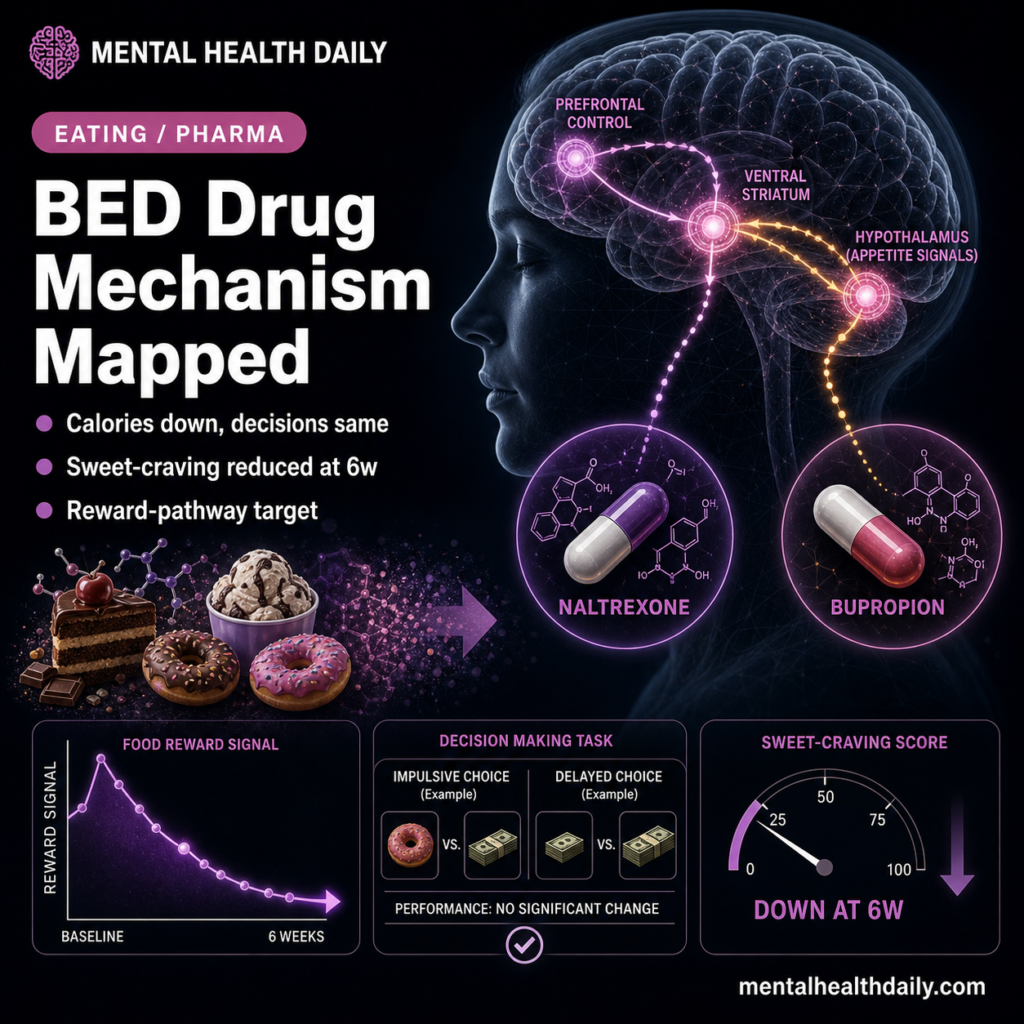
Naltrexone/Bupropion Reduced Food Intake in Binge-Eating Lab Study

Photoreal illustration of brain reward circuitry overlaid on imagery of palatable food, conveying pharmacological reduction of consummatory reward.

Lisdexamfetamine remains the only FDA-approved medication for binge-eating disorder — a serious condition affecting roughly 1.2% of adults. A 2026 human laboratory study by McKee and colleagues tests whether naltrexone/bupropion, already approved for obesity, reduces the food-reward mechanisms that drive binge episodes.1 Research Highlights Binge-eating disorder (BED) is the most common eating disorder in the …

Read more

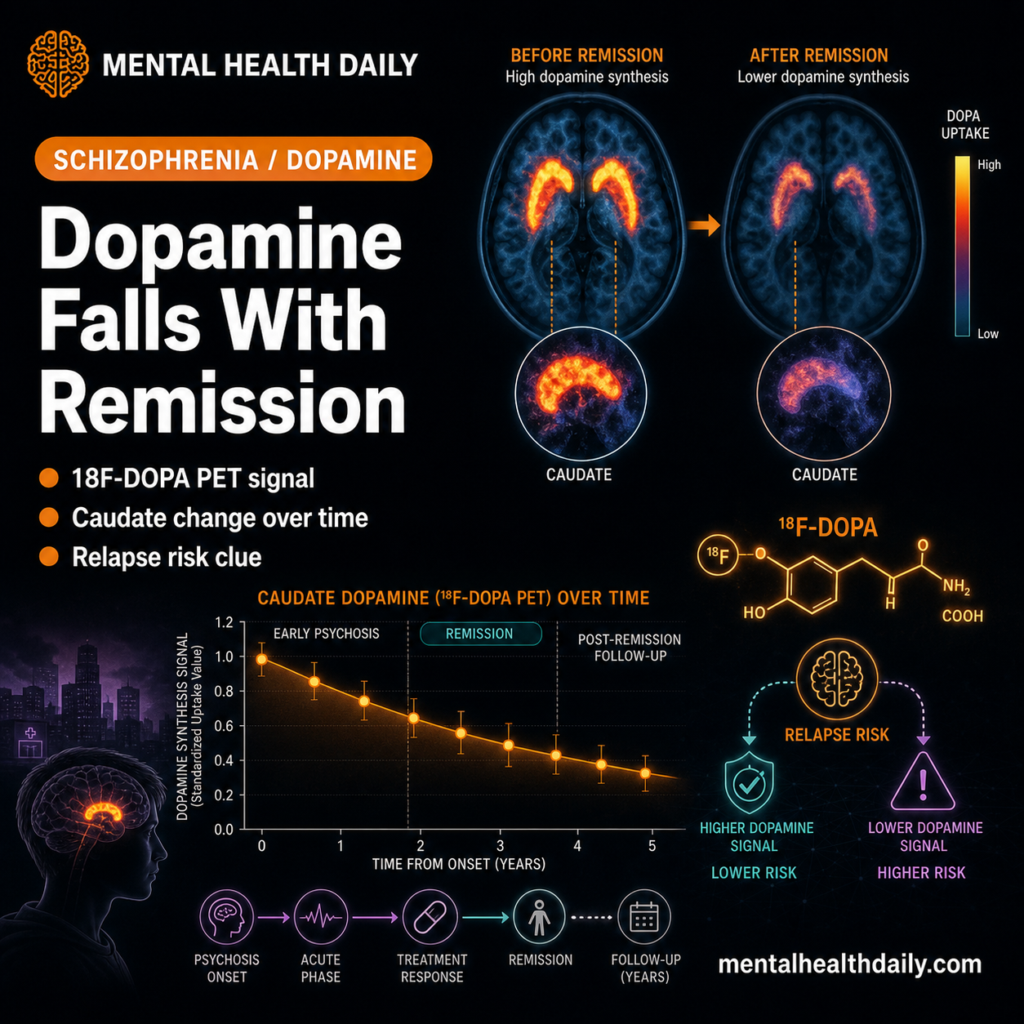
Striatal Dopamine Drops From Psychosis to Schizophrenia Remission

Photoreal illustration of a brain with the striatum highlighted and dopamine synthesis pathways visualized, representing longitudinal PET imaging in schizophrenia.

The dopamine hypothesis of schizophrenia is the field’s longest-running mechanistic story, and most of its supporting evidence has been cross-sectional. A 2026 longitudinal PET study by Schulz and colleagues followed the same 28 patients across psychosis and early remission.1 Research Highlights The dopamine hypothesis of schizophrenia is the field’s longest-running mechanistic story. Cross-sectional 18F-DOPA PET …

Read more

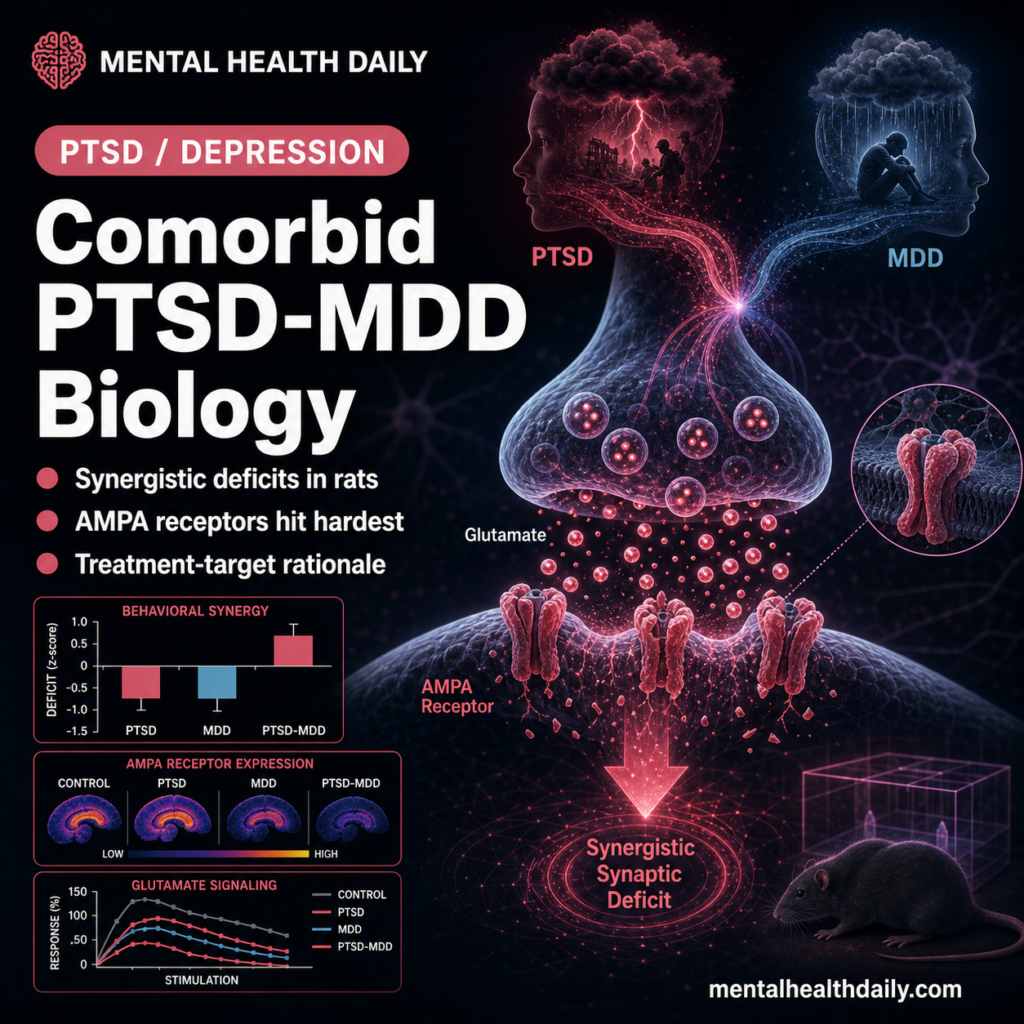
PTSD With Depression Hits AMPA Receptors Harder in Rat Models

Photoreal illustration of synaptic AMPA receptors and stressed neuron, conveying glutamate-system dysregulation in PTSD-MDD comorbidity.

PTSD and major depressive disorder co-occur in roughly half of patients with either diagnosis, and the comorbid presentation is more severe than either alone. The mechanistic question has been whether comorbidity reflects synergistic biology or simple symptom additivity. A 2026 rat-model study by Jiang and colleagues tests this directly, finding that PTSD-MDD comorbid rats show …

Read more

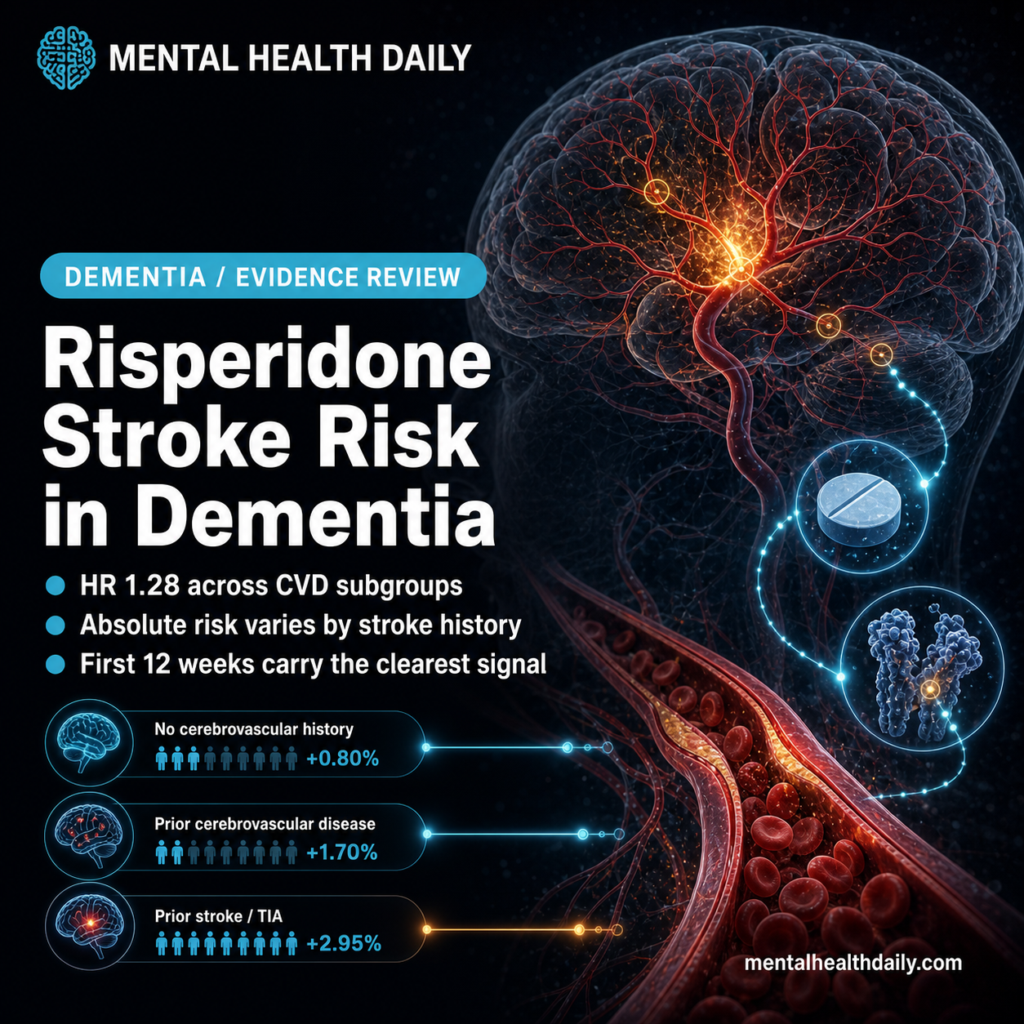
Risperidone Stroke Risk in Dementia: HR 1.28 Across CVD Subgroups

Conceptual illustration of cerebral blood vessels and a pill, representing risperidone-associated stroke risk in dementia patients.

The risperidone-stroke link in dementia is one of the longest-running safety signals in geriatric psychiatry, anchoring the FDA’s 2005 black-box warning on atypical antipsychotic mortality. Popular framing reduces it to “antipsychotics cause stroke in dementia” — a true sentence that flattens a multi-axis decision. Choma’s 2025 analysis of UK primary care records is the largest …

Read more

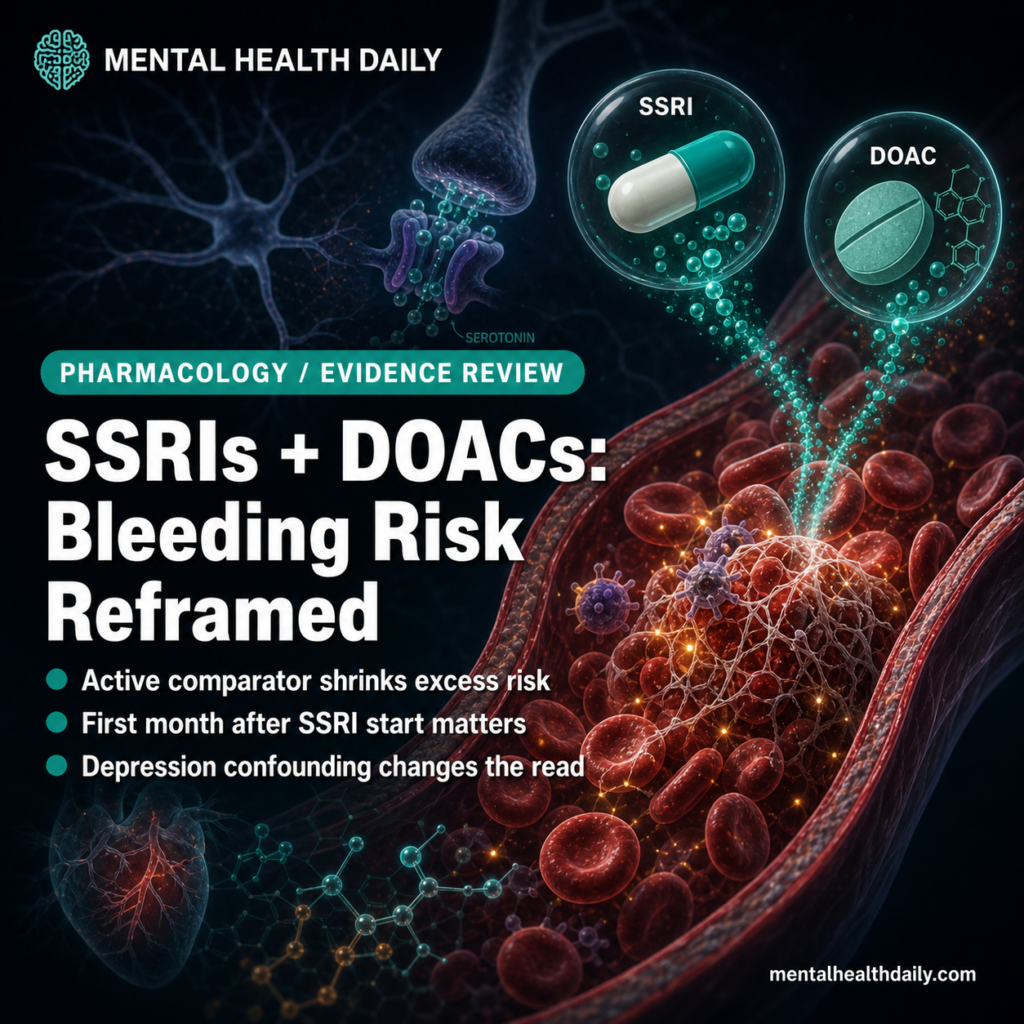
SSRIs + DOACs: No Excess Bleeding vs. Other Antidepressants

Stylized illustration of an SSRI capsule alongside a DOAC tablet against a vascular network background, representing the bleeding-interaction question in primary care.

SSRIs raise bleeding risk on their own. DOACs (direct oral anticoagulants — apixaban, rivaroxaban, dabigatran, edoxaban) raise it more. The intuitive worry is that combining them stacks the two effects. A new BJGP Open analysis from Chau and colleagues argues the stacking is smaller than most popular framings claim, and that the real safety question …

Read more