hit counter

Parkinson’s Balance Study Finds Cortical-Latency Muscle Control at 215 ms
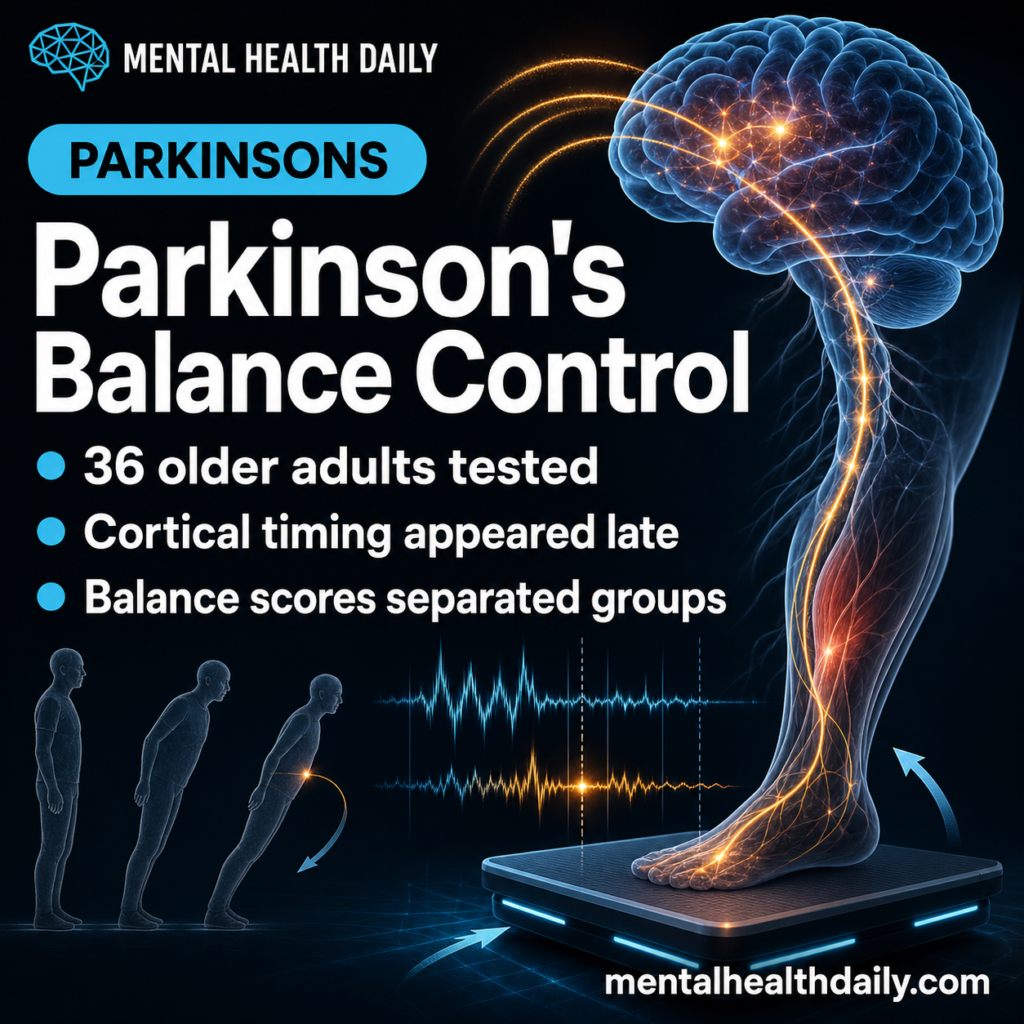
MHD featured image for cortical balance control in Parkinson's disease.

A 36-person Parkinson’s disease balance study found that perturbation-evoked muscle activity could be split into brainstem-latency LLR1 responses around 116-119 ms, cortical-latency LLR2 responses around 200-215 ms, and an antagonist destabilizing component around 173-181 ms.1 Parkinson’s disease lowered clinical balance scores, but the broad claim that Parkinson’s patients had higher cortical-latency LLR2 responses than older …
Read more

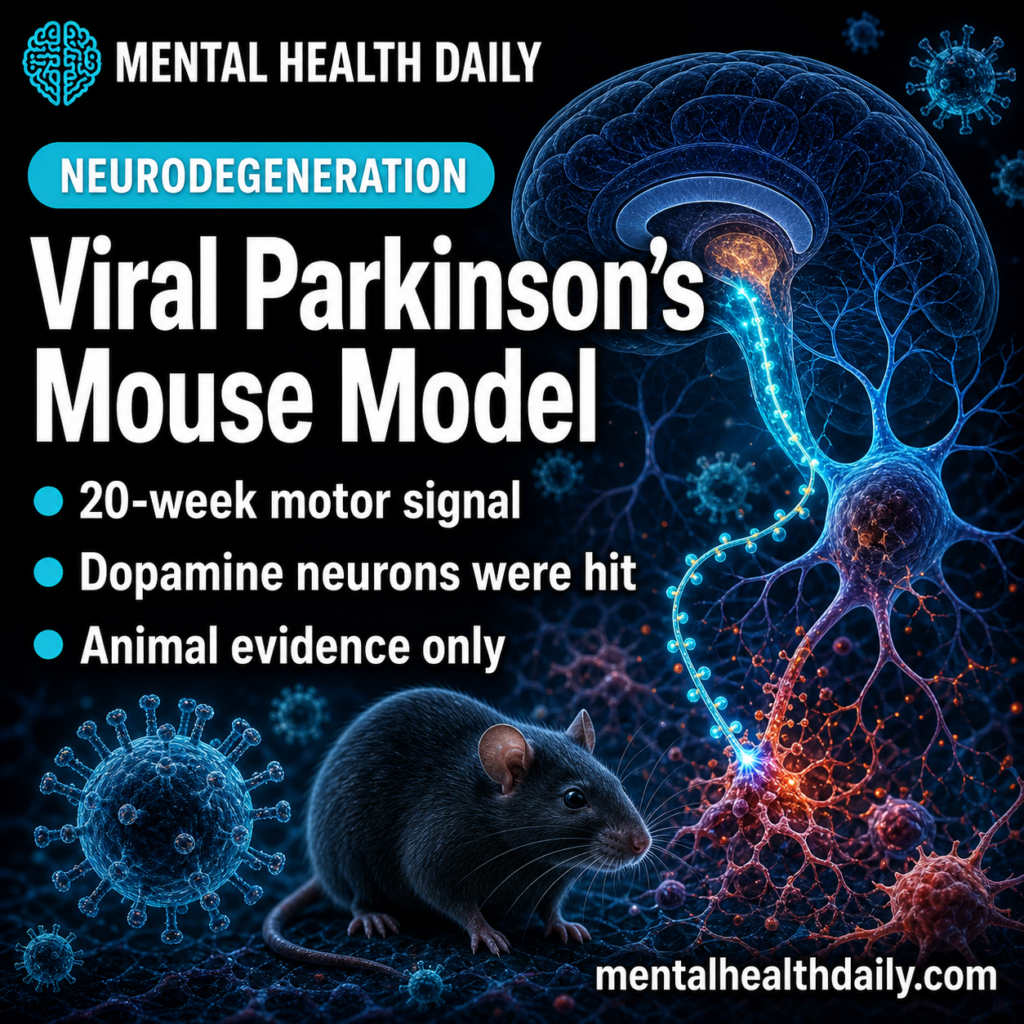
TMEV Viral Parkinson’s Mouse Model Caused 20-Week Dopamine-Lesion Behaviors

MHD featured image for a viral Parkinson's mouse model using Theiler's murine encephalomyelitis virus.

A 2026 mouse study found that Theiler’s murine encephalomyelitis virus (TMEV) injected into the substantia nigra produced persistent Parkinson’s-like motor signals through 20 weeks, including apomorphine-induced rotations at every measured post-injection timepoint.1 The finding makes TMEV a useful viral-neuroinflammation model of dopamine-neuron injury, but it does not show that Theiler’s virus causes human Parkinson’s disease. …

Read more

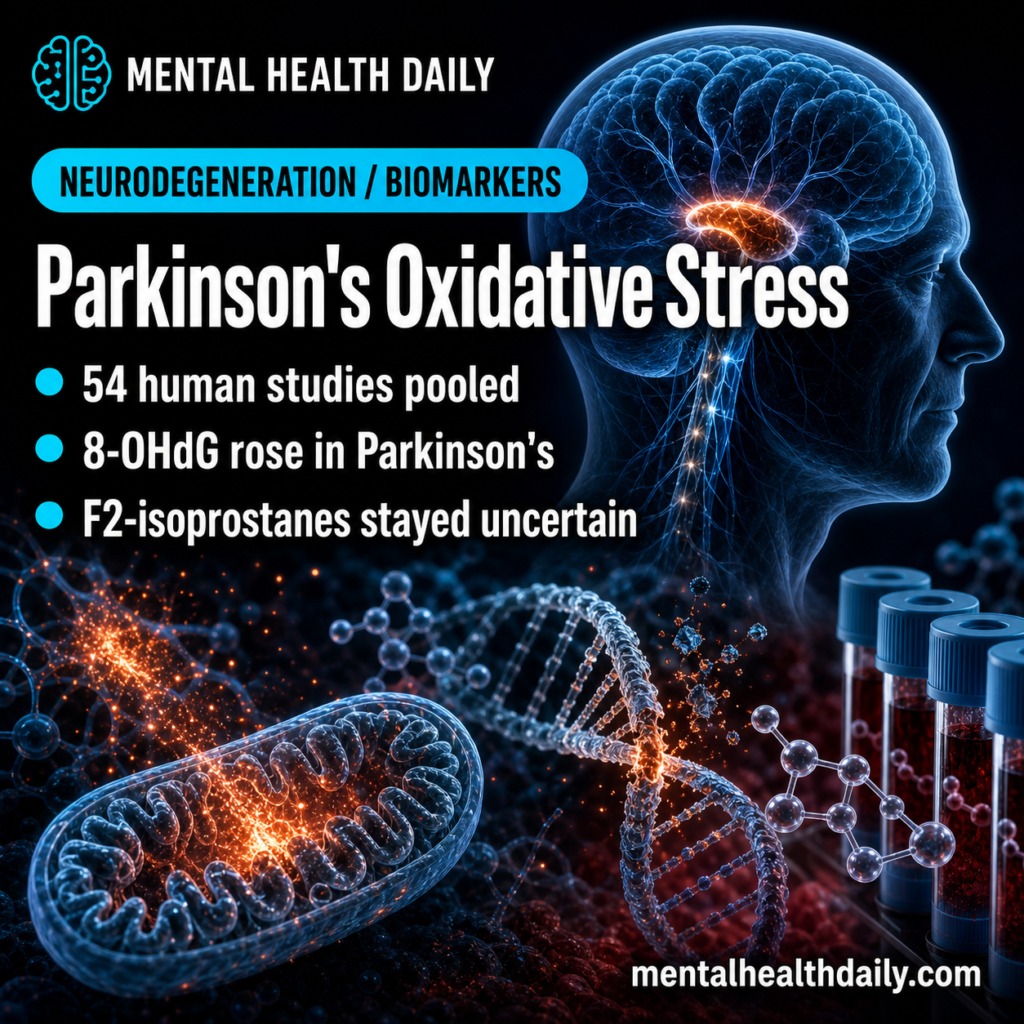
Parkinson’s Diabetes Oxidative Stress: 8-OHdG Rose, F2-Isoprostanes Did Not

MHD featured image for Parkinson's disease, diabetes, oxidative stress, 8-OHdG, and F2-isoprostanes.

A 2026 meta-analysis of 54 human studies found that 8-hydroxy-2′-deoxyguanosine rose in Parkinson’s disease, while F2-isoprostanes did not show a statistically confirmed Parkinson’s signal; type 2 diabetes showed much larger peripheral oxidative-stress elevations than Parkinson’s disease for both biomarkers. Research Highlights Parkinson’s DNA-oxidation signal was moderate: Msigwa et al. pooled 5 Parkinson’s disease studies with …

Read more

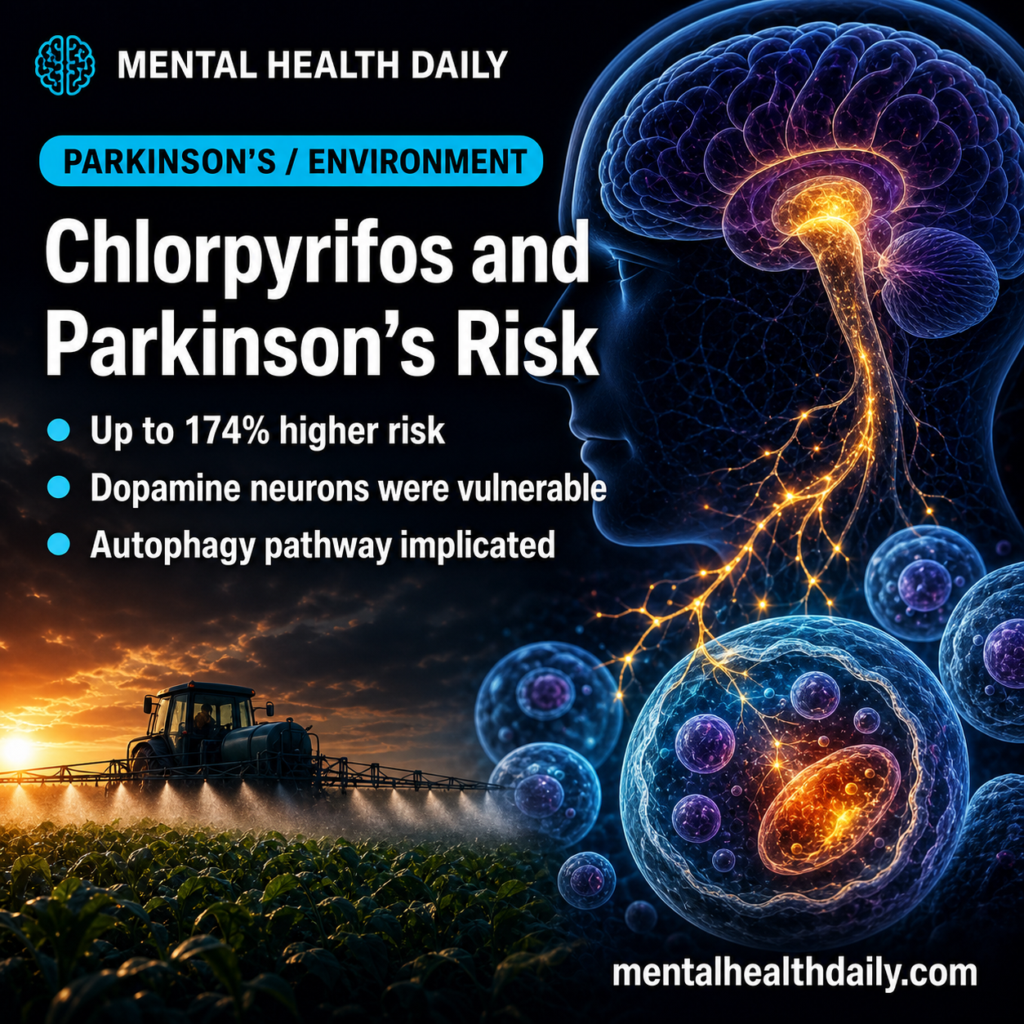
Chlorpyrifos Exposure Linked to Up to 174% Higher Parkinson’s Risk

MHD featured image for chlorpyrifos exposure, Parkinson's risk, dopaminergic neurons, and autophagy dysfunction.

A human, mouse, and zebrafish study linked long-term chlorpyrifos exposure to Parkinson’s disease risk, with the strongest exposure-duration estimate reaching OR 2.74 for workplace proximity across the 1974-to-index-year window.1 The paper is stronger than a single epidemiology result because animal experiments pointed to dopaminergic neuron loss, microglial activation, pathological α-synuclein, and autophagy dysfunction. Research Highlights …

Read more

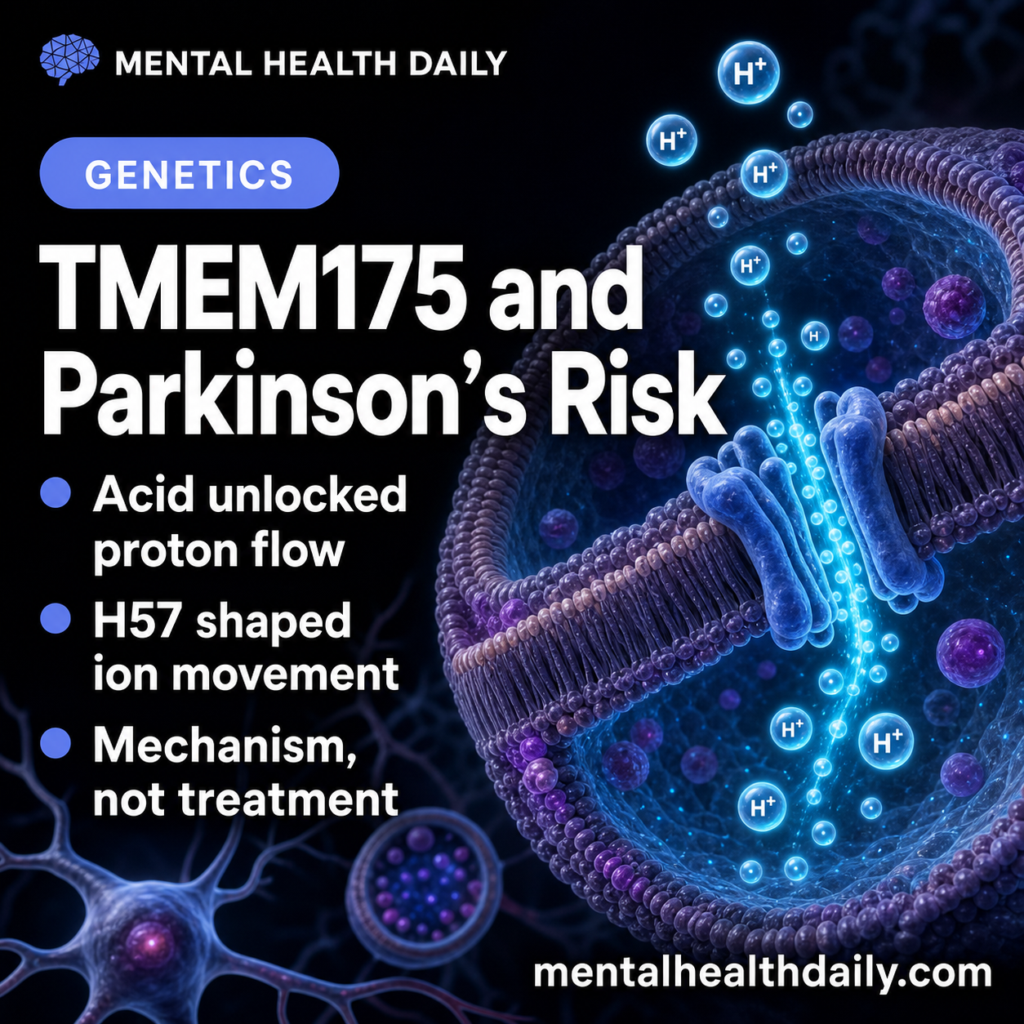
TMEM175 Proton Channel Finding Clarifies Parkinson’s Lysosome Risk

MHD featured image for TMEM175 proton conductance and Parkinson's disease lysosome risk.

A 2026 PNAS study found that TMEM175 behaves as a pH-sensitive lysosomal channel relevant to Parkinson’s risk biology.1 Acidifying the luminal side from pH 7.4 to 4.7 activated proton conductance, shifted reversal potential, and tied H57 to H+ and K+ flux. Research Highlights Acidification activated TMEM175: lowering luminal-side pH from 7.4 to 4.7 increased inward …

Read more

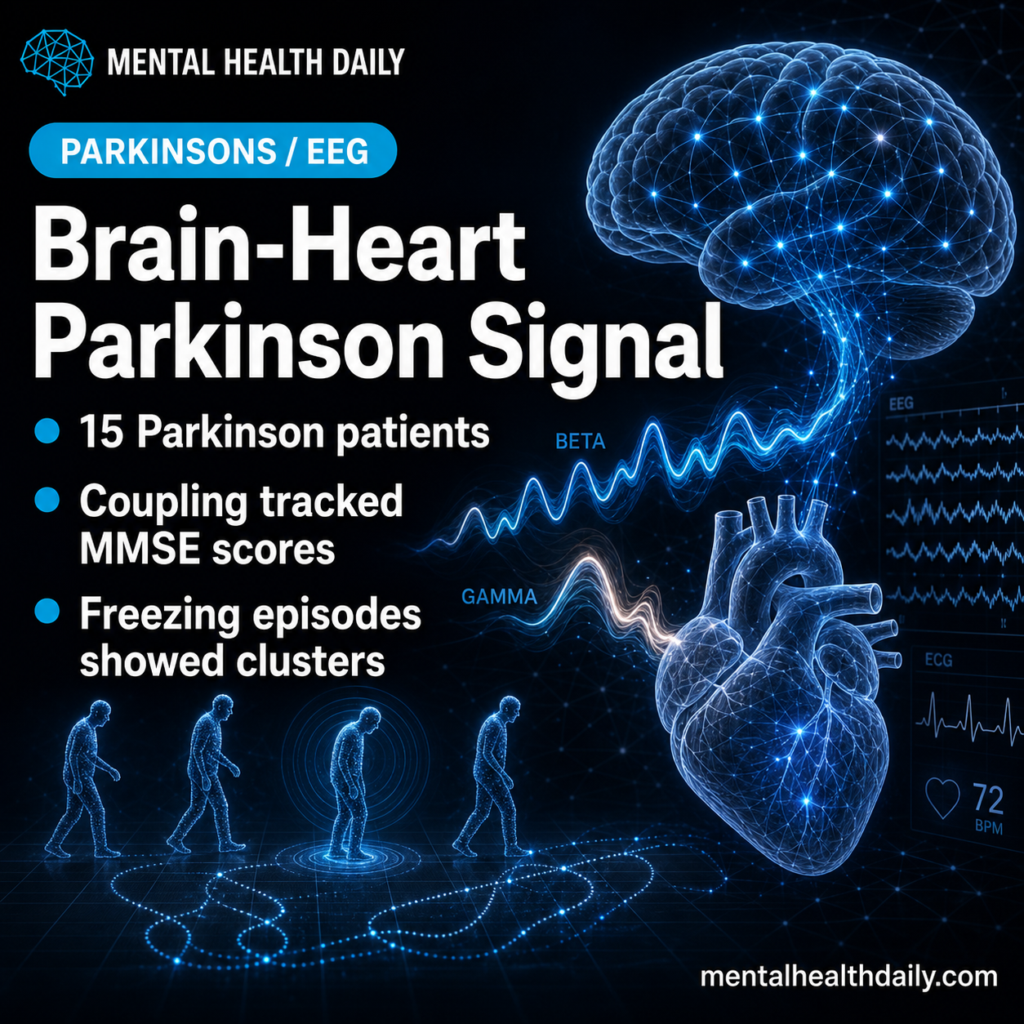
Parkinson’s Brain-Heart Coupling Signals MMSE and Freezing of Gait

MHD featured image for Parkinson's brain-heart coupling and freezing of gait.

A 2026 EEG-ECG preprint reported that beta efficiency-sympathetic coupling differed across healthy young adults, healthy older adults, and Parkinson’s disease patients, p = 0.0032, while gamma efficiency-sympathetic coupling differed at p = 0.0003.1 The main claim is that motor, cognitive, and autonomic physiology may be coupled tightly enough to deserve biomarker-level study. Research Highlights Brain-heart …

Read more

Human Substantia Nigra Neurons Tracked Prior Reward and Faster Motivation

MHD featured image for substantia nigra dopamine reward-history signals.

A 2026 iScience study recorded 27 substantia nigra neurons during deep-brain-stimulation surgery in 11 Parkinson’s disease patients and found that prior reward shaped both putative dopamine-neuron firing and the next reaction time: responses were faster after a +$10 outcome than after neutral or negative outcomes (0.916 s vs. 1.017 s, p = 0.0175).1 Research Highlights …

Read more