hit counter

AI Levodopa Timing Improved UPDRS 4.4 Points in 5 Parkinson Patients
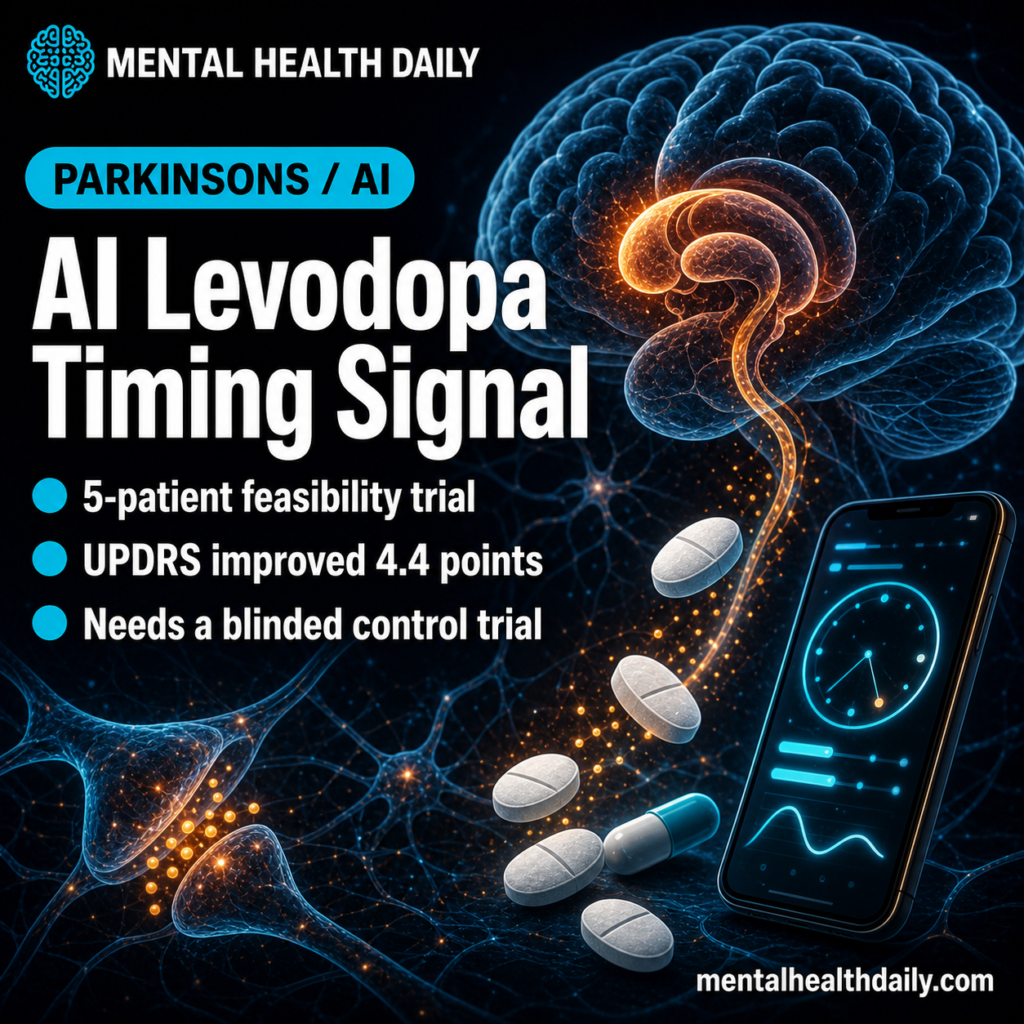
MHD featured image for AI-guided levodopa dosing in Parkinson's disease.

A 2026 open-label feasibility trial involving 5 Parkinson’s disease patients found that app-randomized levodopa timing was associated with a mean 4.4-point improvement on the Unified Parkinson’s Disease Rating Scale, but the signal missed conventional statistical significance at p = 0.063.1 The narrow conclusion is feasibility: this was a dosing experiment that justified a blinded controlled …
Read more

Parkinson’s Sex Differences: Male Flies Show Stronger Rotenone Stress

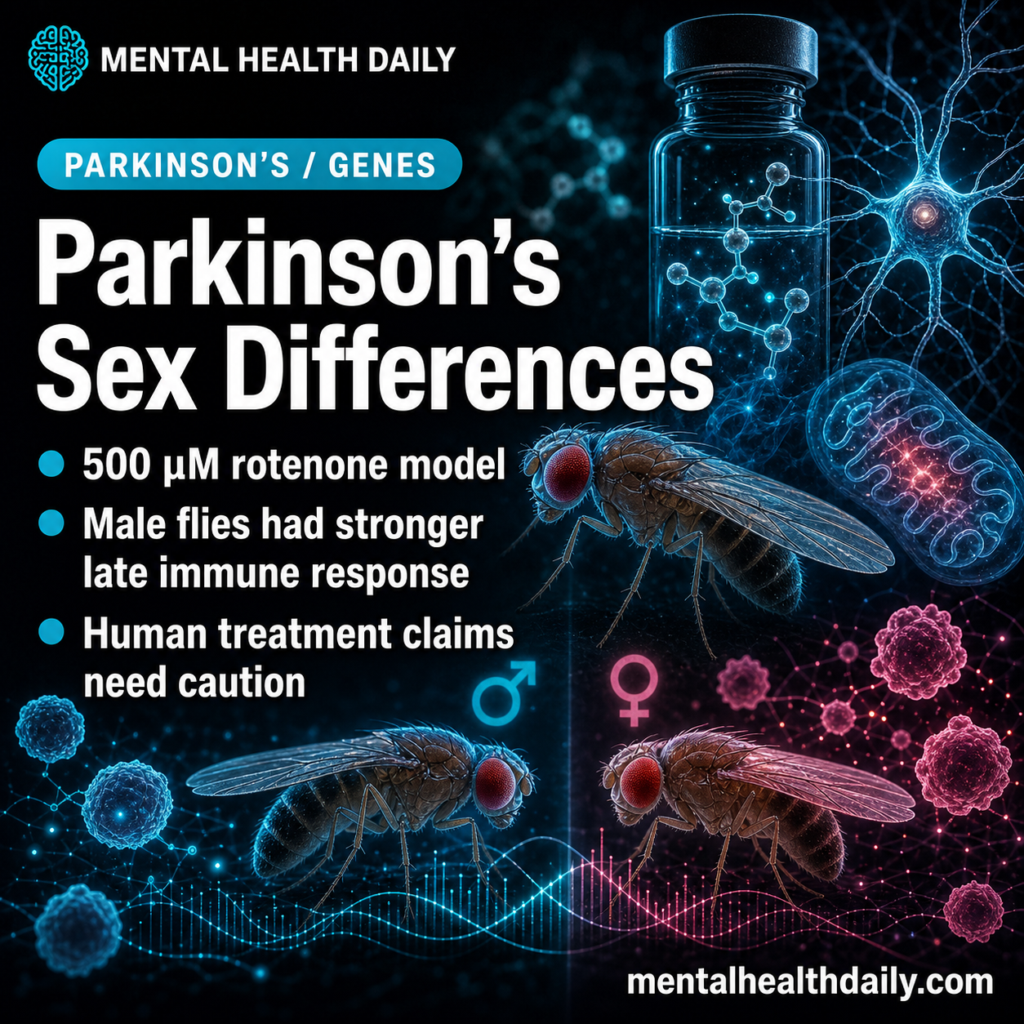
MHD featured image for Parkinson's sex differences and rotenone immune-gene response in Drosophila.

A 2026 Drosophila Parkinson’s model exposed male and female flies to 500 μM rotenone. By 60 days, male flies had worse survival/climbing than female flies; the paper is a vulnerability screen, not evidence that the same genes are ready human biomarkers.1 Research Highlights 500 μM rotenone split male and female flies: Iyer et al. used …

Read more

Parkinson’s Metabolite Biomarkers Split 3 Patient Groups

MHD featured image for Parkinson's disease metabolite biomarkers and patient metabolic subgroups.

A 2026 Parkinson’s disease study used gene-expression data and genome-scale metabolic modeling to predict patient-level metabolite patterns, then separated 104 patients into 3 metabolic subgroups that were partly reproduced in an independent 81-patient validation dataset. Research Highlights Patient-level modeling found heterogeneity: Abdik et al. predicted secretion tendencies for 802 analyzable metabolites across 104 postmortem substantia …

Read more

REDDI MEG Classifier Separated 4 Neurodegenerative Diseases at 0.81

MHD featured image for REDDI MEG differential diagnosis research.

A 2026 medRxiv preprint found that REDDI, a resting-state magnetoencephalography machine-learning pipeline, separated mild cognitive impairment, multiple sclerosis, Parkinson’s disease, and amyotrophic lateral sclerosis with 0.81 ± 0.04 balanced accuracy across 5 folds.1 That is a meaningful jump over the prior 67.1% MEG benchmark, but it is still research-stage decision support rather than a clinical …

Read more

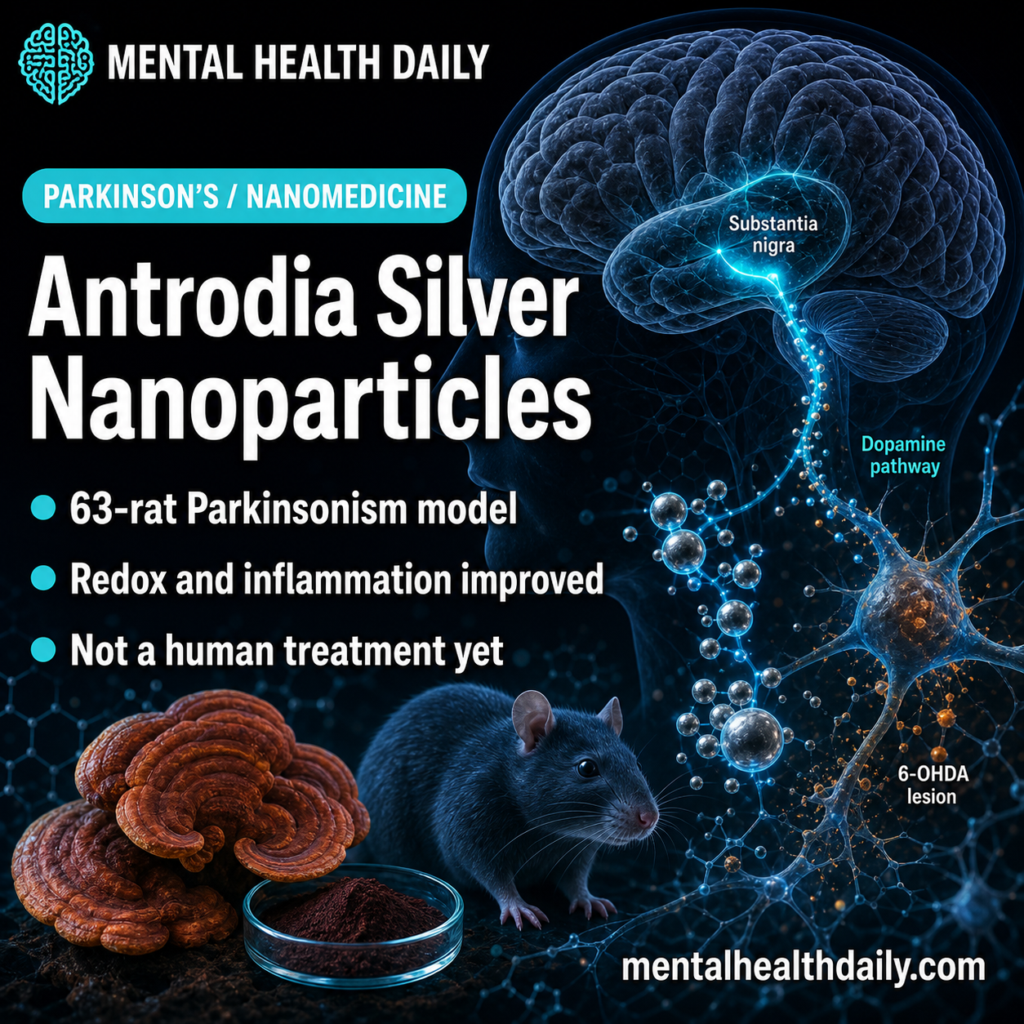
Antrodia Silver Nanoparticles Reduced Parkinsonism Markers in 63 Rats

MHD featured image for Antrodia silver nanoparticles and Parkinsonism oxidative-stress markers.

A 2026 Parkinsonism study involving 63 male rats found that Antrodia cinnamomea plus citrate-stabilized silver nanoparticles reduced 6-OHDA motor, oxidative-stress, inflammatory, α-synuclein, and apoptosis markers, while dopamine and acetylcholine recovery remained nonsignificant. The useful claim is a multitarget preclinical signal, not a Parkinson’s disease treatment recommendation. Research Highlights Combination treatment looked strongest: Tekiner et al. …

Read more

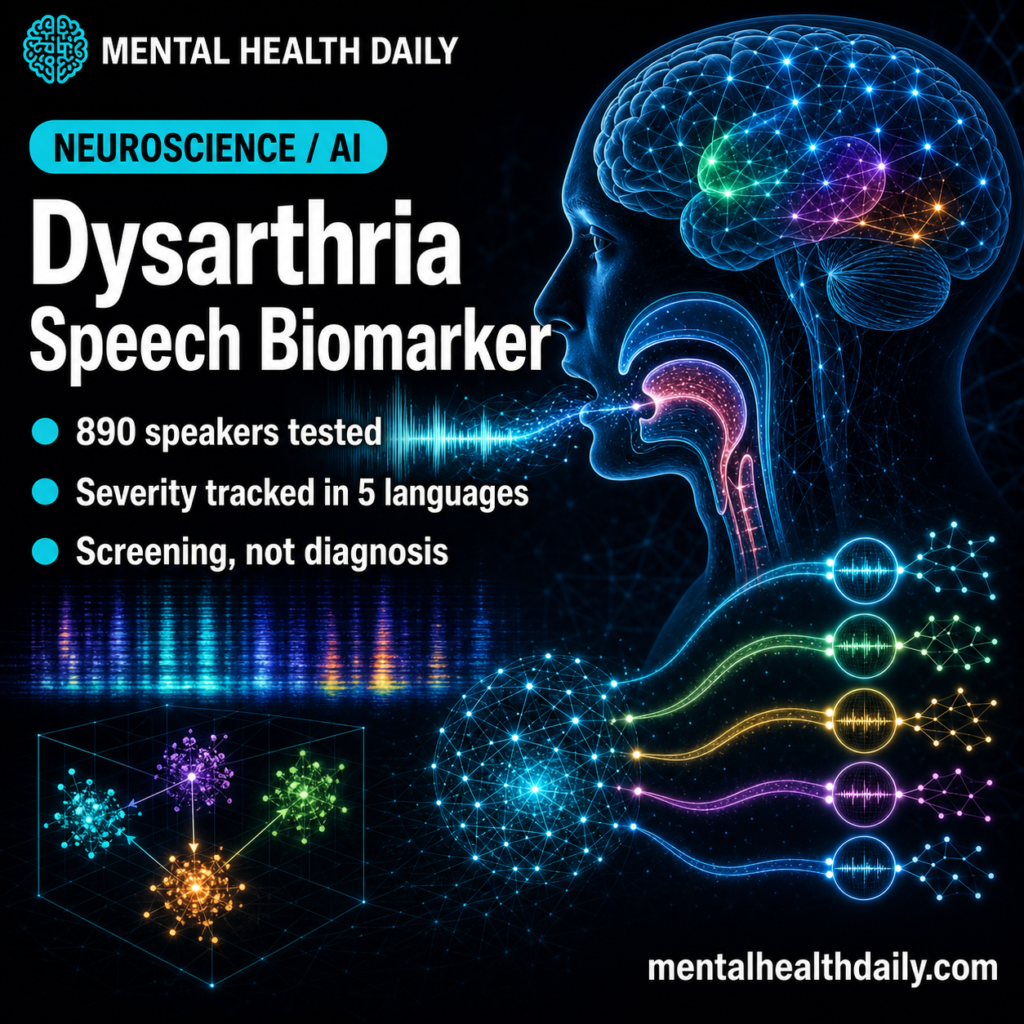
Dysarthria Speech Biomarker Tracked Severity Across 5 Languages

MHD featured image for dysarthria speech biomarkers, phonological subspace collapse, and cross-language severity tracking.

A 2026 medRxiv preprint found that a training-free speech biomarker tracked dysarthria severity across 890 speakers, 10 corpora, and 5 full-pipeline languages, with all 5 consonant d-prime features showing random-effects correlations with clinical severity (rho = −0.50 to −0.56; all p < 2e−4). Research Highlights Speech-severity signal was broad: Muller et al. evaluated 890 speakers …

Read more

Parkinson’s Speech Pauses Track Sentence Complexity and MoCA Scores

MHD featured image for Parkinson's speech pauses, sentence complexity, MoCA scores, and dysarthria.

A 2026 connected-speech study found that people with Parkinson’s disease produced more silent pauses than older controls while reading aloud: 2.185 vs. 1.595 mean pauses, while long sentences produced 2.676 pauses vs. 1.033 in short sentences.1 Within the Parkinson’s group, MoCA scores correlated with total pause count (rs = −0.502, p = 0.005). Research Highlights …

Read more