hit counter

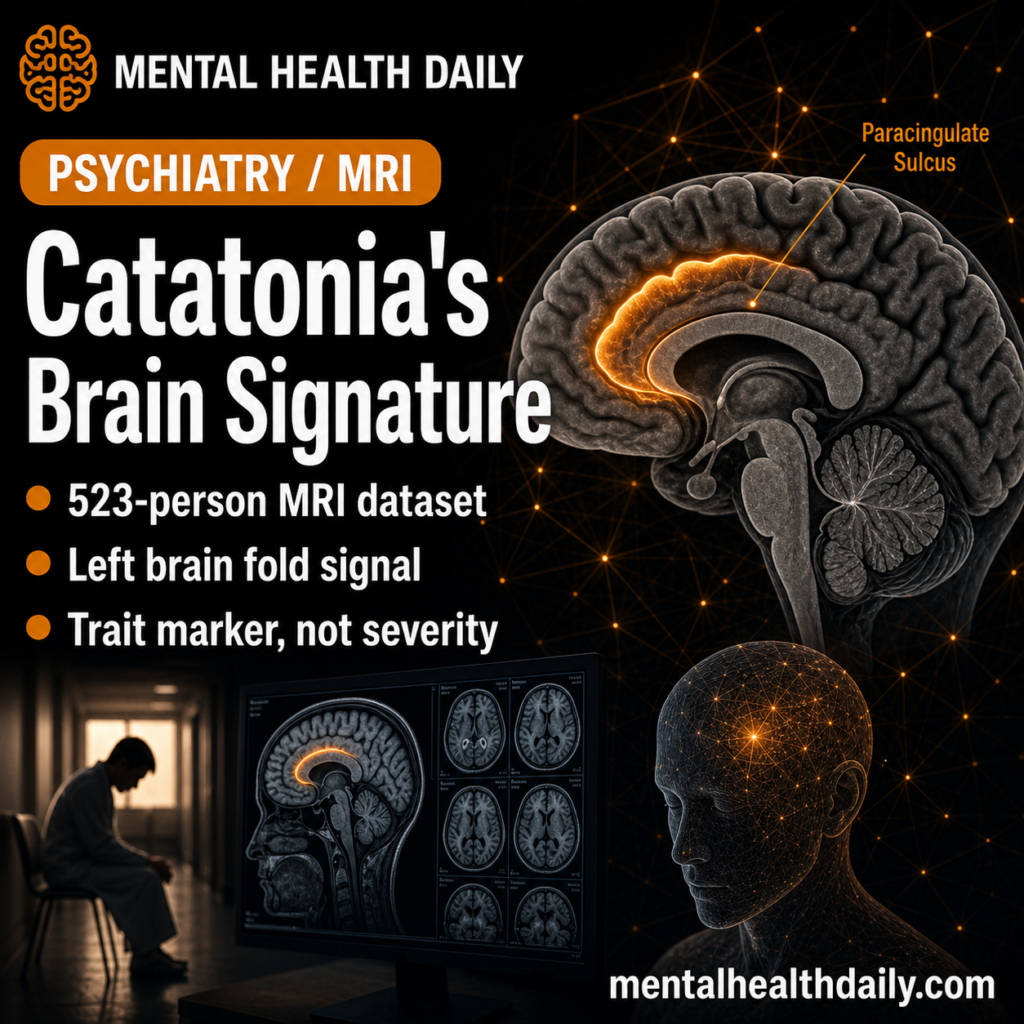
Catatonia Linked to Lower Left Paracingulate Sulcus Rate (28% vs 53%)

Photoreal illustration of a brain with the anterior cingulate cortex highlighted, representing transdiagnostic structural markers of catatonia.

A 2026 hospital MRI study found that the left paracingulate sulcus was present in 31 of 109 catatonia patients (28%) vs. 171 of 323 psychiatric controls without catatonia (53%), a left-hemisphere group effect that survived adjustment for age, sex, scanner, brain volume, benzodiazepines, and antipsychotics.1 Research Highlights Left PCS signal: left paracingulate sulcus (PCS) presence …

Read more

Personalized TMS for Psychiatric Disorders: Targeting Functional Connectivity (FC) in the Brain (2024 Review)

Transcranial Magnetic Stimulation (TMS) has emerged as a beacon of hope in the realm of psychiatry, offering a non-invasive alternative for treating psychiatric disorders. The variability in treatment outcomes highlights the necessity for advancements in personalized approaches. A recent paper analyzed the potential of personalized TMS protocols (customized based on individual brain connectivity) may help …

Read more

Ketamine Increases Amygdala Volume in Treatment-Resistant Depression (TRD) (2024 MRI Study)

Depression is a complex mental health condition that significantly affects an individual’s emotional and physical well-being. Recent advances in neuroimaging have provided deeper insights into how major depressive disorder (MDD) alters brain structures, particularly the hippocampus and amygdala, and how treatments like ketamine can potentially reverse these changes. A new study using 3T and 7T …

Read more

Cerebellum Activity Predicts Euthymia (Stable Mood) vs. Depression in Bipolar Disorder (2024 Study)

Bipolar disorder (BD), a complex and multifaceted mental illness, manifests through various mood states including depression, mania/hypomania, and euthymia. Recent advances in neuroimaging, particularly resting-state functional magnetic resonance imaging (fMRI), have shed light on the intricate dynamics of brain activity underlying these mood states. A new study employing dynamic fractional amplitude of low-frequency fluctuations (dfALFF) …

Read more

Combo of Neuroimaging, Transcriptome, Epigenetics to Understand Gray Matter Abnormalities in Major Depression (2024 Study)

Major depressive disorder (MDD) affects millions worldwide, yet its underlying causes remain largely enigmatic. A new study integrated neuroimaging, transcriptomic, and epigenetic data to better understand the genetic underpinnings of MDD. This comprehensive approach revealed a complex interplay between brain structure, gene expression, and DNA methylation, offering new insights into this debilitating condition. Highlights: Integrative …

Read more

Detecting Misdiagnosed Bipolar Disorder via MRI Brain Connectivity Analysis (2024 Study)

Bipolar Disorder (BD) and Major Depressive Disorder (MDD) are two of the most prevalent mood disorders, yet they are often misdiagnosed due to overlapping symptoms. This misdiagnosis can lead to inadequate treatment and worsened patient outcomes. However, recent advances in functional magnetic resonance imaging (fMRI) offer a promising solution to this challenge. By analyzing brain …

Read more

Analyzing Brain Connectivity with Advanced Neuroimaging to Treat Major Depression (2023 Research)

Depression, a leading cause of disability globally, presents a myriad of treatment challenges. Recent advancements in neuroimaging, particularly in understanding brain connectivity, offer a new lens through which we can view and potentially enhance the treatment of Major Depressive Disorder (MDD). Highlights: Major Depressive Disorder (MDD) affects millions worldwide, with traditional treatments showing varied success …

Read more