hit counter

Alpha-Synuclein SAA Predicts Parkinson’s Levodopa Response Durability

Photoreal illustration of CSF biomarker testing alongside dopaminergic neuron pathways, representing PD biomarker stratification.

A 2026 PPMI analysis found that Parkinson’s patients with positive CSF α-synuclein seed amplification assay results kept gaining levodopa benefit over follow-up, while SAA-negative patients showed faster ON-medication motor progression than SAA-positive patients: 0.87 vs. 3.47 MDS-UPDRS Part III points/year in 183 matched SAA-positive and 40 SAA-negative patients.1 Research Highlights ON-state progression split sharply: SAA-positive …

Read more

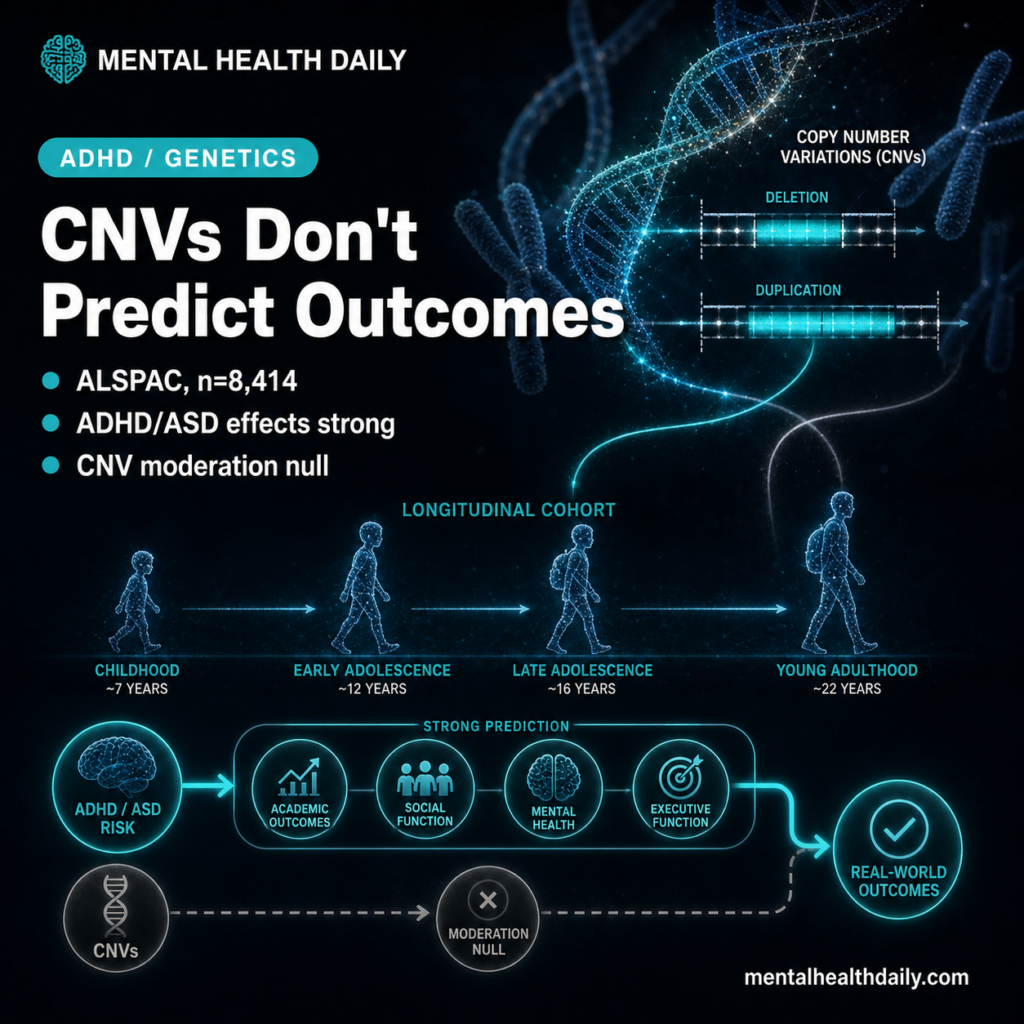
Copy Number Variants Did Not Moderate ADHD or Autism Outcomes in ALSPAC

Photoreal illustration of DNA strands and developmental timeline overlaid on a schematic young adult, conveying genetic moderation of childhood neurodevelopmental outcomes.

A 2026 ALSPAC analysis tested a narrow claim behind routine genetic screening for childhood attention-deficit/hyperactivity disorder (ADHD) and autism spectrum disorder (ASD): whether rare copy number variants (CNVs; deleted or duplicated DNA segments) make young-adult outcomes worse than ADHD/ASD status alone would predict. In 8,414 people with usable CNV data, ADHD and ASD predicted worse …

Read more

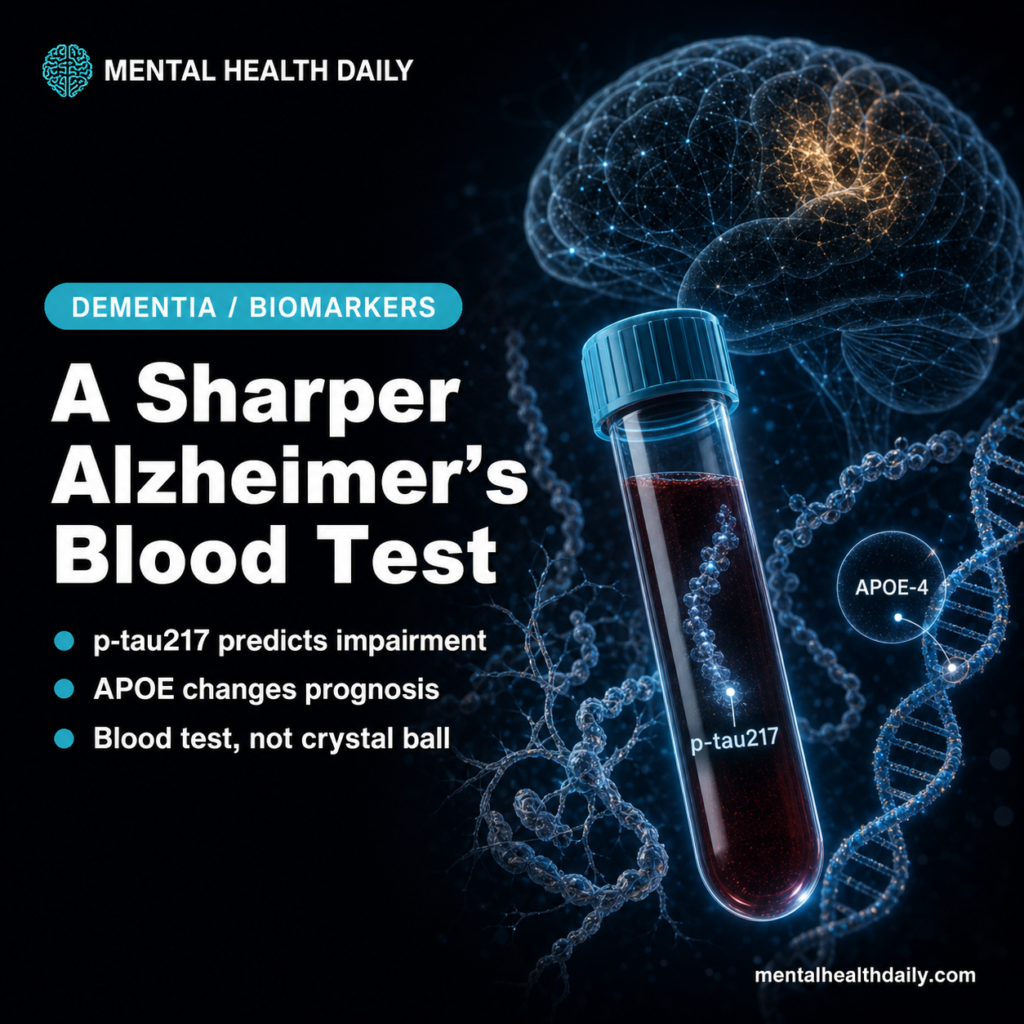
Plasma p-tau217 Blood Test Predicts Alzheimer’s Risk 1.5x Stronger in APOE-e4

Photoreal illustration representing a blood biomarker test for Alzheimer's disease with imagery of blood vials, neurons, and APOE genetic motifs.

Until recently, Alzheimer’s pathology could only be confirmed in living patients via PET imaging or lumbar puncture. Plasma p-tau217 changed that calculus — but how to interpret a positive result depends substantially on APOE genotype.1 Research Highlights Plasma p-tau217 is a blood biomarker that rises years before Alzheimer’s symptoms. The 2024 Alzheimer’s Association revised criteria …

Read more

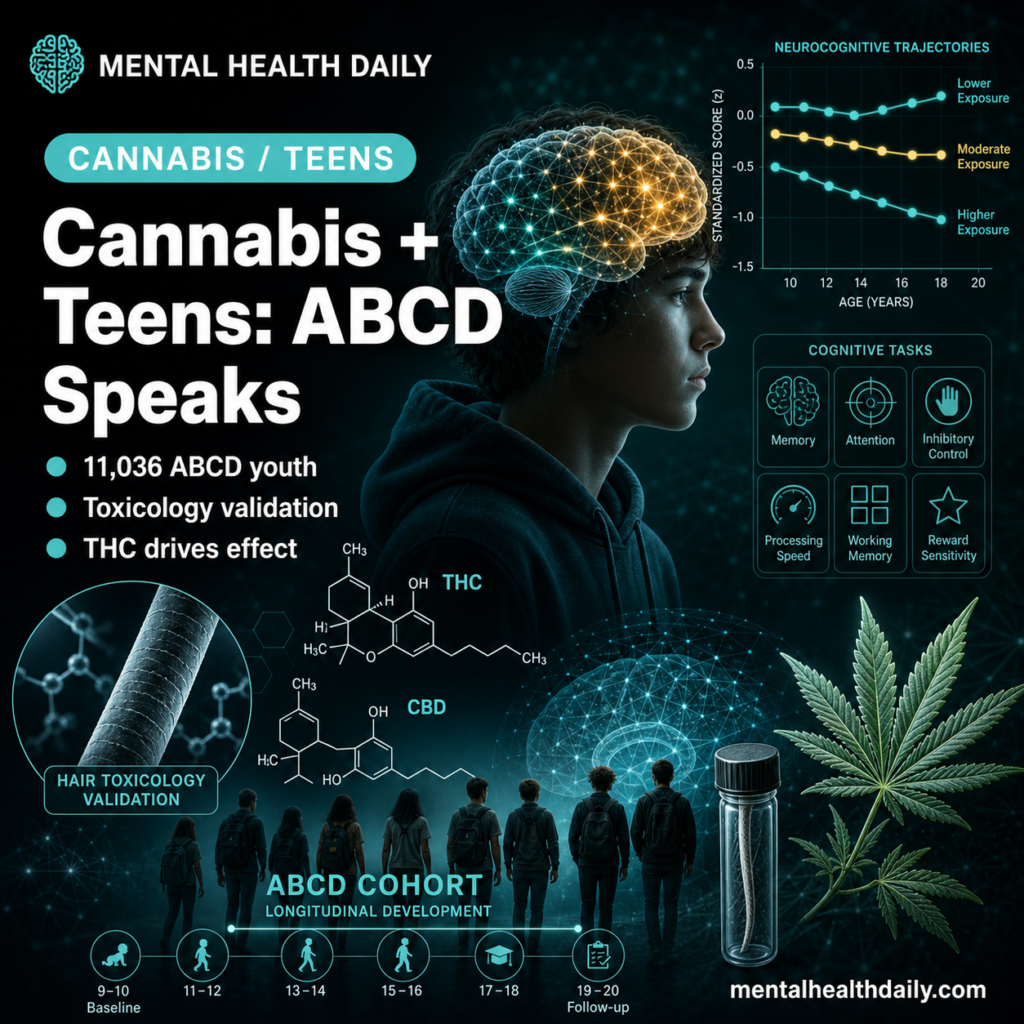
Teenage Cannabis Use vs. Cognition and Brain Development: THC vs. CBD (Toxicology Data)

Photoreal illustration of an adolescent brain with overlay of cannabis molecules and cognitive metrics, conveying developmental neurocognitive impact.

Studies of adolescent cannabis effects on cognition have been limited by self-report and confounding. A 2026 longitudinal study by Wade and colleagues uses the Adolescent Brain Cognitive Development (ABCD) cohort with both self-report and biological toxicology, separating THC and CBD effects on developing cognition.1 Research Highlights Adolescence is a critical window for cognitive maturation, with …

Read more