epilepsy
Published research on epilepsy.
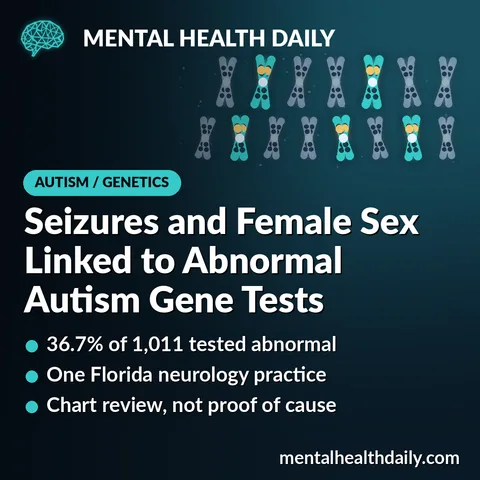
At a Florida neurology practice, 371 of 1,011 autistic patients who had genetic testing (36.7%) had an abnormal result. A seizure history and female sex were linked to higher odds; EEG and M…
Read article →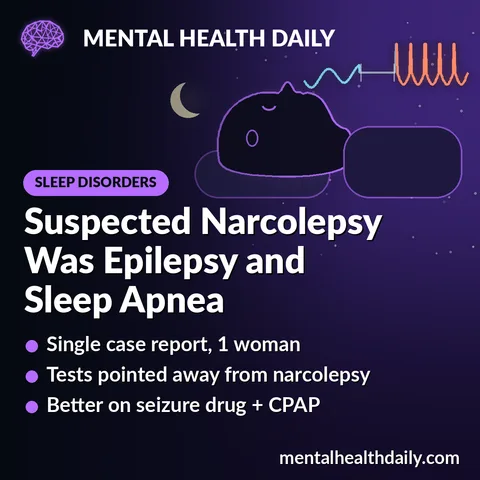
In a 2026 case report from China, a 34-year-old woman with mild intellectual disability was sent for evaluation of possible narcolepsy. Sleep testing and EEG instead showed epilepsy and mode…
Read article →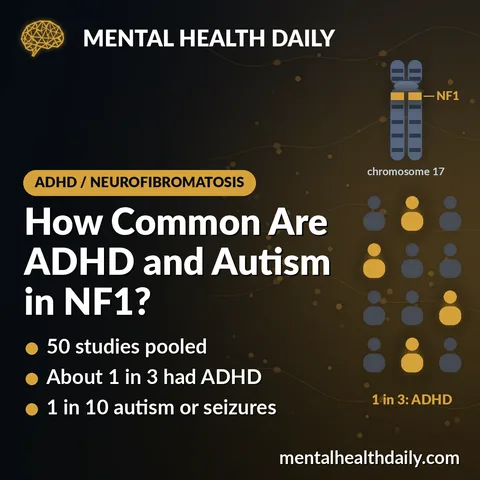
A 2026 meta-analysis of 50 studies estimated that about 1 in 3 people with neurofibromatosis type 1 (NF1) have ADHD (33%), and that roughly 1 in 10 have autism (11%), seizures (11%), depress…
Read article →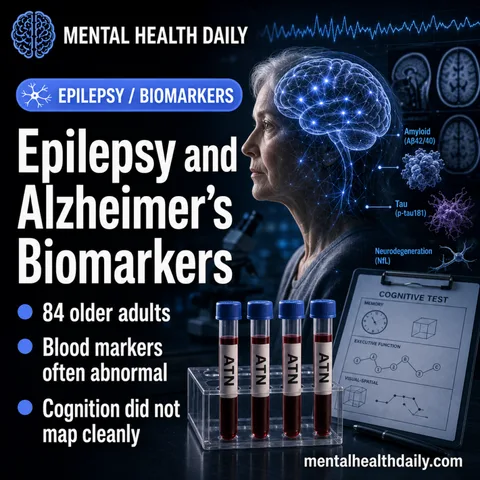
A preprint in 84 older adults with epilepsy found that abnormal Alzheimer's-related blood biomarkers were common, but the biomarker categories did not line up neatly with cognitive impairmen…
Read article →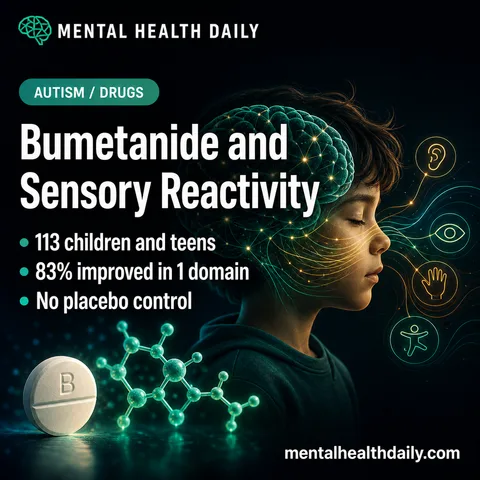
A 2026 medRxiv preprint using parent-cocreated sensory-related outcome measures found that 83% of children and teens improved on at least 1 PROMIS domain during 6 months of bumetanide treatm…
Read article →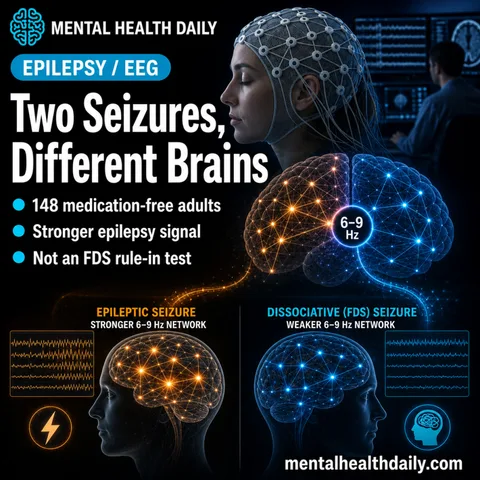
A 2026 diagnostic-accuracy preprint found that resting-state EEG network features separated non-lesional epilepsy from functional/dissociative seizures (FDS) at 67.5% balanced accuracy, but …
Read article →
CBD has solid evidence for rare pediatric epilepsies, preliminary signal in anxiety and psychosis, and insufficient evidence for most conditions it’s marketed for.
Read article →