hit counter

SYNGAP1 Autistic Behaviors Linked to Seizure Type, Not Frequency
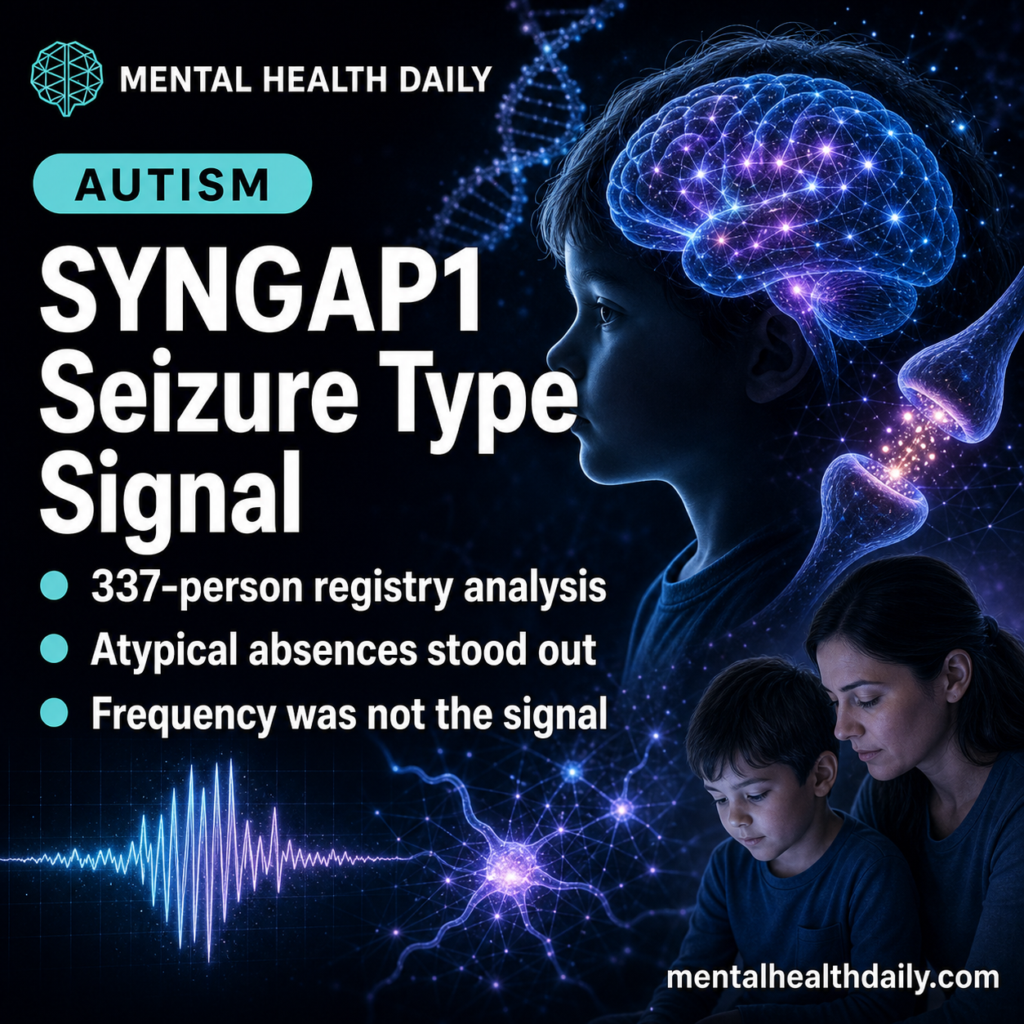
MHD featured image for SYNGAP1 seizure semiology and autistic behaviors.

A 337-person SYNGAP1-DEE registry preprint found caregiver-reported autistic behavior scores linked most strongly to atypical absence seizures (n = 77; FDR-adjusted p = .001), while peak seizure-frequency ratings were not detectably associated with those behavior scores.1 Research Highlights Seizure type carried the signal: atypical absences were associated with higher caregiver-reported autistic behavior scores in 77 …
Read more

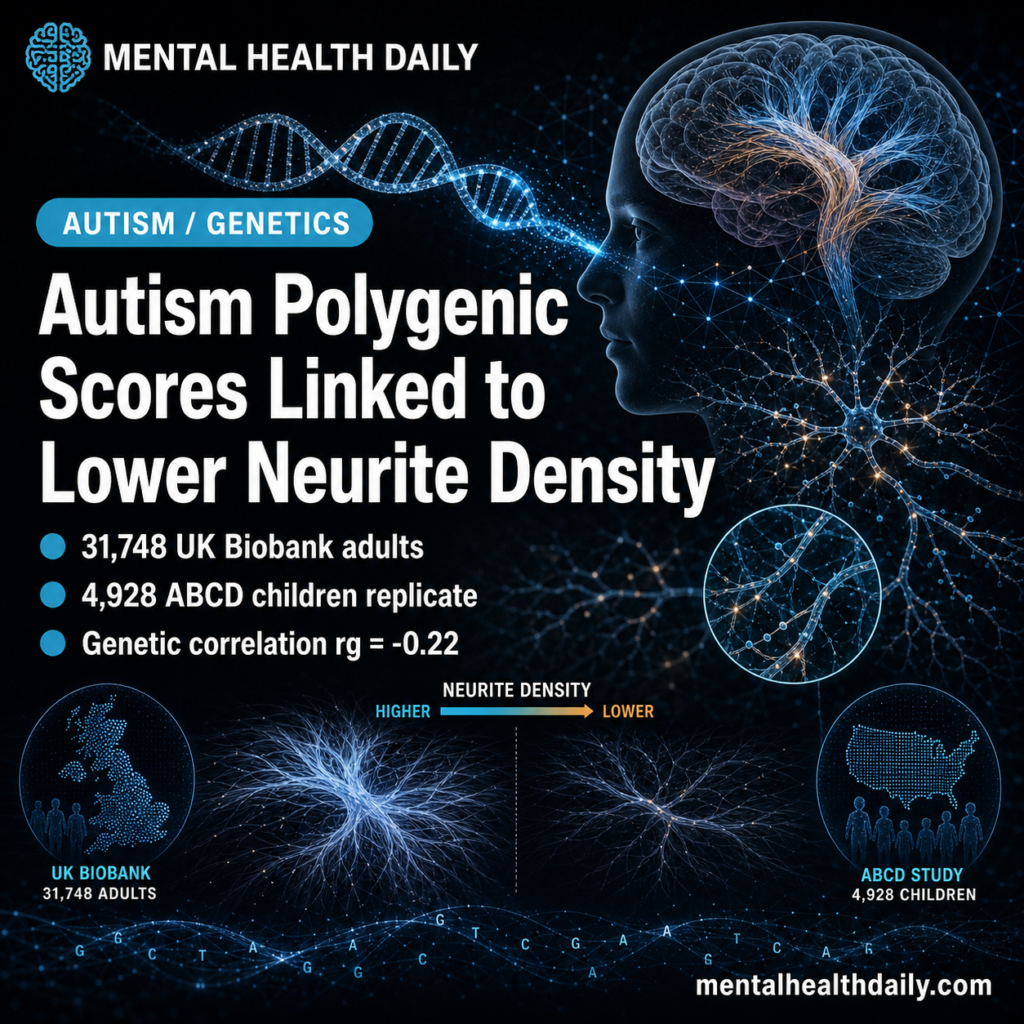
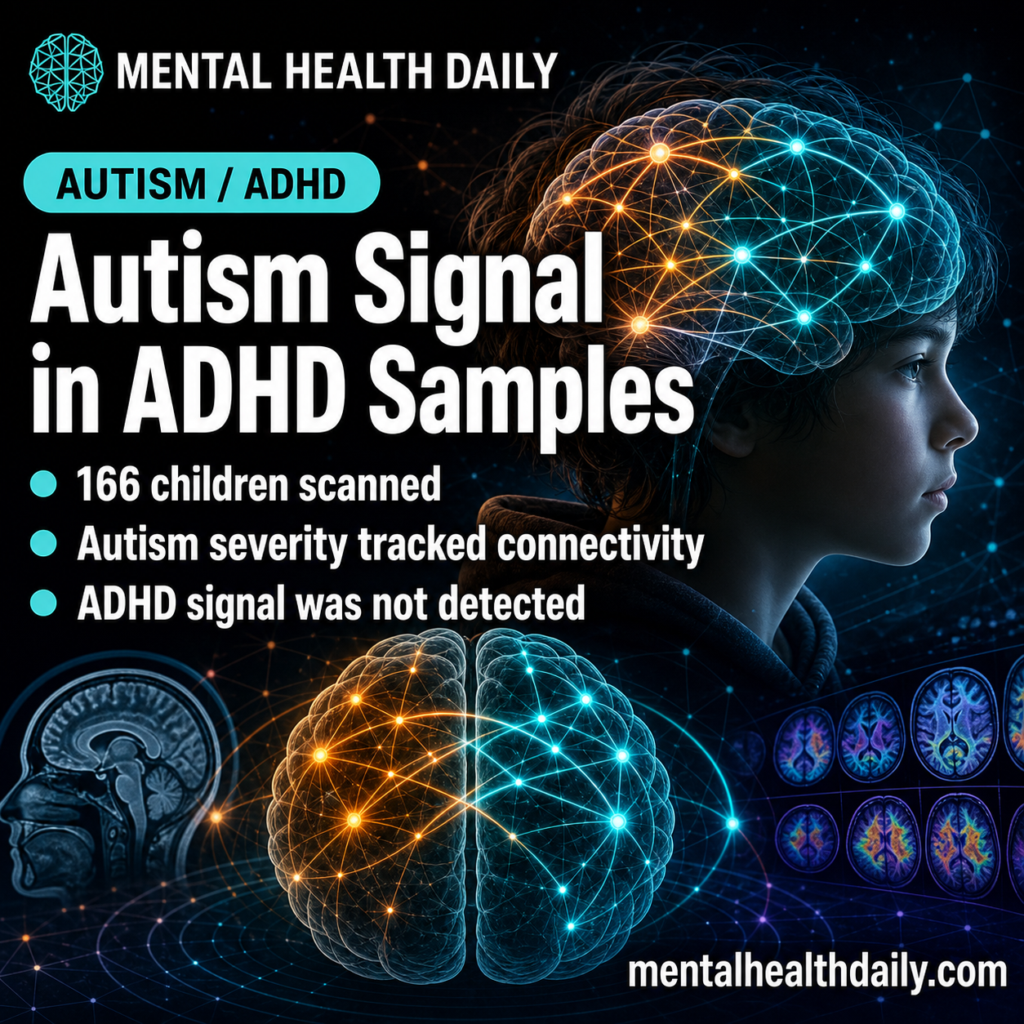
Autism vs. ADHD Connectome Study: Frontal-DMN Signal Tracks Autism Severity

MHD featured image for autism, ADHD, and connectome-based symptom mapping.

A 166-child resting-state fMRI study found that clinician-observed autism severity, not ADHD severity, tracked connectivity strength between a left middle frontal gyrus node and the posterior cingulate/default mode network across children diagnosed with autism or ADHD without autism. The result is transdiagnostic, but asymmetrical: autism traits carried the connectome signal after ADHD ratings were controlled.1 …

Read more

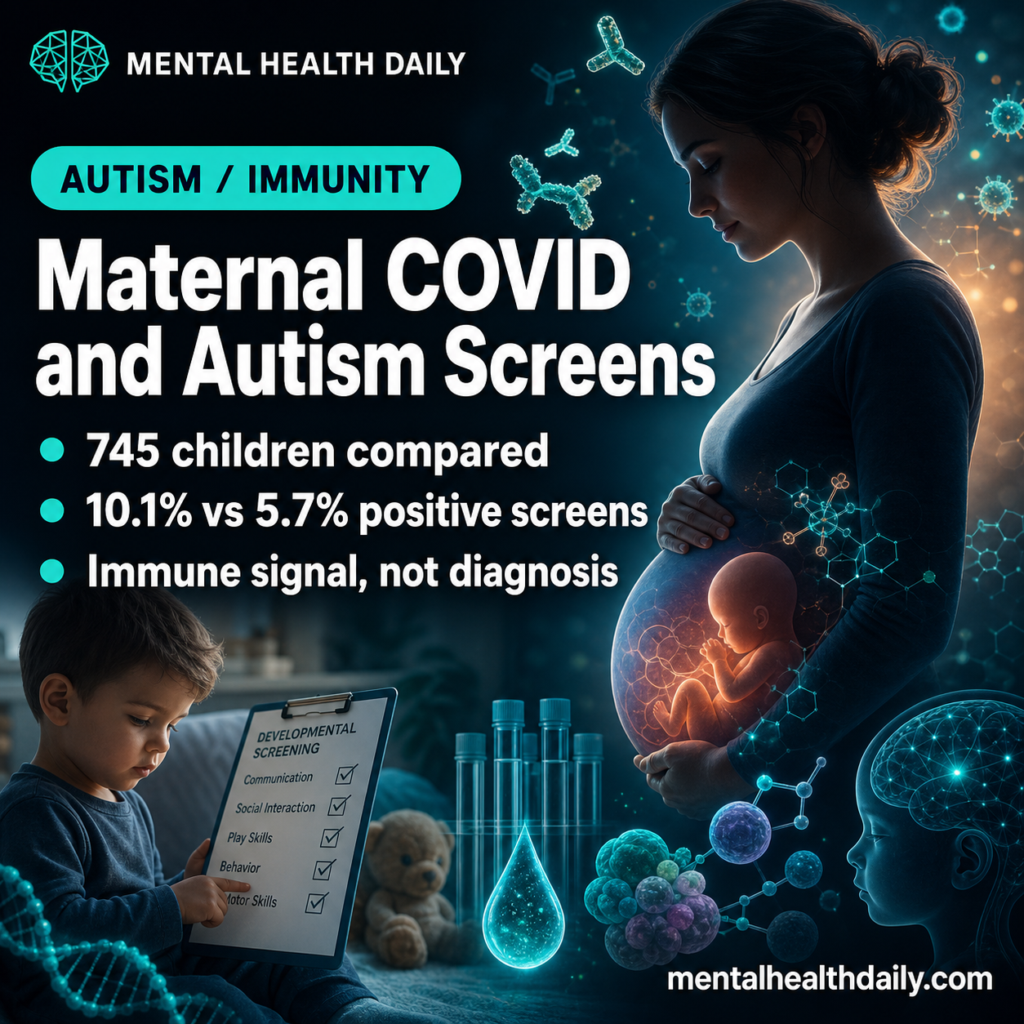
Maternal COVID-19 and Autism Screening: 10.1% Positive MCHAT-R/F

MHD featured image for maternal COVID-19 exposure, autism screening, and immune signatures.

A 745-child cohort found positive MCHAT-R/F autism screens in 22 of 218 children exposed to maternal SARS-CoV-2 infection during pregnancy (10.1%) vs. 30 of 527 pre-pandemic controls (5.7%; p = 0.03).1 The same 2026 analysis added a small serum-proteomics layer: exposed newborns who later screened positive showed altered immune and metabolic markers, but the paper …

Read more

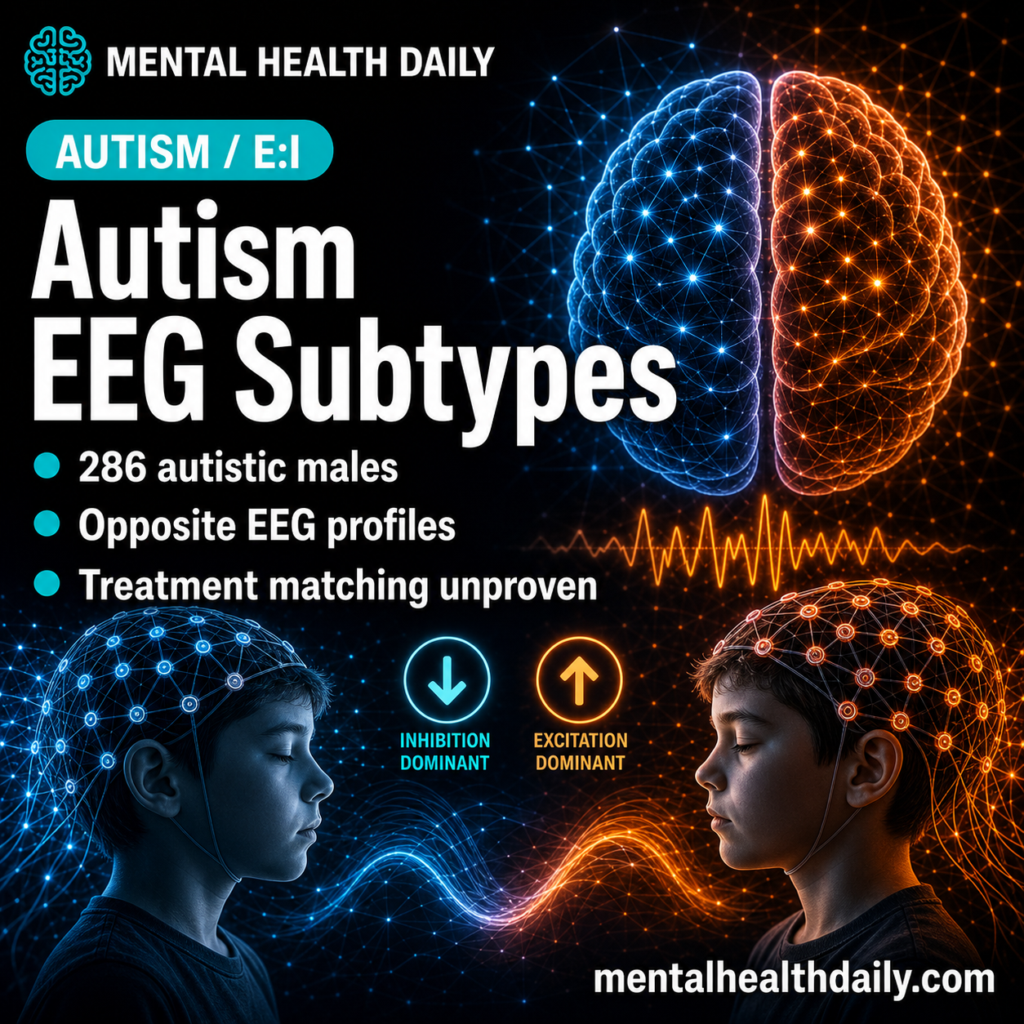
Autism EEG Study Finds 2 Opposite Excitation-Inhibition Subtypes

Photoreal illustration of two opposing brain-network excitability profiles representing distinct autism neurosubtypes.

A 2026 medRxiv preprint did not find one simple autism excitation-inhibition signature. Bertelsen et al. found 2 EEG-derived E:I neurosubtypes in 286 autistic males: a 47% inhibition-dominant subtype with higher Hurst exponent and lower gamma, and a 53% excitation-dominant subtype with the opposite pattern.1 Research Highlights Two subtypes, opposite directions: in 286 autistic males ages …

Read more

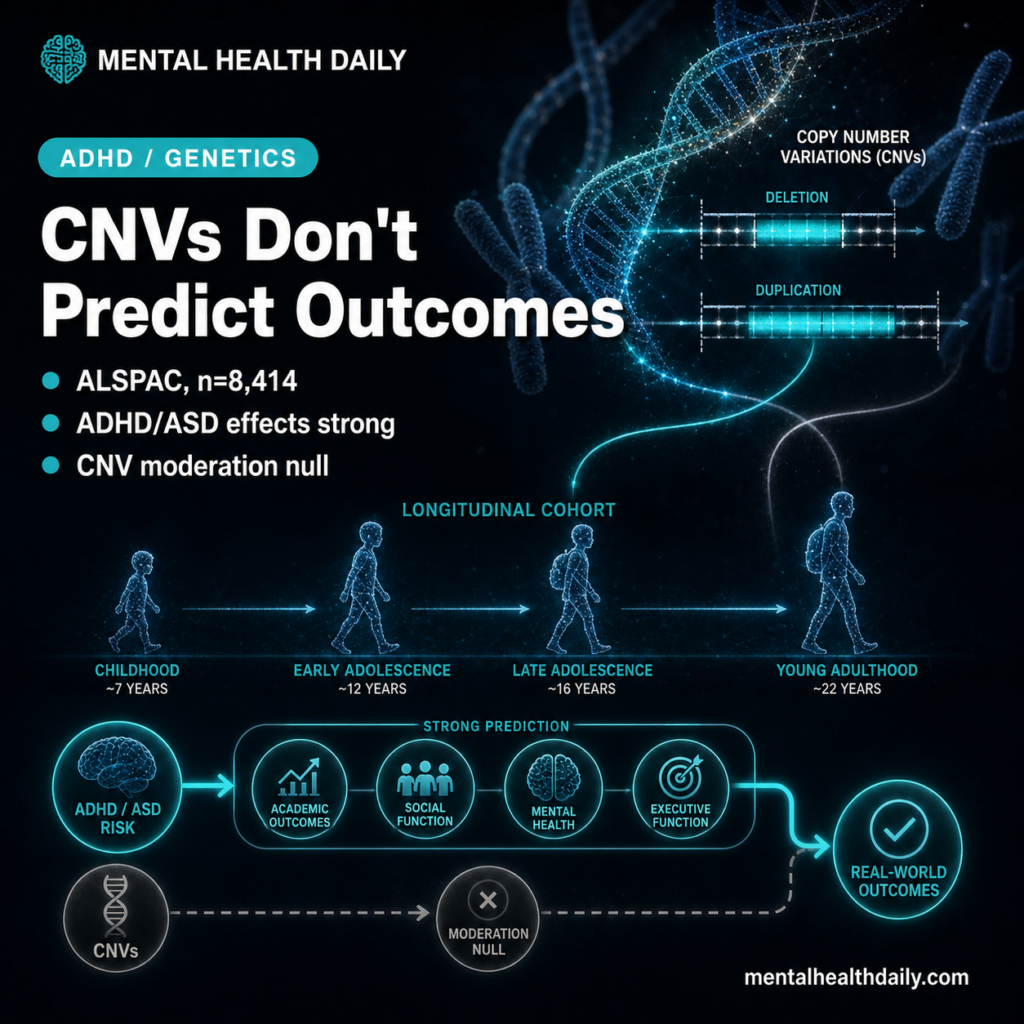
Copy Number Variants Did Not Moderate ADHD or Autism Outcomes in ALSPAC

Photoreal illustration of DNA strands and developmental timeline overlaid on a schematic young adult, conveying genetic moderation of childhood neurodevelopmental outcomes.

A 2026 ALSPAC analysis tested a narrow claim behind routine genetic screening for childhood attention-deficit/hyperactivity disorder (ADHD) and autism spectrum disorder (ASD): whether rare copy number variants (CNVs; deleted or duplicated DNA segments) make young-adult outcomes worse than ADHD/ASD status alone would predict. In 8,414 people with usable CNV data, ADHD and ASD predicted worse …

Read more

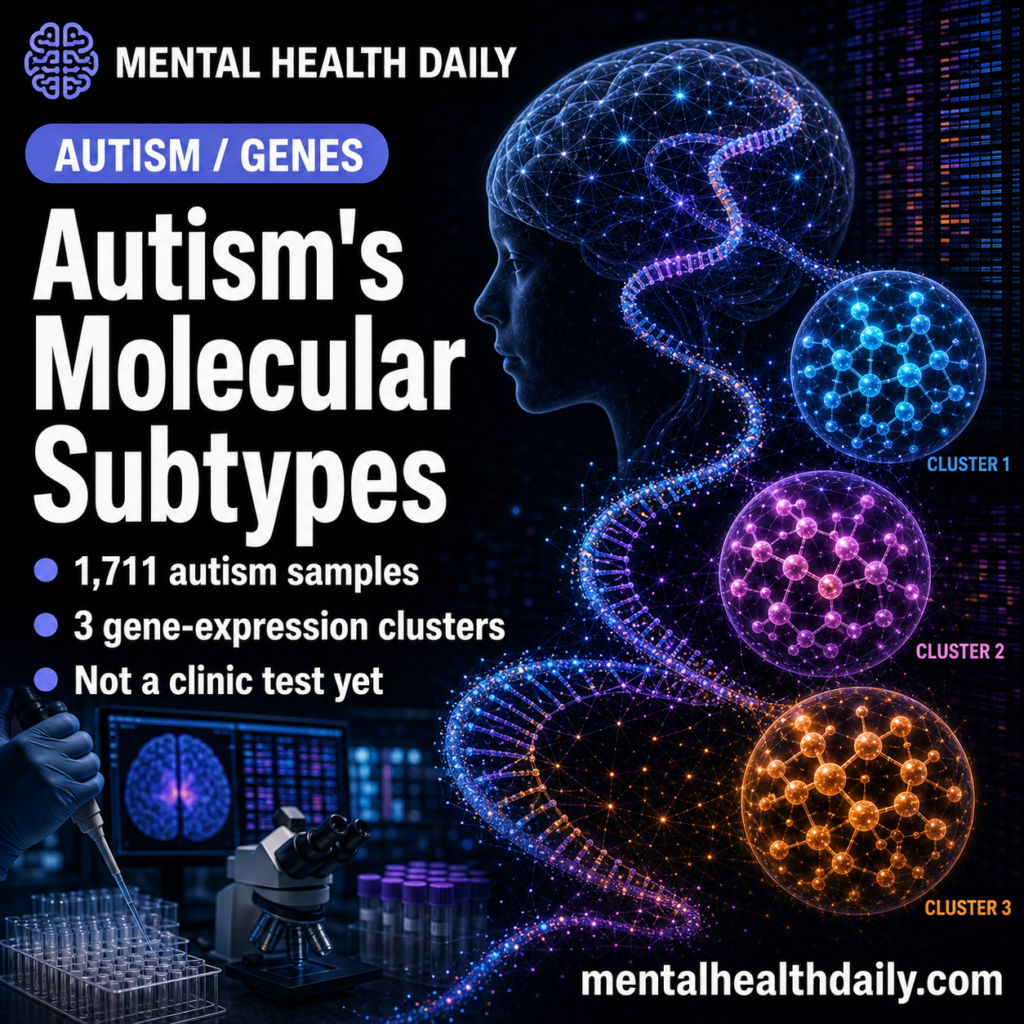
Autism Gene-Expression Study Finds 3 Molecular Subtypes in 1,711 Samples

Photoreal illustration of brain with three highlighted gene-expression patterns showing distinct autism molecular subtypes.

A 2026 RNA-seq analysis of 1,711 autistic probands found 3 gene-expression clusters: 425 people with more severe restricted and repetitive behaviors than the other clusters, 282 with milder symptoms and better adaptive function than the other clusters, and 1,004 with stronger social-communication impairment than the other clusters.1 The supported claim is molecular stratification, not a …

Read more