functional connectivity
Published research on functional connectivity.

A 2026 case-control imaging study found that 23 women with premenstrual dysphoric disorder had higher left DTI-ALPS glymphatic index than 27 healthy controls (p = 0.024), plus wider hypothal…
Read article →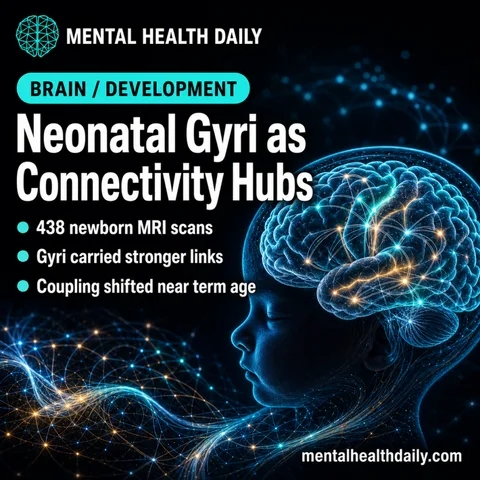
A 2026 developing Human Connectome Project analysis of 438 full-term neonates found that the newborn cortex already had an adult-like folding hierarchy: gyri connected most strongly to other…
Read article →
A 2026 medRxiv preprint found that REDDI, a resting-state magnetoencephalography machine-learning pipeline, separated mild cognitive impairment, multiple sclerosis, Parkinson’s disease, and …
Read article →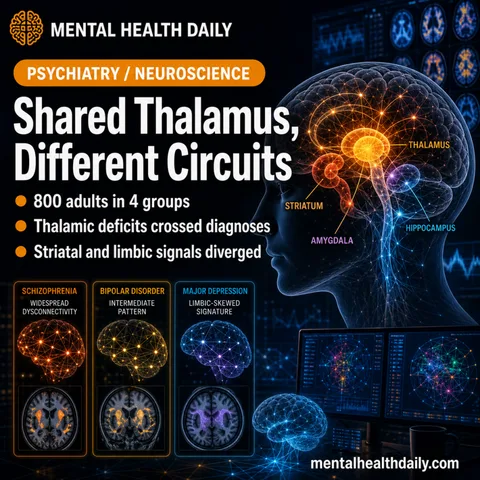
A 2026 resting-state fMRI study of 800 adults found intra-thalamic hypoconnectivity across schizophrenia, bipolar disorder, and major depression, but schizophrenia showed far broader subcort…
Read article →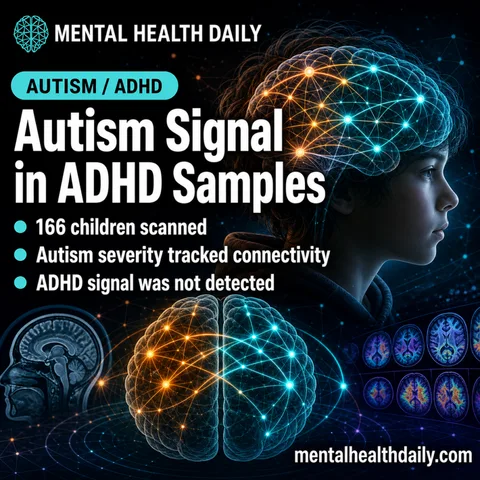
A 166-child resting-state fMRI study found that clinician-observed autism severity, not ADHD severity, tracked connectivity strength between a left middle frontal gyrus node and the posterio…
Read article →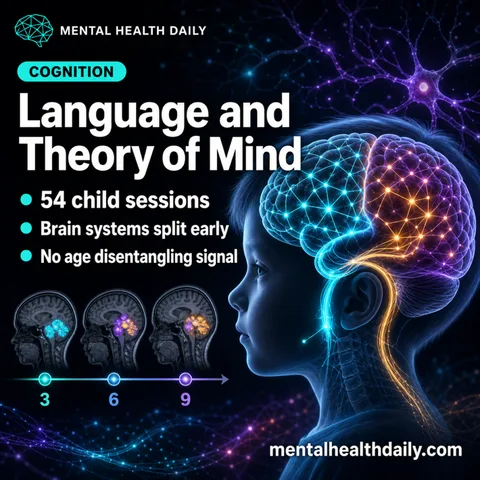
A 2026 fMRI study found language and theory-of-mind activation already separated in 54 child sessions from ages 3-9, with strict child overlap near zero in the left superior temporal lobe (D…
Read article →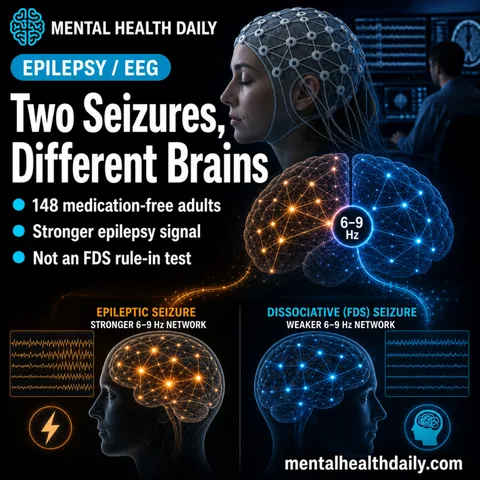
A 2026 diagnostic-accuracy preprint found that resting-state EEG network features separated non-lesional epilepsy from functional/dissociative seizures (FDS) at 67.5% balanced accuracy, but …
Read article →