hit counter

Parkinson’s DBS Impulse Risk: Diffusion MRI Prediction
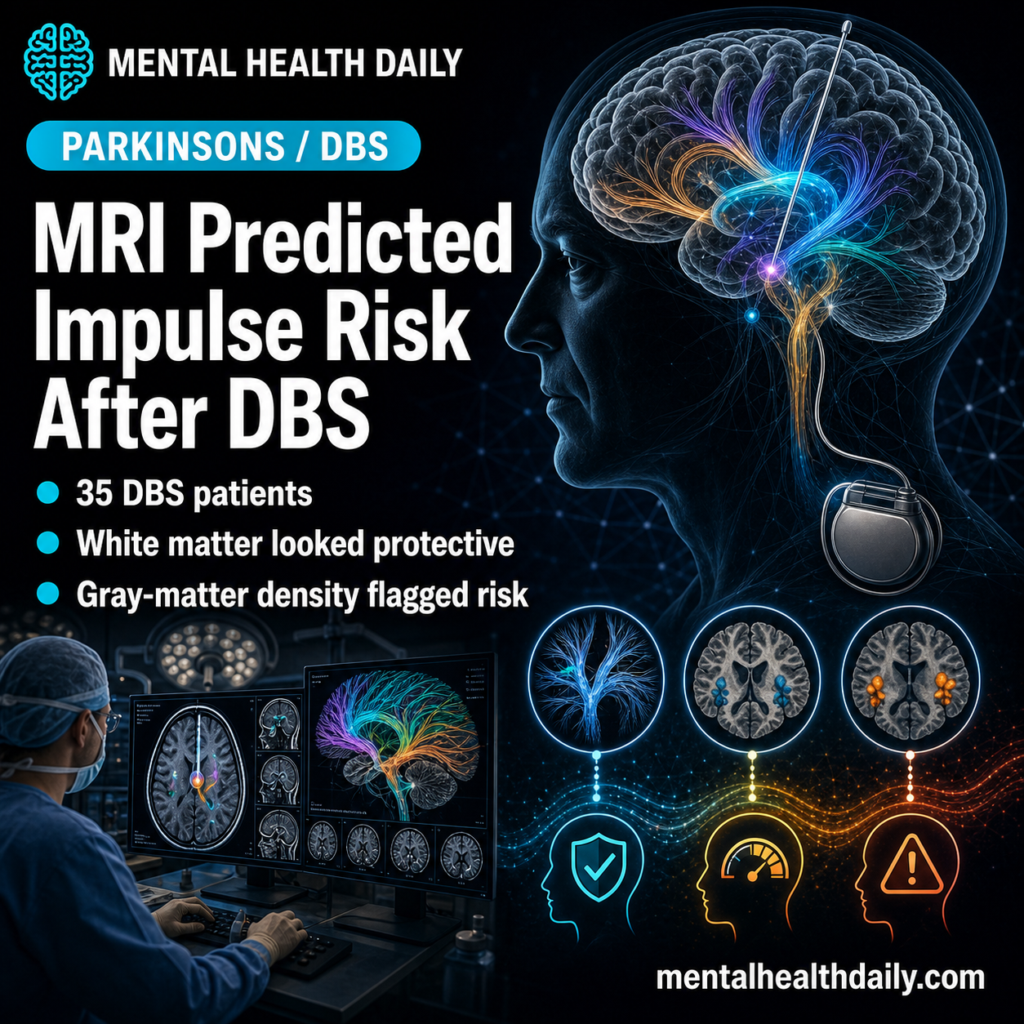
Stylized illustration of a Parkinson's patient brain with overlaid diffusion-MRI tractography showing frontolimbic and executive control fiber bundles, alongside a DBS lead, representing the imaging biomarker question for post-DBS impulse control.

Subthalamic deep brain stimulation (STN-DBS) gives most patients with advanced Parkinson’s disease meaningful motor relief, but a subset develops new or worsened impulse control disorders — pathological gambling, compulsive shopping, hypersexuality, binge eating — while others see preexisting symptoms improve. A 2026 prospective preprint from Loehrer et al. used pre-surgical diffusion MRI to identify microstructural …

Read more

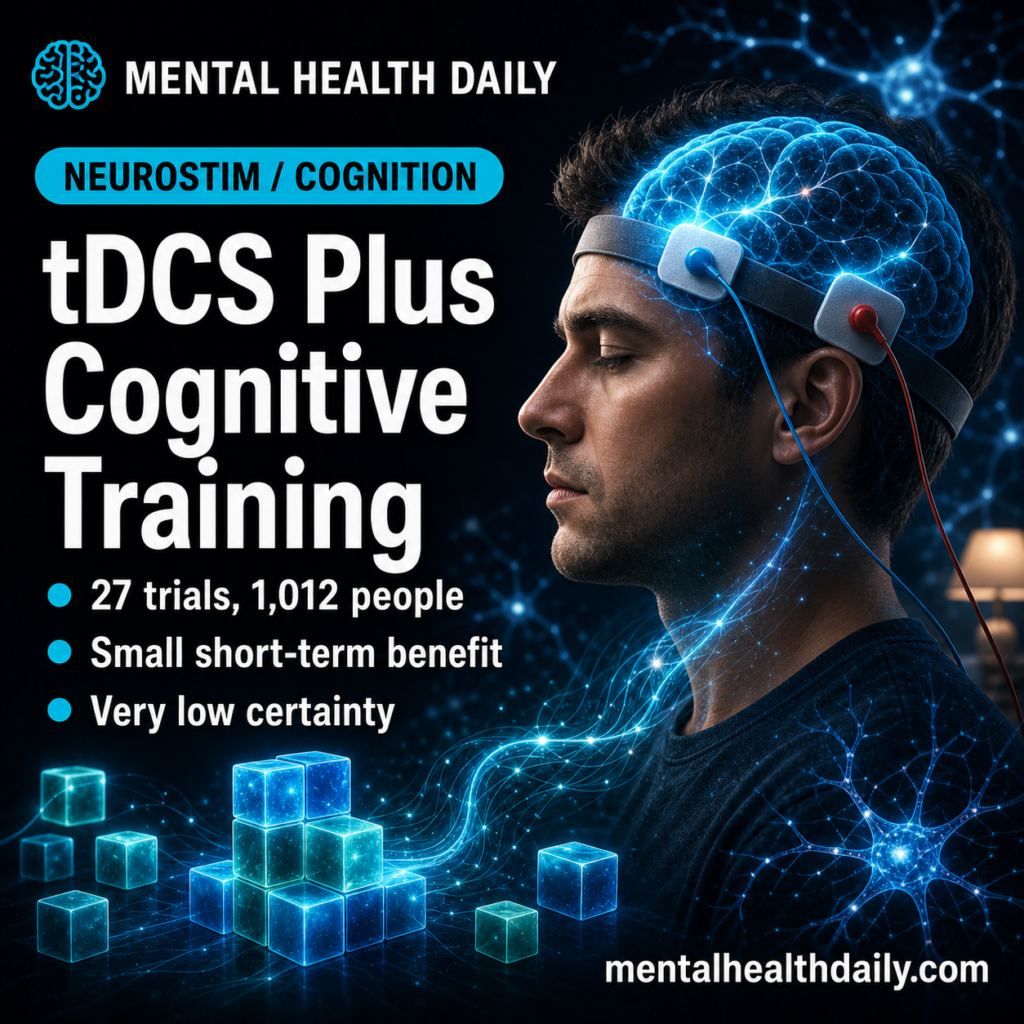
tDCS Plus Cognitive Training Improved Cognition Short-Term by SMD 0.36

MHD featured image for tDCS plus cognitive training in cognitive impairment.

A 2026 medRxiv meta-analysis of 27 trials found that transcranial direct current stimulation added to cognitive training improved global cognition immediately after treatment by SMD 0.36 compared with cognitive training alone.1 The signal was small, short-term, and rated very low certainty, so it is not evidence that tDCS is a durable cognitive-rehabilitation shortcut. Research Highlights …

Read more

Virgin Olive Oil Linked to Cognitive Preservation and Gut Diversity

MHD featured image for virgin olive oil, gut microbiome diversity, and cognition.

A 2026 PREDIMED-Plus cohort analysis linked higher olive-oil intake with 2-year cognitive preservation in 656 older adults, with each 10 g/day increment associated with higher global cognition change compared with lower intake (beta 0.044 z-score; 95% CI 0.013 to 0.075; p = 0.006).1 The more specific signal favored virgin olive oil and gut-microbiome diversity, while …

Read more

Epilepsy and Alzheimer’s Blood Biomarkers in Older Adults

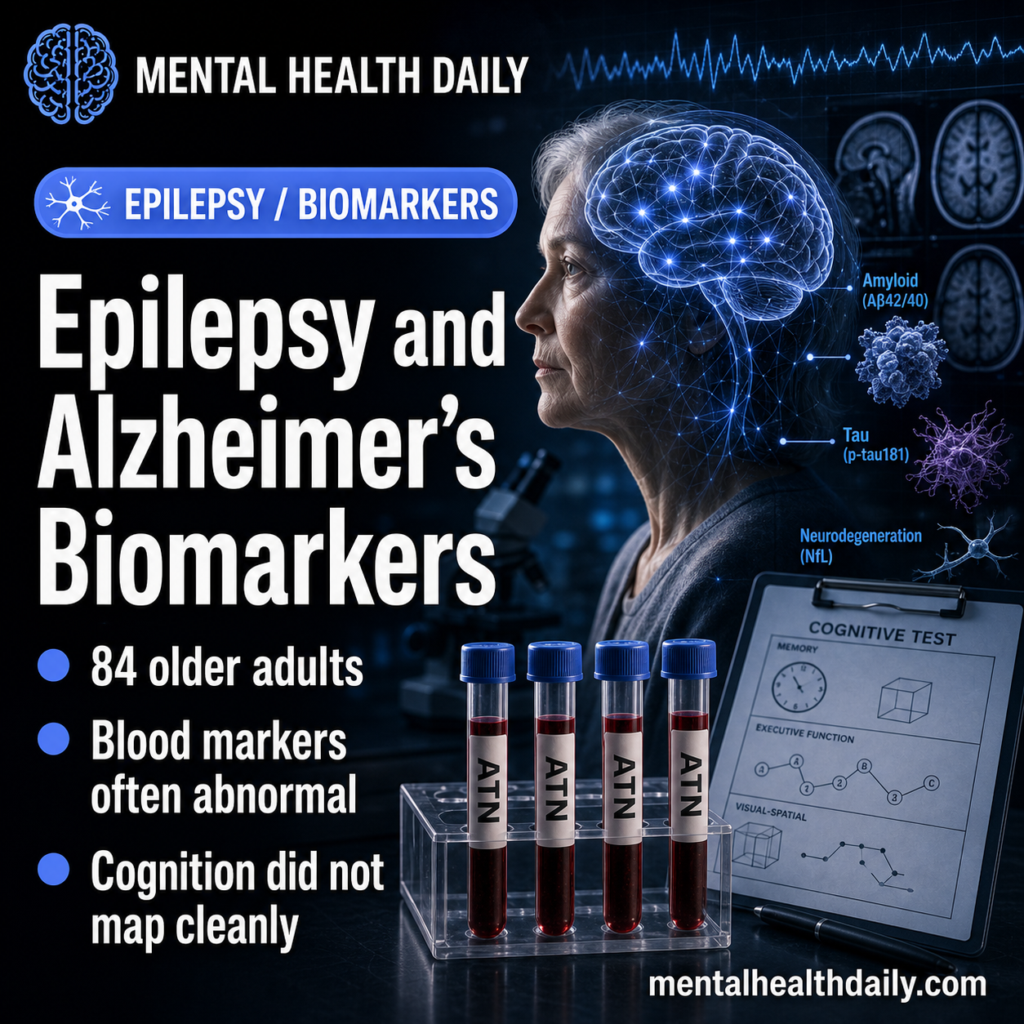
MHD featured image for epilepsy, Alzheimer’s blood biomarkers, and AT(N) profiles in older adults.

A preprint in 84 older adults with epilepsy found that abnormal Alzheimer's-related blood biomarkers were common, but the biomarker categories did not line up neatly with cognitive impairment. Research Highlights Only 32.1% had normal biomarkers: 27 of 84 older adults with epilepsy were A−T−N− using blood-based amyloid, tau, and neurodegeneration markers.1 AD-continuum profiles were common: …

Read more

Alzheimer’s Neurovascular Unit Dysfunction May Start Before Amyloid

MHD featured image for neurovascular unit dysfunction and Alzheimer's disease.

A 2026 review argues that neurovascular-unit dysfunction may precede amyloid-beta generation in Alzheimer’s disease and then synergize with amyloid deposition, tau pathology, inflammation, and neuronal loss.1 The model is vascular biology plus amyloid biology: blood vessels, barrier integrity, and amyloid deposition can amplify each other early enough to affect dementia risk and progression. Research Highlights …

Read more

TMEM175 Proton Channel Finding Clarifies Parkinson’s Lysosome Risk

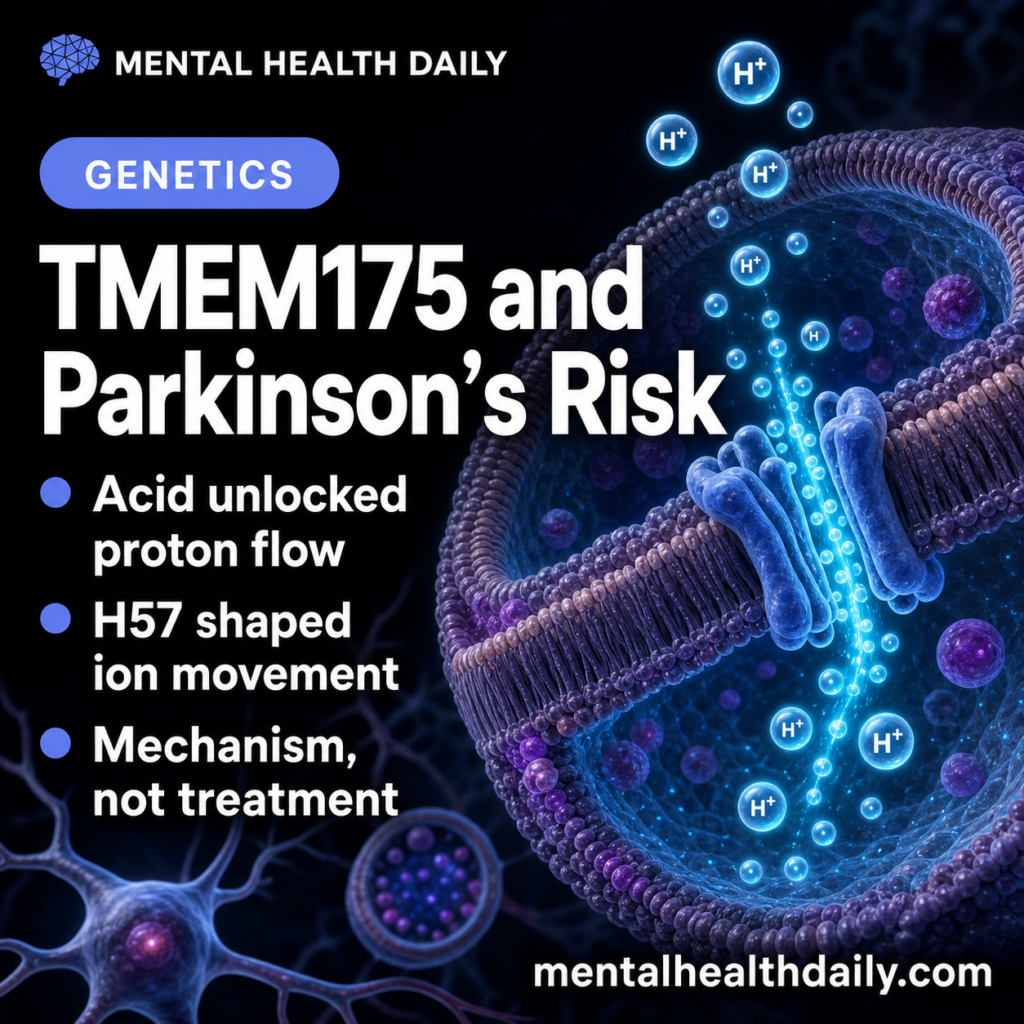
MHD featured image for TMEM175 proton conductance and Parkinson's disease lysosome risk.

A 2026 PNAS study found that TMEM175 behaves as a pH-sensitive lysosomal channel relevant to Parkinson’s risk biology.1 Acidifying the luminal side from pH 7.4 to 4.7 activated proton conductance, shifted reversal potential, and tied H57 to H+ and K+ flux. Research Highlights Acidification activated TMEM175: lowering luminal-side pH from 7.4 to 4.7 increased inward …

Read more

Facial Markers Differed in 31 Older Adults With MCI-Level MoCA Scores

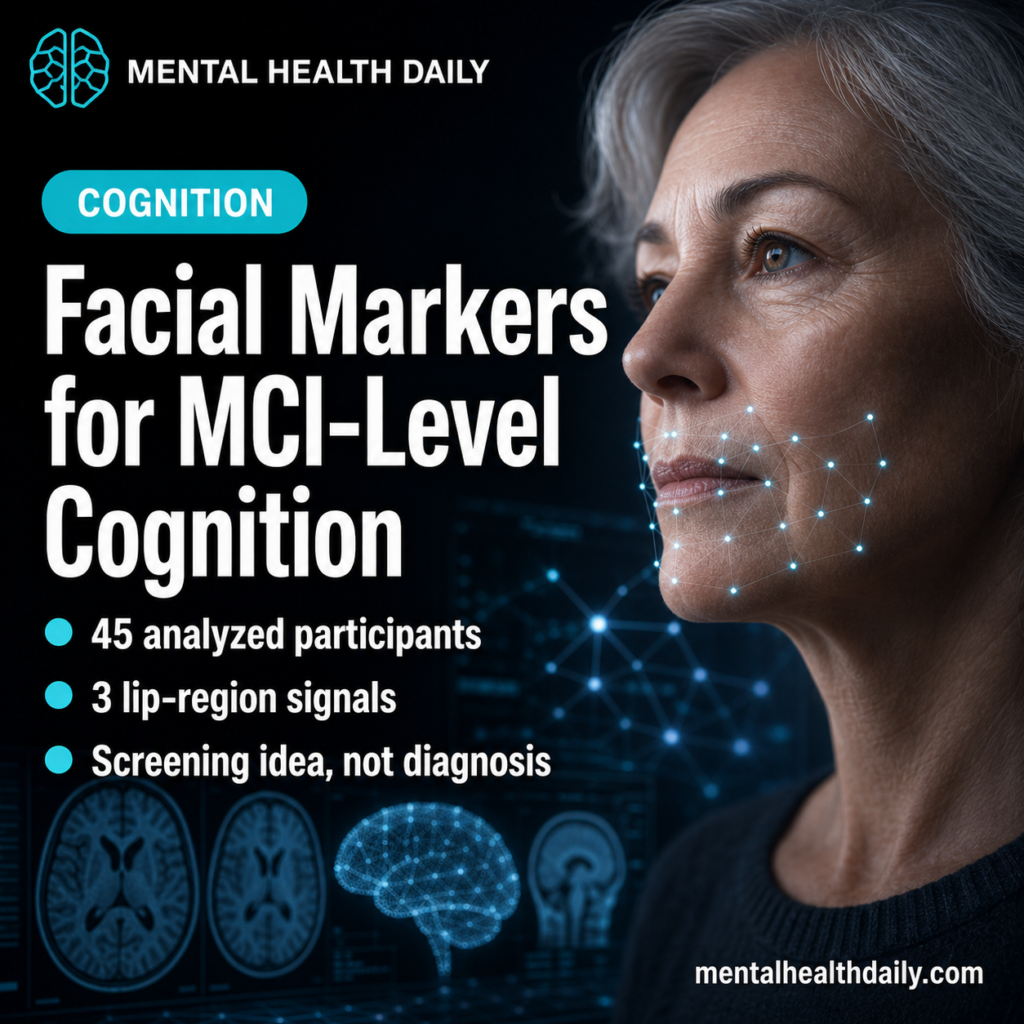
MHD featured image for resting facial expression markers and MCI-level cognition.

A 2026 medRxiv preprint found that older adults with mild-cognitive-impairment-level MoCA-J scores showed distinct resting facial action-unit patterns: AU10 upper lip raiser, AU23 lip tightener, and AU28 lip suck differed after correction in 45 analyzable participants.1 The result supports facial-expression screening research, but it does not show that a face video can diagnose MCI or …

Read more