hit counter

tVNS Alters Effort and Reward Decisions in Severe Depression
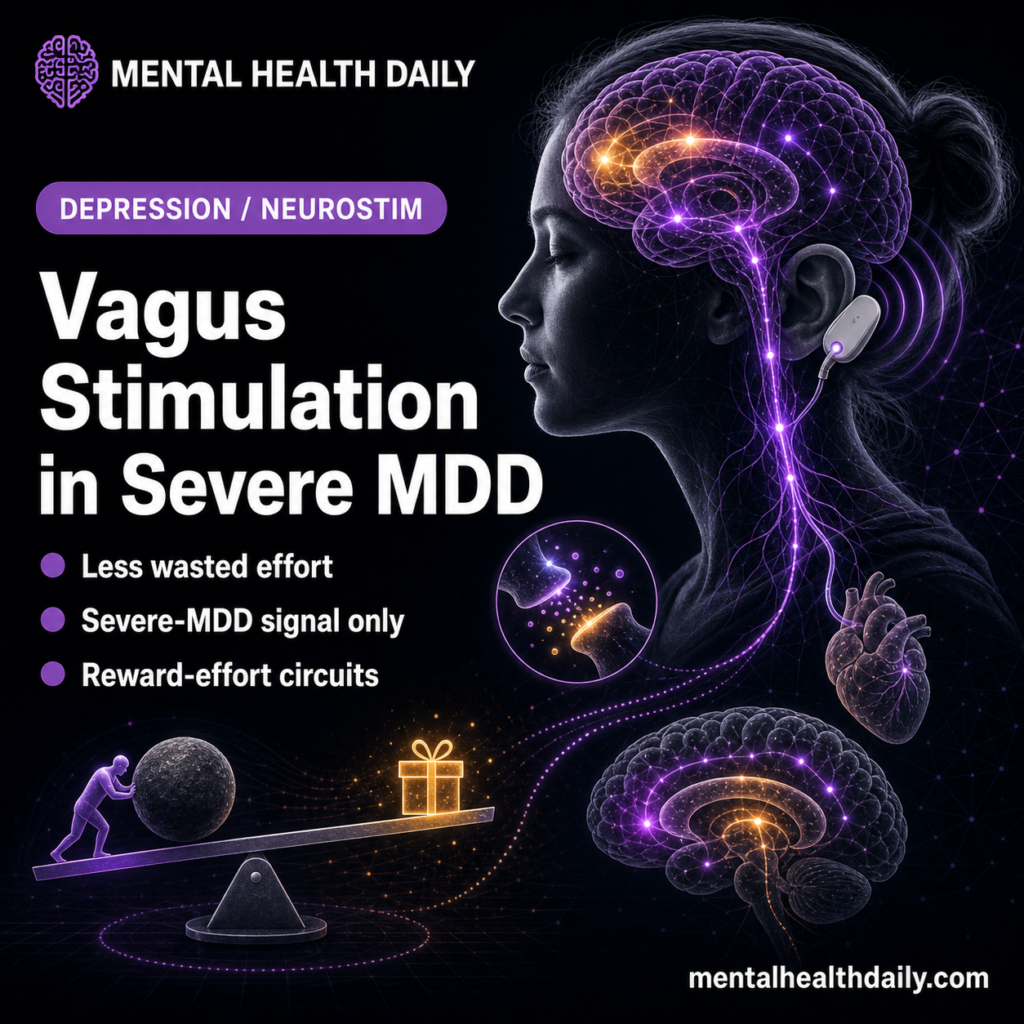
Photoreal illustration of an ear-clip vagus nerve stimulation electrode, with neural pathway motifs representing reward-effort circuits.

An ear-clip that modulates mood by stimulating the vagus nerve has obvious appeal — but the evidence base for non-invasive tVNS in depression has been mixed for a decade. A 2026 cross-over RCT by Forbes et al. sharpens what specifically tVNS does well.1 Research Highlights Transcutaneous vagus nerve stimulation (tVNS) is a non-invasive ear-electrode version …
Read more

Lewy Body Dementia Cognitive Fluctuations Affect 75-90% of Patients

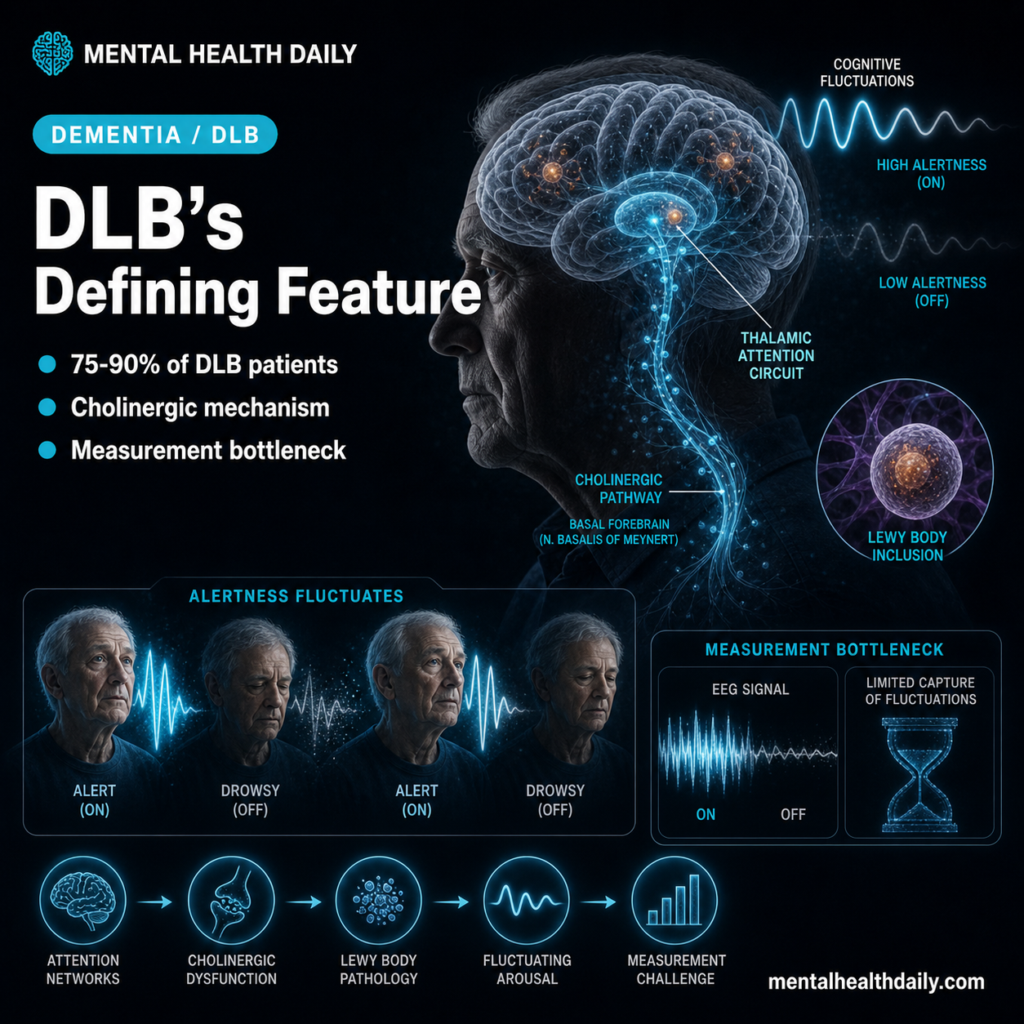
Photoreal illustration of fluctuating brain activity overlay on an older adult, conveying alertness variability characteristic of DLB.

Cognitive fluctuations are a defining feature of dementia with Lewy bodies (DLB), helping distinguish it from Alzheimer’s disease — but they remain notoriously difficult to characterize and measure. A 2026 review by Mahajan and colleagues maps the neurobiology, measurement, and clinical implications of fluctuations across the Lewy body spectrum.1 Research Highlights Cognitive fluctuations are episodes …

Read more

Ubiquinol for Multiple System Atrophy: First Positive Repurposing Trial

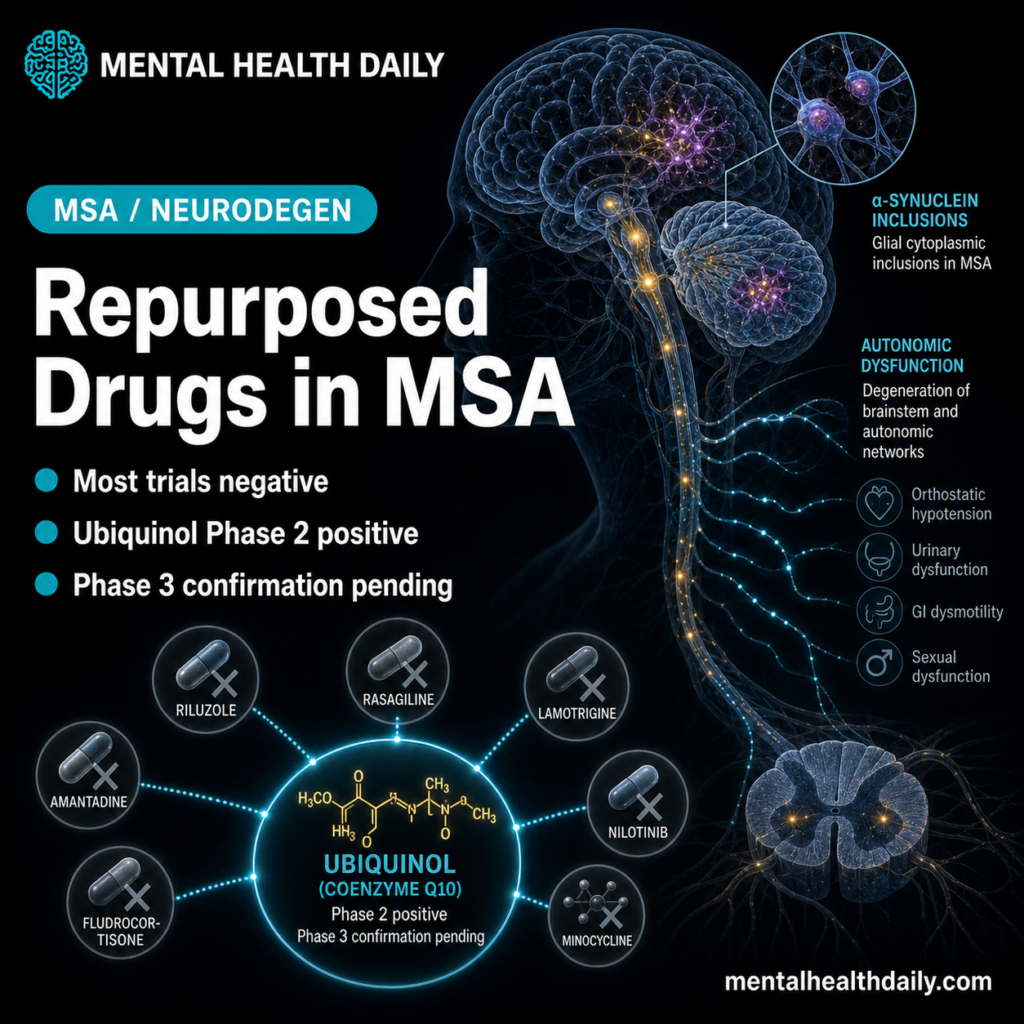
Photoreal illustration of misfolded alpha-synuclein in glial cells with drug molecule motifs, representing repurposed-drug therapeutics in MSA.

Multiple system atrophy is a rapidly progressive neurodegenerative disease with no proven disease-modifying therapy. A 2026 review by Jeong and colleagues tracks two decades of repurposed-drug trials, with one recent positive Phase 2 result.1 Research Highlights Multiple system atrophy (MSA) is a fatal α-synuclein disorder distinct from Parkinson’s disease. It progresses faster than PD (median …

Read more

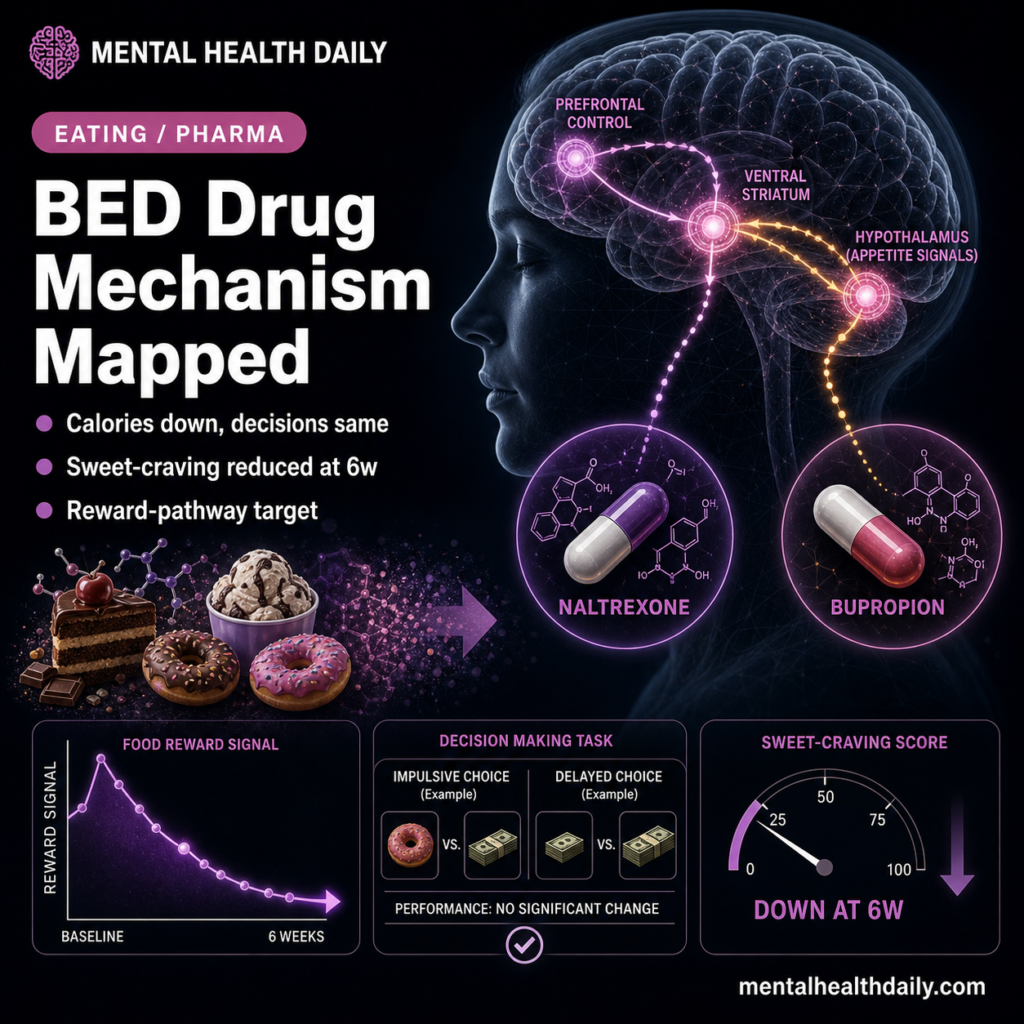
Naltrexone/Bupropion Reduced Food Intake in Binge-Eating Lab Study

Photoreal illustration of brain reward circuitry overlaid on imagery of palatable food, conveying pharmacological reduction of consummatory reward.

Lisdexamfetamine remains the only FDA-approved medication for binge-eating disorder — a serious condition affecting roughly 1.2% of adults. A 2026 human laboratory study by McKee and colleagues tests whether naltrexone/bupropion, already approved for obesity, reduces the food-reward mechanisms that drive binge episodes.1 Research Highlights Binge-eating disorder (BED) is the most common eating disorder in the …

Read more

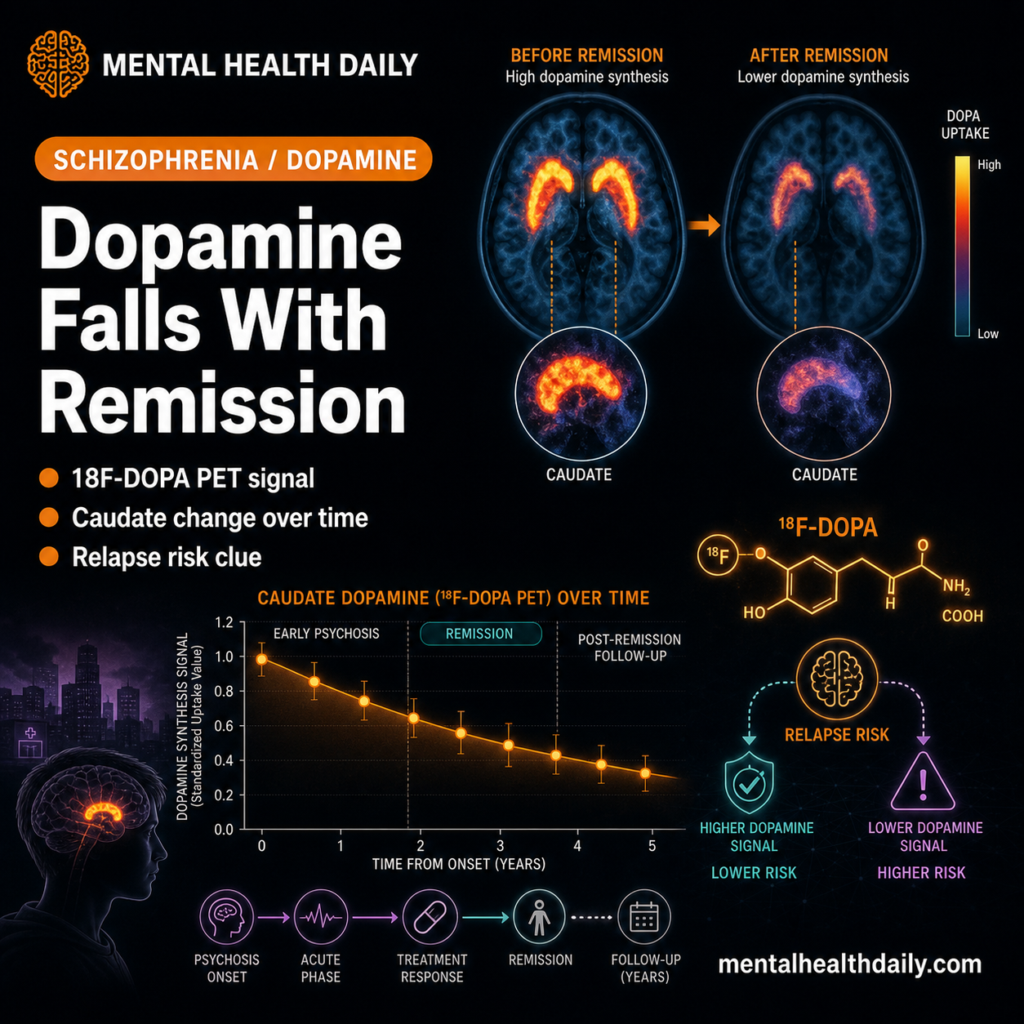
Striatal Dopamine Drops From Psychosis to Schizophrenia Remission

Photoreal illustration of a brain with the striatum highlighted and dopamine synthesis pathways visualized, representing longitudinal PET imaging in schizophrenia.

The dopamine hypothesis of schizophrenia is the field’s longest-running mechanistic story, and most of its supporting evidence has been cross-sectional. A 2026 longitudinal PET study by Schulz and colleagues followed the same 28 patients across psychosis and early remission.1 Research Highlights The dopamine hypothesis of schizophrenia is the field’s longest-running mechanistic story. Cross-sectional 18F-DOPA PET …

Read more

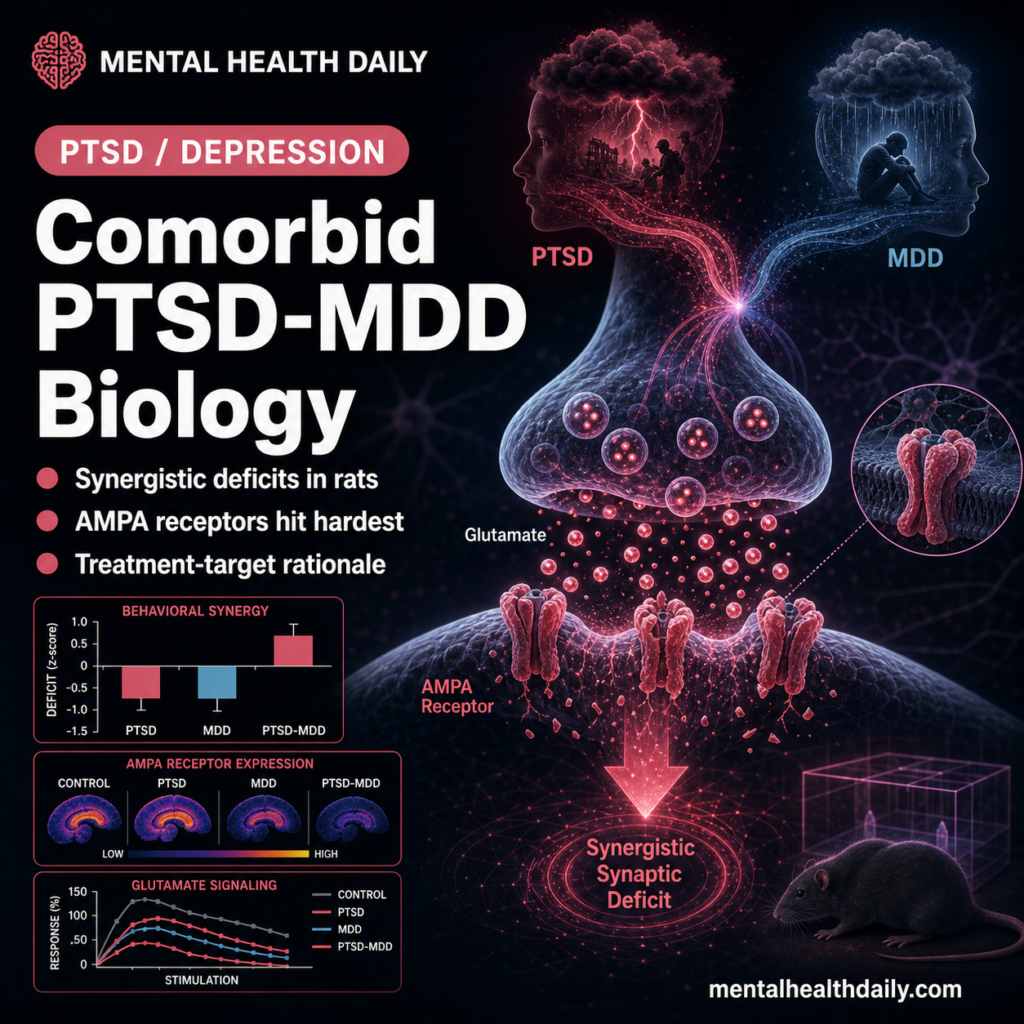
PTSD With Depression Hits AMPA Receptors Harder in Rat Models

Photoreal illustration of synaptic AMPA receptors and stressed neuron, conveying glutamate-system dysregulation in PTSD-MDD comorbidity.

PTSD and major depressive disorder co-occur in roughly half of patients with either diagnosis, and the comorbid presentation is more severe than either alone. The mechanistic question has been whether comorbidity reflects synergistic biology or simple symptom additivity. A 2026 rat-model study by Jiang and colleagues tests this directly, finding that PTSD-MDD comorbid rats show …

Read more