hit counter

Nighttime Caffeine Increased Impulsivity Through Dopamine in Fly Study
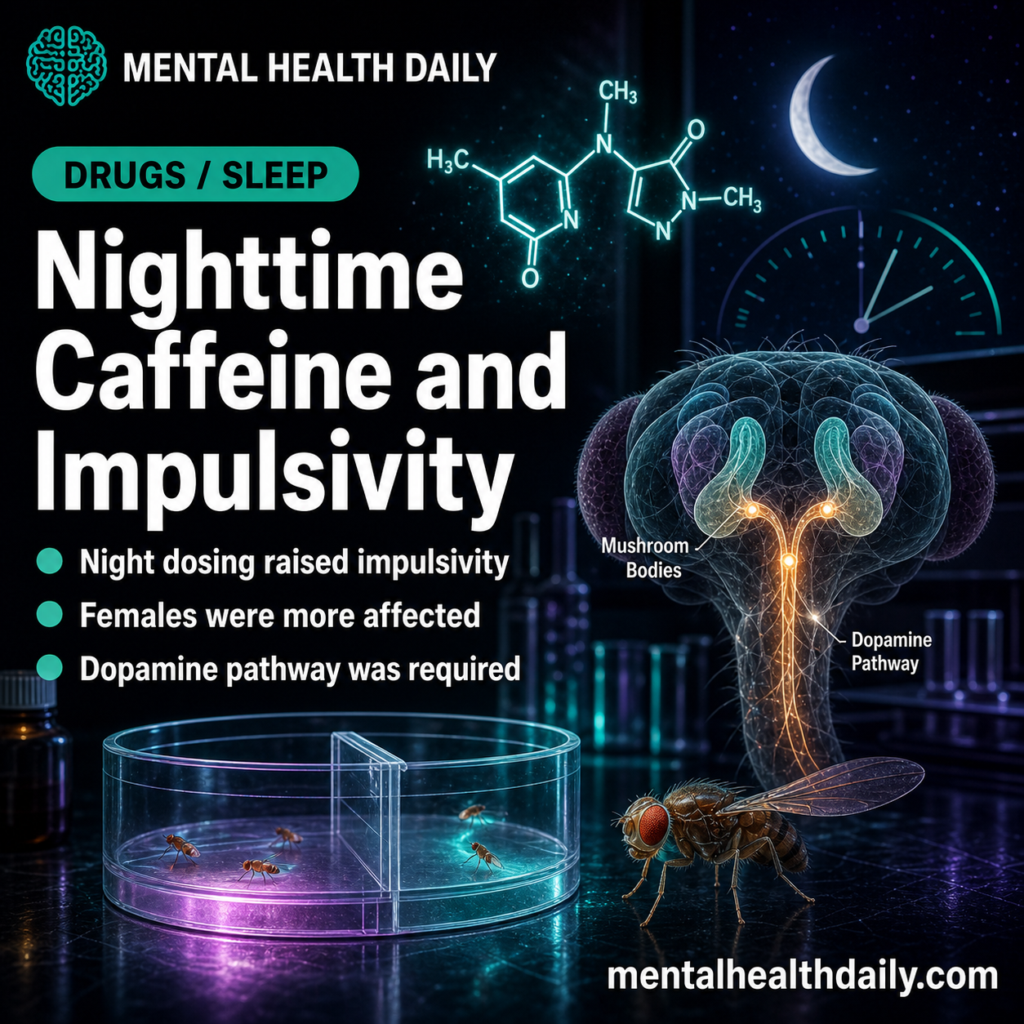
MHD featured image for nighttime caffeine, dopamine, and impulsive motor behavior.

A 2025 iScience study found that nighttime caffeine increased motor impulsivity in Drosophila, with dose-dependent loss-of-inhibition events across n = 30-32 flies per behavioral condition and stronger effects in female flies than male flies.1 The result does not prove that an evening coffee makes humans reckless, but it sharpens a neglected point: caffeine’s alertness benefit …
Read more

ABCD: Childhood Poverty Raised Risk; Inhibitory Control Split Resilience

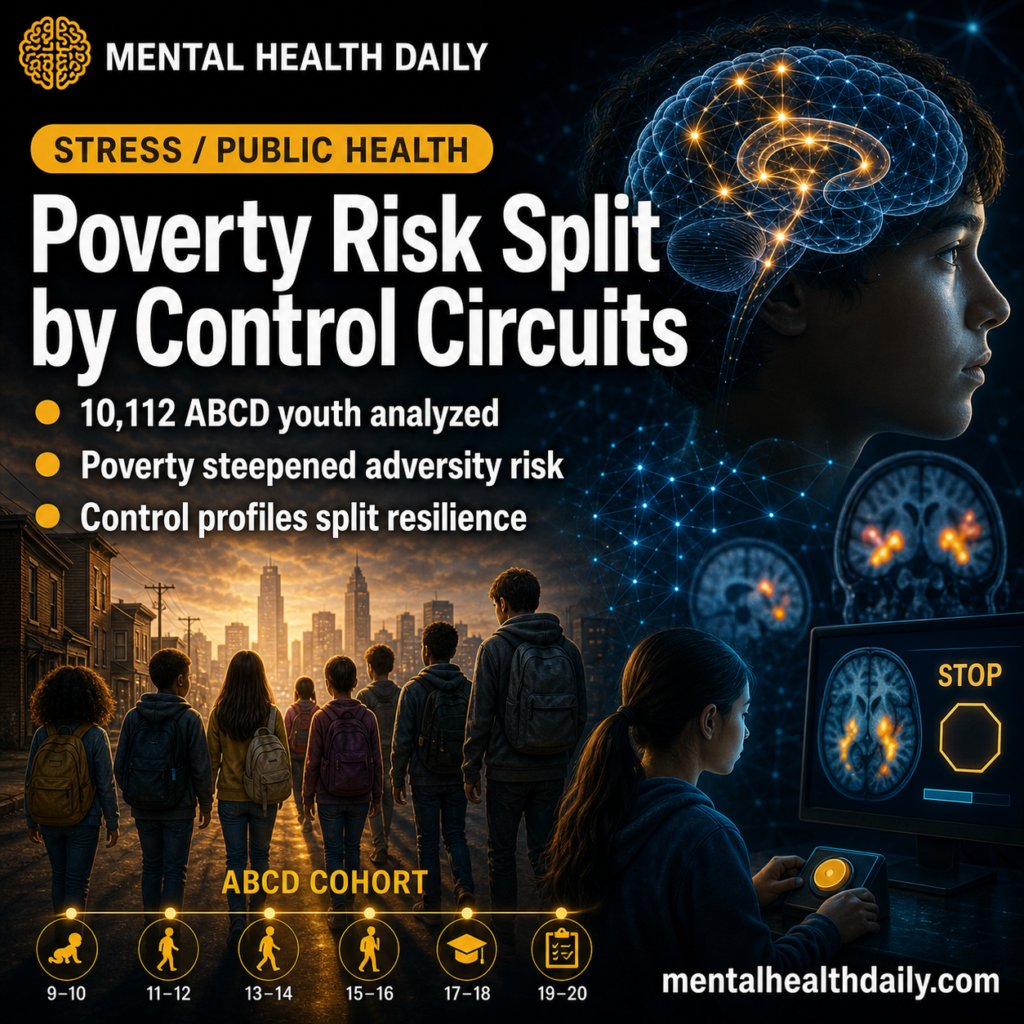
MHD featured image for childhood poverty, inhibitory control, and resilience in ABCD youth.

A 2026 ABCD cohort preprint involving 10,112 youth found that childhood poverty strengthened the link between cumulative early-life adversity and later behavioral problems; among poverty-exposed youth, inhibitory-control fMRI profiles split children into higher-vulnerability and buffered pathways. Research Highlights Poverty steepened adversity risk: In 10,112 ABCD youth, childhood poverty amplified the baseline early-life-adversity-to-CBCL Total Problems slope …

Read more

Group fMRI Misread Cognitive Control in 4,423 Youth

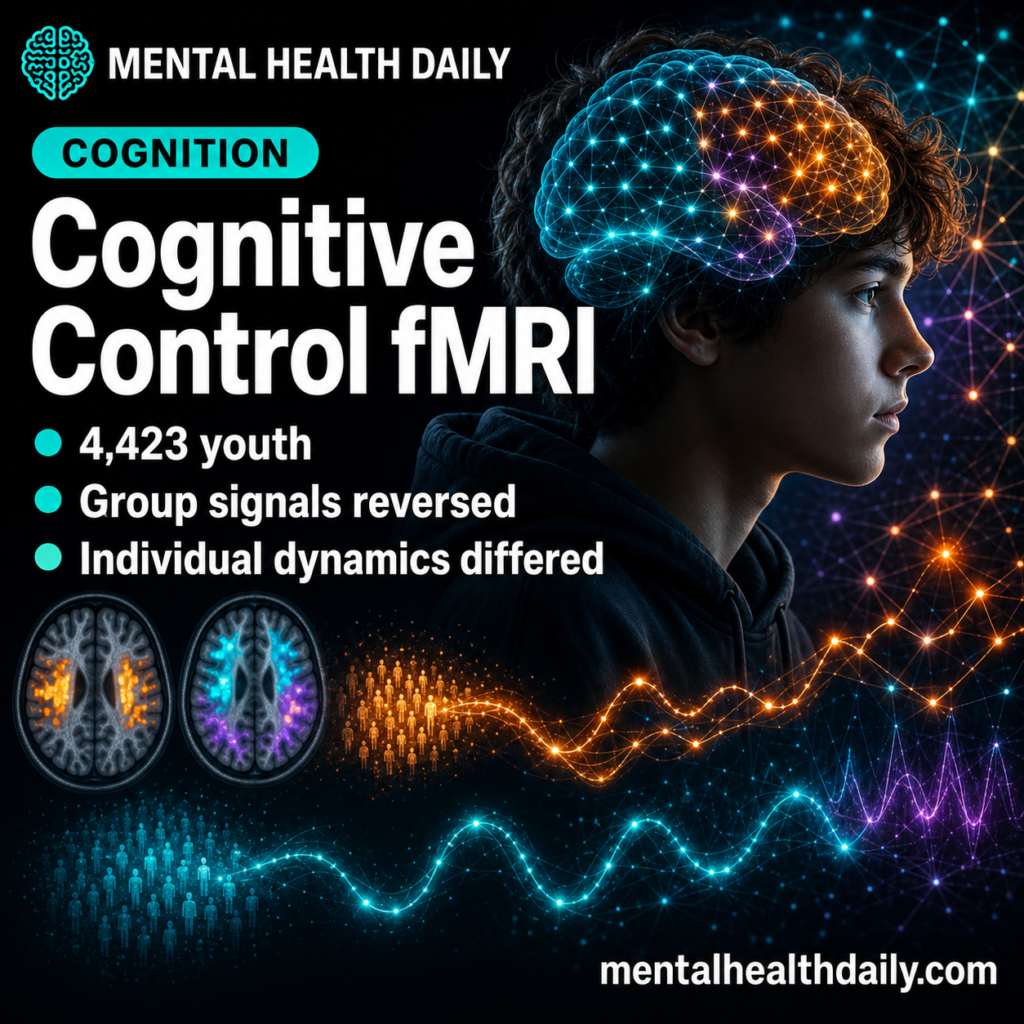
MHD featured image for group fMRI and individual cognitive-control brain signals.

A 2026 ABCD stop-signal fMRI study found that group-level cognitive-control brain signals often failed to describe within-person brain dynamics: across 16 comparisons, between-person and within-person associations diverged, and several reversed direction.1 The practical warning is narrow but sharp: a brain pattern that separates people in a group may be the wrong map for explaining how …

Read more

Stop-Signal Task Links Cannabis Use to Decision Efficiency, Not Inhibition

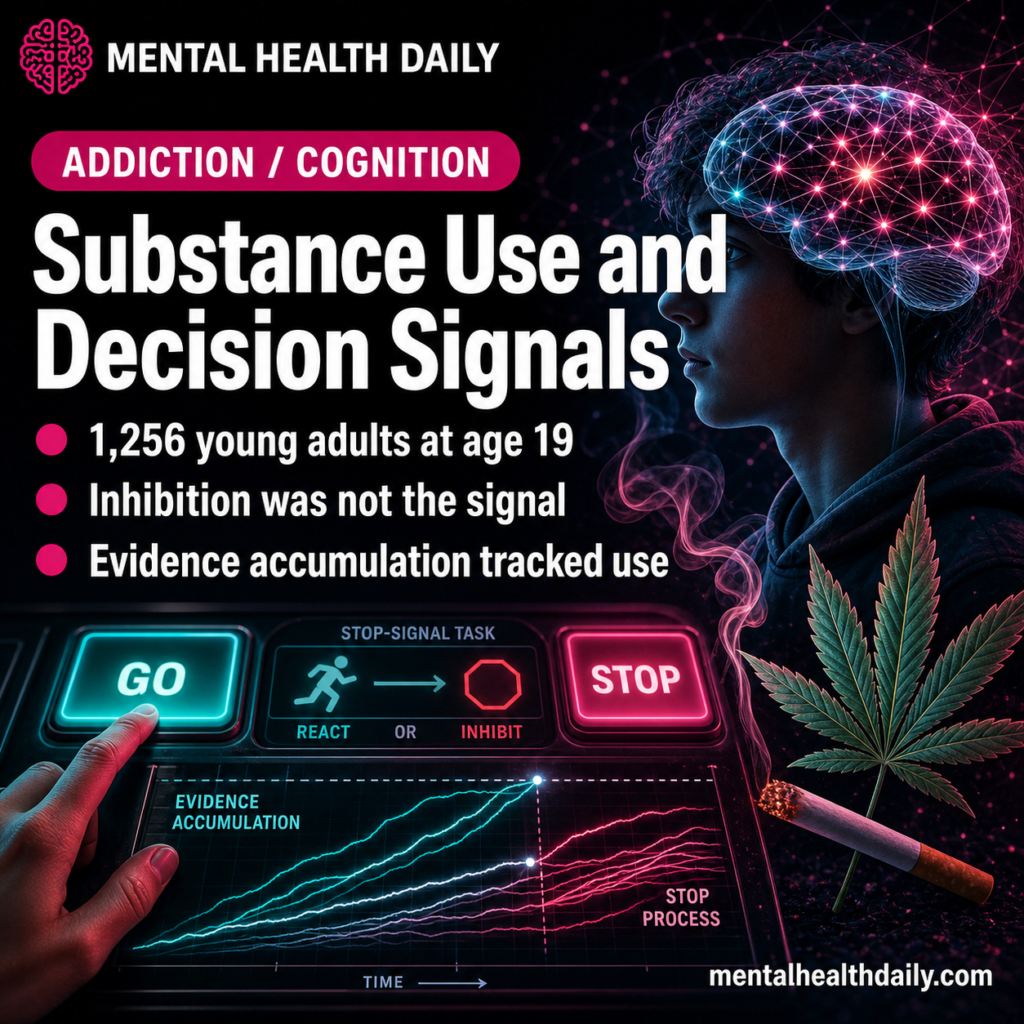
MHD featured image for stop-signal task modeling, evidence accumulation, and cigarette-plus-cannabis use.

A 2026 IMAGEN stop-signal task analysis found that evidence accumulation, response caution, and go-failure probability predicted cigarette-plus-cannabis use at ages 19 and 23, while inhibition parameters showed no apparent substance-use association.1 The calibrated reading is direct: conventional “poor inhibition” language may be too crude when the cigarette-plus-cannabis signal sits in general decision-making efficiency instead. Research …

Read more