GAD-7
Published research on GAD-7.
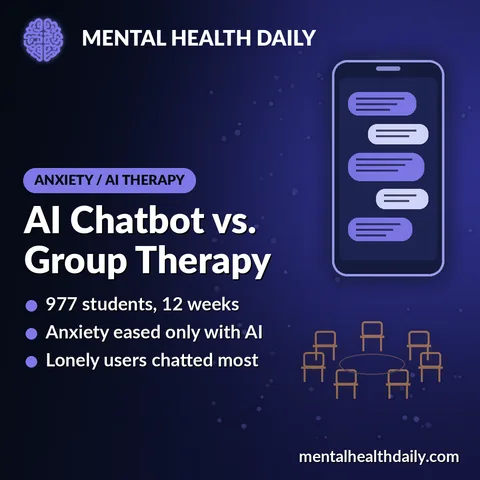
University students who used an AI chatbot for 12 weeks ended with anxiety scores about 2 points lower than students in weekly group therapy, in a randomized trial of 977 students in Israel.…
Read article →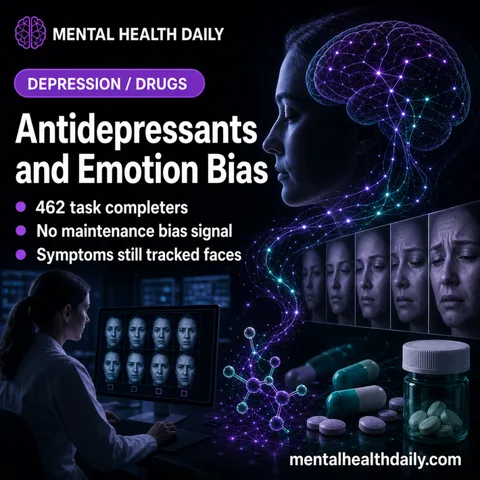
A 2026 ANTLER mechanistic analysis found no evidence that maintaining antidepressants preserved a happier facial-emotion recognition pattern compared with placebo substitution at 12 weeks (a…
Read article →
A 147-person feasibility randomized trial found that both a structured AI therapy chatbot and general ChatGPT reduced PHQ-9 depression scores compared with assessment-only control, with effe…
Read article →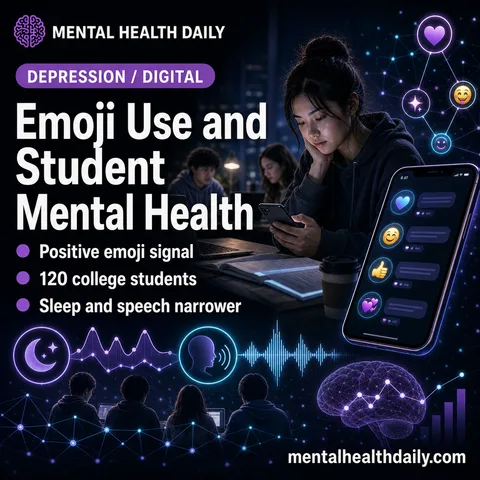
Low-burden digital phenotyping is appealing because college students already leave daily traces in phones, messages, sleep logs, and voice samples. In Henry et al.’s 120-student study, posit…
Read article →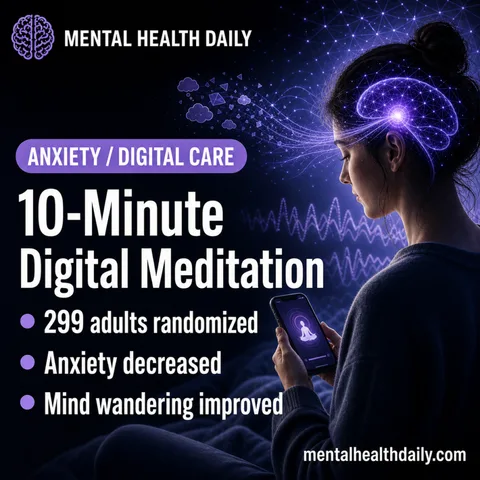
A 299-person remote randomized trial found that 10 min of daily focused-attention meditation reduced anxiety and mind wandering more than waitlist control, with the strongest gains among adu…
Read article →
A 68-person randomized trial in Indian healthcare workers found a narrow but useful pattern: combined yoga plus Bhagavad Gita teaching beat usual care immediately on GAD-7 anxiety scores (p …
Read article →
A 2026 participatory-design and case-study paper turned smartphone mental-health data into 6 clinician-facing visualizations for an 8-week anxiety/depression digital clinic, using feedback f…
Read article →